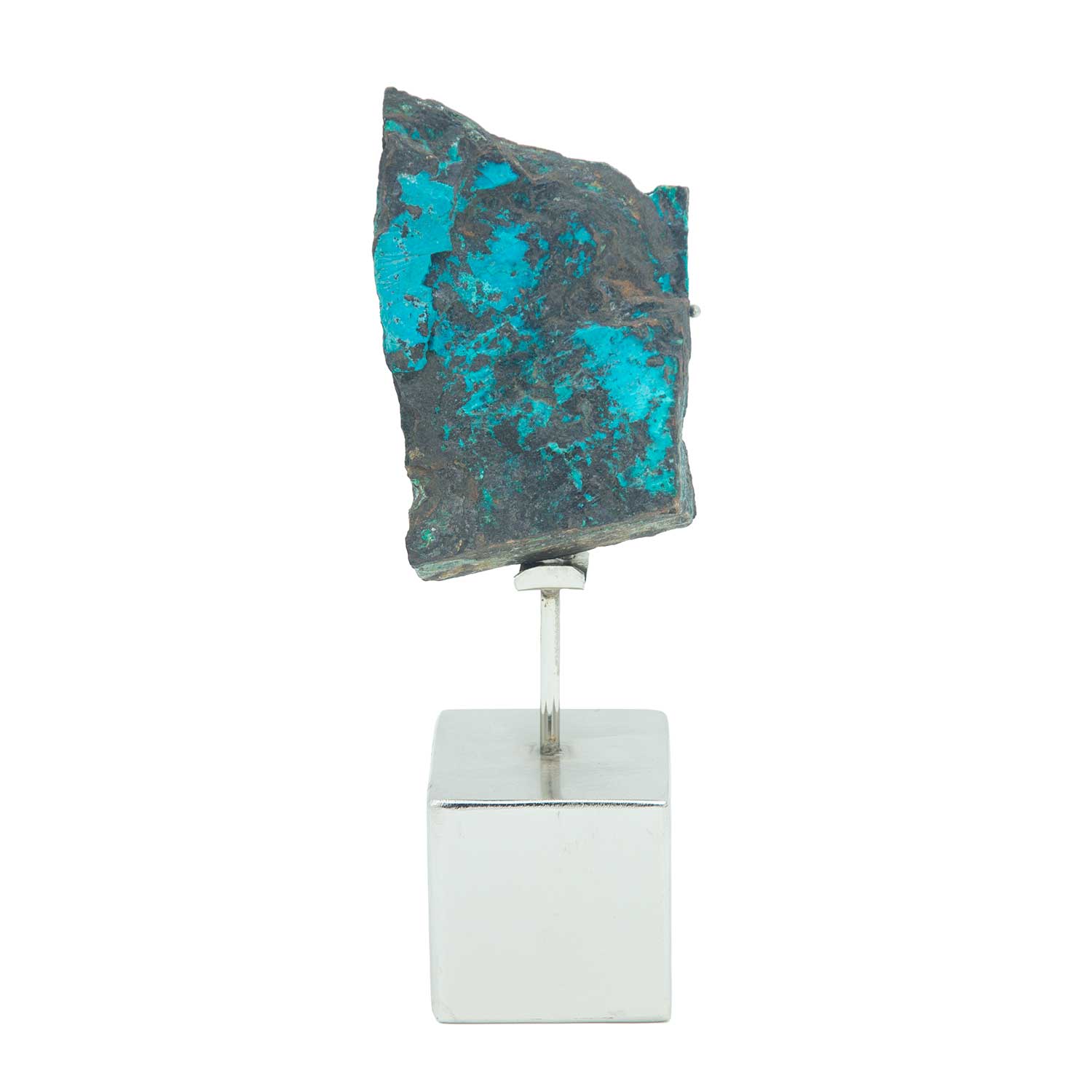
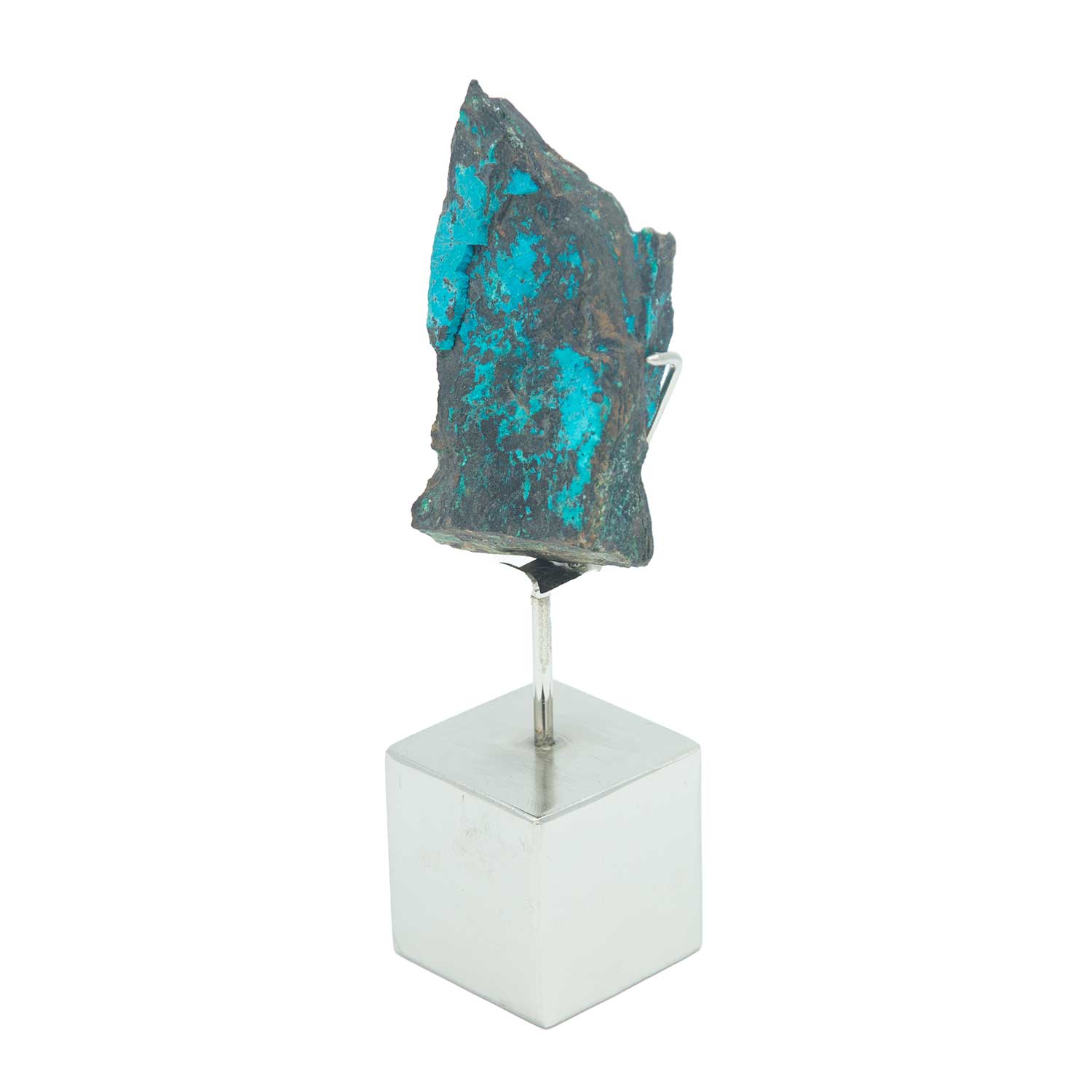
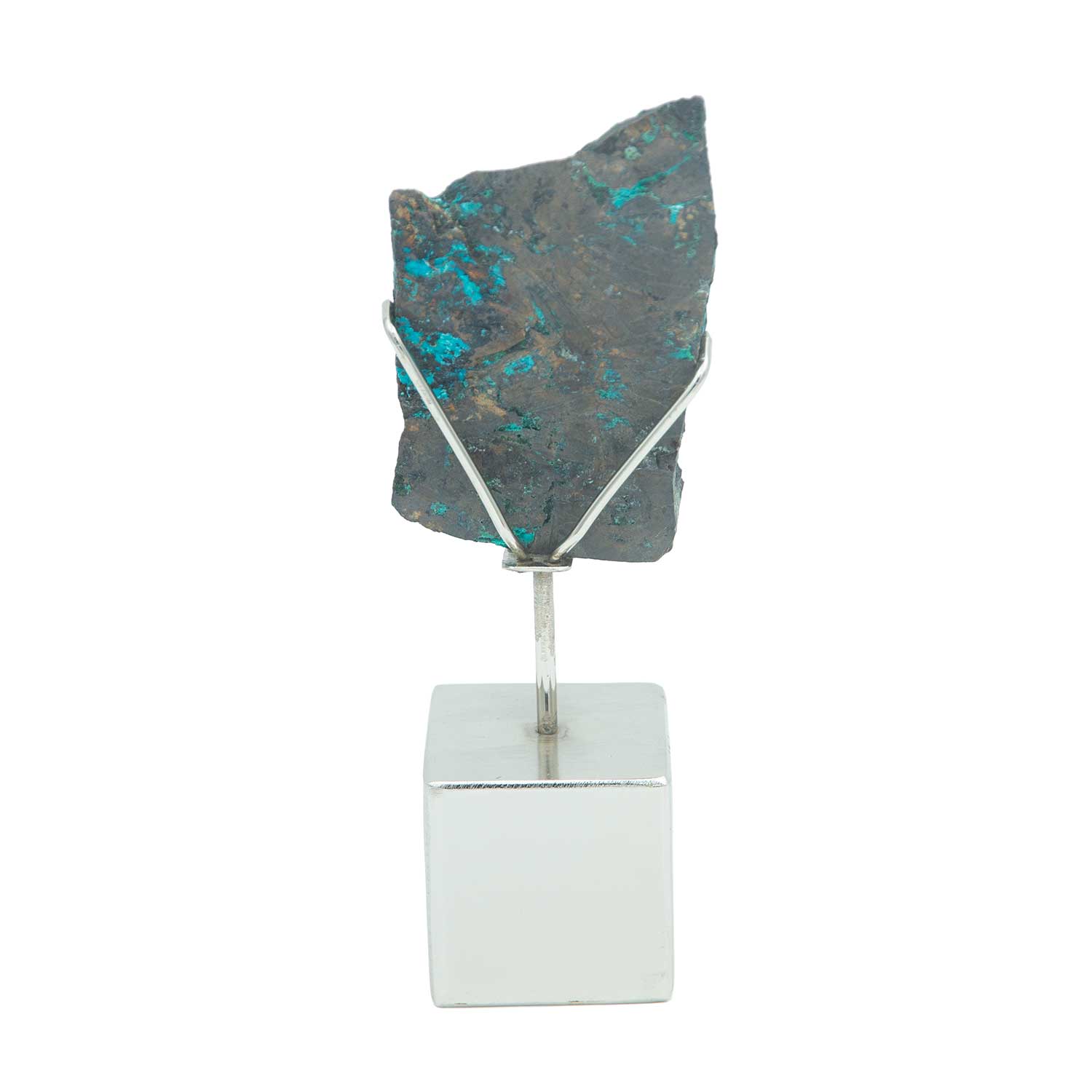
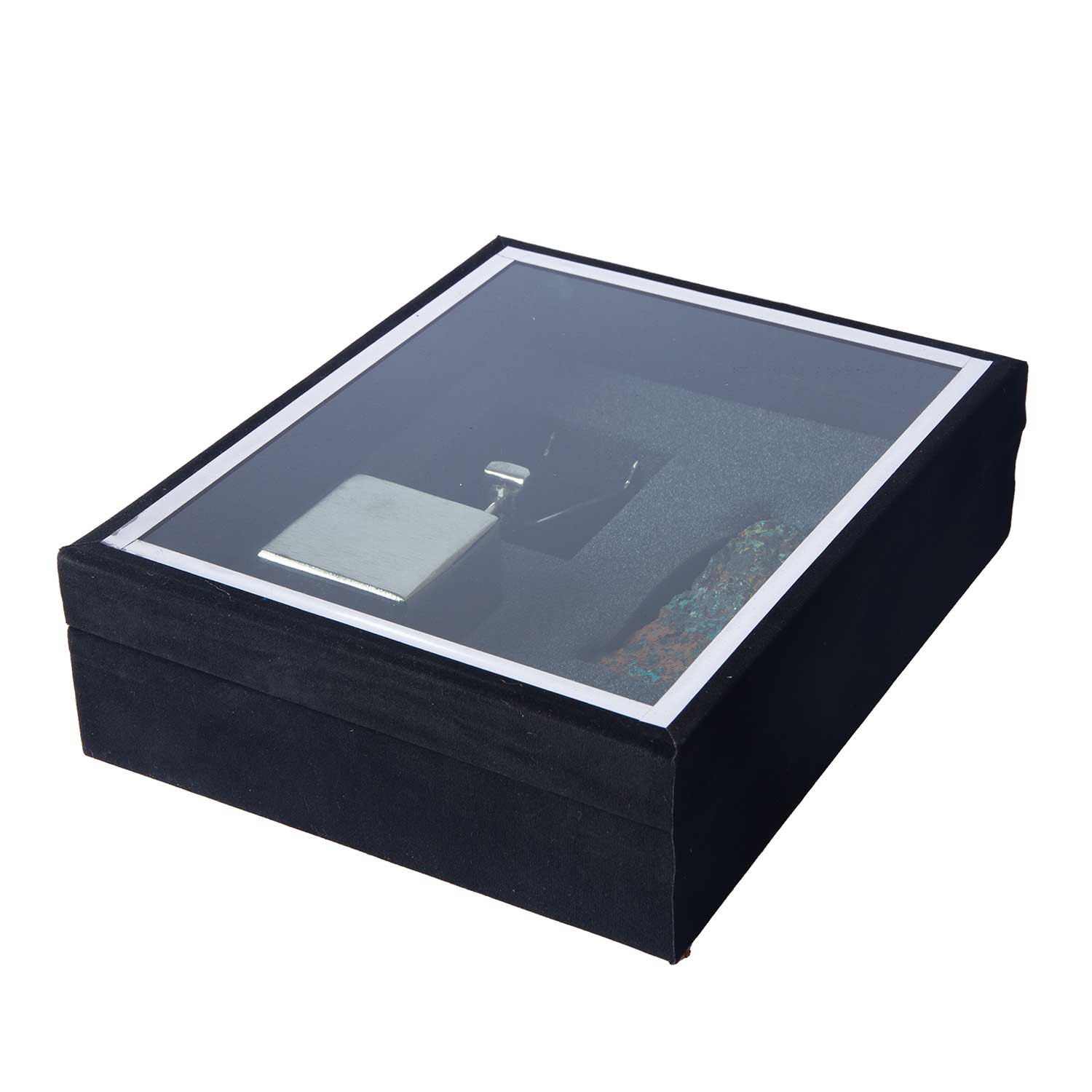
Nishapur Turquoise Stone with Black Veins
Turquoise is found all over the world and its history as a spiritual stone dates back 7,500 years. Persian turquoise is among the best in the world, and the mines of Persian are counted among the first sources of this gem. The finest of all is widely considered to be Neyshabur (Nishapur) turquoise.
This Nishapur turquoise stone, black vein Code N68, pairs a light colour and unique cut with strikingly beautiful black veins that multiply the beauty of the original stone.
Persian Turquoise Stone Detail:
- Weight: 200 gr
- Dimensions: 12 x 5
- Basic dimensions: 6 x 6
- Basic material: Iron with chrome plating
- Base height: 16cm
- Base weight: 250 gr
- Stone material: Neyshabouri turquoise
- Suitable for: decorative
- Type of lathe: Rough
Turquoise Stone Benefits:
Traditionally treasured as a soothing, calming stone for the nerves, turquoise is also associated with supporting the immune system, clearing the mind during meditation and easing feelings of depression and fatigue.
The Mines of Neyshabur Turquoise
The journey of Persian turquoise begins in the heart of Persian’s mountainous regions, particularly around Nishapur, 225 miles east of the southern tip of the Caspian Sea. These mines, positioned along historic caravan routes, have supplied this prized gemstone for centuries, and the vibrant variety of hues found in their stones testifies to the geological richness of the area.
In Persian, turquoise is traditionally categorised into three main types: Angoshtri, the finest ring stones; Barkhane, of medium quality; and Arabic, covering stones that are pale, green or carry spots of matrix. This classification underscores the varied nature of Persian turquoise in jewellery making, and a turquoise with black veins like this one shows how the matrix itself can become the beauty.
A Gem of Prestige
Neyshabur turquoise has long been a symbol of prestige. In the 17th century it was a mark of sophistication for English gentlemen to wear turquoise jewellery, and Napoleon I replaced the emeralds in Marie-Louise’s crown with Persian turquoise cabochons. In the 1970s a high-quality piece measuring 15 x 20 mm could command as much as $2,000, a testament to its enduring desirability. Today it pairs naturally with our Persian turquoise jewellery, or stands alone on its chrome base as a collector’s display piece.