


Amu Nowruz: Persian New Year’s Grandfather Figure
- Persis Collection
- 31 January 2024
- Nowruz
- 4 minutes
Amu Nowruz is the elderly, white-bearded figure who appears in Persian folklore at the turning of the year, said to walk the length of Persian to announce that Nowruz, the Persian New Year, has arrived. His name simply means “Uncle Nowruz”, and for generations of Persian children he has filled a role similar to a herald of spring rather than a gift-giver in the Western sense. Understanding who he is, and how he differs from figures such as Hajji Firuz and Baba Noel, helps explain why Nowruz customs feel so distinct from other new year or midwinter celebrations.
Who Is Amu Nowruz?
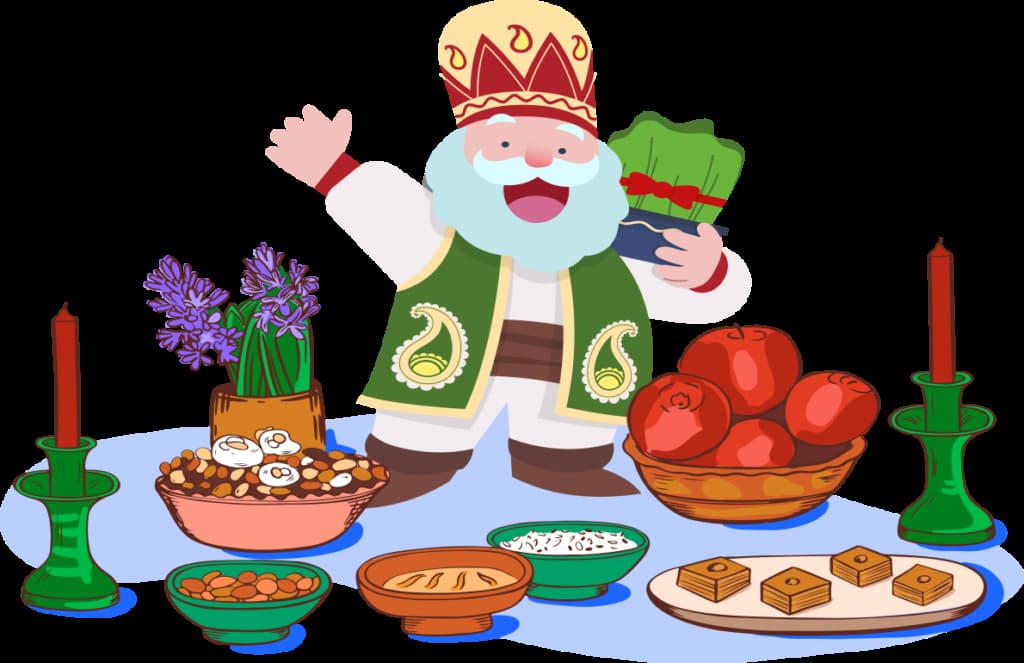
In Persian folklore and popular culture, Amu Nowruz is pictured as an old man with a long white beard, dressed in a traditional felt hat known as a kolah namadi and a simple woollen coat, carrying a wooden walking stick. He is said to travel from village to village as winter ends, and wherever he steps, the snow is supposed to melt and the first spring flowers begin to open. He is often shown alongside a young boy, sometimes called Nowruz Khan, who represents the new year itself arriving to take over from the old one. The image of an ageing figure making way for a young companion mirrors the wider idea at the heart of Nowruz: the old year quietly stepping aside so a new one can begin.
Amu Nowruz became widely known through Persian television and puppet shows broadcast around the Nowruz holidays from the mid-twentieth century onward, which is why many Iranians associate him with childhood memories of watching New Year programmes with their families rather than with a single ancient text. His imagery still draws on older ideas from Persian storytelling about the passing of winter, ideas many people trace back to Zoroastrian beliefs about the renewal of the natural world at the spring equinox.
His Role in Nowruz Traditions
Amu Nowruz does not deliver presents down a chimney or leave gifts under a tree. His role is symbolic rather than transactional. He represents the arrival of spring itself, the moment the Persian calendar turns over at the exact astronomical point of the vernal equinox, known as tahvil. Families sometimes gather around the television or radio in the final minutes before tahvil to hear it announced, and Amu Nowruz has become the folk face of that moment. Children are told that he walks across the country as the old year ends, so that by the time families sit at their Haft Seen table for the countdown, he has already passed through, leaving spring behind him.
Because his function is about marking a moment rather than rewarding good behaviour, Amu Nowruz carries none of the naughty-or-nice bookkeeping associated with some other seasonal folk figures. He is a constant presence, arriving at the same astronomical moment every year regardless of the weather, since Nowruz falls on the equinox itself rather than on a fixed calendar date.
Amu Nowruz and Hajji Firuz: Two Different Figures
Amu Nowruz is often confused with Hajji Firuz, but the two are not the same character and they do not appear at the same moment. Hajji Firuz is the figure who appears in the weeks before Nowruz, not at the turn of the year itself. He is traditionally shown with his face and hands blackened, wearing bright red clothing, and he sings, dances and plays a tambourine or small drum in the streets and bazaars to announce that Nowruz is on its way. Some historians connect him to older Mesopotamian and Zoroastrian fire-keeping figures, since blackened skin was historically linked to soot from tending fires, a role once associated with rebirth and renewal.
Put simply, Hajji Firuz is the excitable town crier who tells everyone Nowruz is coming, while Amu Nowruz is the quieter figure who marks the actual moment it arrives. One builds anticipation in the run-up to the new year, and the other represents the changeover itself.
How Amu Nowruz Differs from Baba Noel
Baba Noel is the Persian term for Father Christmas, used mainly among Persian Christians and in the context of Christmas celebrations rather than Nowruz. The two figures are sometimes lumped together by outsiders because both are elderly men associated with a winter or early-year celebration, but their roles could hardly be more different. Baba Noel belongs to a fixed date on the Gregorian calendar and arrives at night with sacks of presents for a specifically Christian holiday. Amu Nowruz belongs to the solar Hijri calendar, arrives at the precise minute of the equinox, carries no gifts, and is tied to a celebration observed by Zoroastrians, Muslims, Christians, Jews, Baha’is and secular Iranians alike across Persian, Afghanistan, Tajikistan and the wider Persian-speaking world.
Amu Nowruz in Homes and Celebrations Today
Today, Amu Nowruz appears mainly in children’s television specials, school plays and family storytelling rather than as a ritual object on the Haft Seen table itself. Some families use dolls or figurines representing Amu Nowruz and his young companion as seasonal decoration, placed near the Haft Seen spread rather than counted among its seven required items. His real presence is felt in the stories told to children about why the old year gives way to the new one.
Frequently Asked Questions
Is Amu Nowruz based on a real historical person?
No. He is a folkloric character rather than a historical figure, built from older Persian storytelling traditions about winter ending and spring returning, and popularised through twentieth-century Persian television and puppet shows.
Does Amu Nowruz give presents like Father Christmas?
No. His role is symbolic. He represents the moment the year turns over at the spring equinox rather than acting as a gift-giver, which is one of the clearest differences between him and Baba Noel.
What is the difference between Amu Nowruz and Hajji Firuz?
Hajji Firuz appears in the days and weeks before Nowruz with a blackened face and red clothing, singing and drumming to announce the new year is coming. Amu Nowruz represents the actual moment of change at the equinox itself, so the two figures appear at different points in the lead-up to and arrival of the new year.
Why is Amu Nowruz shown as an old man?
He embodies the outgoing year, ageing and stepping aside as the new year, sometimes shown as a young boy at his side, takes over. The pairing of old age and youth reflects the cyclical idea at the centre of Nowruz.
Is Amu Nowruz part of the Haft Seen table?
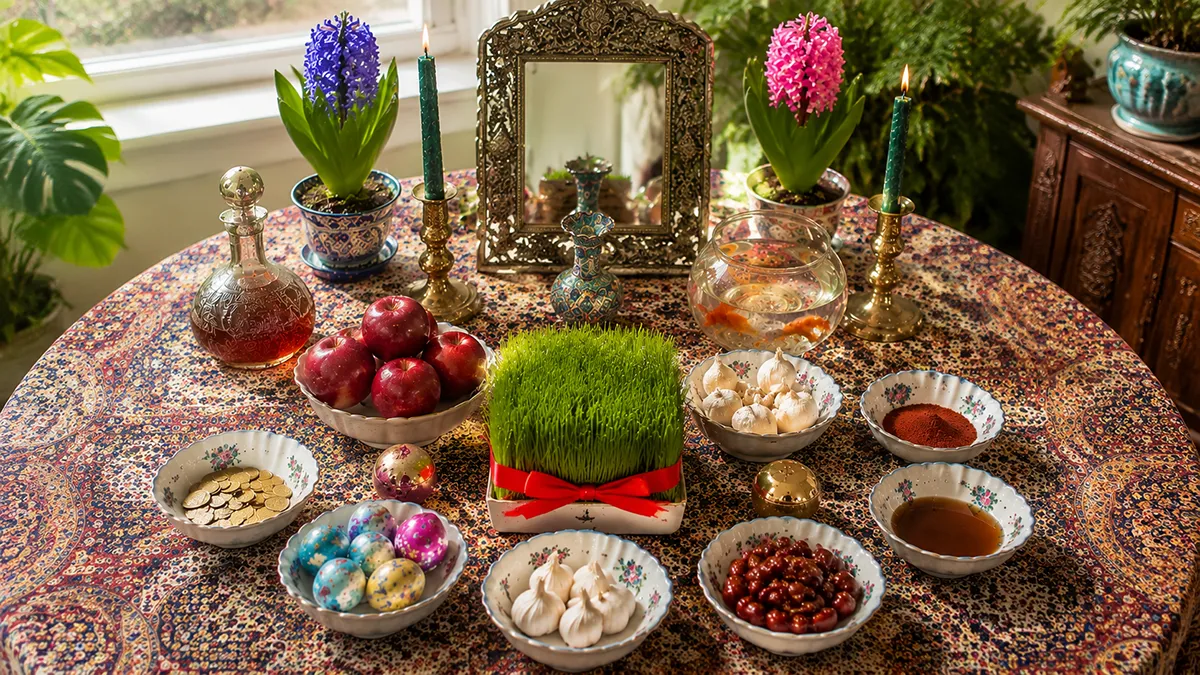
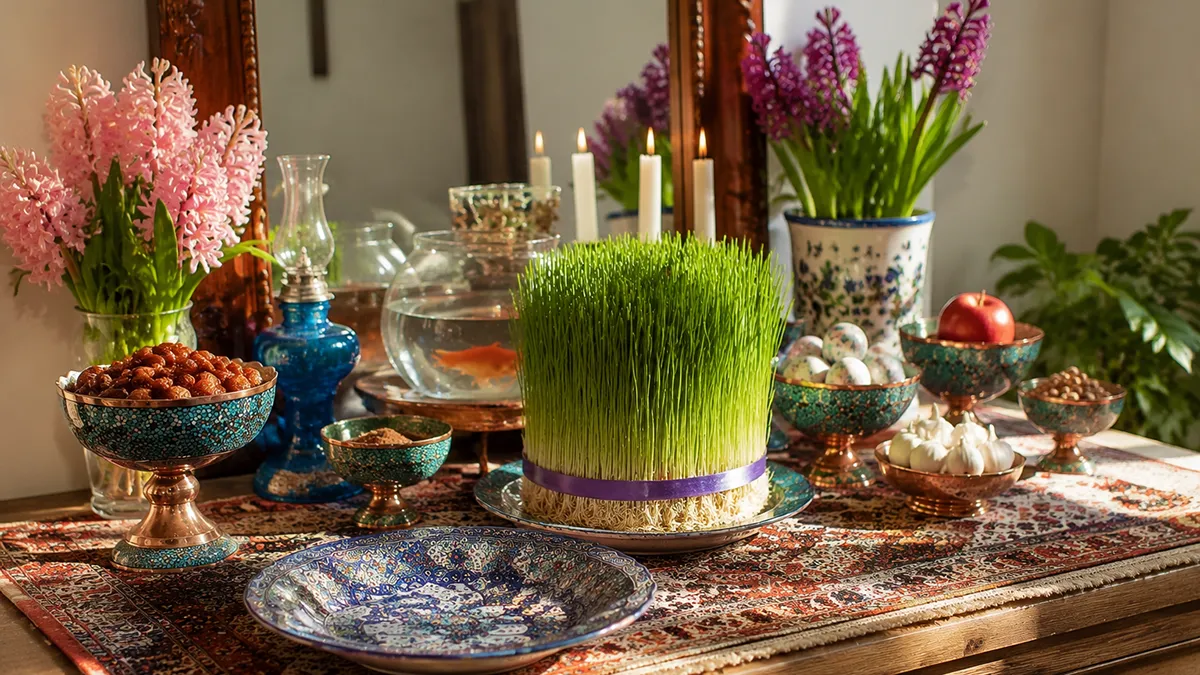
Not traditionally. The Haft Seen table follows its own set of seven symbolic items. Amu Nowruz is a separate folkloric figure who sometimes appears as extra seasonal decoration near the table rather than as one of its required elements.
Comments