


Ceramic Art


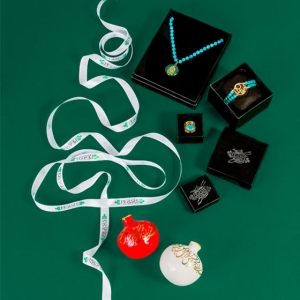


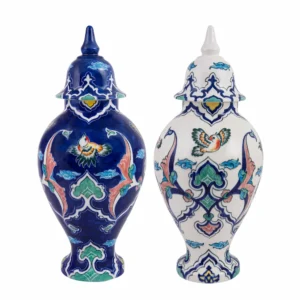
Hand Painted Persian Ceramic Ginger Jar
£100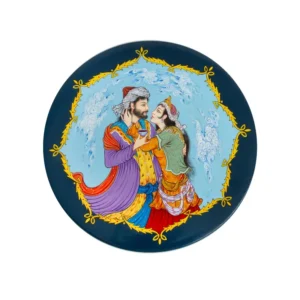
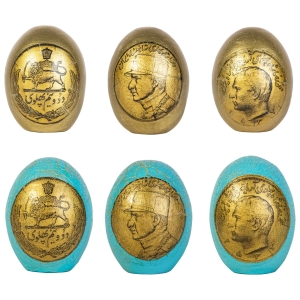
Kingdom Nowruz Eggs
Price range: £7 through £10Select options This product has multiple variants. The options may be chosen on the product page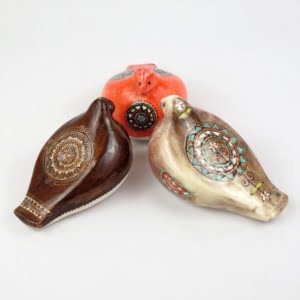
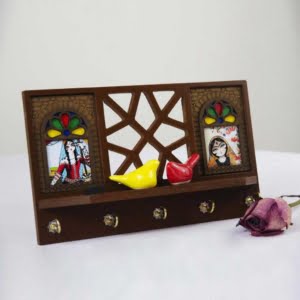
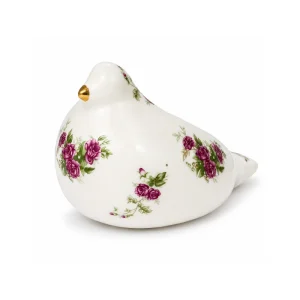
Hand Painted Ceramic Birds
£42Select options This product has multiple variants. The options may be chosen on the product page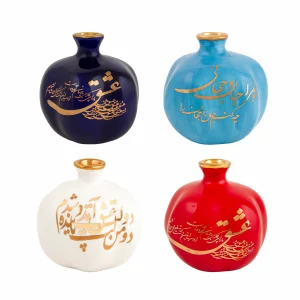
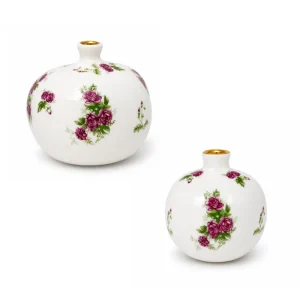
Persian Elegance Love Ceramic Pomegranate
£25Select options This product has multiple variants. The options may be chosen on the product page

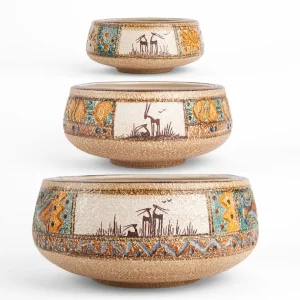
Persian Hemedan Handmade Ceramic Bowl
Price range: £30 through £45Select options This product has multiple variants. The options may be chosen on the product page
Persian Kilim Serving Plates – Elegant Ceramic Serveware Set
Price range: £28 through £39Select options This product has multiple variants. The options may be chosen on the product page

Gol o Morgh Design Handmade Ceramic Plate Set of 4
Price range: £24 through £38Select options This product has multiple variants. The options may be chosen on the product page
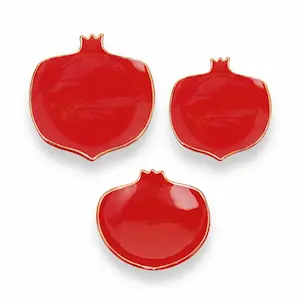
Ceramic Pomegranate
Price range: £20 through £22Select options This product has multiple variants. The options may be chosen on the product pageAbout Persian ceramic art
Introduction to Persian Ceramic Art
Persian Ceramic Art is an inorganic non-metallic solid composed of metallic or non-metallic compounds. Artisans form it by heating at high temperatures and then hardening the material. In general, Persian Ceramic Art is a hard, brittle, and corrosion-resistant material. Common examples include pottery, china, and brick.
Crystallinity and Composition
The crystallinity range of Persian Ceramic Art materials varies from fully oriented to quasi-crystalline, glassy, and sometimes even completely molded (e.g., glass). In most cases, baked ceramics are glass or semi-glass, as is the case with pottery, heavy utensils, and porcelain. The variability of crystallization and electron composition in ionic and covalent bonds makes most ceramic materials good thermal and electrical insulators. Extensive research in ceramic engineering has explored this phenomenon.
Properties of Ceramics
With such a wide range of possible options for the composition or structure of a ceramic (e.g., almost all elements, almost all types of bonds, and all levels of crystallization), the subject range of ceramics is very broad. Identifiable characteristics such as hardness, stiffness, and electrical conductivity are difficult to generalize for the entire group.
Ceramics generally have properties such as high melting temperature, high hardness, poor conductivity, high modulus of elasticity, high chemical resistance, and low ductility. However, there are exceptions, such as piezoelectric ceramics, glass transition temperature, superconducting Persian Ceramic Art, and others. Many composites, such as fiberglass and carbon fiber, although containing ceramics, are not considered part of the ceramic family.
History of Persian Ceramic Art
Early artisans created the first artificial ceramics, including pottery (such as vases or utensils) and sculptures made of clay. They fired and hardened these ceramics in a fire, either by themselves or mixed with materials such as silica.
Later, Persian ceramic artists glazed and baked the ceramics to create smooth, colored surfaces and reduce porosity. They achieved this by using glass and amorphous ceramic coatings on crystalline ceramic art substrates.
Ceramics today include household, industrial, and construction products, as well as There, is a wide range of Ceramic Wall Art arts. In the twentieth century, new ceramic materials were developed for use in advanced ceramic engineering, such as semiconductors.
The word “ceramic” comes from the Greek word κεραμικός (Keramik’s), meaning “pottery” or “for pottery”, [5] and it comes from κέραμος (keramos), meaning “potter, Persian tiles, pottery”. The Greek word ‘ke-ra-me-we,’ meaning ‘ceramic workers,’ originated the word ‘ceramic.’ It uses the syllable line ‘b.’ People use ‘ceramic’ as an adjective to describe a substance, product, or process, or as a noun, both singular and plural.