


Qajari Coffee: Persian Coffee Culture and the History of Coffee in Iran
- maryam jafary
- 13 December 2025
- Persian
- 3 minutes
When Persian Coffee Meant Power, Poetry, and Fate
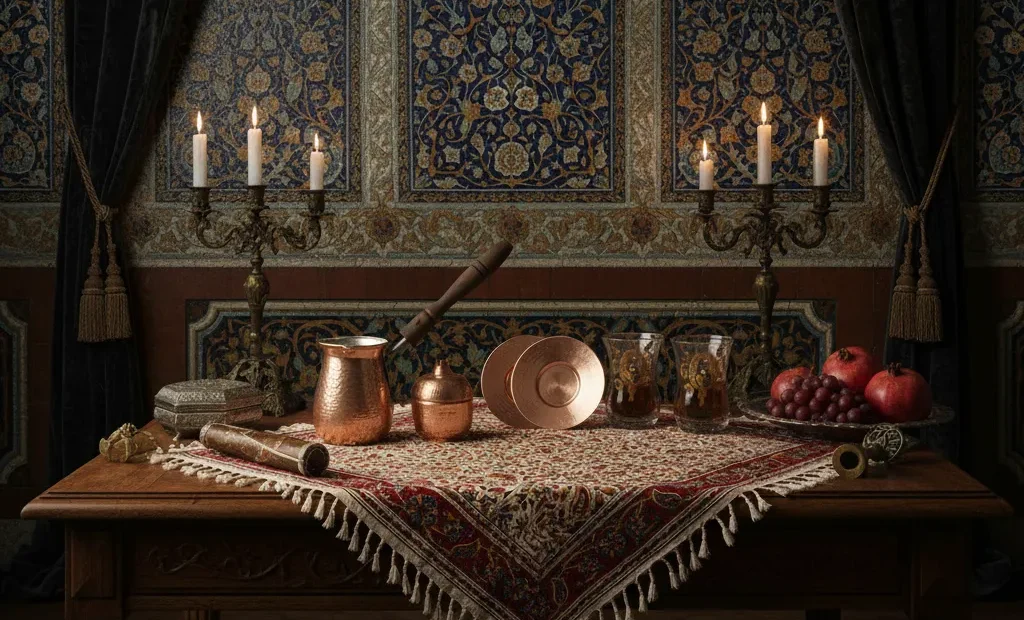
In Persian, coffee never lived a simple life. Long before cafés became places of leisure, Persian coffee occupied a far more complex role—one shaped by ceremony, silence, and symbolism. Within Persian coffee culture, a cup of coffee could welcome a guest, inspire a poet, stir political thought, or quietly announce the end of a life.
This layered history reached its most intense expression during the Qajar dynasty, when coffee rituals extended far beyond taste and hospitality. To understand why coffee still carries such weight in Persian memory, one must step into that era—into its coffeehouses, royal courts, and unspoken customs.
The History of Coffee in Persian – From Trade Routes to Cultural Identity
The Arrival of Coffee in Persian
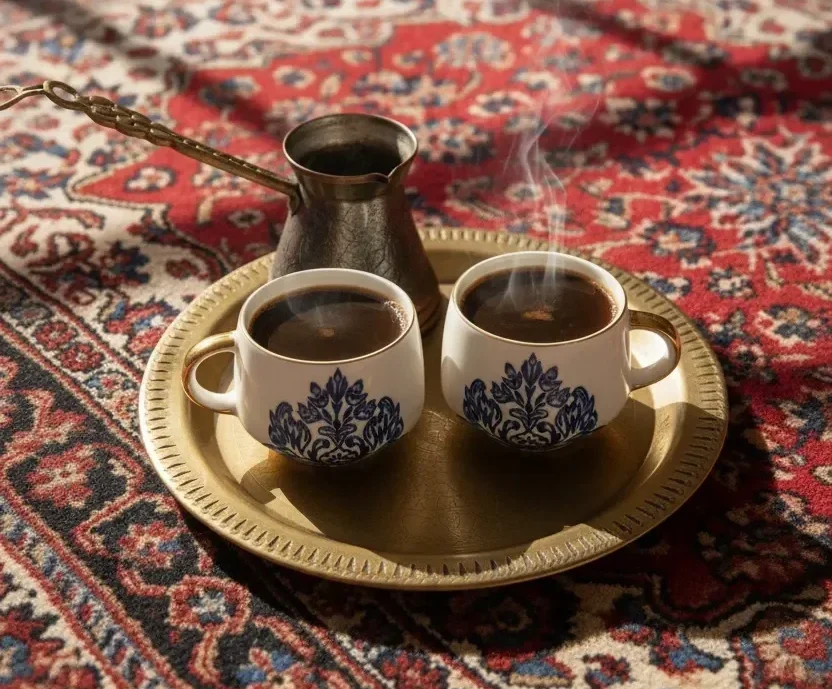
The history of coffee in Persian begins through southern ports such as Bushehr and Bandar Abbas. Coffee traveled from Yemen, Abyssinia, and Ottoman lands via Arab and Persian merchants. This early Persian black coffee history favored dark roasting and bitterness, setting it apart from European coffee traditions.
Persian Coffee Traditions and Bitter Taste
Unlike sweetened Ottoman styles, Persian coffee traditions emphasized bitterness. This preference shaped enduring bitter coffee traditions in Persian, reflecting philosophical ideas of endurance, realism, and restraint.
Persian Coffeehouses History
Coffeehouses quickly became central to urban life. In the history of Persian coffeehouses, these spaces served as hubs for news, art, and political awareness—long before modern media existed.
Persian Storytelling in Coffeehouses
Through Persian storytelling in coffeehouses, epic tales from the Shahnameh were passed down orally. Coffee fueled memory, performance, and collective identity.
Ottoman vs Persian Coffee
The contrast between Ottoman and Persian coffee reveals bigger cultural differences. Ottoman coffee symbolized leisure and hospitality, while Persian coffee carried symbolic weight, moral seriousness, and social consequence.
Coffee in the Qajar Era – Power, Ceremony, and Politics
By the time of the Qajar dynasty, coffee had moved firmly into the realm of power. Coffee in the Qajar era was governed by strict etiquette, especially within the royal court. Serving coffee was not a casual task; it was a formal act layered with meaning.
The Qahvehchi-bashi, the royal coffee server, held a position of remarkable sensitivity. In the long record of royal coffee servers’ history, few roles demanded such absolute discretion. A single cup, prepared incorrectly—or intentionally altered—could change destinies.
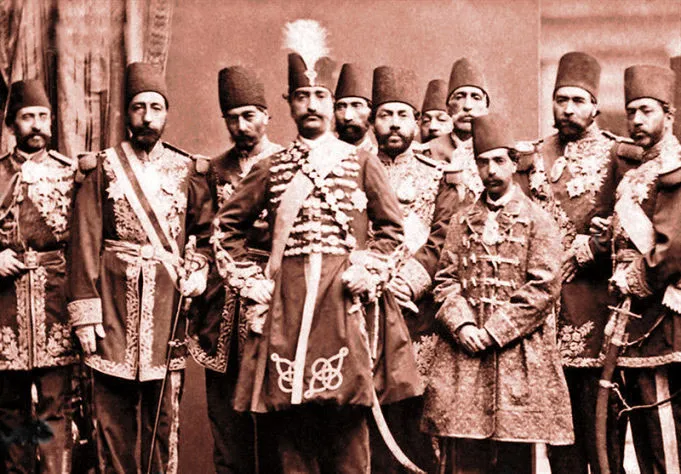
Across civilizations, rulers have used food and drink symbolically, but the political uses of coffee in history reached a particularly refined and chilling form in Qajar Persian. Coffee became a language of power. Without trials, without proclamations, decisions could be communicated through ritual alone.
This is where coffee as a political tool reveals its darkest form. In some cases, what appeared to be a gesture of respect concealed final judgment. The legends of Qajari coffee poison are not merely folklore; they are referenced in memoirs and historical accounts that describe how poison could be dissolved into thick, unsweetened coffee—silent, efficient, and deniable.
Thus emerged the dark coffee history of Persian, where ceremony and elimination occupied the same space, and hospitality masked authority.
Death, Ritual, and the Symbolic Meaning of Qajari coffee
Perhaps no aspect of Persian coffee history is as haunting as its association with death. To be offered coffee before execution in Persian was not an act of kindness. It was acknowledgment—a final ritual before fate was sealed.
These practices formed a unique set of coffee and death rituals, especially within elite circles. The cup served in silence carried more meaning than any spoken sentence. In the context of death and coffee in royal courts, dignity and destruction were inseparable.
Over time, these practices embedded a lasting symbolism into the drink itself. The symbolic meaning of coffee in Persian history rests in its bitterness: acceptance without illusion, truth without adornment. This is why bitter coffee traditions in Persian endured long after the Qajar dynasty faded.
While Persian shares roots with broader Middle Eastern coffee customs, its relationship with coffee remains distinct—more philosophical, more political, and more reflective.
Conclusion
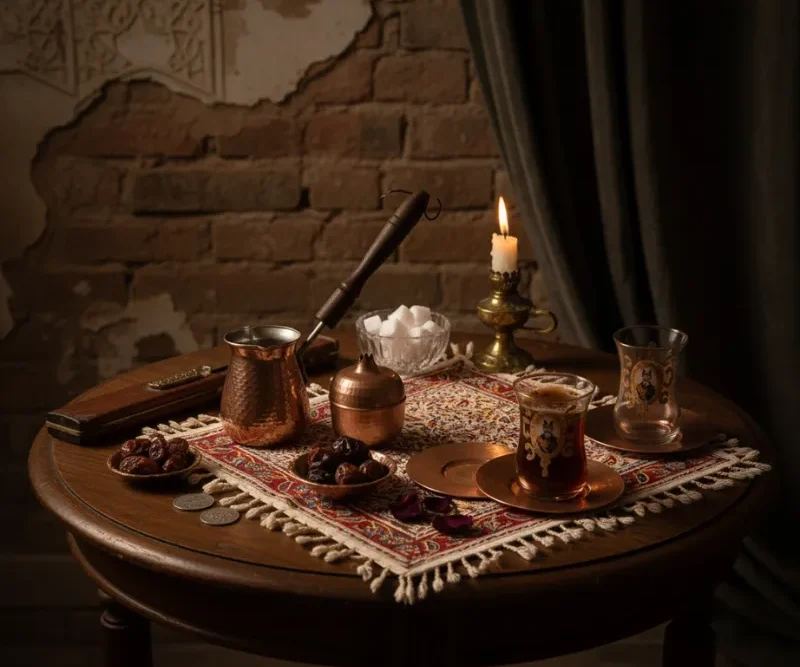
Today, Qajari-style coffee survives not as a threat, but as a memory. Occasionally revived in cultural spaces, it stands as a reminder of how something as small as a cup once carried the weight of destiny. These traditions live on not only in texts and recollections, but also in objects—cups, trays, and coffee sets that echo the rituals of the past.
At Persis Collection, this heritage is preserved through carefully curated Persian coffee sets, inspired by historical forms and traditional aesthetics. These sets are not replicas of fear, but expressions of culture—designed for those who wish to experience Persian coffee as it was once understood: deliberate, ceremonial, and meaningful. Through guaranteed worldwide delivery, Persis Collection makes it possible to bring a piece of this history into contemporary life, where coffee is once again about reflection rather than fate.

Comments