


The Lion and Sun Flag History: A Symbol of Iranian Identity
- maryam jafary
- 22 February 2026
- Persian
- 3 minutes
The Ancient Background of the Lion and Sun in Persian Culture and Worldview
The Sun: A Symbol of Sovereignty and Celestial Glory in Ancient Persian
In ancient Persian culture, people did not view the sun as merely a natural phenomenon; they recognized it as a powerful symbol of cosmic order and royal legitimacy. In narratives about the Kayanian dynasty, historians and epic traditions describe how the rulers deliberately chose a golden sun as their royal emblem to express their divine mandate. This choice reflected the belief that the king was the earthly representative of divine and celestial order.
Classical historical sources also refer to this association. Greek historians wrote that the image of the sun was emblazoned on the royal tent of Darius III. During the Parthian period, the sun symbol appeared on banners, and in the Sasanian era, a red orb—interpreted as the sun—was present in royal insignia. Even in political correspondence, the King of Persian was addressed as the “Sun of the East,” while the Roman Emperor was called the “Moon of the West.” These expressions demonstrate that the sun functioned as an official metaphor for the Persian monarch.
Epic literature also reflects this symbolic contrast. Persian narratives describe Afrasiab, the king of Turan, as the “Moon of Turan,” while portraying the Persian ruler as the “Sun of the Iranians,” destined to prevail. In this worldview, Iranians understood the sun as a symbol of strength, superiority, and centrality. Artists and storytellers sometimes even depicted the sun with a human face, emphasizing the intimate connection between kingship and cosmic order.
The Earliest Manifestations of the Lion and Sun Together
Long before becoming Persian’s national emblem, the combination of the lion and the sun had a broader presence across the ancient Near East. In Neo-Hittite art (first millennium BCE), imagery depicts the sun and moon deities standing upon a lion. This composition suggests that the association between earthly power (the lion) and celestial splendor (the sun) had deep roots in the region’s symbolic tradition.
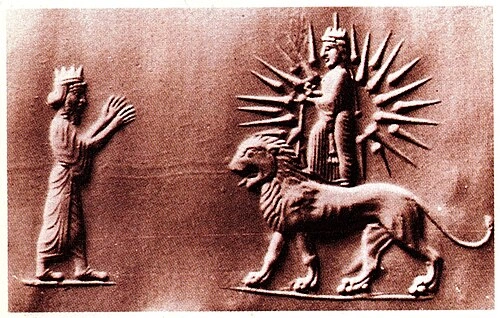
In Persian, the earliest known simultaneous appearance of these two elements dates back to a seal from the reign of Artaxerxes II of the Achaemenid dynasty in the 4th century BCE. In this depiction, the goddess Anahita stands upon a lion against a solar background. This artifact indicates that the concept of dual legitimacy—celestial sanction and earthly authority—was already present in Persian culture at that time.
Within this framework, the lion symbolized bravery, power, and kingship, while the sun represented light, glory, and cosmic order. Their combination formed a comprehensive image of ideal rulership.
The Evolution of the Lion and Sun and the Changing Course of the Persian Flag
From Mythical Standards to Consolidation in the Safavid Era
Long before the lion and sun appeared on the Persian flag, the concept of a banner held deep historical roots in Persian. Epic sources mention the “Derafsh-e Kaviani,” which became a symbol of imperial authority during the Sasanian period. Although its exact appearance remains uncertain, its importance in establishing the banner as a symbol of political identity is clear.
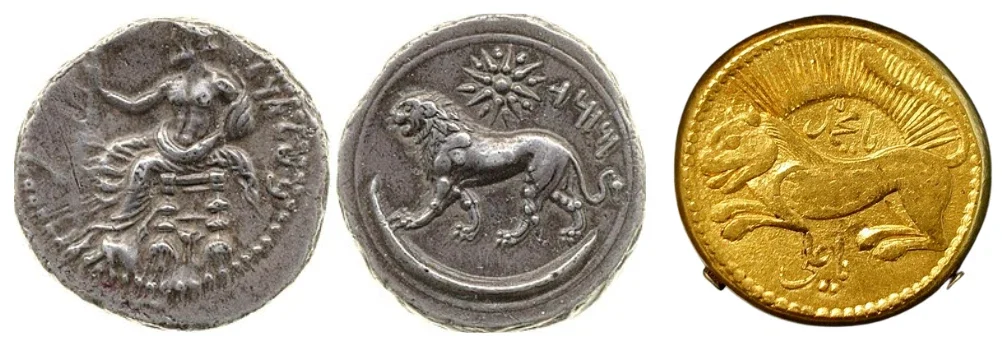
By the 12th century, the lion and sun motif appeared on Seljuk coins. In the 15th century, a 1423 manuscript of the Shahnameh depicts the emblem on a banner. With the establishment of the Safavid state in the 16th century, the consolidation of this symbol accelerated. Initially, a sheep and sun appeared on Safavid standards, but shortly thereafter, the lion replaced the sheep. From the reign of Shah Abbas I onward, the lion and sun became a stable feature of the Persian flag.
The National Tricolor and Modern Transformations
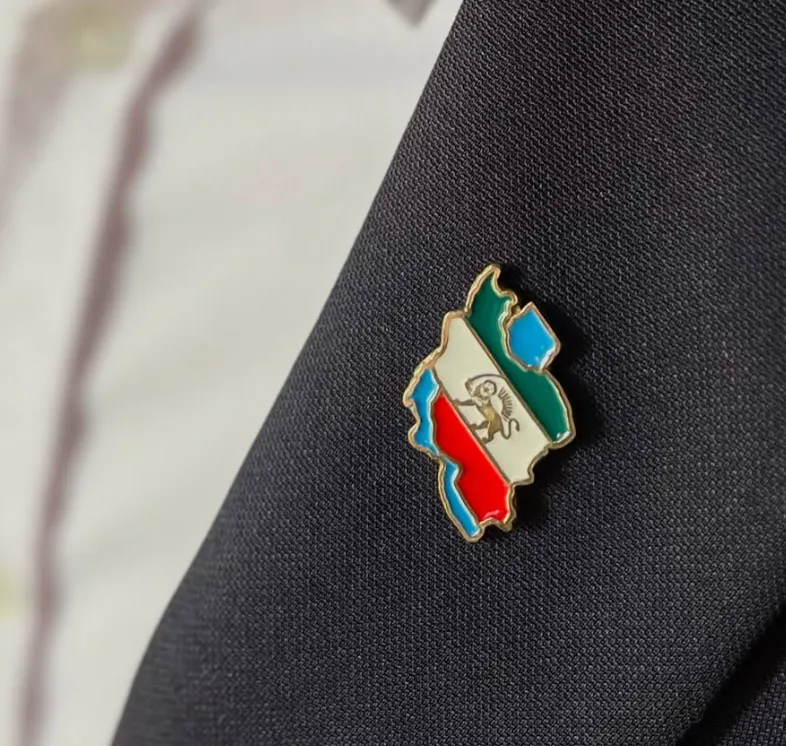
During the Zand period and especially under the Qajar dynasty, a sword was added to the lion’s paw, emphasizing military power. Around this time, the tricolor combination of green, white, and red was formalized, with the lion and sun placed at its center. This configuration continued until the end of the Qajar era.
During the Constitutional Revolution, the Persian flag received its first legal definition. The Supplement to the Constitution explicitly stated that “the official colors of the Persian flag are green, white, and red, with the emblem of the lion and sun.” This act formally and legally established the emblem’s status.
During the Pahlavi period, the government standardized and refined the flag’s design while preserving its overall structure. After the 1979 Revolution, the new political leadership removed the Lion and Sun emblem and introduced the emblem of the Islamic Republic of Persian in its place. This transformation marked a decisive shift in Persian’s political identity and visual symbolism.
Conclusion
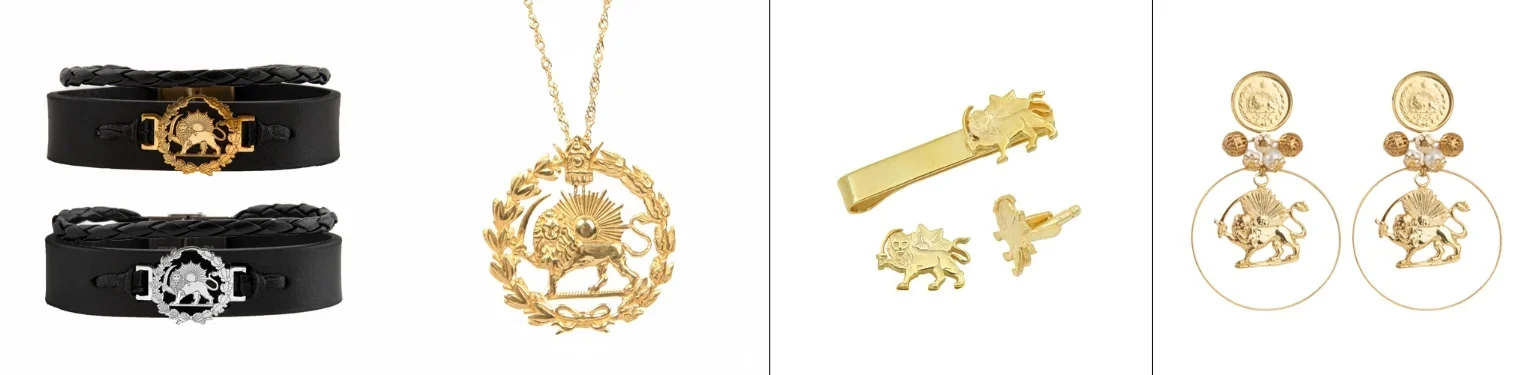
The lion and sun emblem is the product of centuries of cultural, political, and symbolic evolution. The sun represented celestial glory and the legitimacy of rulership, while the lion symbolized earthly power and bravery. Together, they embodied the harmony between heaven and earth—a concept that was reinterpreted many times throughout Persian history.

The evolution of the Persian flag likewise demonstrates how this emblem consistently reflected the historical and political conditions of each era. From mythical standards to the constitutional tricolor and modern transformations, Persian’s flag stands as a mirror of the nation’s evolving identity.

Comments