


Termeh Bags: How Persian Woven Fabric Becomes a Handbag
- tina atrg
- 26 June 2022
- Iranian Art
- 4 minutes
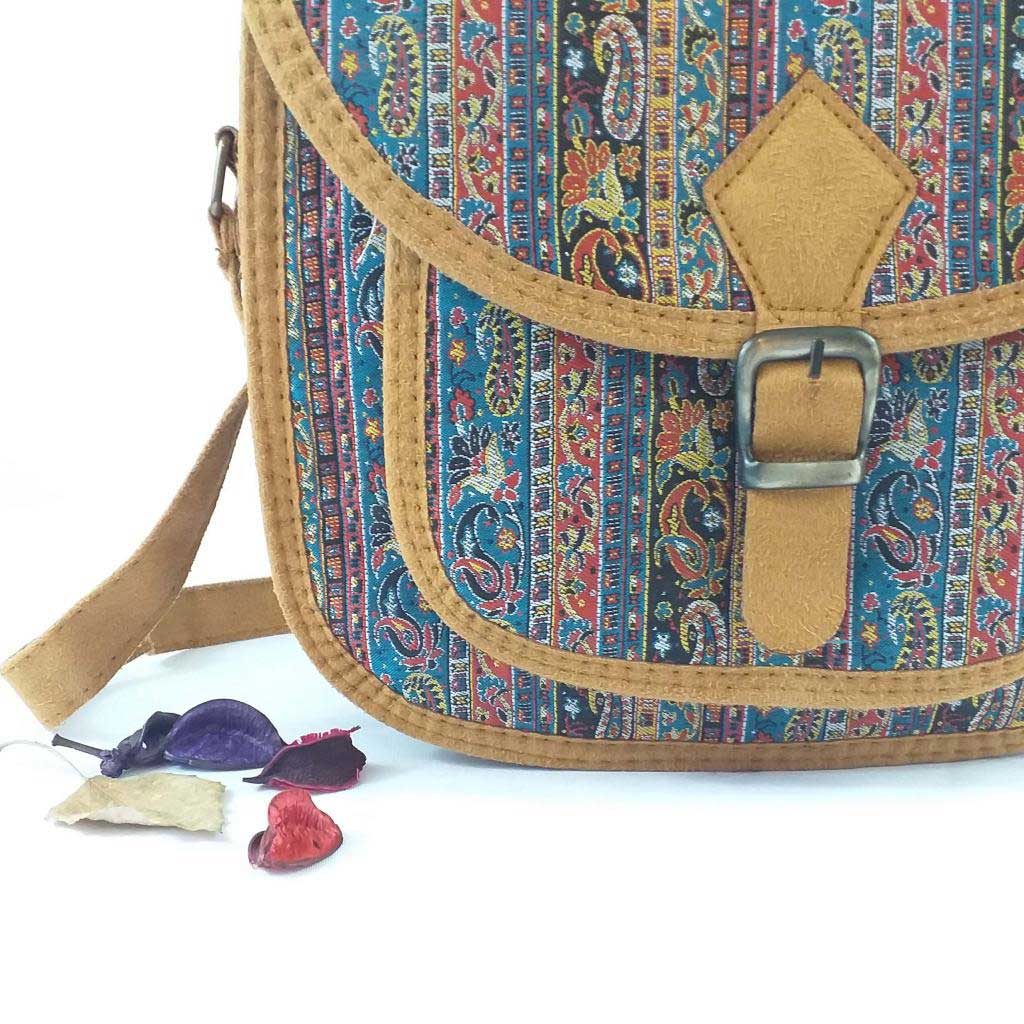
Termeh bags take one of Persian’s most labour-intensive woven fabrics and turn it into something people actually carry every day: handbags, clutches, drawstring pouches and small accessory cases. The fabric itself, hand-woven from wool and silk in workshops centred on Yazd, is normally seen as tablecloths, shawls or ceremonial cloths, so turning it into a bag means solving a different problem: how to give a soft, flat woven textile the structure and durability a bag needs without losing the pattern that makes it recognisable.
What Termeh Fabric Brings to a Bag
Termeh is woven on a hand loom using a base weft of silk or fine cotton and a supplementary weft of dyed wool, which is what creates the raised, almost embroidered look of the pattern. A skilled weaver builds the design thread by thread, working the coloured wool weft only where the pattern calls for it and leaving it floating on the reverse elsewhere, so the fabric carries weight and texture that machine-printed cloth doesn’t have. The classic boteh, the curved teardrop motif also known abroad as paisley, is the pattern most associated with Termeh, though weavers in Yazd also produce geometric borders, medallion layouts and floral repeats depending on the piece.
Because each metre takes a weaver days rather than hours, Termeh cloth is dense and comparatively heavy for its size. That density is useful for a bag: it holds its shape better than a light cotton print and resists sagging, though it also means a bag maker has to think carefully about where the fabric is used and how it’s reinforced.
From Fabric to Bag: How Termeh Is Tailored
Turning a length of Termeh into a finished bag is a separate craft from weaving it, closer to upholstery and leatherwork than to textile production. A pattern is cut first, usually positioned so a border or a central medallion falls in a specific place on the finished bag, such as centred on the front panel or running along the flap. Because Termeh doesn’t stretch and frays easily at a raw edge, every cut edge is either bound, folded under, or backed before it’s sewn, otherwise the wool weft threads start working loose within a few uses.
Most Termeh bags are not made from Termeh alone. The fabric is usually mounted onto a stiffer backing, sometimes a heavier cotton or canvas interlining, sometimes genuine or faux leather, which gives the bag structure and protects the woven surface from the wear a bag takes on its base and corners. Handles, zip tapes, clasps and the bag’s internal lining are added separately, often in leather or a plain fabric that doesn’t compete with the pattern. A well-made Termeh bag shows a clean, even seam where the woven panel meets its backing, with no loose threads visible at the edges, which is one of the easiest ways to tell a carefully finished piece from a rushed one.
Smaller items such as drawstring pouches and coin purses are simpler to construct and are often where new bag makers start, since a small rectangle of Termeh only needs a lining, a folded top edge and a cord to become a usable pouch.
Types of Termeh Bags and Accessories
The range runs from formal to everyday. Structured handbags with a rigid base and a clasp closure are the most common style sold as fashion accessories, built to be carried on the arm or by a top handle. Shoulder bags use the same panels but with a longer strap and a softer, less structured shape. At the smaller end, drawstring pouches and zippered cases are popular both as accessories in their own right, for holding jewellery or make-up, and as gift wrapping, since a small piece of patterned Termeh makes a far more memorable presentation than a paper gift bag.
Clutch bags are another common form, since a flat rectangular shape suits the way Termeh is woven and shows off a full pattern repeat without much piecing. Some makers combine a Termeh front panel with a plain leather back and base, which reduces cost and weight while still putting the woven pattern where it’s seen.
Termeh Bags as Gifts
A Termeh bag or pouch works well as a gift precisely because the fabric is unmistakably Persian and takes real time to produce. Small pouches are traditionally used to present jewellery, sweets or a modest sum of money at weddings and engagements, since wrapping a gift in Termeh is itself considered a mark of respect. For someone with a personal connection to Persian culture living abroad, a Termeh bag also works as a wearable link to that heritage rather than a purely decorative object left on a shelf.
Because the wool weft threads can loosen with rough handling, Termeh bags are best kept away from damp conditions and cleaned by spot treatment or dry cleaning rather than machine washing. Stored flat or gently stuffed rather than crushed, a well-made piece keeps its shape and colour for years.
Frequently Asked Questions
What is a Termeh bag made from?
A Termeh bag uses hand-woven Termeh fabric, made from a silk or fine cotton base weft with a supplementary wool weft, mounted onto a backing such as canvas or leather for structure.
Where is Termeh fabric traditionally made?
Yazd, in central Persian, is the city most associated with Termeh weaving, though the craft has historically also been practised in Persian Heritage.
Are Termeh bags durable enough for everyday use?
Yes, provided the fabric is properly backed and the edges finished. The woven cloth itself is dense and hard-wearing, but raw or unbacked edges can fray with heavy use.
How should I clean a Termeh bag?
Spot cleaning or dry cleaning is safest. Machine washing can loosen the supplementary wool weft and distort the pattern.
Why are Termeh pouches given as gifts?
Presenting a gift wrapped in Termeh, rather than in plain paper, is a traditional Persian gesture of respect, commonly seen at weddings and engagements where jewellery or money is given inside a small Termeh pouch.


Comments