


History of Iranian Calligraphy: Persian Art Styles & Masters
- tina atrg
- 14 June 2022
- Iranian Art
- 4 minutes
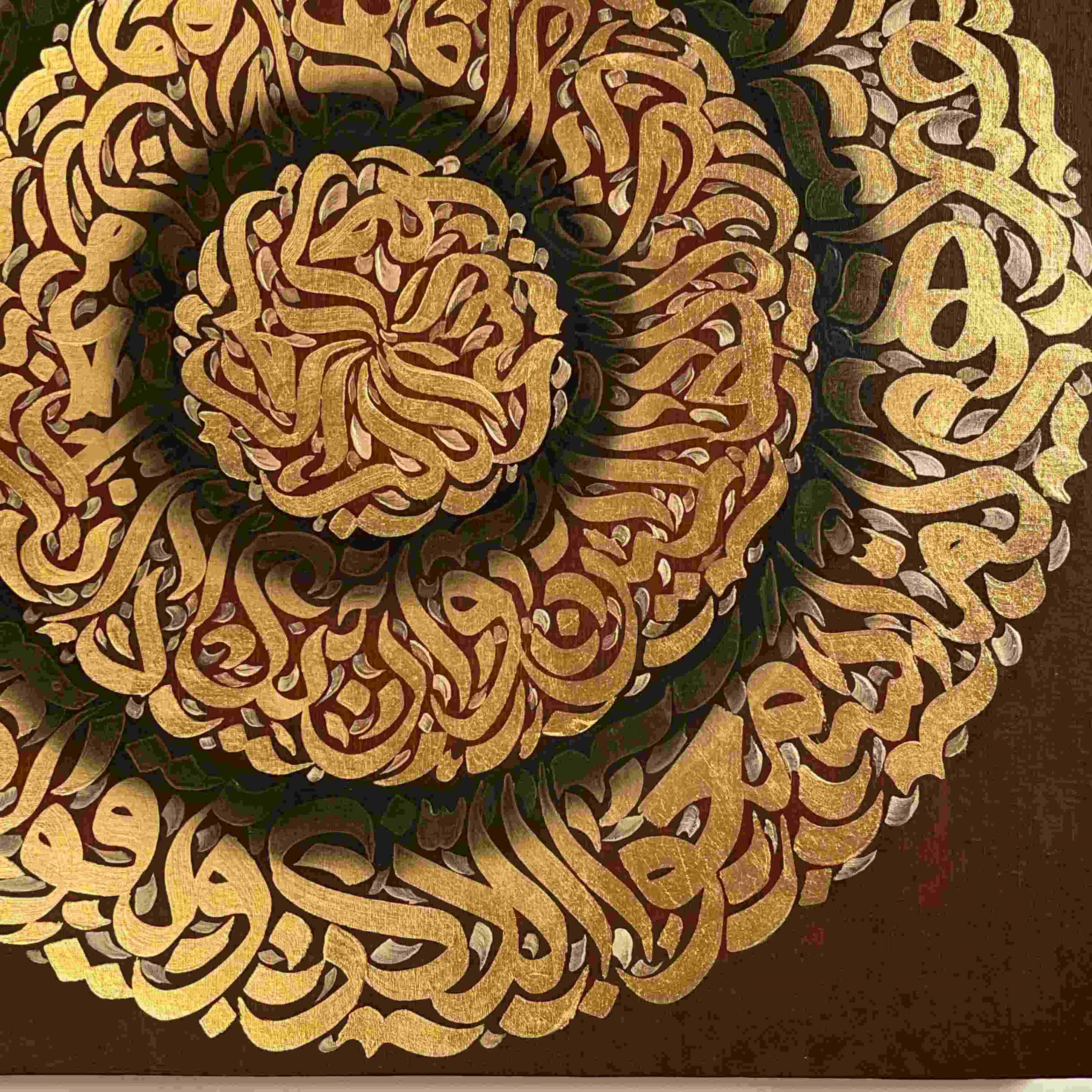
Persian calligraphy means calligraphy or writing along with creating beauty, and the person who does this process is called a calligrapher, especially when calligraphy is a person’s profession. Sometimes it is difficult to understand calligraphy as a Persian art. It seems that in order to understand and enjoy the visual experience of calligraphy, we must know that in addition to writing a text, the calligrapher has tried to create a work of traditional art with aesthetic values. Also, since this art has aspects of tradition at its heart, it must be distinguished to some extent from typography, which is based on modern graphic values and printed works. Calligraphy is found in almost all cultures, but in the Orient, and especially in Islamic lands and Persian, it is very important among the visual arts. Islamic calligraphy and moreover Persian calligraphy is a balance between all its components and elements.
Persian Calligraphy
The balance between being useful and consumable on the one hand and its dynamism and deformation on the other; the balance between form and content, which with all its elegance and softness can provide the right composition for different meanings.
If we consider that Islamic and Persian calligraphy is formed based on very specific forms, rules, and systems, and each of the letters of different pens has a special form system, and to a large extent, it is unchangeable. We then find out what an amazing invention and observance the creation of new pens or the personal methods of calligraphers arises.
In calligraphy, the size of each letter and its relation to other letters is determined with great precision, and each letter becomes a fixed “module”, the violation of which is ignoring a centuries-old agreement that is always between the calligrapher and the audience and with the consent of both parties.
Even the order of the words was determined on the basis of certain principles that were formulated and presented by the great masters in “calligraphy” and the “etiquette“. The placement of the words – “composition” – in each line, though not entirely predictable and tasked – which was impossible – but in the form of “desirable taste” had its own proposed aesthetic context.
Persian Calligraphy and Its Legacy in Islamic Art
Whilst most of the conversion of ordinary words into artistic calligraphy was done by Iranians, Iranians gradually developed their own styles and methods in calligraphy.
Although these innovative methods and pens are popular in other Islamic countries, they are mostly related to Persian and its influential countries such as Central Asia, Afghanistan, Pakistan and India. In this region, calligraphy has always been considered as the highest form of visual arts and has a special subtlety. In Persian after the Islamic conquest, calligraphy became an established art form. During the reign of the Ilkhanids, the religious pages of manuscripts were first decorated with decorative designs. During the reign of the Timurids in Persian, calligraphy and illumination reached their peak.
Mir Ali Tabrizi founded the Nastaliq script by combining the Naskh and Ta’liq scripts. The most famous calligrapher of the Qur’an in this period was Baysanghar Mirza. What are known as Persian calligraphy methods or pens are mostly invented and used to write non-religious texts such as poetry collections, fine art pieces, or for administrative correspondence. This is whilst the calligraphy was more religious and sacred for the Ottoman Arabs and Turks.
Although they also use more pens for secretarial and non-religious affairs, the peak of their art – unlike Persian calligraphers – can be seen in the production and copying and writing of the Qur’an and hadiths. In Persian, too, for religious matters such as writing the Qur’an or hadiths and narrations, as well as inscriptions in mosques and religious schools, the use of Persian calligraphy and manuscripts was more common, which is similar among the Arabs. However, the Iranians have also created their own distinct methods in these scripts.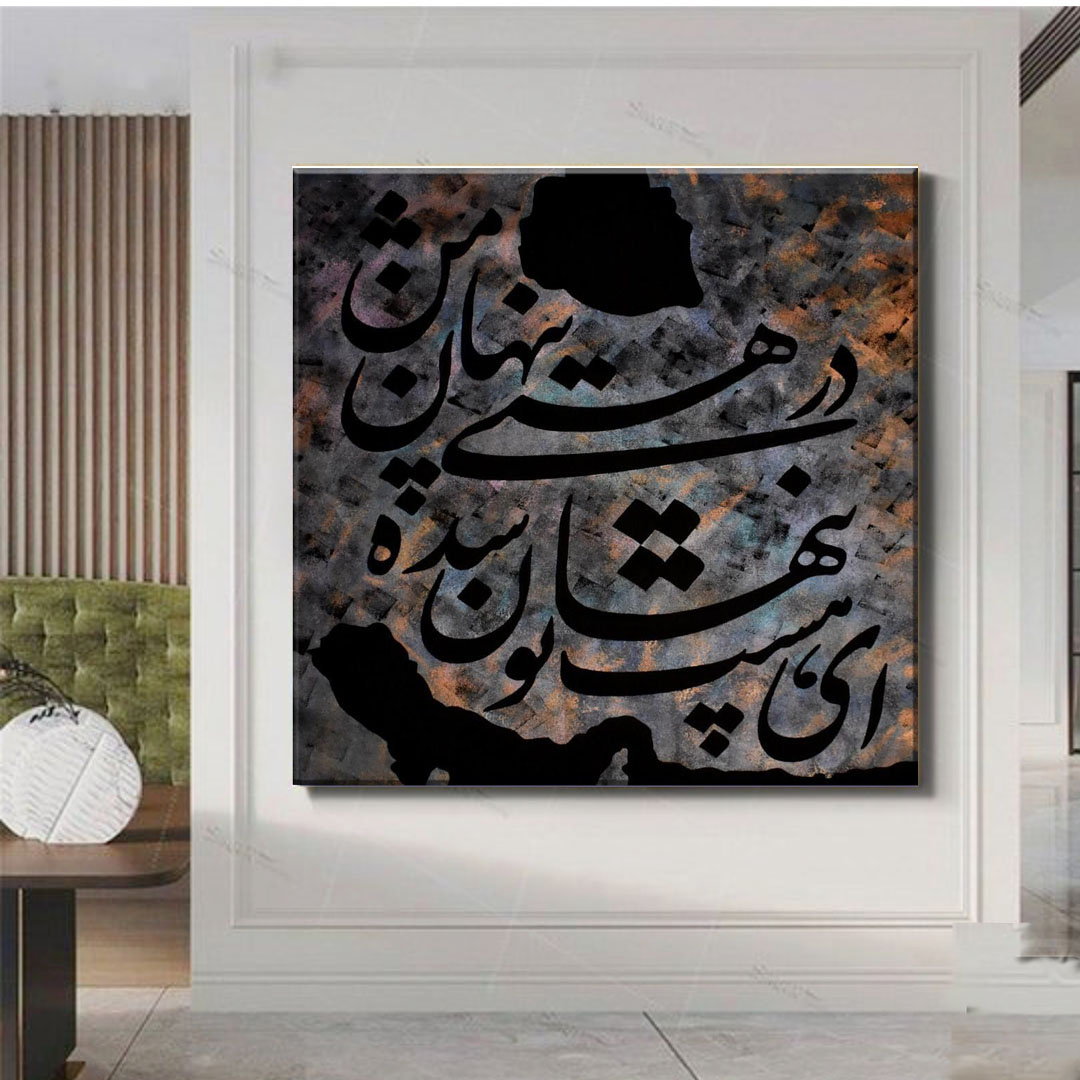
Kufic Script: Origins and Evolution
Ibn al-Muqalla, due to the strictness of the Kufic script, was trying to develop an easier version of this script. To create the variant, he placed the line circuit on a circle and a surface. He then wrote a Qur’an along this line. Some believe that the Naskh script was developed to fix the shortcomings of the Kufic script.
Others think Ibn Muqalla only perfected Naskh and did not create it. Ahmad Nirizi was one of the most famous Persian manuscript writers. He founded a unique style of manuscript in Persian. The seventh century is the golden age for the development of Naskh due to the contributions of master scribes.
Related articles: Art Of Persian Calligraphy
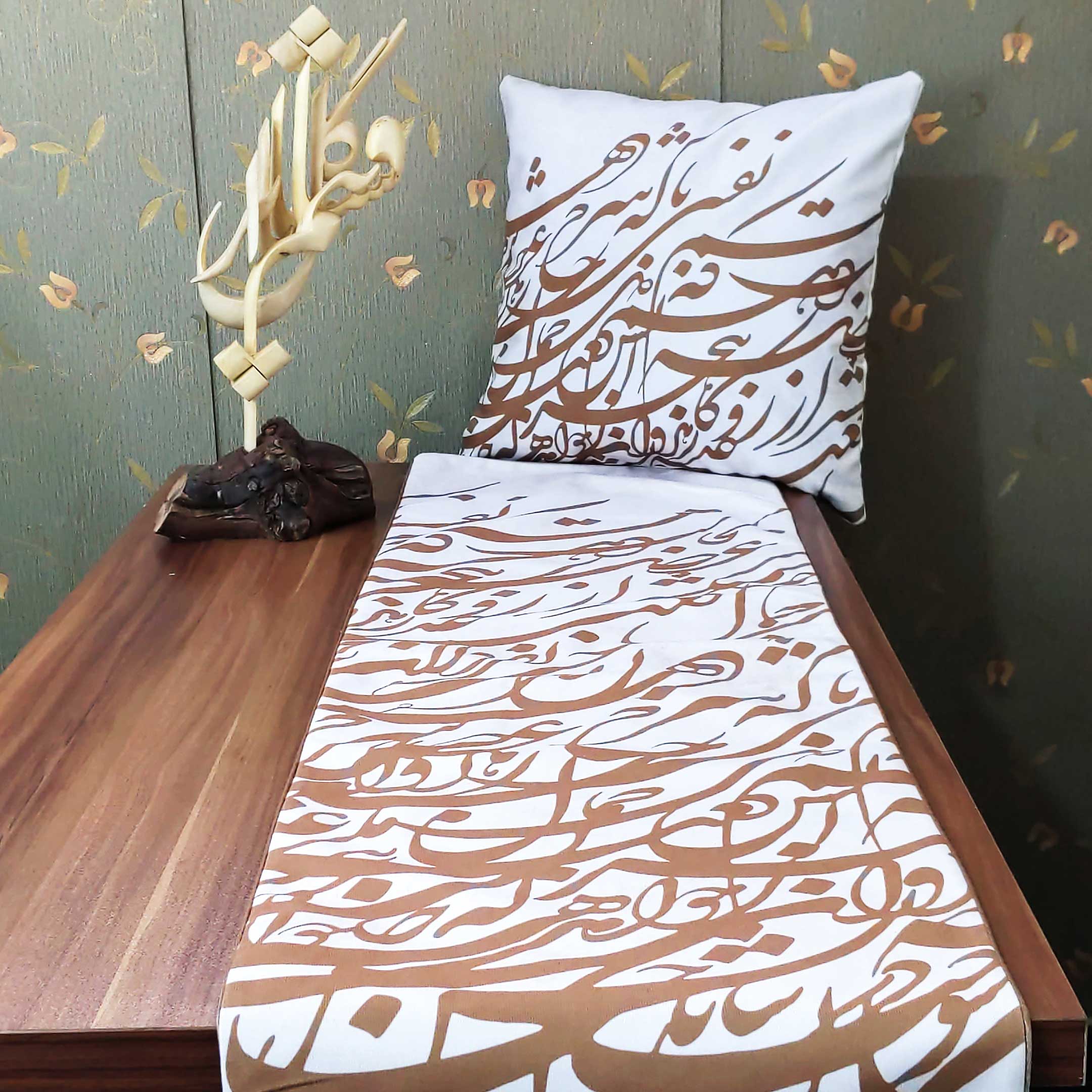
CALLIGRAPHY TABLE RUNNER
Riqaa: Uniform and Readable Script
If you come across a line in which the shapes of the letters are uniform, consistent and of course legible, you can safely identify it as the Riqaa script. For more certainty, pay attention to the spacing between the letters.
This script is written at regular intervals without interruption, and sometimes the previous letters provide the space for their next letters.
This script is called Riqaa because it can be read without any problem at a glance.
The Raihani script is derived from this script with a smaller size and many Qur’ans have been written with it. In this script, sometimes characteristics of the Riqaa are seen and sometimes the Raihani includes elements of the Riqaa script.
Talik: An Elegant Persian Script
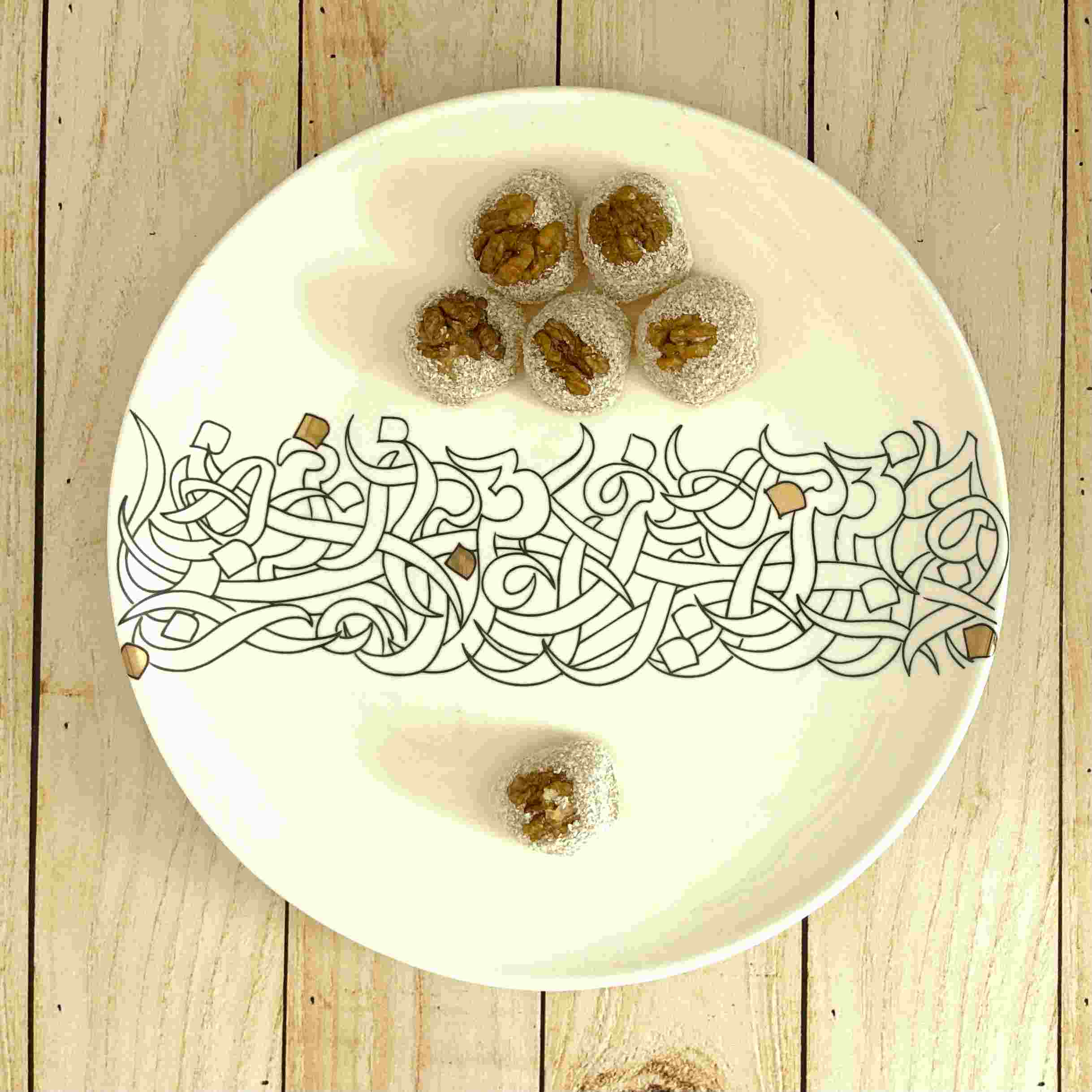
Talik can be considered one of the most important scripts in Persian calligraphy that emerged in the seventh century. The lifespan of the Talik style extended for one hundred years and gradually declined. This script, which itself is a combination of Naskh and Raqa and forms one of the foundations of the Nastaliq style, was formalised by Khajeh Taj Salmani.
To recognise this script, you must pay careful attention to the movements of the pen. Numerous circles, rounded letters, and the ability to create new compositions are the hallmarks of Talik. This script can be mastered by those experienced in Persian calligraphy due to its complexities, and it seems quite challenging for those learning it.



Comments