








The guide to Persian Yalda Night (shab-e Yalda)
Order in time for Yalda Night, Monday 21 December 2026. Last order dates: UK Express Thursday 10 December, UK Standard Tuesday 8 December, Canada and Australia Friday 4 December, USA Thursday 3 December, Europe Wednesday 2 December, all other countries Tuesday 1 December.
Yalda Night, or Shab-e Yalda, is the Persian celebration of the longest night of the year. On the last evening of autumn, families gather at the home of their elders, eat pomegranate and watermelon, crack open bowls of nuts, read Hafez and stay up late to welcome the return of the sun. This guide explains what Yalda Night means, when it falls in 2026, what goes on a Yalda table and how Persian families keep the night alive, at home and abroad. If you are already planning your table, you can browse our handmade Yalda decorations and gifts.
What Is Yalda Night?
Yalda Night is an ancient Persian festival held on the night of the winter solstice, the longest night of the year in the Northern Hemisphere. After it, the days grow longer, so the night has long stood for light winning over darkness. It is also called Shab-e Chelleh, and it is celebrated by Iranians, Afghans and Persian speaking communities across Central Asia and around the world.
Why is it called Yalda and Shab-e Chelleh?
The word Yalda comes from Syriac and means birth. It is thought to have reached Persian through Syriac speaking Christians, and in Persian it came to describe the birth of the sun after the longest night. The second name, Shab-e Chelleh, means the night of the forty. It opens Chelleh-ye Bozorg, the first forty days of winter in the Persian calendar, which runs from the first day of the month of Dey.
Yalda on the UNESCO heritage list
In 2022 UNESCO added Yalda/Chella to its Representative List of the Intangible Cultural Heritage of Humanity, nominated jointly with Afghanistan. The listing describes families gathering at the homes of elders around a table of symbolic foods, with poetry, storytelling, games, music and gifts for new brides, in-laws and children. In other words, the customs most Persian families still follow today.
When Is Yalda Night 2026?
Yalda Night 2026 falls on the evening of Monday 21 December 2026, which is 30 Azar 1405 in the Persian calendar. Families celebrate from sunset that evening until late into the night, and the next day, 1 Dey, is the first day of winter.
The astronomical solstice itself happens at 20:50 UTC on 21 December 2026, which is 8.50pm in London and 3.50pm in New York. Iranians abroad usually keep the same evening as family back home rather than working out the exact minute, so wherever you live, Monday 21 December is the night to gather.
| Where you are | Yalda Night 2026 | Solstice time |
|---|---|---|
| Tehran | Evening of 30 Azar 1405 | 00:20 on 22 December, Tehran time |
| United Kingdom | Evening of Monday 21 December | 8.50pm |
| United States (Eastern) | Evening of Monday 21 December | 3.50pm |
The Meaning and History of Yalda Night
Yalda Night celebrates the rebirth of the sun and the idea that hope returns after the darkest point of the year. Its roots lie in the farming life of ancient Persia, where people watched the sun closely to plan their work. They noticed that the days shortened through autumn until one night was longer than any other, and that from the next morning the light began to grow again. That turning point became a night to stay awake, keep each other company and see the darkness through together.
In popular tradition the night is linked with Mithra, the ancient Persian figure of light and friendship, whose birth was said to fall on this night. Over the centuries the meaning broadened into a contest between light and darkness, and between good and bad fortune. Families stayed up until dawn so that no one faced the longest night alone.
What makes Yalda unusual is how little it has changed. The foods, the poetry and the gathering at the grandparents’ house are much the same as they were generations ago, which is why so many Iranians abroad hold on to it as a way of passing their culture to their children.
How Iranians Celebrate Yalda Night
Iranians celebrate Yalda by gathering with family, usually at the home of the eldest relatives, sharing symbolic fruits and nuts, reading poetry and telling stories until late. The details change from city to city, but the heart of the night is the same everywhere: spending the longest night together.
Staying up with the elders
In the days before Yalda, markets fill with pomegranates, watermelons and nuts as families stock up. On the night itself, children, parents and grandparents gather in one house. The elders lead the evening, and the younger generation listens, eats and stays awake far later than usual.
Fal-e Hafez and reading the Shahnameh
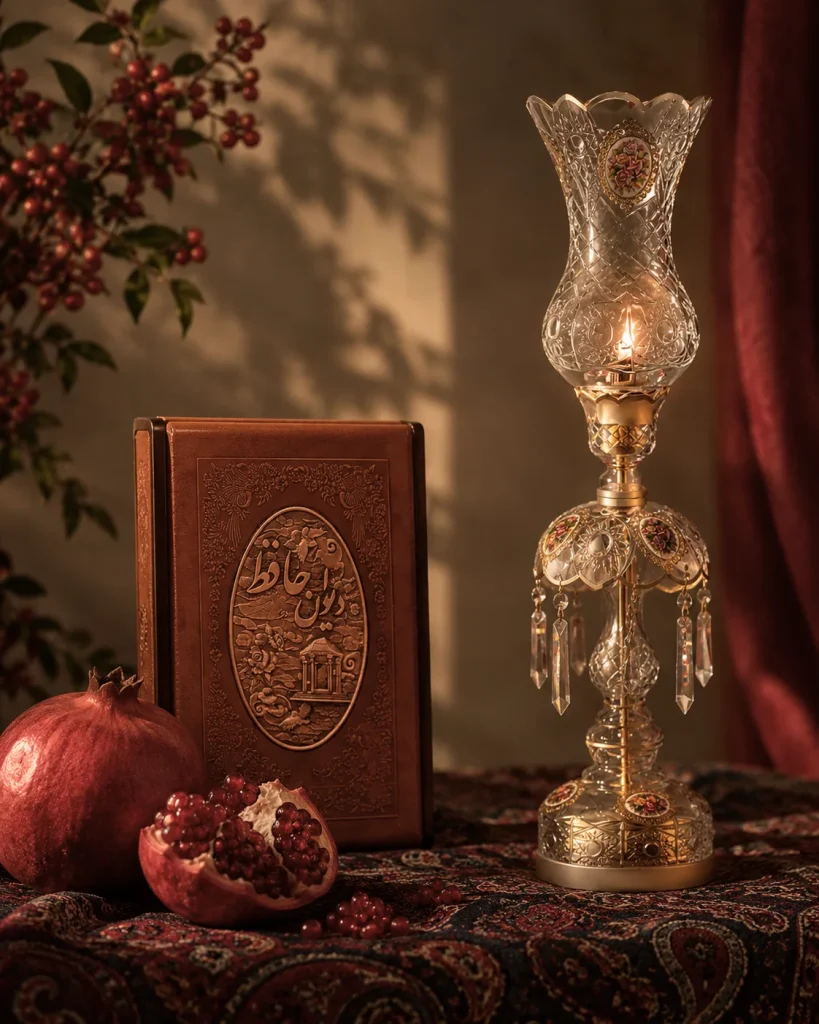
The most loved custom of the night is Fal-e Hafez, a form of fortune telling with the poems of Hafez of Shiraz. Each person makes a silent wish, the book is opened at random and the poem on that page is read aloud as the answer. Many families also read from the Shahnameh, Ferdowsi’s epic of ancient Persian kings and heroes. You can read more in our guide to fortune telling on Yalda Night and our article on who Hafez was.
Storytelling and regional customs
Grandparents tell stories of fairies, demons and clever animals, and each region has its own favourites. Stories from the Shahnameh are especially popular in Khorasan, while Azerbaijani families often tell the tale of Hossein Kurd Shabestari. Proverbs and riddles fill the gaps between stories, and our collection of Persian proverbs for Yalda Night gives a taste of the sayings you might hear.
Gathering around the korsi
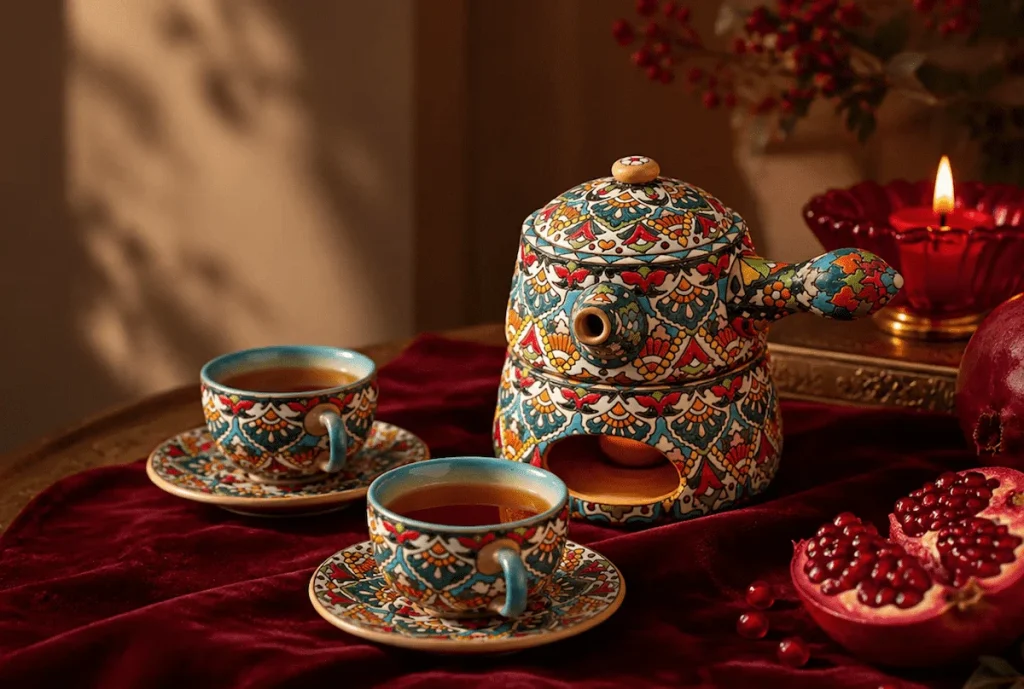
In colder regions, families traditionally sat around a korsi, a low table with a heater beneath it and a large quilt draped over the top. Everyone tucks their legs under the quilt while fruit, nuts, tea and a lamp sit on the tray above. Fewer homes keep a korsi today, but it remains one of the strongest images of a Yalda evening, and some families still bring one out for the night with a Termeh korsi cover.
Gifts for new brides and children
Yalda is also a night for giving. In many families, the groom’s side sends a decorated tray of fruit, sweets and gifts to a newly engaged or newly married bride, and children receive small presents from their grandparents. The UNESCO listing names this gift giving to new brides, in-laws and children as part of the tradition.
Fire and light
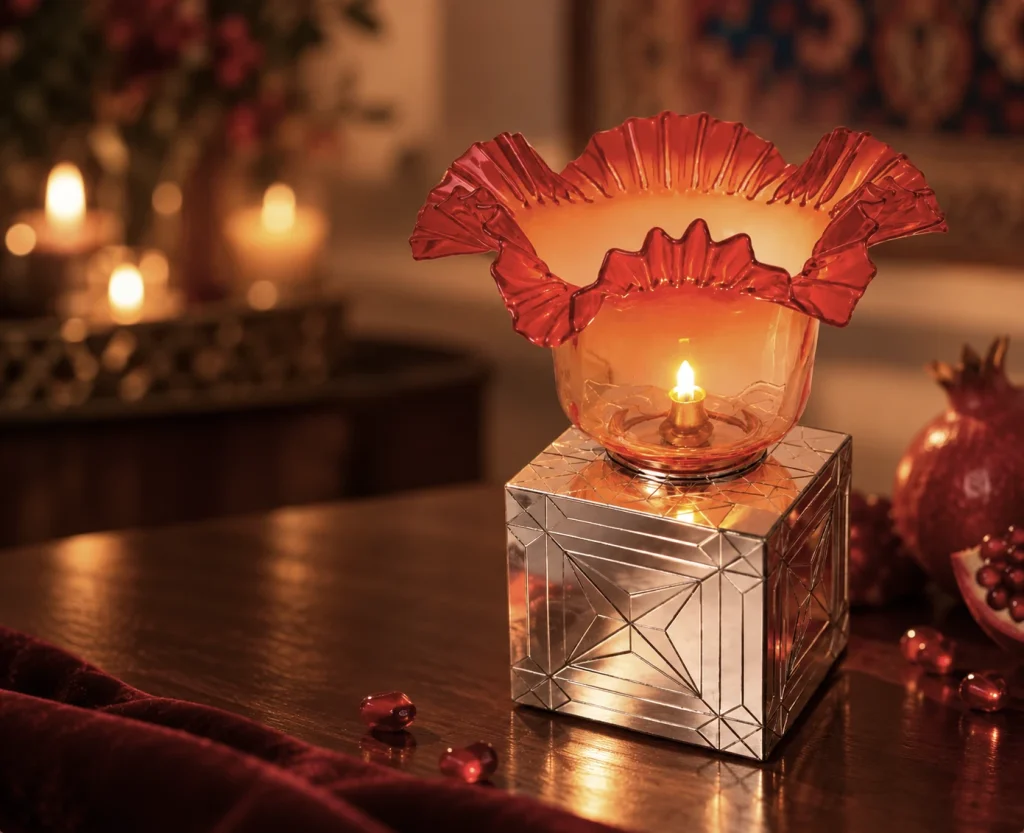
For the ancient Iranians, fire stood for the sun and for protection against darkness, so people lit fires and lamps on the longest night and sat together in their warmth. Today that survives as candles and lamps on the Yalda table.
Yalda around the world
Yalda, or Shab-e Chella, is also kept in Afghanistan and Tajikistan, and by Persian speaking communities wherever they have settled. In London, Toronto, Los Angeles and beyond, families hold the same gathering, often with friends who are celebrating it for the first time.
What Is on a Yalda Table?
A Yalda table, or Sofreh Yalda, is spread with red fruits, nuts, dried fruits, sweets, tea, a lamp or candles and a book of Hafez. Each item has a meaning, and most of them are red because red stands for the sun, warmth and life.
| Item | What it stands for |
|---|---|
| Pomegranate | Life, fertility and the many seeds of a fruitful year |
| Watermelon | Summer’s warmth kept for winter; eating it is said to protect against the cold |
| Ajil (mixed nuts and dried fruit) | Plenty and good fortune for the year ahead |
| Red grapes, jujube and persimmon | Seasonal red fruits that echo the colour of the sun |
| Sweets and tea | A sweet year and a long, sociable evening |
| Candles or a lamp | Light returning after the longest night |
| Book of Hafez | Poetry, wisdom and the night’s fortune telling |
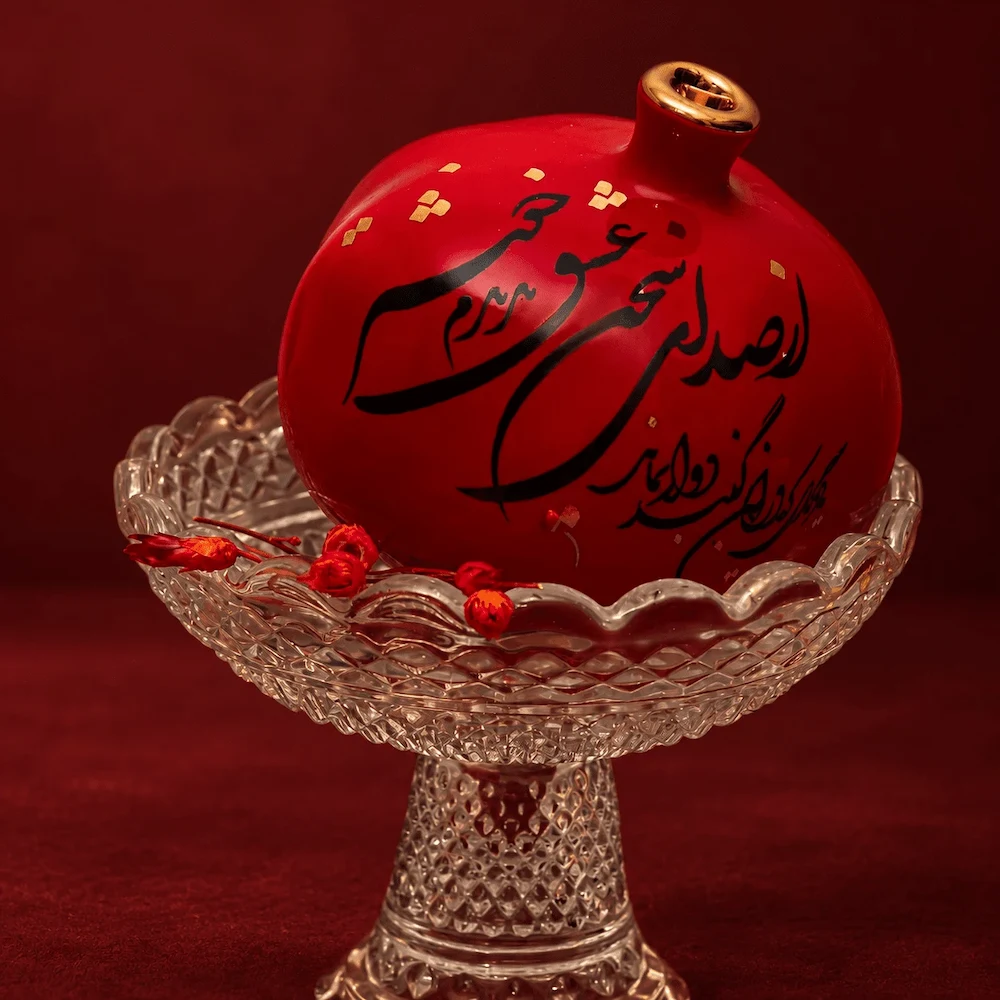
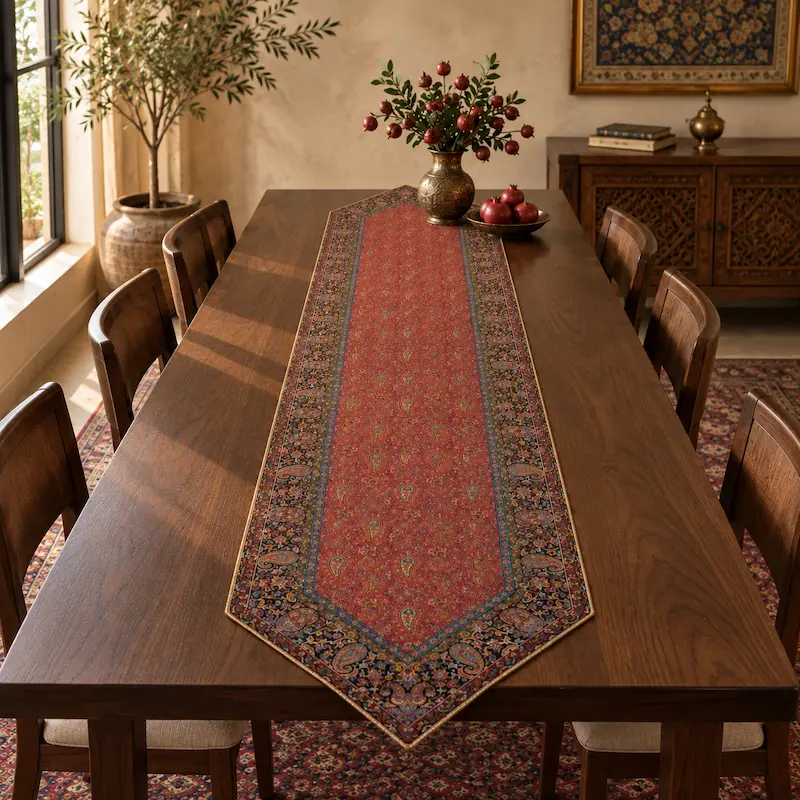
The table is usually laid on a rich cloth such as Termeh or a hand printed Ghalamkar cloth, with the fruit in large bowls or on trays so everyone can help themselves. Termeh cloths, fruit and nut bowls and ceramic pomegranates are all part of our Yalda table decorations.
Setting a Yalda table abroad
Pomegranates are easy to find in UK and North American supermarkets in December, but good watermelons are not, because they are out of season. Many families abroad buy one imported watermelon for the symbolism and fill the rest of the table with pomegranates, red grapes and persimmons. Ajil can be mixed at home from pistachios, almonds, hazelnuts, roasted chickpeas, raisins and dried mulberries; our guide to Persian nuts explains what goes into it. Buy fruit two or three days ahead so it is ripe on the night, and prepare the pomegranate seeds the afternoon before.
Modern Yalda table ideas
Many families now blend tradition with their own style. Red and green remain the colours of the night, but they appear as a single pomegranate centrepiece on a white cloth, ceramic pomegranates scattered between candles, or a long table runner in deep red. Some prefer an earthy look with wooden trays and clay bowls; others choose brass candle holders and glass. Our Yalda table decorations include handmade pomegranate ornaments, candle holders and tableware for both styles. The celebration often spreads beyond the table too, with red lights, calligraphy wall art and cushions in pomegranate prints around the room.
Yalda Night Food
Traditional Yalda food is built around pomegranate, watermelon, ajil, dried fruit and sweets, with tea served throughout the night. Pomegranate seeds are often sprinkled with golpar (ground Persian hogweed) or a little salt, and watermelon is cut into large wedges for sharing.
Many families also serve a warm dish or broth, and regional favourites appear on the table: cooked beetroot sold from street carts in winter, sweets such as baslogh and gaz, and in some homes a rice dish for dinner before the fruit is brought out. The UNESCO description of Yalda also lists broth, sweets, dried fruits and nuts prepared specially for the night.
What to Wear on Yalda Night
There is no fixed dress code for Yalda, but red is the colour most people choose, often with touches of green to echo pomegranate and watermelon. Women may wear a red dress or a scarf with a pomegranate motif, men a red tie or pocket square, and children often wear clothes printed with pomegranates or watermelon slices. Others prefer traditional Persian garments with embroidery, or simply something comfortable for a long evening sitting together.
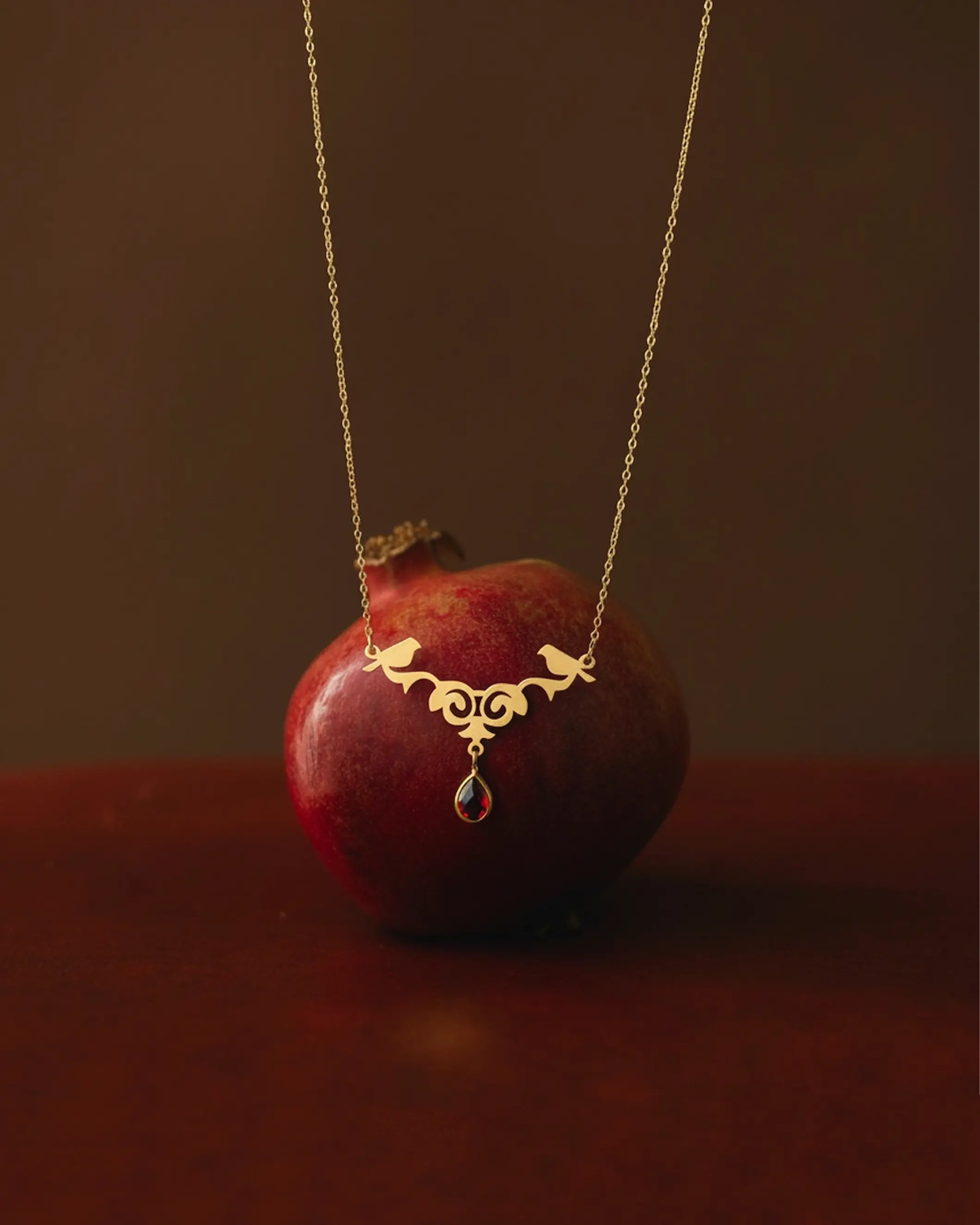
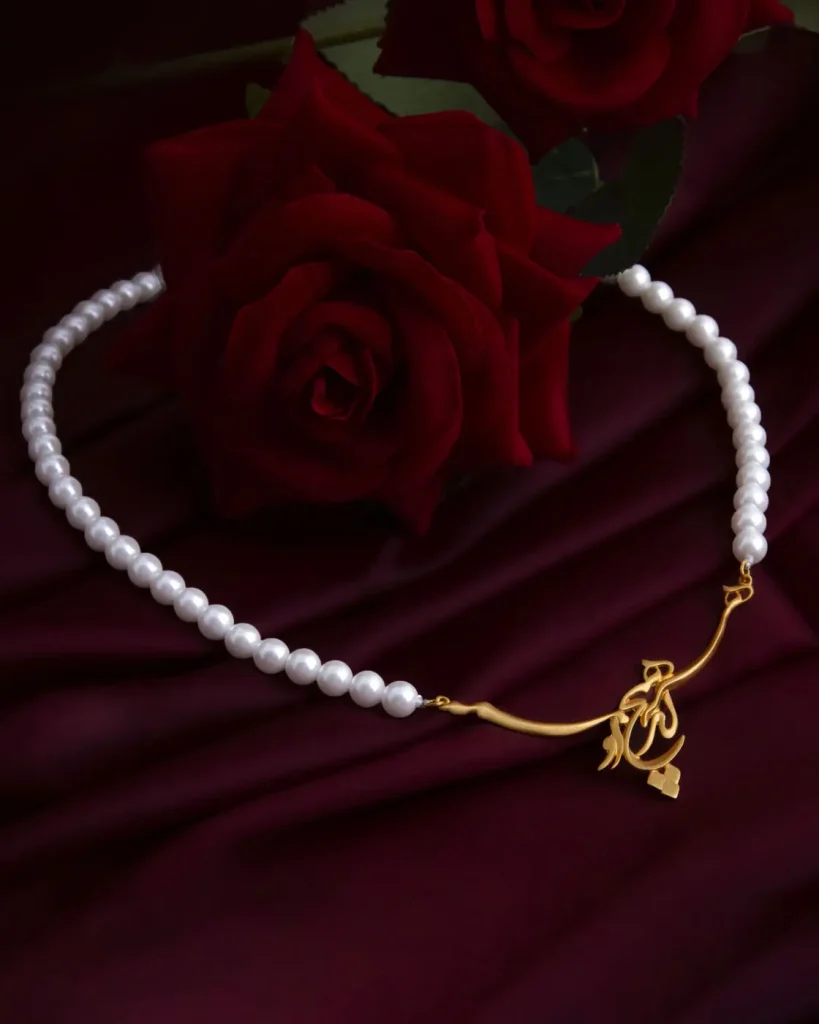
Pieces from our pomegranate jewelry collection are a popular choice for the night and a common Yalda gift.
Why Red Matters on Yalda
Red is the colour of Yalda because it stands for the sun, warmth and life on the darkest night. It runs through every part of the evening: the fruit on the table, the cloths and candles, the clothes people wear and the gifts they exchange. A table that feels right on Yalda is almost always a red one.
Yalda Night Gifts
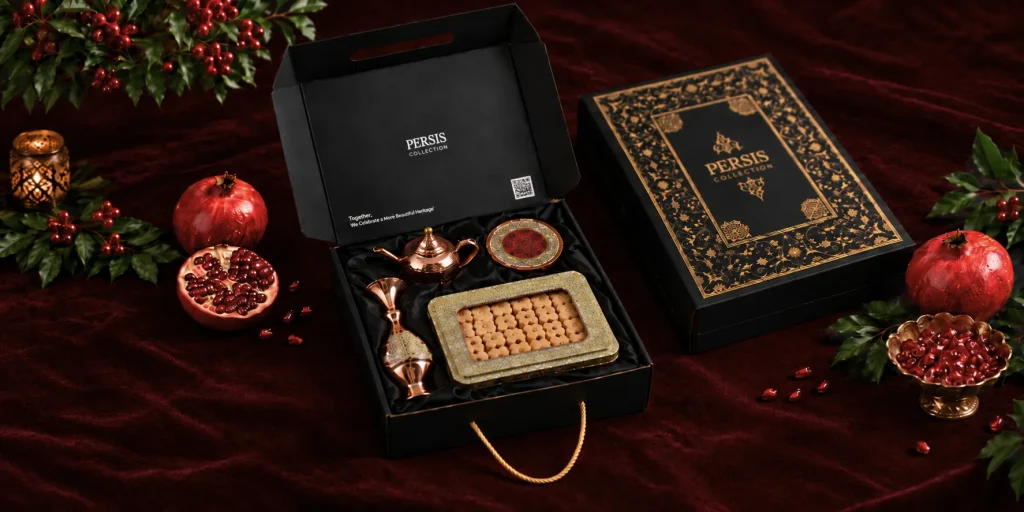
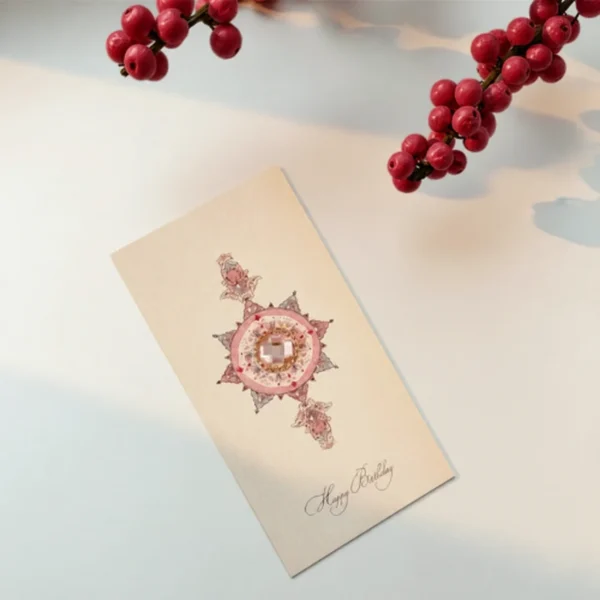
Yalda gifts are about care rather than cost: something chosen for the person and connected to the night. Popular choices include a well bound book of Hafez for the evening’s fortune telling, pomegranate decorations and tableware, Termeh textiles, pomegranate jewellery, and gift boxes of dried fruit and sweets. Even a small card or keepsake can mean a lot to someone celebrating far from family.
You will find handmade Yalda gift sets and hampers and many more Yalda gifts in our collection, and the Persian books section includes editions of Hafez in Persian and English.
Our Experience at Persis Collection
We have been sending Persian pieces from our London warehouse to more than 100 countries for over ten years, working directly with more than 250 Persian artists and craftspeople. A few things repeat every Yalda season.
Most people start looking late. Searches for Yalda rise slowly through November and then jump sharply in the week before the night, but international parcels need more time than that. That is why the last order dates at the top of this page matter, especially for Canada, Australia and the United States.
Simple pomegranate pieces sell best. Last season our most popular Yalda items were the small Persian pomegranate bowls, calligraphy pomegranate gift sets and pomegranate earrings: things that sit on the table for one night and then stay in the home or the jewellery box all year.
Many orders are gifts for family members in another country, and some come from people celebrating Yalda with an Persian partner or friends for the first time. For them, a book of Hafez and a few pomegranate pieces are usually the right place to start.
Conclusion
Yalda Night, or Shab-e Yalda, is one of the oldest celebrations in Persian culture: the longest night of the year, spent together with pomegranates, watermelon, nuts, poetry and stories until the sun begins its return. In 2026 it falls on the evening of Monday 21 December. For a family keeping the tradition their grandparents taught them, or someone joining an Persian family for the first time, the essentials are the same: a red table, a book of Hafez and people you love around it. When you are ready to set your table, explore our Yalda Night collection and order before your country’s last order date.
Frequently Asked Questions
What is Yalda Night?
Yalda Night is the Persian celebration of the winter solstice, the longest night of the year. Families gather with their elders, eat pomegranate, watermelon and nuts, read Hafez and stay up late to mark the return of longer days.
When is Yalda Night 2026?
Yalda Night 2026 is on the evening of Monday 21 December 2026, which is 30 Azar 1405 in the Persian calendar.
Why is Yalda also called Shab-e Chelleh?
Shab-e Chelleh means the night of the forty. It opens Chelleh-ye Bozorg, the first forty days of winter in the Persian calendar.
How long is Yalda Night?
It depends on where you are. In Tehran the night lasts a little over 14 hours, and in London it is just over 16 hours, because the solstice night is longer the further north you live.
What do you eat on Yalda Night?
The classic Yalda foods are pomegranate, watermelon, ajil (mixed nuts and dried fruit), persimmons, red grapes and Persian sweets, served with tea. Many families also have a warm dinner or broth before the fruit.
What do you wear on Yalda Night?
Most people wear something red, often with a touch of green, to echo pomegranate and watermelon. Pomegranate jewellery and traditional embroidered clothing are popular choices.
What is Fal-e Hafez?
Fal-e Hafez is fortune telling with the poems of Hafez. You make a silent wish, open the Divan of Hafez at random and read the poem on that page as your answer.
Can you celebrate Yalda abroad?
Yes. Iranians and Afghans around the world celebrate Yalda with family and friends, and many share it with partners and friends who are not Persian. All you need is a few red fruits, some nuts, candles and a book of poetry.
Do you deliver Yalda gifts outside the UK?
Yes. We send Yalda orders worldwide from our London warehouse. Check the last order date for your country at the top of this page so your order arrives before 21 December.