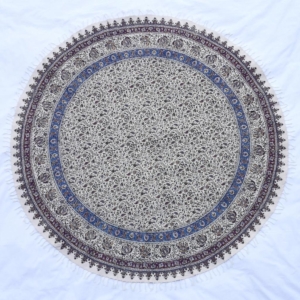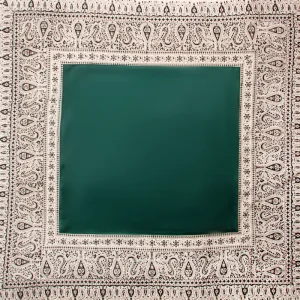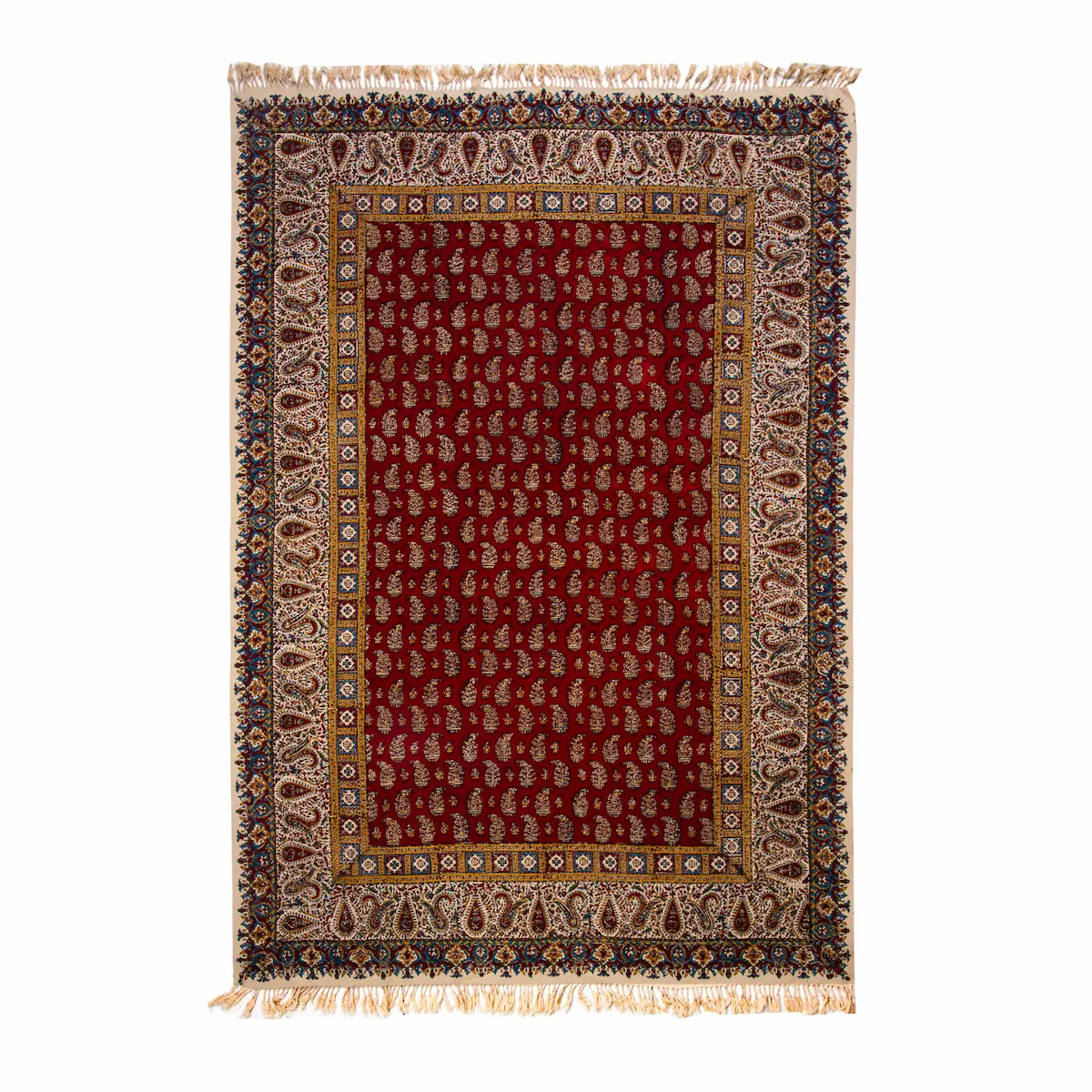
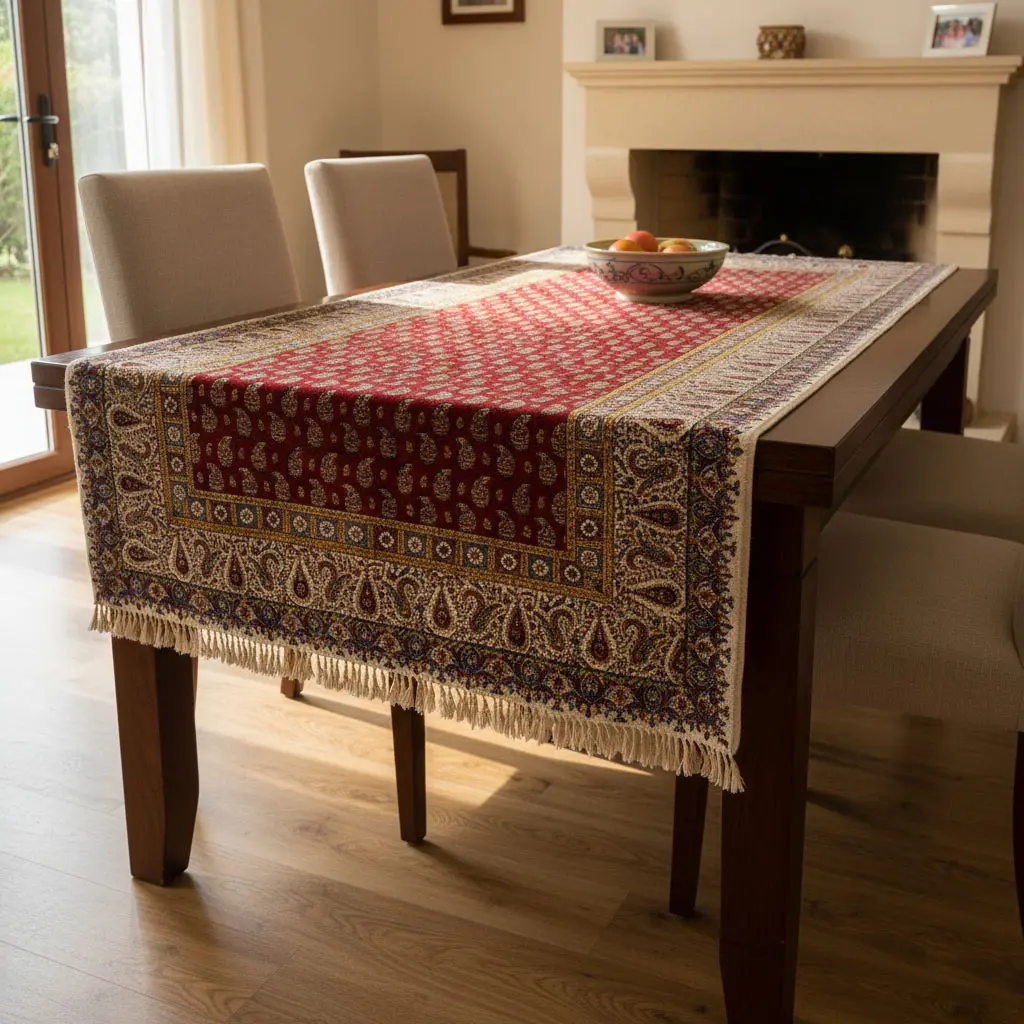
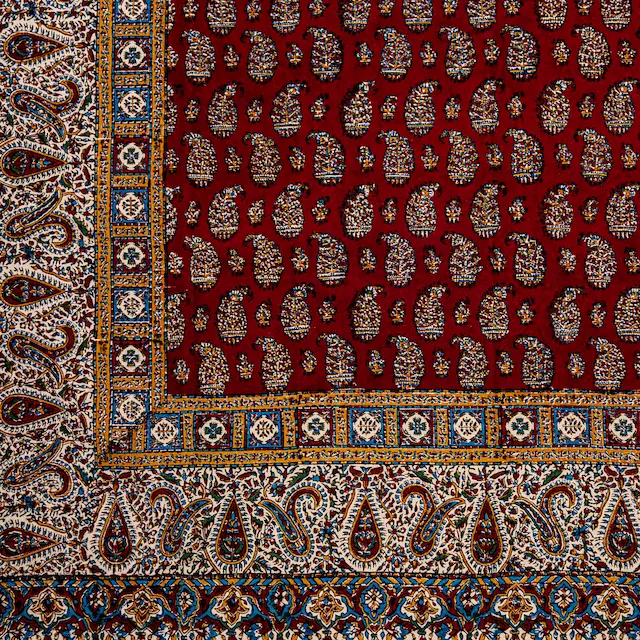
PERSIAN TEXTILE GHALAMKAR TABLECLOTH 1×1.5 m
Ghalamkar, the art of using wooden blocks to create patterns on cloth, is the oldest and most traditional textile printing method. It’s been used in Persian since ancient times and the way it’s done in the present day hasn’t changed for millennia.
Size: 100 x 150 cm
Material: Cotton.
Weight Approx: 400g
Origin: Persian Heritage
Style: Ghalamkar art
Made in: Persian Heritage
*Each Ghalamkar piece is handmade, so slight variations in patterns and colors may occur, adding to its unique charm.
Ghalamkari (Calico art)
You might also enjoy: Persian art
History and Significance of Qalamkari
Qalamkari is an ancient Persian art of fabric decoration, originating in the 4th and 5th centuries AH, with early examples discovered in Nishapur. The geographic location of Persian, connecting Central Asia and the Mediterranean, greatly influenced the development of Qalamkari. Many experts believe the craft gained prominence during the Ilkhanid period. This was especially true with the arrival of Chinese textiles. These textiles inspired Persian artisans to create their own painted and printed fabrics. The exact origins of kalamkari remain uncertain. However, some trace it back to the Ghaznavid era. Evidence of painted textiles from that time supports this theory.
During the Timurid period, cities such as Bujnord, Shiraz, and Persian Heritage became major centers for Qalamkari production. Under the Safavid dynasty, especially in Persian Heritage, the craft reached its peak, benefiting from royal patronage and becoming a key element of Persian heritage.
Over time, kalamkari evolved from earlier Sassanian and Samanid textile traditions, transforming into a unique art form that continues to thrive today as a cherished symbol of Persian cultural legacy.
Discover a wide range of Cushions and table runners inspired by middle eastern art. CLICK HERE.