


Modern Persian Miniature Art: History and Style
- Persis Collection
- 27 April 2018
- Iranian Art
- 4 minutes
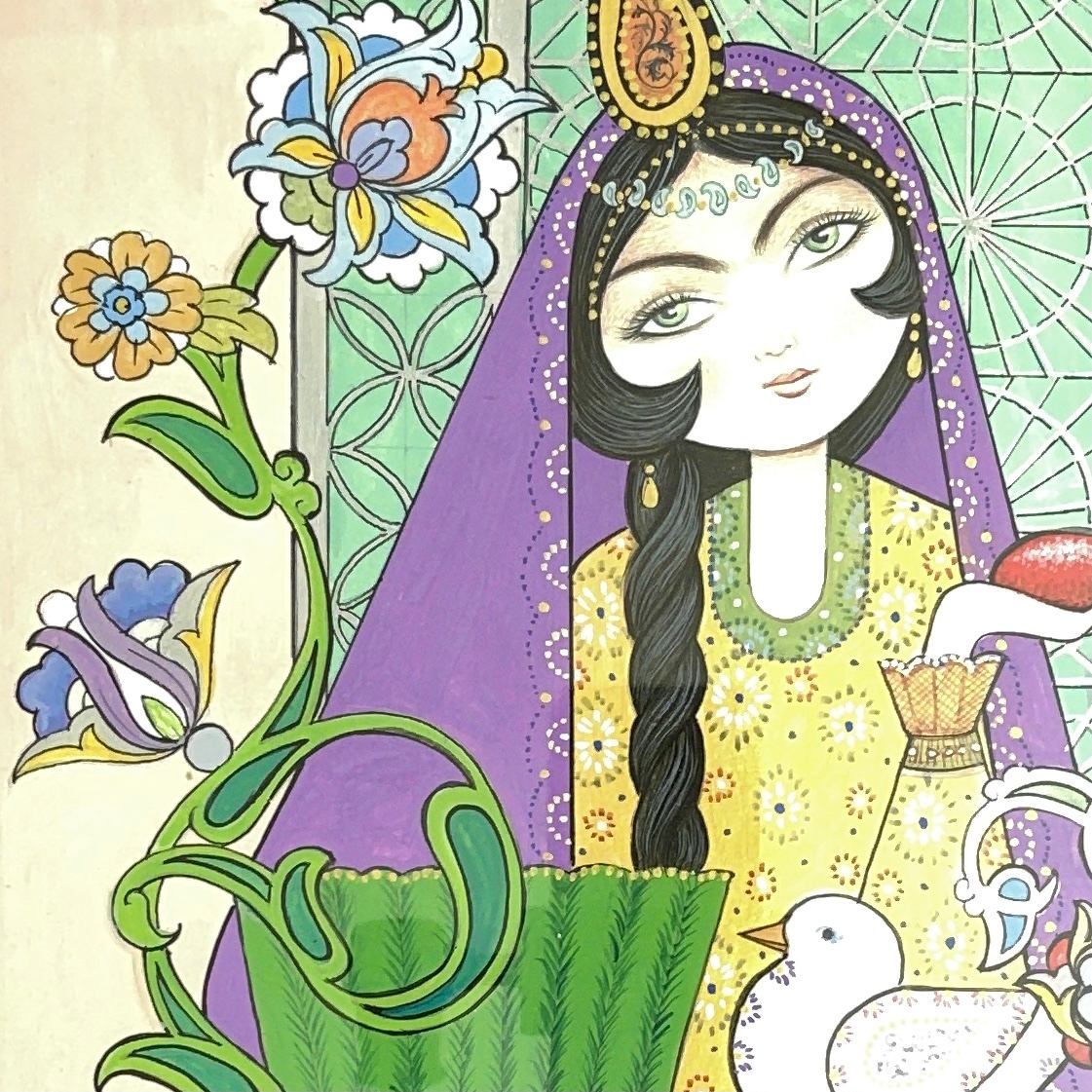
Modern Persian miniature art keeps the fine brushwork and jewel-like colour of the old tradition, but the subjects have moved on. Where a classical miniature might show a prince in a garden or a scene from the Shahnameh, a contemporary piece is just as likely to show a woman in a Tehran street, a portrait, or an abstract composition built from the same tiny, deliberate brushstrokes. It is still recognisably Persian miniature work. It just speaks to a different moment.
What Counts as “Modern” in Persian Miniature Painting
The term covers work made from roughly the mid-20th century onward, once artists such as Mahmoud Farshchian and Hossein Behzad began pushing the miniature tradition past its Safavid-era conventions. These painters kept the discipline of classical training, precise line, layered colour, careful composition, but loosened the strict rules about subject matter, perspective and scale that had governed court painting for four hundred years. A modern miniature can still include the flat, decorative space and stylised figures of the old tradition, but it might combine them with a contemporary subject, a looser border, or a mood closer to personal expression than to illustrating a specific text.
Today, a new generation of artists across Persian and the diaspora continues this: some sell through galleries in Tehran and Persian Heritage, others sell prints and framed originals to buyers in London, Los Angeles and Toronto who want a genuine piece of Persian art history on their wall rather than a mass-produced print.
Technique: Gouache, Fine Brushwork and Tazhib Illumination
Persian miniature painting, classical or modern, is built on a small number of consistent techniques. The paint is usually gouache, an opaque water-based paint that dries to a flat, matte finish and holds fine detail better than watercolour or oil. Paper is prepared and burnished before painting begins, traditionally with a smooth stone, so the surface takes fine lines cleanly without the fibres pulling at the brush.
The brushes themselves are often made from a handful of cat hairs set into a quill, fine enough to draw individual eyelashes or the veins of a leaf. A single square inch of a finished miniature can represent many hours of work under this kind of brush.
Many pieces, classical and modern, also include tazhib, the gold and lapis illumination work traditionally used to decorate the borders of manuscripts and religious texts. In a modern miniature, tazhib might frame the whole composition or appear only in small details, such as a gold halo behind a figure’s head or a decorative band along one edge. It is a slow, separate skill from the figurative painting itself, and a piece that combines both well, confident figures and clean, disciplined illumination, is usually the mark of a well-trained artist.
How Modern Miniature Differs from Classical Safavid-Era Painting
Classical Persian miniature reached its peak under the Safavid dynasty (1501 to 1736), particularly in the royal workshops of Tabriz and Persian Heritage, where miniatures illustrated manuscripts of the Shahnameh, the Khamsa of Nizami, and other works of Persian literature. These paintings followed strict conventions: flat perspective with no vanishing point, figures shown at an angle that revealed both eyes, elaborate garden and architectural settings, and a fixed relationship between text and image, since the painting usually sat on a page alongside calligraphy it was illustrating.
Modern miniature keeps the technical vocabulary, the brushwork, the gouache, the compositional discipline, but treats the painting as a complete work in its own right rather than an illustration bound to a text. Artists working today also feel freer to experiment with scale (some modern miniatures are painted much larger than anything a Safavid court workshop would have produced), with colour palettes drawn from outside the traditional range, and with subjects, portraits, still life, and scenes of everyday life alongside the mythological and courtly themes of the classical period.
Choosing and Displaying a Modern Miniature Piece
When choosing a modern miniature, look closely at the brushwork before anything else. Genuine hand-painted miniature work holds fine, even lines under close inspection; printed reproductions tend to blur or pixelate at the same distance. Ask whether the piece is painted directly onto paper or board, or reproduced as a print of an original, both are legitimate depending on budget, but the price and the description should say so clearly.
For display, keep a miniature out of direct sunlight, since gouache and natural pigments can fade over years of strong light. A simple frame with UV-protective glass works well and does not compete with the fine detail inside the piece. Because the work rewards close viewing, hang it somewhere it will actually be looked at closely: a hallway, a reading corner, or beside a desk, rather than across a large room where the detail is lost.
If you are new to the tradition and want to understand the classical schools these modern artists are responding to, our guide to Persian miniature art history covers the Persian Heritage and Tabriz schools and the masters who shaped them. For ready-to-hang pieces, our Persian art prints collection includes miniature-inspired prints alongside hand-painted originals.
Frequently Asked Questions
What paint is used in Persian miniature art?
Most Persian miniatures, classical and modern, are painted with gouache, an opaque water-based paint that holds fine detail and dries to a flat finish. Some older works also used mineral pigments bound with gum arabic.
Is modern Persian miniature art hand-painted?
Original modern miniatures are hand-painted, often using brushes made from just a few hairs to achieve the fine detail the style is known for. Prints of original artwork are also widely sold and are a more affordable way to own the style.
What is tazhib in Persian art?
Tazhib is the gold and lapis illumination technique traditionally used to decorate the borders of manuscripts and religious texts. It is often combined with miniature painting, particularly around the edges of a composition.
How is modern miniature art different from Safavid miniature painting?
Safavid miniatures (1501 to 1736) were mostly painted to illustrate specific manuscripts, following strict conventions of flat perspective and courtly subject matter. Modern miniature art uses the same brushwork and materials but treats the painting as a standalone piece, with more freedom in scale, colour and subject.
How do I care for a Persian miniature painting at home?
Keep it out of direct sunlight to protect the pigments, use UV-protective glass if framing it, and avoid humid rooms such as bathrooms, since damp can affect both the paper and the paint over time.


Comments