


Persian Tea Culture: Chai, the Samovar and the Iranian Way
- Persis Collection
- 19 June 2026
- Taste of Persia
- 2 minutes
In Persian, tea is far more than a drink. From the first guest of the morning to the last of the evening, chai is poured, shared and never refused. The samovar is always warm, and a glass of tea is the first thing offered at any home, shop or gathering. At Persis Collection we love this ritual, so here is a look at Persian tea culture and the beautiful objects that surround it.
The heart of Persian hospitality
Tea, or chai, sits at the centre of Persian hospitality. To offer a guest tea is to make them welcome, and to share a glass is to share company. It is drunk throughout the day, in homes, bazaars and tea houses, and no visit feels complete without it.
A short history
Although Persian feels inseparable from tea today, it became the national drink relatively recently, in the nineteenth century, when it gradually replaced coffee in everyday life. Carried along old trade routes, tea took root so deeply that it now feels as old as the country itself.
How Persian tea is brewed
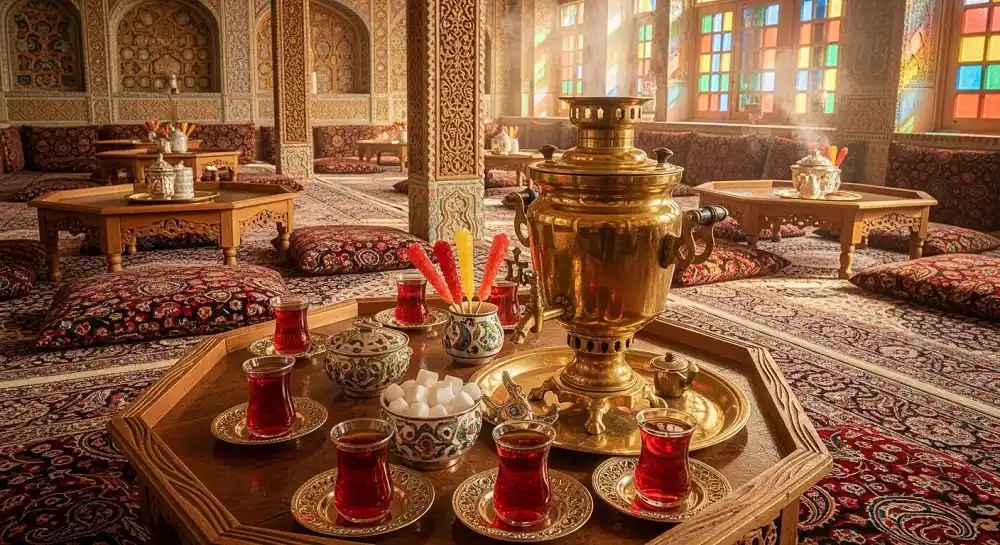
The traditional method uses a samovar with a teapot resting on top. A strong brew is made in the pot and kept hot, then each glass is poured part strong tea, part hot water, so everyone can have it exactly as they like it, from pale and light to dark and powerful.
How it is served
Persian tea is served in small, clear glasses called estekan, so you can admire its golden-red colour. It is taken without milk, and sweetened in a very particular way: a cube of sugar, known as qand, is held between the teeth as you sip, or the tea is sweetened with nabat, the saffron rock candy, or enjoyed alongside dates, sweets and pastries.
Flavours and rituals
Many families perfume their tea with cardamom, rose, cinnamon or a thread of saffron. Whatever the flavour, the ritual matters as much as the taste: the warmth of the glass, the company, and the simple act of offering. It is hospitality you can hold in your hands.
Bringing Persian tea home
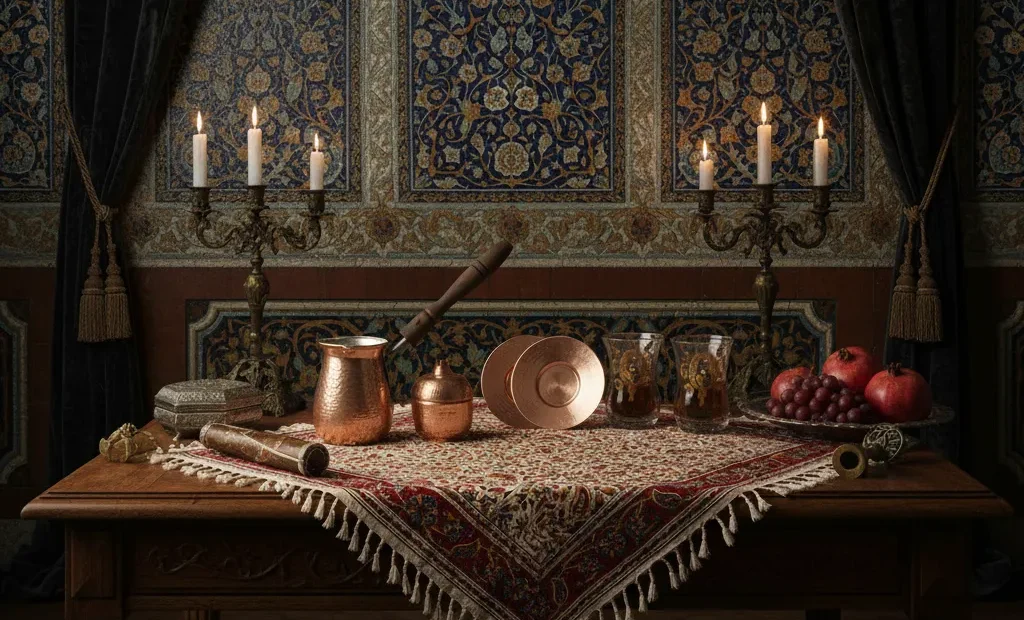
You can recreate the ritual with the right pieces. A beautiful teapot, a set of estekan glasses, and some nabat or saffron go a long way. Two of our most loved pieces are our enamel-painted Persian teapot and warmer and our Minakari tea set for two. You can explore the full range in our Persian tea collection.
Frequently asked questions
What is chai? Chai is simply the Persian word for tea, the everyday drink at the heart of Persian hospitality.
What is an estekan? An estekan is the small, clear glass in which Persian tea is traditionally served.
How do Iranians sweeten their tea? Often by holding a sugar cube, or qand, between the teeth while sipping, or with nabat, the saffron rock candy.
What is a samovar? A samovar is the traditional heated urn used to keep water hot and brew tea, with the teapot resting on top.
Where can I buy a Persian tea set? Persis Collection offers Persian teapots, tea sets and accessories, with worldwide delivery.
To bring a little of this warmth into your home, explore our Persian tea collection.
Comments