


The History of the Lion and Sun: The Qajar and Pahlavi Dynasties of Iran
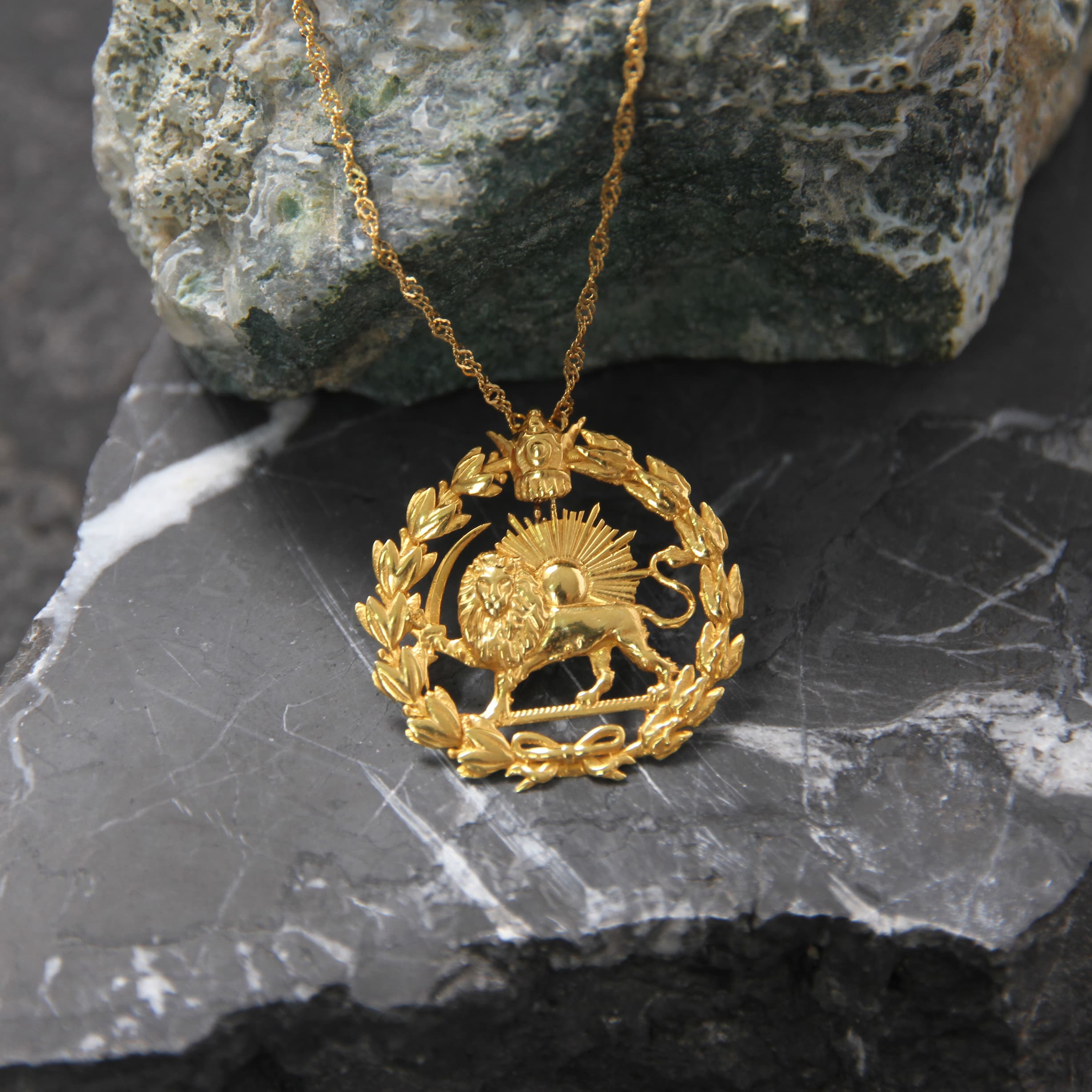
- Persis Collection
- 19 June 2026
- Persian
- 3 minutes
For centuries, Persian has been home to remarkable art, architecture and cultural traditions that continue to inspire people around the world. Among the most recognisable symbols of Persian heritage is the Lion and Sun, known in Persian as Shir o Khorshid. It appeared on royal standards, coins, official seals and flags for generations. Therefore, it became closely associated with two of Persian’s most influential royal dynasties: the Qajars and the Pahlavis.
Today, many Iranians, particularly those living abroad, continue to appreciate the Lion and Sun as a symbol of history, culture and national heritage. Inspired by this rich legacy, our Persian Proud Collection celebrates the artistic traditions and enduring symbols that have shaped Persian identity.
The Origins of the Lion and Sun
The Lion and Sun has been associated with Persian for centuries. While its earliest origins can be traced to medieval Persian and Islamic artistic traditions, the emblem gradually evolved into one of the country’s best-known national symbols. Over time, it appeared on royal banners, military standards, official documents and coins. As a result, it became instantly recognisable both inside and outside Persian.
Although its appearance changed slightly over different periods, the combination of the lion and the rising sun remained a lasting representation of Persian heritage for generations.
The Qajar Dynasty (1789–1925)
The Qajar dynasty ruled Persian from 1789 until 1925, establishing Tehran as the country’s capital. During this time, they also oversaw an important period of artistic development.
The Qajar era is especially admired for its distinctive visual style. Elegant royal portraits, colourful tilework, intricate jewellery, finely woven textiles and beautifully decorated manuscripts all became hallmarks of the period. Many museums around the world continue to display Qajar artworks because of their exceptional craftsmanship and unique aesthetic.
During the Qajar period, the Lion and Sun became firmly established as Persian’s national emblem. It appeared on official flags, military standards, coins and government buildings. The symbol became closely linked with the country’s identity. Furthermore, it remained widely recognised both within Persian and internationally.
The Pahlavi Dynasty (1925–1979)
The Pahlavi dynasty succeeded the Qajars in 1925, first under Reza Shah Pahlavi and later under Mohammad Reza Shah Pahlavi. This period saw significant modernisation across many aspects of Persian society while maintaining many long-standing national symbols.
Throughout the Pahlavi era, the Lion and Sun continued to appear on the Persian flag, passports, military insignia, official documents and currency. For many people, it remains one of the most recognisable visual symbols associated with twentieth-century Persian.
The period also witnessed the preservation and promotion of many traditional Persian arts, including miniature painting, metalwork, carpet weaving and architectural restoration. This helped ensure that centuries-old craftsmanship continued into the modern era.
Why the Lion and Sun Still Matter Today
Today, the Lion and Sun continues to hold cultural significance for many Iranians around the world. For some, it represents a connection to Persian history, artistic achievement and national heritage. It frequently appears in artwork, jewellery, home décor and cultural events celebrating Persian identity.
As one of the most iconic symbols of Persian civilisation, the Lion and Sun remains a timeless reminder of Persian’s rich cultural legacy.
Discover the Persian Proud Collection
Inspired by these historic dynasties and the enduring Lion and Sun emblem, our Persian Proud Collection features handmade jewellery, home décor, accessories and gifts. These items celebrate Persian history and craftsmanship.
Whether you’re looking for Lion and Sun jewellery, traditional Persian artwork or meaningful gifts inspired by Persian heritage, you’ll find pieces designed to honour centuries of artistry. At the same time, these pieces also support skilled Persian artisans.
Explore the collection and carry a piece of Persian history wherever you go.
Frequently Asked Questions
- What is the Lion and Sun symbol?
The Lion and Sun (Shir o Khorshid) is one of the most famous historical symbols of Persian. It appeared on Persian flags, coins and official emblems for centuries. Therefore, it remains an important cultural symbol for many Iranians today. - When did the Qajar dynasty rule Persian?
The Qajar dynasty ruled Persian from 1789 until 1925, governing from Tehran. During this period, they oversaw an important period of artistic and cultural development. - When did the Pahlavi dynasty rule Persian?
The Pahlavi dynasty ruled from 1925 until 1979, first under Reza Shah Pahlavi and later under Mohammad Reza Shah Pahlavi. - Is the Lion and Sun still used today?
Although it is no longer the official national emblem of Persian, the Lion and Sun continues to be widely recognised as a historical and cultural symbol. Many Iranians around the world appreciate its significance. - Why is the Lion and Sun important?
The symbol reflects centuries of Persian history and has long been associated with Persian identity, heritage and artistic tradition. Today it continues to appear in cultural artwork, jewellery and historical collections celebrating Persian civilisation.
Comments