


Gold vs Silver: Which Persian Jewellery Suits You
- mahyar
- 29 July 2026
- Persian Jewellery
- 7 minutes
If you have ever stood in front of a jewellery cabinet unsure whether to reach for the warm glow of gold or the cool shine of silver, you are not alone. The gold vs silver jewelry question comes up constantly at Persis Collection, and the honest answer is that there is no single right choice: it comes down to your skin tone, the occasion, and which metal actually reflects the story you want to wear. Persian jewellery has used both metals for thousands of years, each carrying its own techniques, symbolism and price point. This guide draws on what we see every day sourcing pieces from goldsmiths and silversmiths across Persian, so you can choose with confidence rather than guesswork.
Gold or Silver: Which One Actually Suits You?
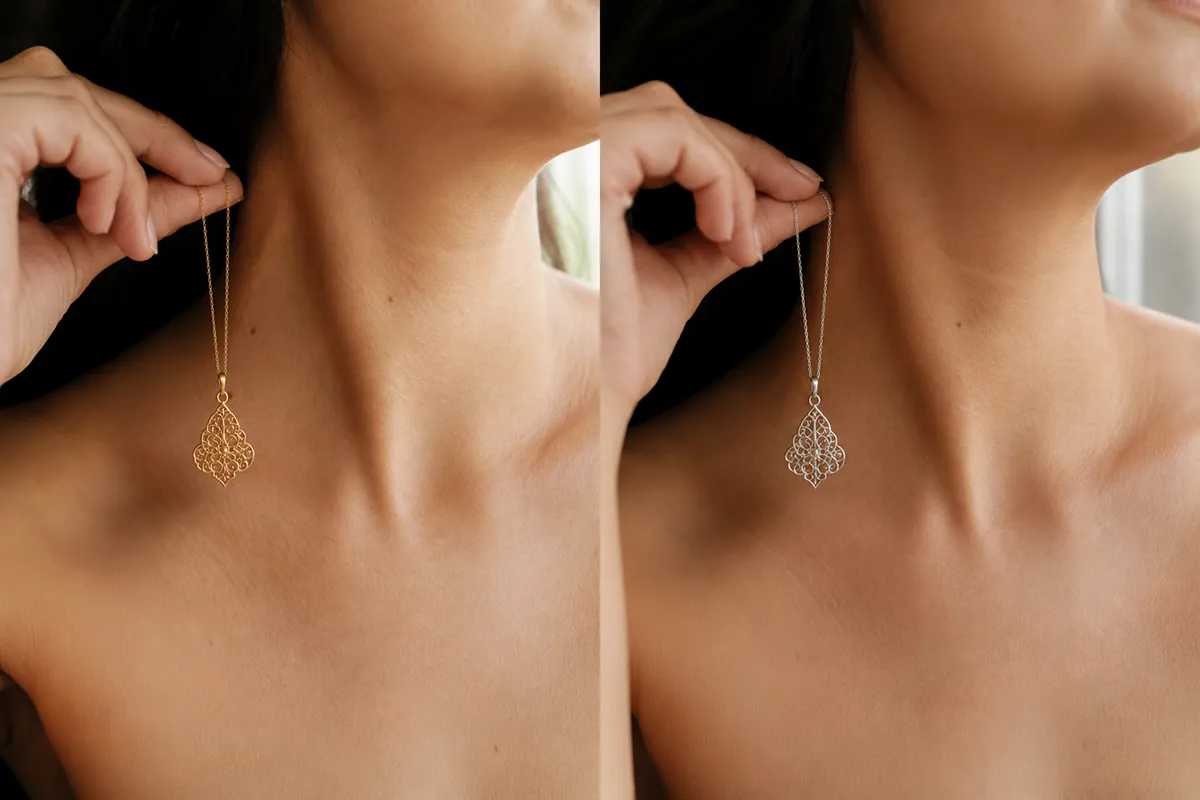
The quickest way to decide is to look at your skin’s undertone: gold generally flatters warm undertones (skin that leans golden, peachy or olive), while silver tends to suit cool undertones (skin with pink or blue undertones). A simple test is to hold both a gold and a silver piece against your wrist in natural daylight; whichever makes your skin look brighter and more even is usually your metal. That said, plenty of people wear both, and in Persian jewellery design specifically, mixing gold and silver pieces, especially when a design pairs gold with oxidised silver detailing, has become increasingly common rather than a styling mistake.
Beyond skin tone, think about how the piece will actually be worn. Gold jewellery photographs beautifully under warm indoor lighting and against darker fabrics, which is part of why it dominates Persian wedding and engagement pieces. Silver reads as cleaner and more understated, which is why it is the metal of choice for daily-wear protective pieces like the evil eye, and for younger buyers building a first jewellery collection on a smaller budget.
The Real Differences Between Persian Gold and Silver Jewellery
The two metals differ in far more than colour. Persian gold jewellery is almost always worked in 18 carat gold (750 purity), which is harder and more durable than the 24 carat gold favoured in parts of South Asia and the Gulf, making it better suited to pieces that get worn often, like a wedding ring or a daily necklace. Persian silver, by contrast, is typically sterling silver at 925 purity, meaning 92.5% pure silver alloyed with other metals for strength, and it is almost always hallmarked accordingly.
Weight and price are the other obvious differences. Gold is significantly heavier and, gram for gram, far more expensive, which is why a gold vs silver jewelry decision is often really a budget decision in disguise. Silver lets you buy a bolder, more detailed design, filigree work in particular, for a fraction of the cost of the equivalent piece in gold, without sacrificing craftsmanship.
How Persian Craftsmanship Treats Gold and Silver Differently
This is where the two metals genuinely diverge as crafts, not just as materials. Persian goldsmiths, historically concentrated in cities like Persian Heritage and Najafabad, work gold using techniques passed down through family workshops: hand engraving (ghalam zani), fine granulation, and the setting of turquoise and coloured stones into 18K settings. A well-made Persian gold piece will show slightly irregular, hand-finished engraving under close inspection rather than the machine-perfect uniformity of mass-produced jewellery, and that irregularity is actually a mark of authenticity, not a flaw.
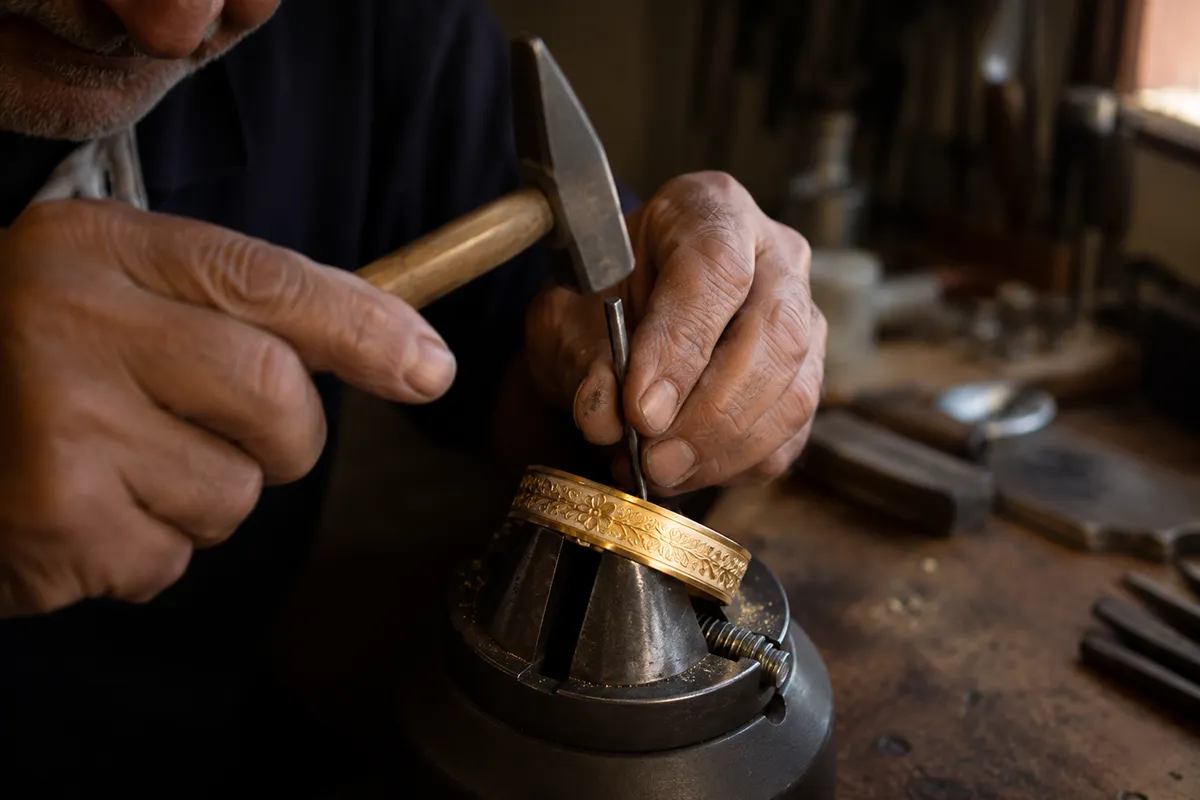
Silver, meanwhile, is the metal most associated with Persian filigree, known as malileh, a technique historically centred in Zanjan in north-western Persian, where fine silver wire is twisted, coiled and soldered into lace-like patterns without a solid metal backing. Genuine malileh work is astonishingly light for how intricate it looks, and it takes a skilled silversmith days rather than hours to complete a single piece. Silver is also the traditional base for oxidised, antique-finish jewellery, where the recessed parts of a design are deliberately darkened to make the pattern stand out, a finish that simply does not work the same way on gold.

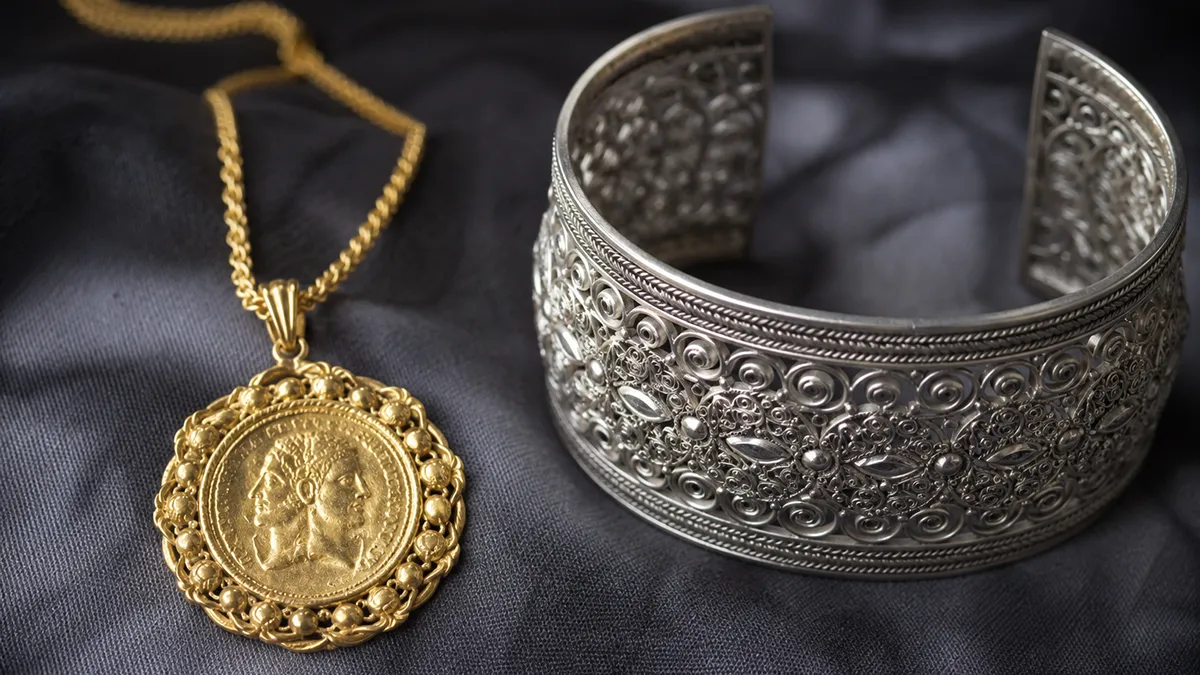
At Persis Collection, when we work with our jewellery suppliers, this distinction shapes what we recommend for which piece. A heritage coin necklace or a piece meant to be passed down tends to make more sense in gold, since it is built to last generations and carries more cultural weight as a gift. A statement filigree cuff or an evil eye pendant meant for everyday wear makes more sense in silver, both for cost and because the intricate detailing genuinely reads better against the metal’s brighter, cooler shine. Our guide to the history of Persian gold jewellery goes further into how these techniques developed over the centuries if you want the fuller picture.
Which Occasions Call for Gold and Which Call for Silver
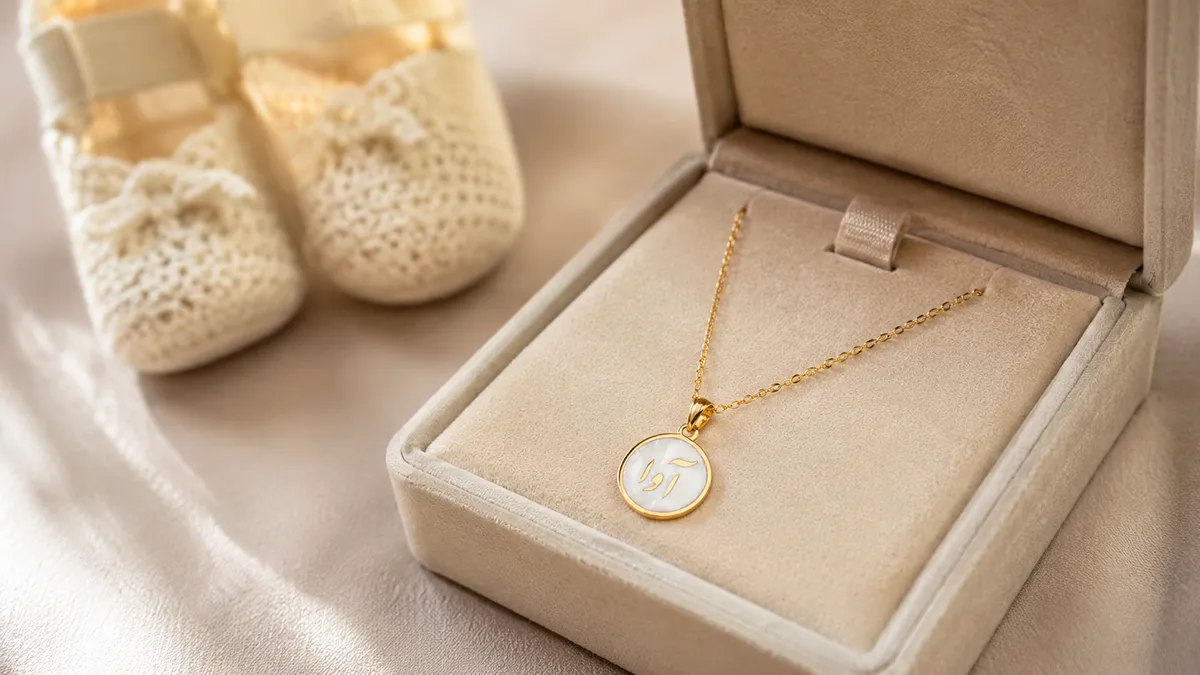
Gold is still the expected choice for major life milestones in Persian culture: engagement and wedding jewellery, gifts to mark a birth, and pieces given at a sofreh aghd table almost always lean gold, partly for the symbolism of permanence and partly because gold historically doubled as a store of value that a family could rely on. If you are choosing a gift for an engagement, an anniversary, or any occasion meant to signal lasting commitment, gold is the safer and more traditional choice.
Silver suits a wider range of everyday occasions. It is the natural choice for a first piece of jewellery for a teenager or young adult, for protective pieces like nazar and evil eye jewellery that are meant to be worn constantly rather than saved for special occasions, and for gifts where you want something beautifully made without the price tag of gold. If you are new to Persian jewellery and want to try the aesthetic before committing to a gold piece, starting with a well-made silver design is a genuinely sensible way in.
Caring for Gold and Silver Persian Jewellery
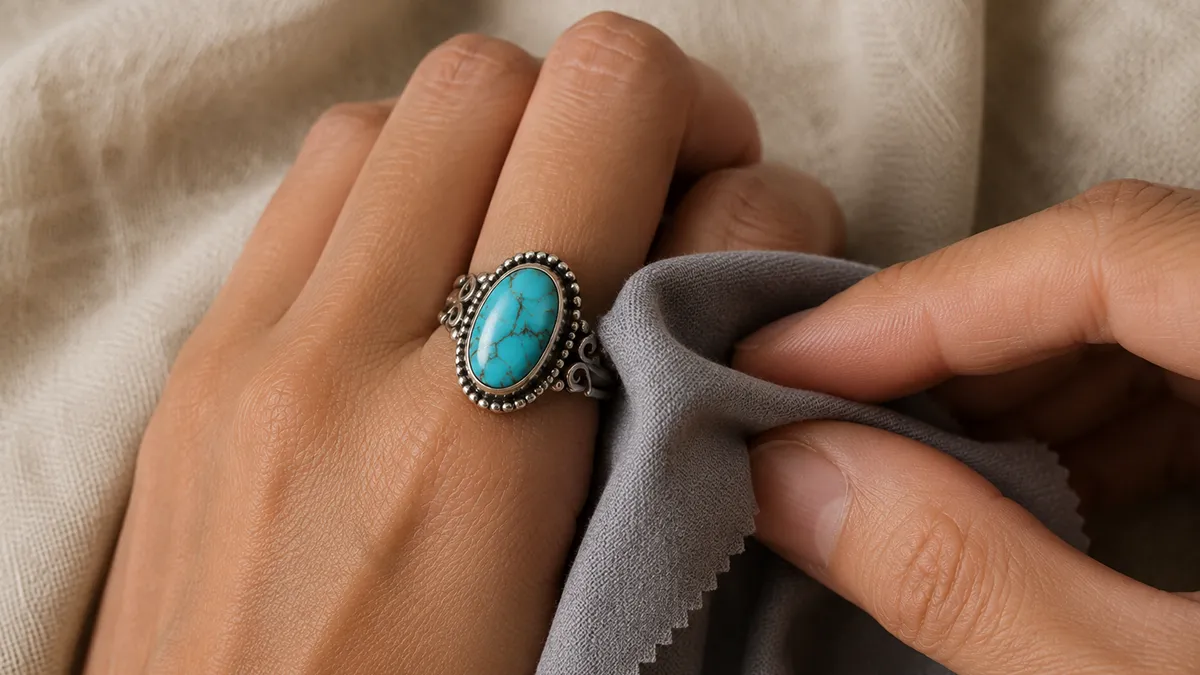
Gold needs relatively little maintenance: a soft cloth wipe after wearing and an occasional clean with mild soapy water keeps 18K pieces looking sharp for decades, since gold does not tarnish. Silver needs more attention, as it naturally oxidises over time when exposed to air and moisture, which is why plain sterling silver pieces benefit from being stored in an airtight bag and polished periodically with a proper silver cloth. Note that on filigree and oxidised pieces specifically, you should only clean the raised, shining areas and leave the recessed dark patterning alone, since that darkening is intentional and part of the design. If you already own turquoise-set pieces in either metal, our turquoise jewellery care guide covers the extra precautions turquoise stones need, since the stone itself is more delicate than either setting metal.
Gold vs Silver as Gifts: What to Choose for Every Occasion
When you are shopping for gold vs silver jewelry gift ideas, let the relationship and the occasion guide the metal rather than personal preference alone. For a close family member’s wedding or engagement, gold signals the seriousness of the occasion. For a friend’s birthday, a graduation, or a “thinking of you” gift, a beautifully made silver piece, particularly one with filigree or an evil eye motif, tends to feel more personal and less formal without feeling like a lesser gift. If you are ever unsure, a piece that combines both metals, gold detailing set into a silver base is a genuinely popular middle ground that lets the recipient wear it with almost anything.
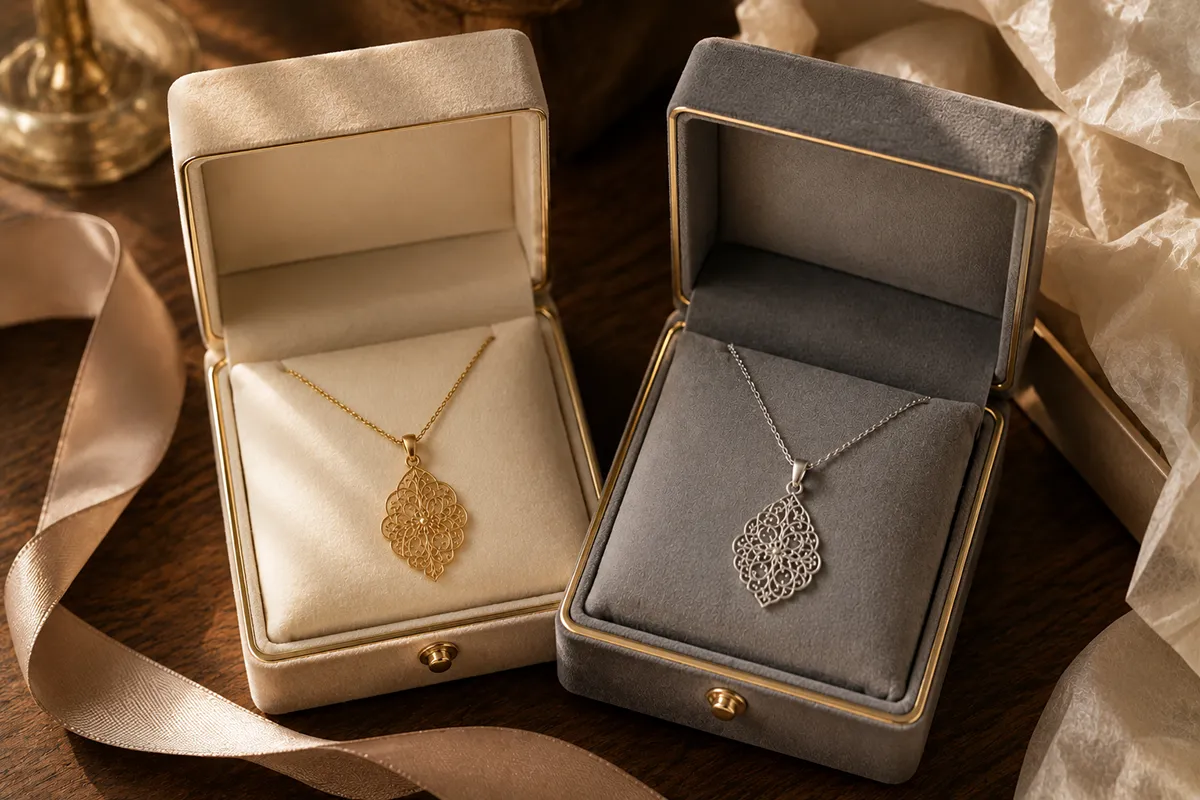
If you would like to shop gold vs silver jewelry side by side rather than choosing on the page, our Persian gold jewellery collection is a good place to see the full range of 18K pieces we currently have available, from heritage coin designs to everyday-wear pendants, alongside our silver filigree and evil eye ranges elsewhere on the site.
Conclusion
There is no universally correct answer to gold vs silver jewelry, only the answer that suits your skin tone, your budget and the occasion in front of you. Gold carries more weight, literally and symbolically, in Persian tradition, making it the natural choice for weddings, engagements and pieces meant to last generations, while silver offers extraordinary craftsmanship, particularly in filigree work, for a fraction of the price, and suits everyday and protective pieces beautifully. When you shop gold vs silver jewelry gift ideas with us, we would always rather point you towards the metal that actually suits the recipient and the occasion than the more expensive option by default. Whichever you choose, look for hand-finished detailing and proper hallmarking as your marks of genuine Persian craftsmanship.
Frequently Asked Questions
What is the actual difference between gold and silver jewellery?
Gold and silver differ in colour, weight, price and durability. Gold is warmer in tone, heavier and more expensive, and in Persian jewellery is typically 18 carat (750 purity), while silver is cooler in tone, lighter, more affordable, and typically sterling silver at 925 purity. Both can be equally well made; the difference is material, not quality.
Is Persian gold jewellery different from gold jewellery from other countries?
Yes, in a few concrete ways. Persian gold jewellery is almost always 18K rather than the 22K or 24K more common in South Asian and Gulf jewellery, which makes it more durable for everyday wear. It also tends to feature hand engraving, filigree detailing and turquoise or coloured stone settings that reflect specific regional techniques developed in cities like Persian Heritage.
How can I check that Persian gold or silver jewellery is genuine?
Look for a hallmark stamp, usually a small mark stating the purity, such as 750 for 18K gold or 925 for sterling silver, stamped somewhere discreet on the piece, such as inside a ring band or on a clasp. On handmade pieces, slightly irregular engraving or filigree work is actually a good sign of genuine hand craftsmanship rather than a flaw, since machine-made replicas tend to look too perfectly uniform.
Does Persian silver jewellery tarnish, and how do I stop it?
Yes, sterling silver naturally oxidises over time when exposed to air, moisture and skin oils, which is normal and not a sign of poor quality. Slow it down by storing pieces in an airtight bag or box when not being worn, avoiding contact with perfume and lotion, and polishing occasionally with a proper silver cloth, taking care not to polish away intentional oxidised detailing on filigree pieces.
Can I wear gold and silver Persian jewellery together?
Yes, mixing metals has become widely accepted rather than a styling mistake, and many modern Persian designs deliberately combine gold detailing with a silver base, or the reverse. If you are new to mixing metals, start with one dominant piece in each metal, for example a gold ring with a silver necklace, rather than layering several pieces of each at once.

Comments