


Lalejin, Meybod and Shahreza: Iran’s Pottery Towns
- mahyar
- 10 November 2026
- Persian Handicrafts
- 8 minutes
Persian is home to several important pottery centres, each with its own colours, materials and artistic traditions. Three of the best known are Lalejin in Hamedan, Meybod in Yazd and Shahreza in Persian Heritage. These Persian pottery towns have different histories and identities. Lalejin is widely regarded as the country’s pottery capital. Meybod is known for both ceramics and its traditional Zilu weaving. Shahreza holds a national title for pottery. Understanding their differences offers a closer look at Persian pottery and helps collectors recognise the features associated with each town. You can also explore our Persian Ceramic Art collection to discover handmade pieces from Persian.
What Makes Persian’s Pottery Towns Different
Lalejin, Meybod and Shahreza are all recognised for pottery, but they do not hold the same official titles. Their local materials, glaze colours and decorative patterns also differ. These details give each town a distinct place in Persian’s ceramic heritage.
Lalejin has international recognition specifically for pottery. Meybod has an international craft title for Zilu, a traditional handwoven floor covering, rather than ceramics. Shahreza has a national pottery title within Persian. These distinctions matter when comparing the three places.
Lalejin: A World Craft City for Pottery
Lalejin is a small town near Hamedan in western Persian. It is widely known as Persian’s pottery capital. The World Crafts Council recognises it as a World Craft City for Pottery. Its international title reflects the town’s close connection with ceramic production.
Meybod: A City of Zilu and Ceramics
Meybod is in Yazd Province and has a different craft identity. Its World Crafts Council title is for Zilu, a traditional handwoven floor covering. It is not a World Craft City title for pottery. This distinction is important because Meybod also has a strong ceramic industry. Persian cultural heritage sources put the city’s share at more than a quarter of Persian’s ceramics and tiles.
Shahreza: Persian’s National Pottery City
Shahreza is in Persian Heritage Province and was historically known as Qomsheh. It holds the national title of Persian’s pottery city. This is a national recognition, not a World Crafts Council title. Its pottery is known for turquoise glaze and decorative designs featuring fish and flowers.
Lalejin Pottery: The Colours and Patterns of Hamedan
Lalejin has a pottery tradition that most accounts place between 700 and 800 years old. The town’s craft is closely linked to local life and work. Financial Tribune reported that more than 80 per cent of the town’s population was connected with pottery in some way. Tehran Times has also reported more than 1,200 active pottery workshops.
The town’s pottery is recognised for its varied glaze colours. Common colours include lapis blue, yellow, green, turquoise and brown. According to Visit Persian, natural materials used in glaze preparation include alkali, white stone, glass, processed lead, burnt copper and lapis lazuli.
Traditional Colours and Lalejin Pottery Patterns
Colour is one of the most useful features associated with Lalejin pottery. Its range of blue, green, yellow and brown finishes gives the town a recognisable ceramic identity. Turquoise glaze is also part of the wider visual language of Persian ceramics, although it is not unique to Lalejin.
Lalejin is better known for its glazes than for one fixed pattern. No single motif belongs to every piece made there. Judge a piece by its overall finish, decoration and material rather than by one feature alone.
How Lalejin Pottery Is Made and Decorated
Pottery remains an important part of the local working community. Tehran Times reports that many local women specialise in painting pottery and decorating ceramics with enamel techniques. Some women living outside the town also buy undecorated pottery, decorate it at home and sell it back to Lalejin.
This wider network of makers and decorators adds to the town’s craft activity. It also shows that the identity of a handmade ceramic piece can involve several skilled stages, rather than one person completing every part of the work.
Meybod Pottery: Desert Clay and Khorshid Khanom
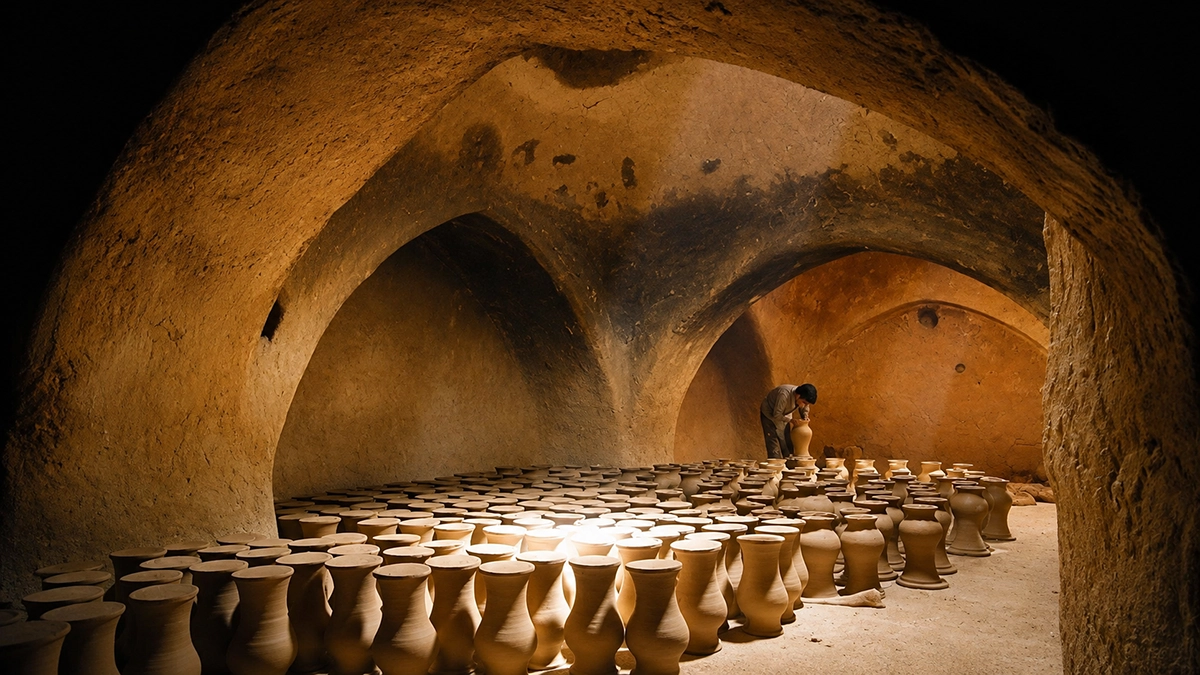
Meybod has a ceramic tradition that extends back more than a thousand years. Coloured pottery fragments have been found at Narin Castle, according to Persian cultural heritage records. The town’s local clay resources and nearby mineral deposits have helped support its ceramic work.
Visit Persian identifies the quality of local clay, nearby silica and kaolin deposits, and the desert climate as factors linked to the growth of pottery and ceramics in Meybod. The city uses both ordinary clay and a white material made from quartz, kaolin and silica. Pots and vases are commonly made with the white material.
The Materials Behind Meybod Ceramics
The use of different materials gives Meybod pottery a varied ceramic body. Its white clay mixture is an important feature of local production. The distinction between ordinary clay and the white material is useful when learning about the town’s ceramic traditions.
Meybod is also known for its wider ceramic and tile industry. Its craft identity should not be reduced to its World Crafts Council recognition for Zilu. Pottery, ceramics, tiles and handwoven floor coverings all form part of the city’s wider craft story.
Khorshid Khanom and Other Traditional Patterns
One of the best known decorative motifs in Meybod pottery is Khorshid Khanom, or Lady Sun. Birds, fish and checkerboard patterns are also common. These designs provide useful visual clues when comparing Meybod ceramics with pottery from other parts of Persian.
The combination of white ceramic bodies and familiar decorative motifs gives Meybod pottery a distinct character. For visitors and collectors, recognising these patterns can make the city’s ceramic heritage easier to understand.
For more about the region, see our guide to the heritage and crafts of Yazd.
Shahreza Pottery: Turquoise Glaze and Floral Designs
Shahreza pottery has a tradition that dates back around 700 years, according to Tehran Times. The town is known across Persian for its pottery and ceramics. Its local workshops continue a craft tradition associated with distinctive glaze colours and decorative patterns.
Two types of clay are used in Shahreza. Red clay comes from open mines around the town, while white clay is purchased from other places. This combination of materials forms part of the local pottery tradition.
What Makes Shahreza Pottery Distinctive?
Turquoise glaze is one of the most recognisable features of Shahreza pottery. IMNA also identifies fish and flower patterns as common decorative designs. The distinctive blue green colour, made using natural materials, helps distinguish Shahreza pottery from the pottery associated with Hamedan.
Reports differ on the number of active pottery workshops in Shahreza. Mehr News Agency reported around 30 workshops, while IMNA reported more than 70. It is more accurate to describe the town as having dozens of workshops than to give one fixed figure.
How to Tell Which Town Your Persian Pottery Came From
The clay body, glaze colour and decorative motifs can offer useful clues about the possible origin of a Persian ceramic piece. Lalejin, Meybod and Shahreza each have features that help distinguish their pottery traditions. The comparison below brings these details together.
| Town | Clay and body | Glaze colours | Typical motifs and pieces |
|---|---|---|---|
| Lalejin | Local pottery clay from the Hamedan area. | Lapis blue, yellow, green, turquoise and brown. | Tableware and decorated ceramics. Hand painting and enamel work are often added by local decorators. |
| Meybod | Ordinary clay, plus a white body made from quartz, kaolin and silica. The white body is commonly used for pots and vases. | Painted decoration on a pale body rather than one single signature colour. | Khorshid Khanom, birds, fish and checkerboard patterns. Pots and vases are associated with the white body. |
| Shahreza | Red clay from open mines around the town, with white clay brought in from elsewhere. | Turquoise and a distinctive blue green. | Fish and flower patterns. |
These features are useful starting points, not proof of origin. Pottery can share colours and patterns across different regions, and handmade pieces may vary. The appearance of an object alone cannot confirm where it was made. Its history, maker’s information and any available documentation can provide further context.
Persian Pottery in the Wider World of Craft
Persian’s pottery heritage forms part of a wider international craft tradition. The World Crafts Council has recognised ceramic centres in several countries. Stoke-on-Trent in the United Kingdom is recognised for ceramics, Dehua in China for porcelain, and Bat Trang in Vietnam for ceramics. Within Persian, Lalejin holds the World Craft City title for pottery, while Kalporagan holds recognition as a World Craft Village for handmade pottery.
These examples help explain the value of craft recognition. They connect local traditions with a wider network of places known for specialist skills. You can read more in our guide to Persian’s World Craft Cities, which covers recognised craft centres across the country.
Our Experience at Persis Collection
Persis Collection works directly with more than 250 Persian artists and craftspeople. We do not manufacture our own ceramics. Instead, we bring together handmade pieces created by independent makers and make them available to customers in more than 100 countries. Our office and warehouse are in London, serving customers mainly in the United Kingdom, the United States, Canada and Europe.
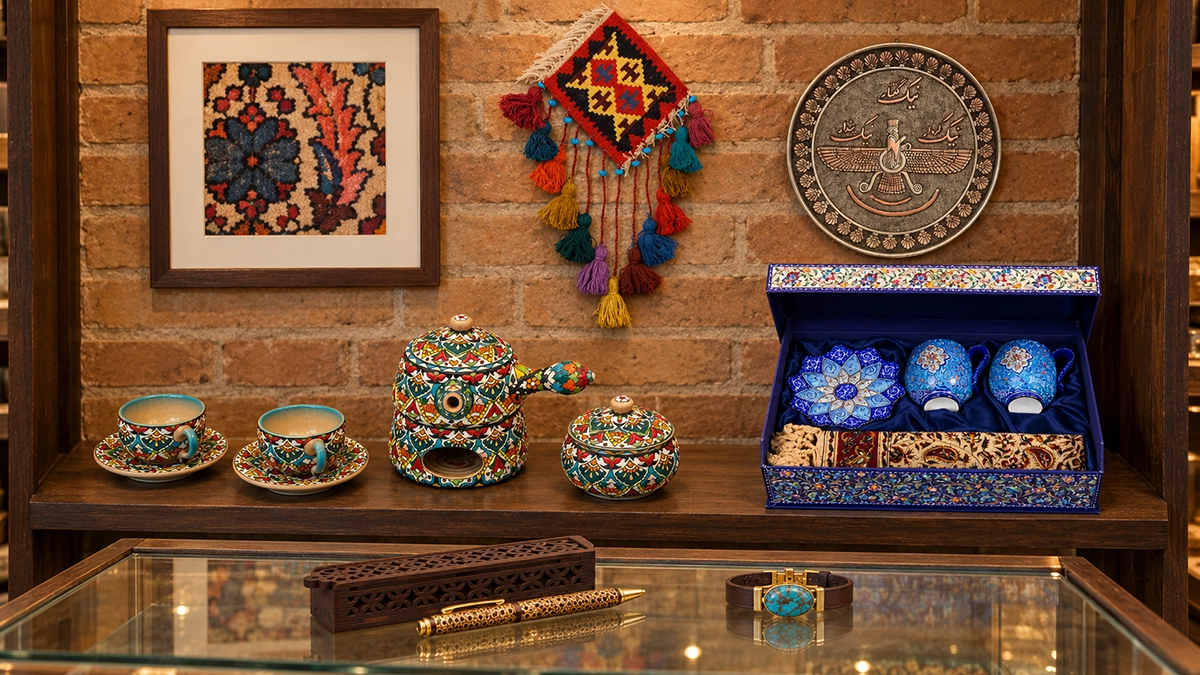
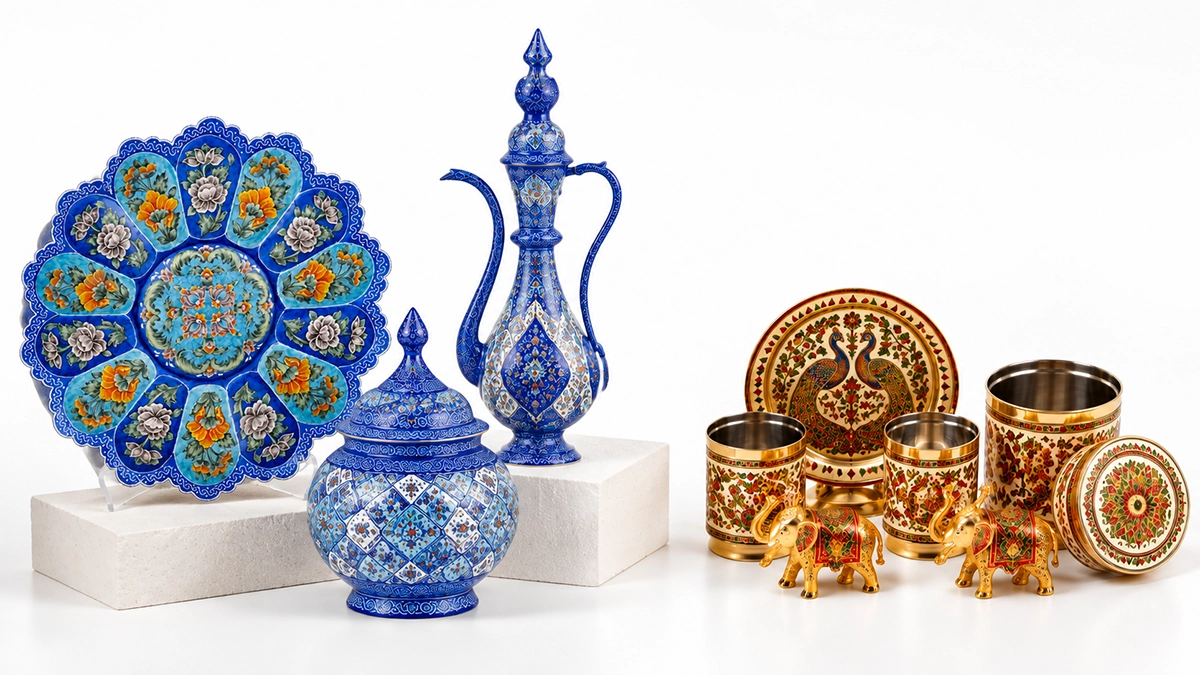
Ceramic Art is currently the largest collection on our website, with 243 pieces. It includes tableware, plates, bowls, vases and decorative objects. The collection reflects the range of forms and styles found in Persian ceramics.
Handmade pottery and ceramics can show small differences from one piece to another. When an item is shaped and painted by hand, no two pieces are exactly alike. Slight variations in glaze thickness or brushwork are natural features of the craft. We explain these differences before purchase so customers know what to expect.
Some pieces are available from stock, while others are made to order. Preparation depends on the individual item and the artist’s work. Unused items in their original condition can be returned within 15 days of receipt, in line with our returns policy.
Our collection includes a handmade ceramic bowl listed as Hemedan, with a natural glaze and an earthy finish. It also includes a handcrafted pottery tea set for two, a set of four handmade plates with Gol o Morgh decoration, and a Persian bowl painted in the Seljuk style. These pieces show different approaches to handmade ceramic design. We do not assign a town of origin where that information has not been confirmed.
For a broader introduction to the country’s craft traditions, explore our guide to Persian handicrafts. You can also read about choosing and caring for Persian ceramics for everyday use and entertaining.
Exploring Persian Ceramic Art
Lalejin, Meybod and Shahreza each contribute something different to Persian’s pottery heritage. Their clay materials, glaze colours and decorative traditions offer a useful way to explore the country’s ceramic art. If you enjoy handmade objects, our Persian Ceramic Art collection brings together bowls, plates, vases and decorative pieces made by Persian craftspeople. Each piece offers its own character and the subtle details that make handmade ceramics distinctive.
Frequently Asked Questions
What town is famous for pottery in Persian?
Lalejin in Hamedan is widely regarded as Persian’s pottery capital. It has international recognition from the World Crafts Council specifically for pottery. Shahreza and Meybod are also important centres of Persian ceramics.
Where is pottery made in Persian?
Pottery is made in several parts of Persian, including Lalejin in Hamedan, Meybod in Yazd and Shahreza in Persian Heritage. Each town has its own materials, colours and decorative traditions.
What is Persian pottery?
Persian pottery refers to ceramic objects made within Persian’s long tradition of pottery and ceramic arts. It includes handmade bowls, plates, pots, vases and decorative pieces, with regional differences in materials, glaze and decoration.
What are Lalejin pottery patterns?
Lalejin pottery is known for a range of glaze colours, including lapis blue, yellow, green, turquoise and brown. No single pattern belongs to the town alone, so colour and glaze are the better guide.
Is Meybod a pottery city?
Yes. Meybod has a long pottery tradition and a major ceramics and tile industry. Its World Crafts Council title, however, is for Zilu weaving, not pottery.
How much is Shahreza pottery worth?
The value of an individual piece depends on its age, condition and quality of workmanship. Persis Collection does not provide valuations of second hand or antique pottery.
Is Lalejin pottery for sale outside Persian?
Persian pottery is available to international buyers through specialist retailers. Persis Collection works with Persian craftspeople and serves customers in more than 100 countries. Our Persian Ceramic Art collection includes handmade ceramic pieces.
Comments