


Neyshabur Turquoise: How to Recognise Genuine Persian Turquoise
- mahyar
- 31 October 2026
- Persian Jewellery
- 7 minutes
If you want to know how to tell if persian turquoise is real, start with its colour, natural markings and treatment history. These clues help you assess a stone, but appearance alone cannot prove its origin. Genuine turquoise can be natural and untreated, or treated to improve its durability. A convincing imitation may look almost identical in photographs.
Neyshabur turquoise has a long history in Persian jewellery. Its blue tones and natural patterns make it widely admired. If you are choosing a finished piece, explore our Persian turquoise jewellery from Neyshabur and other Persian sources while learning what to look for before buying.
How to Tell If Persian Turquoise Is Real
There is no single visual test that proves a turquoise stone is genuine or from Persian. Colour, texture, natural inclusions and the seller’s information can provide useful clues. A gemmological examination may be needed when identification remains uncertain.
Look at the Colour and Surface
Natural turquoise ranges from blue to greenish blue and green. Some stones have an even colour, while others show small differences across the surface. A rich sky blue is widely admired, but a perfectly blue stone is not automatically genuine.
Dyed imitations can reproduce attractive turquoise colours. Some natural stones are also treated to change or protect their appearance. Judge colour alongside other evidence, rather than treating it as proof.
Examine the Matrix and Natural Inclusions
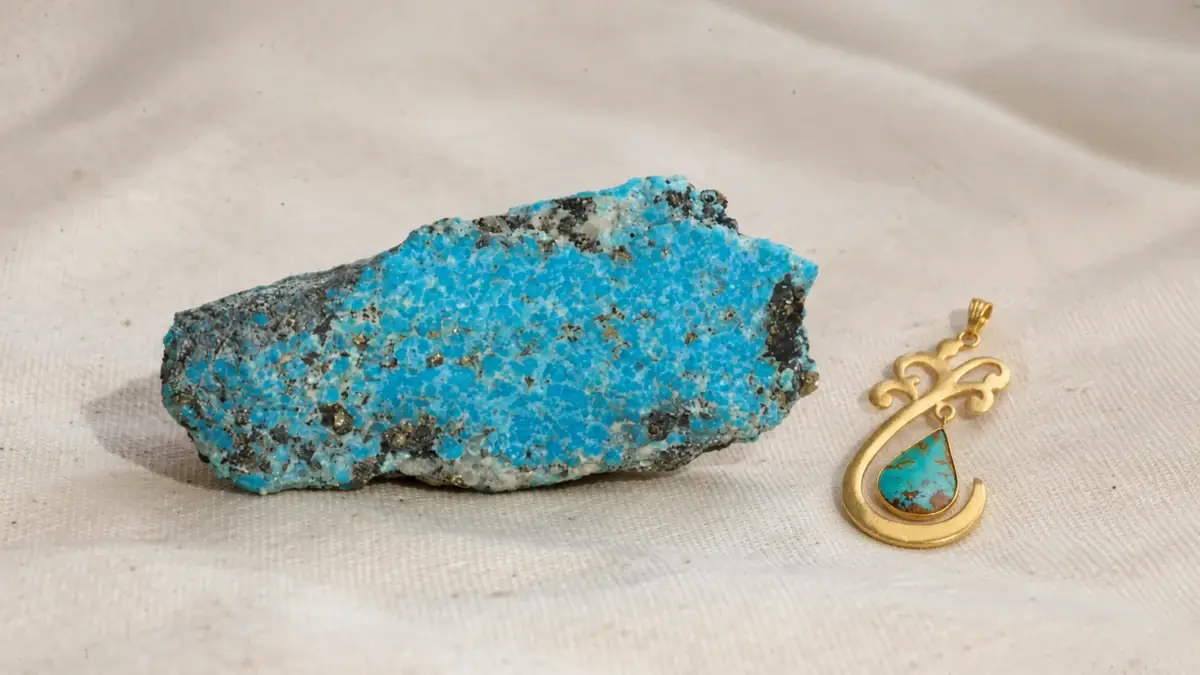
Matrix is material from the surrounding rock that remains within the turquoise. It can form brown, black or irregular lines. In Persian, fine branching patterns are often called shajari.
Natural turquoise can contain mineral inclusions. Pyrite and pale areas appear in some Persian stones. However, dyed howlite can also display convincing dark veins. Matrix is a feature to examine, not a guarantee of authenticity.
Check the Treatment and Origin Claims
Ask whether the stone is untreated, stabilised, dyed or reconstructed. These descriptions refer to different conditions and should not be used interchangeably.
Also ask where the stone was sourced. Real Persian turquoise is turquoise mined in Persian, not simply a stone of a certain shade. A genuine turquoise stone does not automatically come from Neyshabur. The words Persian blue may describe its colour rather than its geographical origin.
Why We Do Not Recommend Home Tests
Many guides on how to tell if turquoise is real suggest scratching the stone, applying acetone or heating it with a needle or lighter. We do not recommend these methods. They can damage the stone, its treatment or the surrounding jewellery.
Turquoise has a Mohs hardness of 5 to 6, according to GIA’s turquoise gem information. Hardness describes resistance to scratching. It does not establish where a stone was mined.
Temperature, UV light and water tests are also unreliable as proof of origin. For an important identification question, consult a qualified gemmological laboratory rather than risking damage at home.
What Is Neyshabur Turquoise?
Neyshabur turquoise is turquoise associated with the historic mining area near Neyshabur, also written Nishapur, in northeastern Persian. The same stone is sold as Nishapur turquoise or Neishabour turquoise, so spelling alone should not worry you. The Persian name Firoozeh is associated with victory and good fortune.
According to a 2021 field report in GIA’s Gems & Gemology, the mine lies on Mount Raish in Razavi Khorasan, around 53 kilometres from Neyshabur city. The area has supplied much of Persian’s turquoise for more than a thousand years.
Turquoise is an opaque, porous mineral containing copper, aluminium, phosphate and water. Persian turquoise has travelled through trading networks for centuries. The English name turquoise comes from an old French expression linked to its route into Europe through Turkey.
The term Persian blue reflects this history. However, colour names are not proof that a particular stone was mined in Persian.
Natural, Stabilised and Fake Turquoise: What Is the Difference?
Real vs fake turquoise is not always a simple choice between two types of stone. Genuine turquoise may receive treatment, while imitations can be made from other minerals or manufactured materials.
| Type | What it means | What buyers should know |
|---|---|---|
| Natural untreated turquoise | Genuine turquoise without added colour or stabilising treatment. | May absorb oils and change colour over time. |
| Stabilised turquoise | Genuine turquoise strengthened with resin or polymer. | Still turquoise, but its treatment should be disclosed. |
| Dyed turquoise | Genuine turquoise with added colour. | The colour has been altered and should be described accurately. |
| Dyed howlite or magnesite | Different minerals coloured to resemble turquoise. | Not genuine turquoise. |
| Reconstituted turquoise | Turquoise fragments or powder combined with a binding material. | Not equivalent to a single natural stone. |
Stabilised turquoise is not necessarily fake. The treatment helps strengthen more porous material. What matters is whether the seller clearly explains the treatment.
According to the same GIA field report, the Neyshabur mine sells its stones untreated. Where stabilising happens, it takes place later, in the cutting and inlay workshops. The stone’s appearance alone may not reveal this process.
What Makes Neyshabur Turquoise Special?
Neyshabur is recognised for its long mining history and sought after blue turquoise. Its appeal comes from colour, texture, local traditions and craftsmanship. Yet no single shade or pattern belongs exclusively to this region.
Persian Blue and Traditional Colour Grades
According to GIA’s turquoise quality factors, colour, texture and matrix influence how turquoise is evaluated. A strong, even medium blue is widely regarded as especially desirable. The market also uses descriptions such as Persian blue and sky blue.
At Neyshabur, traditional colour grading includes three broad levels. The first has the deepest colour. The second is called nim rang, while the third ranges towards pale blue or white.
These local grades help describe appearance. They do not replace identification or confirm geographical origin. Persian turquoise value also depends on the individual stone’s condition, size, treatment and overall appearance.
Shajari Turquoise and Matrix Patterns
Although even blue turquoise is often prized, some collectors prefer distinctive patterns. Shajari turquoise contains branching brown or black markings that give each stone character.
Fine spiderweb patterns can also be attractive. However, the presence of matrix does not prove Neyshabur origin. Stones from other locations may show similar features.
How to Buy Genuine Persian Turquoise Jewellery Online
Buying online means judging a stone without holding it. Clear product information is therefore more useful than claims about colour alone. A responsible seller should distinguish what is known from what remains uncertain.
Before choosing turquoise stone jewelry, consider these questions:
- Is the stone described as turquoise rather than a lookalike mineral?
- Is the claimed geographical origin clearly stated?
- Has the seller disclosed any known treatment?
- Do the photographs show the stone’s actual colour and markings?
- Are the metal, dimensions and weight explained?
- What evidence supports any claim about origin or treatment?
A certificate may provide useful evidence, depending on what it actually tests. However, a certificate is not automatically proof of a particular mine. Avoid assuming that an attractive photograph confirms an untreated stone.
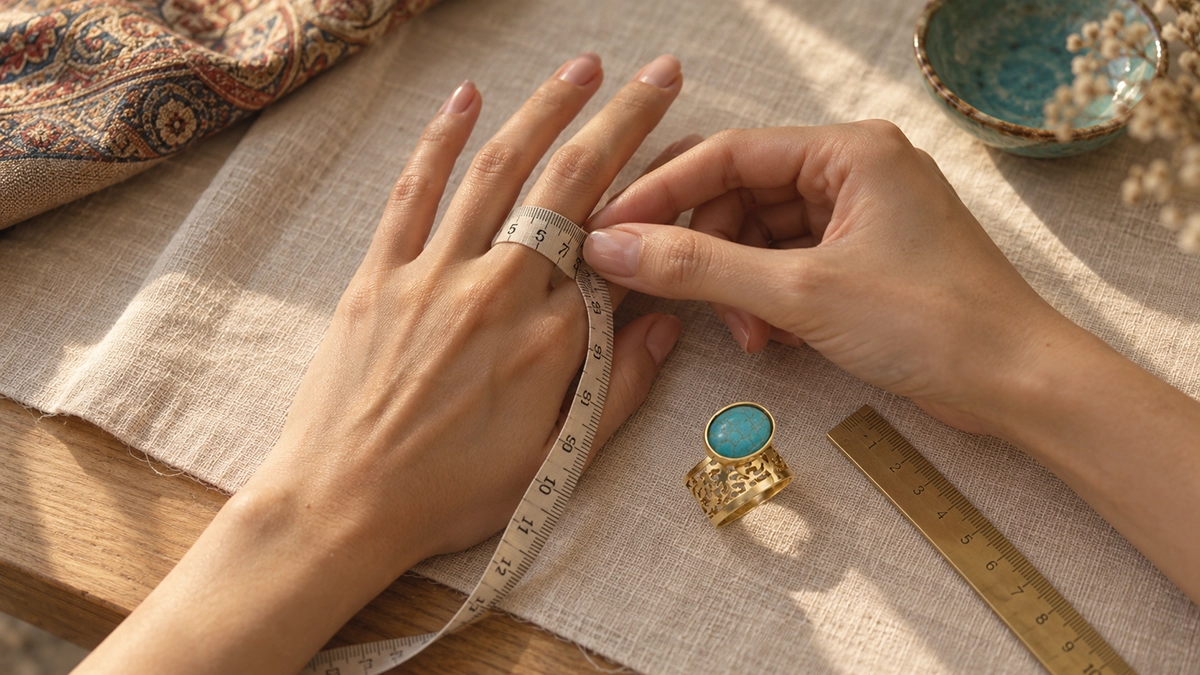
For a persian turquoise ring, also check its metal and size. Our ring size guide explains how to measure before choosing a ring.
Our Experience at Persis Collection
At Persis Collection, our turquoise jewellery is made by artists in Mashhad, in Khorasan. This is the province where the Neyshabur mine is located. Our stones are sourced through the market closest to the mine.
Our collection includes Neyshabur turquoise alongside some stones from Persian Heritage. Product descriptions identify the stated stone origin, metal and weight. We do not provide laboratory certificates for these pieces.
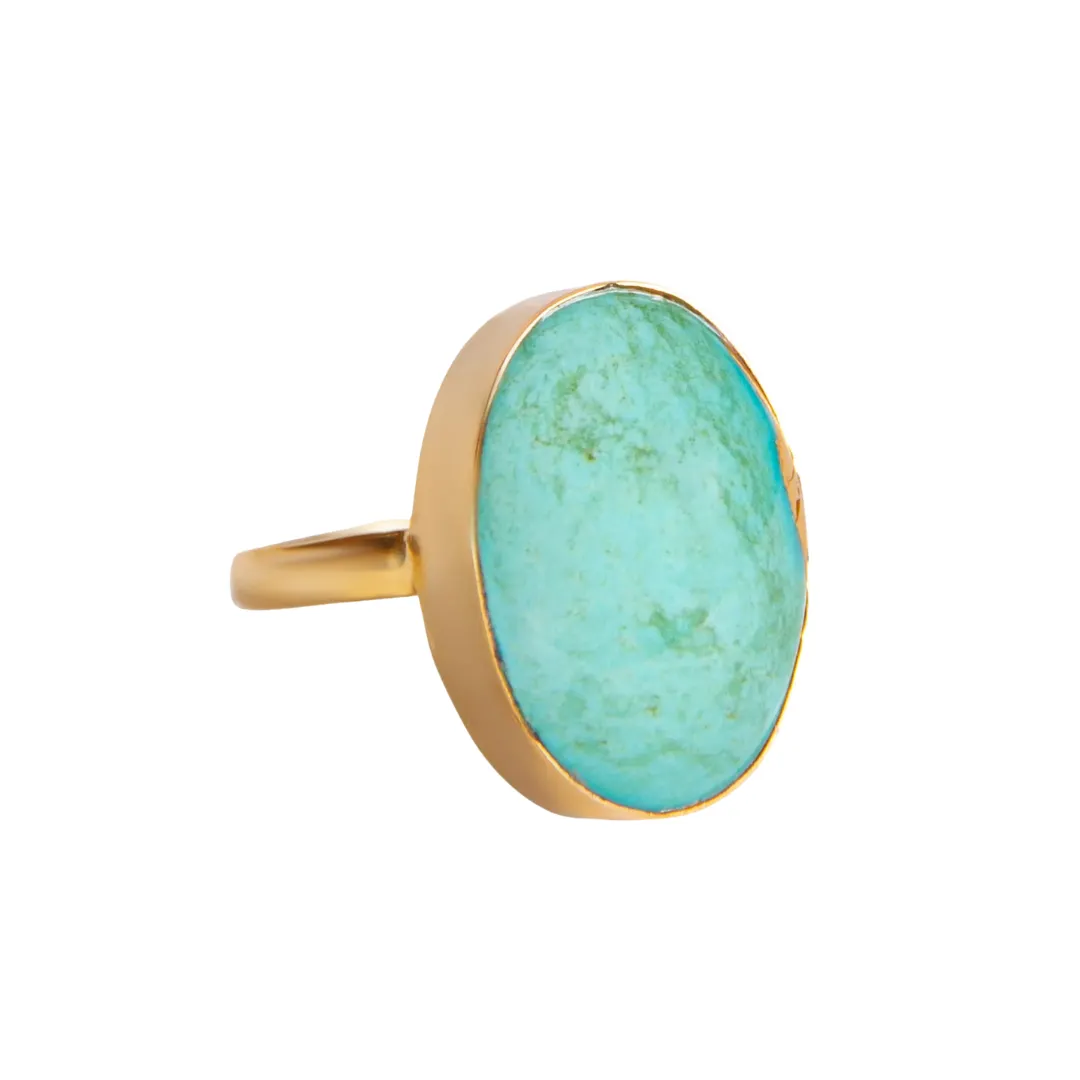
Our Persian Turquoise Ring illustrates natural looking matrix, with visible pyrite points and pale areas. Its product description identifies the stone as Persian turquoise without specifying Neyshabur or Persian Heritage as its exact origin.
We also explain that untreated turquoise can gradually become greener after years of contact with skin oils. This is a natural process rather than a flaw, and it does not mean the stone is fake.
We recommend putting jewellery on after perfume or creams and removing it before swimming or washing dishes. Our turquoise jewellery care guide explains more. For silver settings, see our silver jewellery cleaning guide, while keeping cleaning products away from the stone.
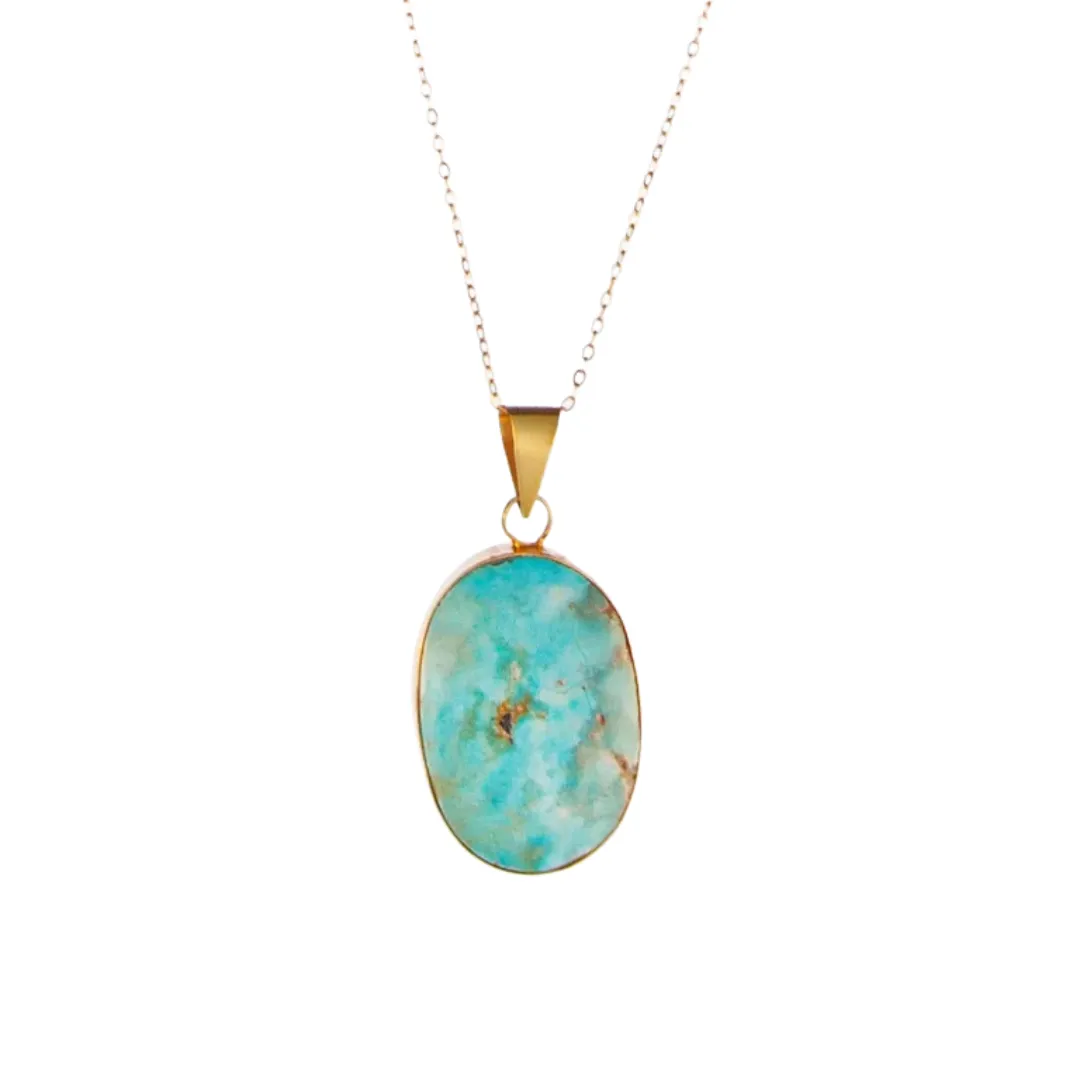
The collection includes rings, necklaces and bracelets in silver, gold and brass. Some pieces feature traditional Ghalamzani, a form of hand engraving on metal.
Persis Collection Turquoise Jewellery


Our London warehouse serves customers worldwide, including families with Persian roots and people discovering Persian crafts through someone close to them. Firoozeh Koobi, the art of setting small turquoise pieces into metal, is another Persian craft explored in our history of Firoozeh Koobi.
Choosing a Persian Turquoise Piece with Confidence
Genuine Persian turquoise deserves to be appreciated for more than its colour. Look at the natural markings, ask about treatments and examine the information supporting its origin.
Remember that stabilisation does not turn real turquoise into an imitation. Equally, an attractive Persian blue colour cannot prove that a stone came from Neyshabur.
If you are considering a meaningful piece of jewellery, explore the Persis Collection turquoise jewellery collection and compare the materials, dimensions and stone descriptions at your own pace.
Frequently Asked Questions
How to Tell If Persian Turquoise Is Real at Home?
You can examine colour, matrix and product information at home, but these cannot confirm authenticity or mine origin. Avoid destructive tests. If certainty is essential, seek a qualified gemmological assessment.
What Does Fake Turquoise Look Like?
Fake turquoise may have bright blue colouring, dark veins and a polished surface. Dyed howlite and magnesite can closely resemble genuine stone. Appearance alone is not enough to distinguish them reliably.
Is Stabilised Turquoise Fake?
No. Stabilised turquoise is genuine turquoise treated with resin or polymer to improve durability. The treatment should be disclosed because untreated and stabilised stones are different products.
Is Persian Turquoise More Valuable Than Other Turquoise?
Some Persian turquoise is highly valued for its colour, history and quality. Value depends on the individual stone, including colour, matrix, size, condition and treatment. Persian origin alone does not determine value.
Does Real Turquoise Change Colour Over Time?
Yes. Untreated turquoise can absorb oils and other substances and may gradually become greener. Heat, sunlight and chemicals can also affect its appearance. Careful handling helps limit unwanted changes.
What Is the Difference Between Neyshabur Turquoise and American Turquoise?
The main difference is geographical origin. Neyshabur turquoise comes from a historic mining area in Persian, while American turquoise comes from deposits in the United States. Colours and matrix patterns can overlap, so appearance alone cannot establish the source.
Can You Test Turquoise with a Lighter, UV Light or Water?
These are not reliable ways to prove turquoise authenticity or origin. Heat and water exposure can also harm some stones. Professional examination is safer when the answer matters.
Is Turquoise a December Birthstone?
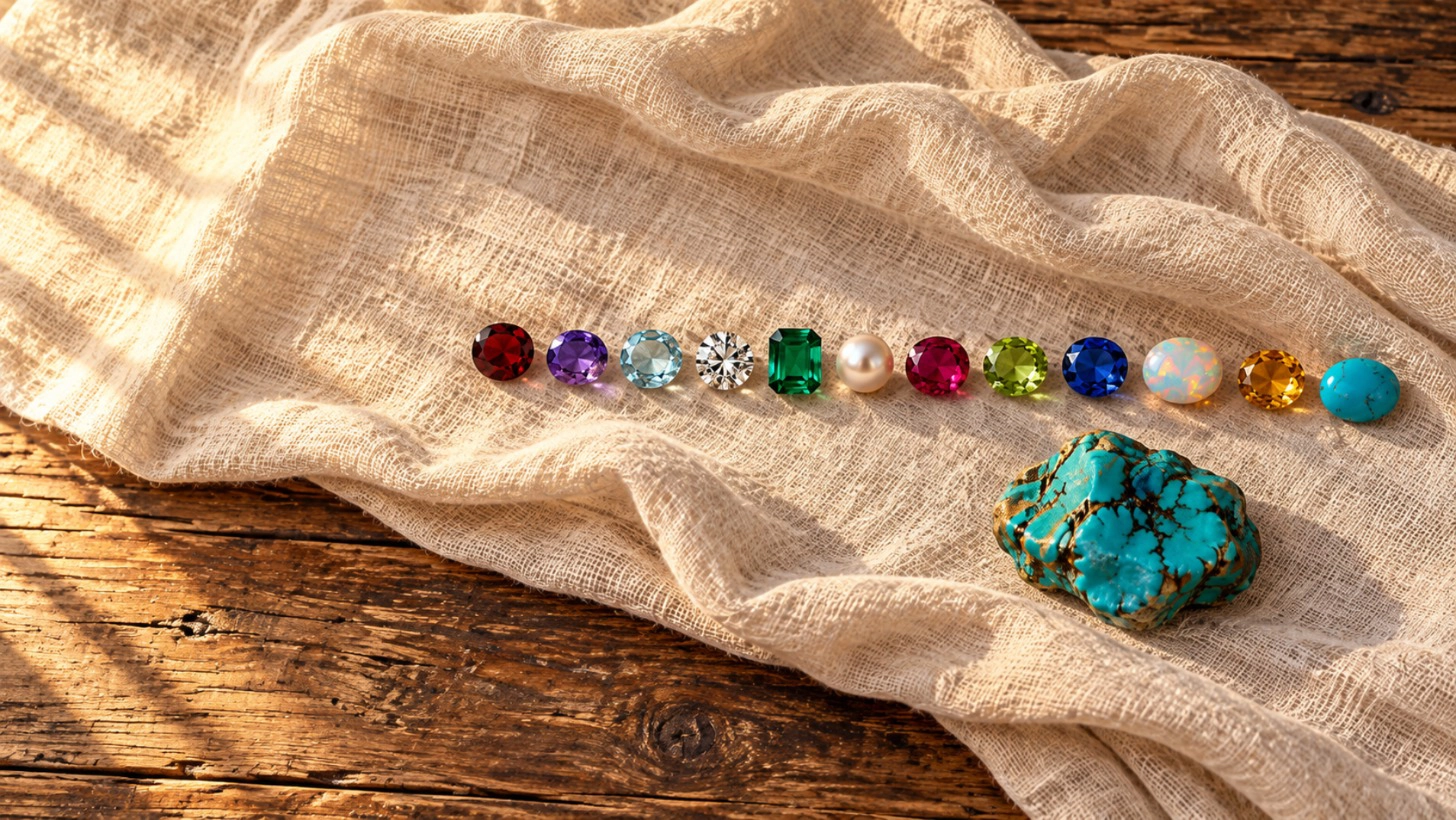
Yes. Turquoise is recognised as a December birthstone. You can learn about its place among other stones in our birthstones by month guide.
Comments