


What Is Abangan? The Zoroastrian Festival Honouring Anahita and Water

- mahyar
- 27 October 2026
- Uncategorized
- 7 minutes
The Abangan festival is an ancient Persian celebration that honours water and its place in life. Rooted in Zoroastrian tradition, it is closely linked to Anahita, a divine figure associated with rivers and lakes. In the calendar used by Zoroastrians in Persian, Abangan falls on 26 October each year. It is a day for recognising the value of water through prayers and traditional observances. The festival also has stories, names and dates that can seem confusing at first. Understanding these details offers a clearer picture of a tradition that has endured for centuries.
What Is the Abangan Festival?
Abangan is a Zoroastrian festival dedicated to the waters. Its name comes from Aban, the Persian term used for the waters in the Zoroastrian calendar. It is one of the ancient Persian festivals linked to the relationship between people, nature and sacred tradition.
According to Mary Boyce in Encyclopaedia Iranica’s entry on Aban Mah, the eighth Zoroastrian month belongs to the waters. The tenth day of each month is also dedicated to them. When these two names meet, the result is a special festival.
The Meaning of Aban Roz and Aban Mah
Aban Roz means the day dedicated to the waters. Aban Mah is the eighth month, also dedicated to the waters. Their meeting gives Abangan its place in the calendar.
The festival is also called Abanegan, Abanagan, Abanegan festival and Aban Jashan. Another traditional name is Aban Ardvisur Jashan, reflecting its connection with Aredvi Sura Anahita.
Like Mehregan, the Persian autumn festival, Abangan belongs to a wider tradition of named days and months. Mehregan falls in the preceding month of the Persian calendar.
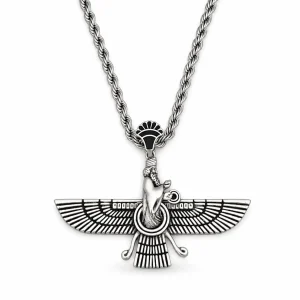
These festivals remain part of Persian’s cultural heritage. People interested in that heritage can also explore the Faravahar inspired jewellery and decorative art collection, which features a separate symbol associated with Zoroastrian tradition. The Faravahar is not a symbol of Anahita herself.
When Is the Abangan Festival Celebrated?
Abangan has more than one date because different calendars are used. The festival is held on 26 October in the seasonal Zoroastrian calendar used in Persian. In the official Persian calendar, the corresponding named day is 10 Aban, around 1 November.
26 October in the Persian Zoroastrian Calendar
The Fasli or Bastani calendar follows the seasons. In this calendar, Abangan takes place on 26 October every year. This is the date commonly used when discussing the festival as a Zoroastrian observance in Persian.
Around 1 November in the Official Persian Calendar
The official Persian calendar uses different month lengths and a different arrangement of dates. Its 10 Aban falls on 31 October or 1 November, depending on the year.
The difference explains why some accounts describe Abangan as taking place on 4 Aban, while others give 10 Aban. They reflect different ways of matching the traditional festival with the official calendar.
Why Parsi Dates Vary
Some Parsis in India follow the Shahenshahi or Kadmi calendars. These systems do not use leap years, so their dates move gradually through the seasons when compared with the Gregorian calendar.
There is therefore no single fixed Gregorian date that applies to every Parsi community. The calendar followed by a community matters when identifying its festival date.
Who Is Anahita in Zoroastrian Tradition?
Anahita is a divine figure associated with water, particularly rivers and lakes. She is also known as Aredvi Sura Anahita. Over time, the honouring of waters became closely connected with devotion to her.
Mary Boyce describes how these traditions came together. This helps explain why a festival named after the waters also has a strong connection with Anahita.
Aredvi Sura Anahita and the Waters
In Zoroastrian texts, Aredvi Sura Anahita has a prominent place in the praise of the waters. Her name also appears in the traditional title Aban Ardvisur Jashan.
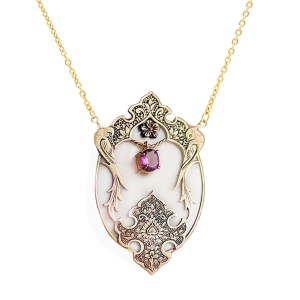
Her place in Persian cultural history has inspired artists as well as religious traditions. One example is our engraved Anahita shell necklace, a handmade piece combining brass Ghalamzani, shell and amethyst. Ghalamzani is the art of engraving patterns into metal by hand. This necklace is a modern artistic tribute, not an object required for the festival.
How Is Abangan Traditionally Observed?
Traditional Abangan observances focus on water, prayer and offerings. According to Encyclopaedia Iranica, Zoroastrians visit rivers, lakes or the sea to honour the waters. The setting itself is important to the meaning of the festival.
The observances include prayers connected with Aredvi Sura Anahita. Two important texts are Aban Yasht and Aban Niyayesh.
Aban Yasht and Aban Niyayesh
Aban Yasht is the fifth of the 21 Yashts, a collection of devotional texts within the Avesta. Although it bears the name of the waters, its praise centres on Anahita. Aban Niyayesh is another prayer dedicated to the waters and associated with her.
The guide to the Avesta and its sacred texts explains how the Yashts fit into the wider collection of Zoroastrian writings.
Readers who want to explore these texts in Persian can also find the full Avesta in Persian, translated and researched by Ahmad Nouri. This leather bound edition includes the Yashts, alongside other sections of the Avesta. It is a Persian language edition, not an English translation.
For readers who prefer English, our guide to English translations of the Avesta offers a useful starting point.
Why the Prayers Are Recited Within Sight of Water
The location of these prayers matters. According to Mary Boyce, Aban Yasht is recited only within sight of water in present religious practice. It is never recited in a fire temple or before a fire.
Boyce describes the same rule for Aban Niyayesh. This distinction is important because the prayers are directed towards the waters and their divine association.
Understanding this practice helps keep the description of Abangan accurate. It also prevents unrelated Zoroastrian objects or symbols from being mistaken for the tools of this water observance.
The Two Abangan Legends Recorded by Biruni
Abangan is linked with two stories recorded by Biruni, the medieval scholar of Persian traditions. Both appear in Mary Boyce’s account of the festival, although their connection to Abangan is not equally clear.
Zav and the Care of Waterways
In the first story, Zav became king on this day. He ordered canals and underground water channels to be dug and properly maintained.
This account gives water management an important place in the festival’s remembered history. The story connects the care of water with the responsibilities of a ruler.
It is a traditional account, not evidence that a particular water project can be dated to Abangan.
Fereydun, Zahhak and the Return of Order
The second story concerns Fereydun and Zahhak, also known by the older name Bevarasp.
According to Biruni’s account, people across the seven regions of the world heard on this day that Fereydun had bound Zahhak and restored order.
Boyce considers the connection between this story and Abangan to be rather arbitrary. It is therefore better understood as a legend associated with the day, rather than an explanation of the festival’s original purpose.
How to Remember Abangan Today
Abangan can be remembered today through an appreciation of water and Persian cultural heritage. People outside the Zoroastrian faith can learn about the day without presenting themselves as participants in its religious ceremonies.
The suggestions below are modern ways to reflect on the festival. They are not documented Zoroastrian rites and should not be confused with the traditional prayers and offerings described earlier.
- Spend time near water. Visit a river, lake or coastline and consider why water has held such importance across generations.
- Learn about the festival. Read about Aban Mah, Anahita and the place of water in ancient Persian traditions.
- Care for local waterways. Support responsible water use or take part in a suitable community activity that protects a river or stream.
- Share the history. Introduce family or friends to Abangan and explain how it differs from other Persian celebrations.
- Explore Persian art. Discover how artists continue to interpret themes and symbols drawn from the country’s cultural past.
These activities offer ways to remember the festival without copying sacred practices. For those who celebrate Abangan as a religious observance, the traditional prayers retain their own place and meaning.
Our Experience at Persis Collection
Persis Collection is based in London and sends Persian art and cultural products worldwide. Our Faravahar Collection contains more than 90 pieces, including jewellery and decorative objects for the home.
The collection includes pieces in 18 carat gold, 925 silver and gold plated finishes, alongside sculptures, engraved plates and candle holders. Our Anahita shell necklace has been part of the shop since 2022 and is the only piece directly named after Anahita.
Among our Farvahar necklaces, the 925 silver necklace with the Faravahar symbol has been our best seller. The gold Faravahar necklace with turquoise offers another interpretation of the symbol. A stone Faravahar candle holder is a decorative object for the home, not an item used for Abangan prayers.
To understand the symbol separately from the festival, readers can explore our guide to the Faravahar and its meaning.
You can see each of these pieces below.


Keeping the Meaning of Abangan Alive
Abangan brings together an ancient calendar, a tradition of honouring water and stories from Persian’s cultural past. Its connection with Anahita gives the festival a place within the wider history of Zoroastrian belief.
The changing calendar dates do not change its central meaning. Water remains at the heart of the celebration, both in the recorded observances and in the way the festival is remembered.
For readers discovering this tradition, learning its history is a meaningful place to begin. Persian literature, art and carefully chosen cultural pieces can offer further ways to explore the heritage surrounding Abangan.
Frequently Asked Questions
When is Abangan festival celebrated?
The Abangan festival takes place on 26 October each year in the seasonal Zoroastrian calendar used in Persian. The corresponding 10 Aban in the official Persian calendar falls around 1 November. Dates followed by Parsi communities may vary.
Is Abanegan the same as Aban Jashan?
Yes. Abanegan, Abanagan and Aban Jashan are alternative names for the festival honouring the waters. Aban Ardvisur Jashan is another traditional name associated with Anahita.
Who is Anahita in Zoroastrianism?
Anahita, also called Aredvi Sura Anahita, is a divine figure associated with rivers, lakes and the waters. Her worship became closely linked with the older tradition of honouring water.
What do Zoroastrians do on Abangan?
Traditional observances include visiting a river, lake or sea, offering prayers and making offerings to the waters. Aban Yasht and Aban Niyayesh are among the prayers associated with the occasion.
Can non-Zoroastrians take part in Abangan?
Non-Zoroastrians can respectfully learn about Abangan and remember its cultural meaning. They can reflect on the importance of water, study its history or take part in water conservation activities. These modern choices are distinct from Zoroastrian religious ceremonies.
Comments