


How to Make Persian Tea in a Samovar: Electric and Traditional Methods

- mahyar
- 21 October 2026
- Taste of Persia
- 9 minutes
To learn how to make Persian tea in a samovar, you need loose leaf black tea, a teapot and hot water from the samovar. Brew the tea in the teapot above the hot water, then pour a little strong tea into a glass and dilute it with hot water from the tap. This is how Persian chai is traditionally prepared, with each person choosing how strong they like their tea.
Both electric and traditional coal samovars follow the same basic method. The difference is how you heat the water. This guide explains how to use each type, how much tea to add, how long to brew it and how to care for your samovar.
How to Make Persian Tea in a Samovar: The Short Answer
Persian tea is brewed in a teapot placed above the samovar, not directly inside its water tank. The samovar heats the water and keeps the teapot warm while the tea develops its colour and flavour.
- Fill the samovar: Add fresh water to the tank, keeping within the manufacturer’s recommended water levels.
- Heat the water: Switch on an electric samovar or prepare a traditional coal samovar safely.
- Prepare the teapot: Add about 1.5 to 2 tablespoons of loose leaf black tea for approximately 500 ml of water.
- Add hot water: Pour freshly boiled water from the samovar into the teapot.
- Let the tea brew: Place the teapot on top of the samovar for around 10 to 15 minutes.
- Serve: Pour a little concentrated tea into an estekan, then add hot water from the samovar until you reach your preferred strength.
The result is a fragrant glass of Persian tea that can be served strong or light without preparing a separate pot for each person.
What Makes Persian Tea Different When Brewed in a Samovar?
The traditional Persian method separates brewing from serving. A small teapot holds concentrated tea, while the samovar provides hot water to adjust its strength.
In Persian, the process of allowing tea to brew gently is called dam. The teapot sits above the samovar, where the warmth helps the tea brew without being boiled directly over a flame.
Iranians often describe their preferred tea by its colour:
- Por-rang: Stronger tea with a deeper colour, made by using more of the concentrated brew.
- Kam-rang: Lighter tea, made by adding more hot water to the glass.
This way of serving tea makes it easy for several people to enjoy different strengths from the same teapot.
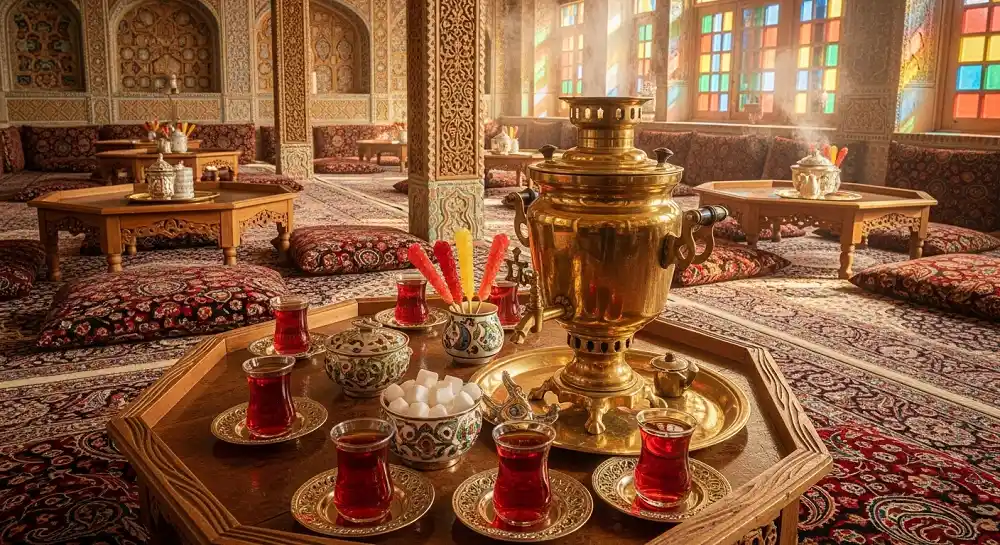
Tea is commonly served in a small, narrow waisted glass called an estekan, often with ghand (sugar cubes) or nabat (rock sugar), sometimes flavoured with saffron.
The Persian word chai simply means tea. Traditional Persian tea should not be confused with Indian masala chai, which uses a different preparation. You can read more in our guide to the differences between Persian tea and Indian chai.
What You Need to Make Persian Tea in a Samovar
You only need a few basic items to prepare traditional Persian tea. Good loose leaf black tea, clean water and a suitable teapot are the essentials.
- An electric or traditional coal samovar
- A teapot that sits securely on the samovar
- Loose leaf black tea, such as tea from Lahijan
- Fresh drinking water
- Small glasses for serving
- Ghand or nabat, if preferred
Lahijan has an important place in Persian tea culture. Around 1900, Kashef al-Saltaneh brought tea plants from India to Lahijan, helping establish tea cultivation in Persian. His tomb in Lahijan is now a tea museum.
For more background on the history and customs of tea drinking, see Persian Tea: A Tradition from the Heart of History.
If you are preparing tea for guests, you can also explore our Persian tea collection and gift sets.
How to Use an Electric Samovar to Make Persian Tea
An electric samovar heats water in its main tank while a teapot rests above it. Once the water is hot, you can brew tea in the teapot and serve it using the samovar’s tap.
Step 1: Prepare the Samovar
If your electric samovar is new, read its instructions before using it. Clean and rinse the water tank and any removable parts as directed by the manufacturer.
Place the samovar on a stable, heat resistant surface. Check that its voltage matches your local electricity supply before connecting it.
Step 2: Fill the Water Tank
Add fresh drinking water to the tank. Keep the water above the manufacturer’s minimum level and never fill beyond the maximum mark.
Never switch on an electric samovar when its water tank is empty.
Step 3: Heat the Water
Switch on the samovar and allow the water to heat. Follow the temperature controls and operating instructions for your particular model.
Once the water has boiled, it is ready for making tea.
Step 4: Prepare the Tea
Put loose leaf black tea into the teapot. Pour hot water from the samovar over the leaves, then replace the teapot lid.
Set the teapot securely on the top of the samovar, where it can remain warm while the tea brews.
Step 5: Let the Tea Brew and Serve
Allow around 10 to 15 minutes for the tea to brew. Pour a little concentrated tea into your glass and top it up with hot water from the samovar.
For a practical example of an electric model, see our Persepolis 4 litre electric samovar set, which is offered in versions for different electrical markets.
How to Make Persian Tea in a Traditional Coal Samovar
A traditional coal samovar uses burning fuel to heat the water rather than an electric heating element. The tea itself is prepared in a teapot using the same brewing and serving method as an electric samovar.
Step 1: Choose a Safe Location
Set the samovar on a stable, heat resistant surface outdoors, away from combustible objects. Charcoal produces carbon monoxide, so an enclosed indoor space is not suitable for operating a coal samovar.
Follow the manufacturer’s instructions for fuel, airflow and lighting. Keep children and pets away from the hot body and chimney.
Step 2: Add Water and Prepare the Fuel
Fill the water tank to the recommended level. Prepare and light the fuel in the samovar’s combustion chamber according to its instructions.
Allow the fire to establish itself and the water to heat. Do not move the samovar while its fuel is burning.
Step 3: Prepare the Teapot
Once the water boils, add loose leaf tea to the teapot and pour hot water over it. Place the teapot securely on the top of the samovar.
Allow the tea to brew gently for around 10 to 15 minutes, without placing the teapot directly into the fire.
Step 4: Pour and Enjoy
Pour some strong tea into an estekan and dilute it with hot water from the samovar’s tap. Adjust the colour to suit each person.
For a smaller gathering, our 1 litre coal samovar with tray offers a compact traditional option. For a larger household, our 4 litre hand engraved coal samovar follows the same traditional heating method.
After use, allow the fire to finish safely and the samovar to cool completely before cleaning or storing it.
How Much Tea and Water Should You Use?
A useful starting point is 1.5 to 2 tablespoons of loose leaf black tea for approximately 500 ml of water in the teapot. Let it brew for around 10 to 15 minutes, then adjust the strength when serving.
These amounts are a starting point rather than a fixed rule. The type of tea, the size of the leaves and personal taste can all affect the final result.
Remember that the concentrated tea in the teapot is not necessarily meant to fill the entire glass. Start with a little brewed tea and add hot water until you reach your preferred colour.
A longer brewing time does not always produce better tea. If the teapot boils or the same leaves remain on the samovar for hours, the tea can become bitter and taste stewed. Prepare a fresh pot when needed.
How to Choose the Right Samovar Size and Voltage
Choose your samovar according to the number of people you normally serve and the type of heating you prefer. For electric models, checking the voltage before ordering is just as important as choosing the capacity.
- 1 litre coal samovar: Suitable for two or three people.
- 4 litre model: A practical family size.
- 6 and 7 litre models: More capacity for gatherings.
North America generally uses a nominal 120V electricity supply, commonly described as 110V in product listings. The UK and much of Europe use approximately 220 to 240V. Always check the product’s voltage rating and your local supply rather than relying on the country name alone.
Here are the samovars and related tea sets offered by Persis Collection:
| Product | Capacity or type | Price |
|---|---|---|
| Persepolis Electric Samovar Set | 4 litres, 110V or 220V | £490 |
| Silver Patina Electric Samovar Set | 3 or 6 litres | From £450 |
| Small Coal Samovar and Tray | 1 litre | £100 |
| Coal Persian Samovar and Tray | 4 litres | £370 |
| Hand Etched Coal Samovar Set | 7 litres, available to pre-order | £580 |
| Persian Teapot and Warmer | Ceramic teapot and warmer | From £28 |
| Persian Tea Set with Calligraphy Glass Warmer | Teapot and glass warmer | £80 |
You can compare more styles in our Persian samovar collection.
Common Mistakes When Making Samovar Tea
The most common preparation problems come from overheating the tea, leaving it too long or using the equipment incorrectly. A few simple habits help you prepare a better cup while protecting your samovar.
- Boiling the teapot: Tea should brew gently rather than boiling continuously over direct heat.
- Leaving old tea for hours: Make fresh tea instead of keeping the same concentrated brew warm all day.
- Using too much concentrated tea: Begin with a small amount in your glass and adjust with hot water.
- Running an electric samovar without water: Always check the minimum water level before switching it on.
- Ignoring the voltage: Check the electrical rating before connecting an electric samovar.
- Using charcoal in an enclosed space: Choose a suitable outdoor location and follow the fuel safety instructions.
How to Clean and Maintain Your Samovar
Regular cleaning helps keep the water tank free from mineral deposits and protects the finish of the samovar. Always let it cool before cleaning, and disconnect electric models from the power supply.
Cleaning the Water Tank
- Empty the cooled tank and rinse it with clean water.
- If mineral scale builds up, use diluted white vinegar or citric acid, provided the manufacturer confirms the solution is suitable for the tank material.
- Follow the product’s cleaning instructions and rinse thoroughly afterwards.
Do not immerse electrical parts in water.
Caring for the Decorative Exterior
Many traditional Persian samovars feature hand engraved brass surfaces. Clean these areas gently with a soft cloth, avoiding steel wool, abrasive cleaners and harsh scrubbing.
Decorative silver patina finishes also need careful handling. Do not polish them with products that could remove or change their surface appearance.
For more information about caring for handcrafted metal objects, read our article on handcrafted copperware and its care.
Can You Make Persian Tea Without a Samovar?
Yes. You can prepare Persian tea using a kettle, a teapot and a suitable warmer. The essential method remains the same: brew concentrated black tea and dilute it with hot water when serving.
- Boil water in the kettle.
- Add loose leaf tea and hot water to the teapot.
- Allow it to brew gently.
- Keep the teapot warm using an appropriate warmer rather than boiling the tea repeatedly.
For smaller spaces or everyday use, our ceramic Persian teapot and warmer is a simple alternative. The Persian tea set with a calligraphy glass warmer is another option for serving tea at the table.
Our Experience at Persis Collection
At Persis Collection, we offer electric and traditional samovars made by Persian artisans. Our Persepolis electric samovar has been listed since 2021 and is our bestselling electric samovar.
We offer this model in separate 110V and 220V versions, so choosing the correct voltage is an important part of ordering. Our range also includes smaller traditional samovars and larger models for family gatherings.
Many of our customers are Iranians living abroad, including second generation Iranians, as well as people introduced to Persian culture through Persian partners or friends.
Our handcrafted brass samovars feature Ghalamzani, the traditional art of metal engraving. For example, the Persepolis model has an antique finish and designs inspired by Achaemenid art.
Samovars became part of everyday Persian life during the Qajar period, after arriving from Russia in the nineteenth century. Borujerd remains a recognised centre of traditional samovar craftsmanship.
Today, tea continues to accompany family gatherings, including winter evenings and Yalda celebrations, when poetry is also part of the occasion. You can discover this tradition in our article about Hafez and his place in Yalda gatherings.
Our available products are dispatched from our London warehouse to customers worldwide.
Conclusion
Making Persian tea in a samovar is straightforward once you understand the two parts of the process. Brew loose leaf tea gently in a teapot above the hot water, then adjust the strength in each glass using the samovar’s tap.
An electric samovar offers a convenient way to prepare tea, while a coal samovar preserves a traditional method of heating water. Whichever you choose, pay attention to brewing time, water levels and safe operation.
To prepare Persian tea at home, explore our collection of handcrafted Persian samovars and our Persian tea and tea gift sets.
Frequently Asked Questions
How do you use an electric samovar?
Fill the water tank to the recommended level, connect the correct voltage and switch it on. Once the water has boiled, prepare your tea in a separate teapot and place it on top to brew.
How long should Persian tea brew on a samovar?
Persian black tea usually needs around 10 to 15 minutes to brew. The exact time depends on the leaves and how strong you prefer your tea.
How much tea do you put in a samovar teapot?
Start with approximately 1.5 to 2 tablespoons of loose leaf black tea for 500 ml of water. Adjust the amount according to the tea and your preferred strength.
Can you leave tea brewing on a samovar all day?
It is better to prepare fresh tea rather than leave the same brew on the samovar for hours. Prolonged heating can make the tea bitter and stewed.
What size samovar do I need?
A 1 litre model suits two or three people, while a 4 litre samovar is a practical choice for a family. Larger 6 or 7 litre models provide additional capacity for gatherings.
Is it safe to use a coal samovar indoors?
A coal samovar should not be operated in an enclosed indoor space because burning charcoal produces carbon monoxide. Use a suitable outdoor location and follow the manufacturer’s safety instructions.
How do you clean and descale a samovar?
Allow it to cool, empty the tank and rinse it with clean water. For mineral deposits, use a manufacturer approved descaling method and avoid abrasive materials on decorative metal surfaces.
Comments