


The Blind Owl by Sadegh Hedayat Explained: Summary, Ending and Meaning

- mahyar
- 19 October 2026
- Persian Literature
- 13 minutes
The Blind Owl by Sadegh Hedayat tells the story of a lonely painter who becomes trapped between dreams, memories and reality. This The Blind Owl summary follows the narrator as he meets a mysterious woman, faces her death and later struggles with a troubled marriage. The novel has two connected parts, and its ending suggests that the narrator has become the old man who haunted him. Yet we never learn which events were real. To understand the story, we need to look at its repeated images, Persian words and hidden meanings.
Content note: The novel deals with death, violence and opium use. This article discusses these subjects without graphic details.
The Blind Owl Summary: Part One and Part Two
The Blind Owl, known in Persian as Boof-e-Koor (بوف کور), has two parts. The first feels like a strange dream. The second takes place in a more familiar world of illness, marriage and jealousy. Both are told by the same lonely narrator, but we cannot fully trust what he tells us.
Part One: The Mysterious Woman and the Old Man
The narrator lives alone and paints traditional Persian pen cases called qalamdan. He paints the same picture again and again.
The picture shows a cypress tree, an old man sitting in a hunched position and a young woman wearing black. She offers the old man a blue flower called a nilufar. The old man reminds the narrator of an Indian ascetic.
One day, the narrator looks through a small opening in his wall. To his surprise, he sees the exact scene he has been painting. The woman, the old man and the cypress tree are all there.
The woman later enters his house, but she dies there. The narrator is overwhelmed and struggles to deal with her death. An elderly second-hand dealer, who looks like the old man in the painting, becomes involved in burying her body.
During these events, an old vase from Rey appears. The vase carries the same image as the narrator’s painting.
This creates a strange mystery. How can the same picture appear on his pen cases, in a scene outside his window and on an ancient vase?
The narrator cannot explain it. His memories and visions become mixed together. We can no longer tell where his imagination ends and reality begins.
The important thing to notice in this first part is the repetition. The woman, the old man, the cypress and the painted objects keep returning. Each time, they seem to have a deeper connection to the narrator.
Part Two: The Wife, the Illness and the Returning Figures
The second part takes us into a different setting. The narrator is ill and spends much of his time in his room. He is married, but his relationship with his wife is filled with anger, jealousy and suspicion.
He calls his wife lakkateh, a harsh Persian insult. The word shows how much he resents her. However, we hear the story only from his point of view, so we cannot know how fairly he describes her.
Other people appear around him, including a butcher and an elderly second-hand dealer. Their faces and behaviour remind us of characters from the first part.
The old dealer is especially disturbing to the narrator. As the story continues, the difference between the two men becomes less clear.
There is also a connection between the mysterious woman in the first part and the narrator’s wife in the second. One is presented as beautiful and almost unreal. The other is described through anger and jealousy.
These very different descriptions may tell us more about the narrator’s mind than about the women themselves.
Near the end, the narrator kills his wife. When he looks in the mirror, he sees that he has become the elderly second-hand dealer.
The story now returns to the images and fears of the first part. But it never tells us which part happened first or whether either version of events is real.
The Blind Owl book is therefore not a traditional story with a clear beginning, middle and end. Its two parts reflect and question each other.
The Blind Owl Ending Explained
The ending of The Blind Owl shows the narrator turning into the old man who appears throughout the novel. This suggests that the people he fears may be connected to his own identity. The story ends without giving us one clear explanation.
In the first part, the old man appears in the repeated painting and later as a dealer who helps with the burial. In the second part, a similar man appears in the narrator’s everyday life.
Finally, the narrator sees the old man’s face in the mirror instead of his own.
One way to understand this is that the old man represents a hidden part of the narrator. The narrator may be placing his fears, memories and feelings onto other people.
Another possibility is that the two parts tell different versions of the same events. The characters and objects change, but the fears behind them remain.
Neither explanation is confirmed by the book.
The ending also makes us think again about the beginning. The strange images from the first part no longer seem separate from the narrator’s marriage and illness in the second.
The novel leaves us with an important question: is the narrator describing the world around him, or is he describing his own troubled mind?
There is no final answer. The uncertainty is part of what makes the ending so powerful.
How the Two Parts of The Blind Owl Connect
The easiest way to understand the structure of The Blind Owl is to look for repeated characters and objects. The same images appear in both parts, but their roles change. These connections help us follow the story without assuming that everything the narrator says is true.
| Recurring element | Part One | Part Two and the ending |
|---|---|---|
| The woman | A mysterious, idealised woman dressed in black | The narrator’s wife, described with anger and jealousy |
| The old man | A hunched figure in the painting and a dealer involved in the burial | A similar dealer whose appearance the narrator finally takes on |
| Death | The mysterious woman’s death | The wife’s death and the narrator’s transformation |
| The narrator | A lonely painter following a strange vision | An ill husband struggling with jealousy and fear |
| Repeated images | The cypress, blue flower, painting and old vase | Familiar faces and objects that make reality harder to understand |
What do we know for certain? The narrator tells two connected stories. People and images return in both parts. At the end, he sees himself as the old man.
What we do not know is whether the events happened exactly as he describes them.
This is why the narrator is often called unreliable. His feelings change how he sees other people. When he describes his wife, for example, his anger may be shaping everything he tells us.
It is useful to separate what happens in his account from what he believes about it.
The two women are a good example. The mysterious woman may represent an ideal that the narrator cannot reach. His wife may represent the same desire mixed with fear and resentment.
These are possible readings, not facts the novel confirms.
Persian Words and Objects That Change How You Read the Story
Some of the most important details in The Blind Owl come from Persian language and culture. Words such as qalamdan, nilufar, lakkateh and rajjaleh carry meanings that are easy to miss in English. Understanding them helps us see why certain objects and descriptions matter so much.
Qalamdan: The Painted Persian Pen Case
A qalamdan (قلمدان) is a traditional Persian pen case. Many were decorated with detailed paintings and were valued as objects of art.
The narrator earns his living by painting these cases. He always paints the same strange scene, with the cypress, old man and woman.
This matters because his private vision becomes part of a real handmade object. The image exists not only in his mind but also in something he can hold and paint.
The old vase from Rey creates a similar connection. Its decoration repeats the same picture, making the narrator’s experience even harder to explain.
Painted objects have a long place in Persian art. To understand the visual world behind the narrator’s work, you can read our guide to Persian miniature art and its traditions.
Nilufar: The Blue Flower
Nilufar (نیلوفر) is the Persian word for the flower in the repeated painting. In English translations, it may appear as a lotus or a lily.
These different English words can make the image seem less consistent than it is in Persian.
The blue flower links the young woman to the old man and the cypress tree. It is part of the picture that follows the narrator throughout the story.
Rather than searching for one fixed meaning, it is more useful to notice where the flower appears and how it connects different scenes.
If you read the novel in English, remember that the lotus or lily may be the same nilufar from the Persian text.
Lakkateh and Rajjaleh: Words That Lose Meaning in Translation
Lakkateh (لکاته) is the insulting name the narrator uses for his wife. Some English translations replace it with a much harsher and simpler insult.
But the original word is important because it shows the narrator’s attitude. It is not a fair or neutral description of the woman.
The way he speaks about her reveals his anger and the distance between them.
Rajjaleh (رجاله) is another important Persian word. The narrator uses it when speaking with contempt about ordinary people.
He seems to believe that he is separate from the people around him, even as he struggles to understand himself.
These words help us understand his character. They show someone who judges others harshly but cannot see his own behaviour clearly.
That is why reading the original Persian words can add meaning that a simple English replacement may not carry.
The Blind Owl Themes and Symbolism
The main themes of The Blind Owl are loneliness, death, obsession, identity and the difficulty of knowing what is real. Its symbols are closely tied to these ideas. Many also carry meanings from Persian poetry, art and everyday cultural beliefs.
The Owl: Misfortune Rather Than Wisdom
In many Western traditions, the owl is linked with wisdom and knowledge. In Persian culture, however, it can also suggest bad luck, ruined places and misfortune.
This difference helps explain the title of the novel.
The narrator’s shadow on the wall looks like an owl. He writes for this shadow, as though he is speaking to another version of himself.
The owl does not seem wise or able to explain the world. Instead, it reflects the narrator’s loneliness and confusion.
The word blind makes the image even stronger. The narrator watches everything closely, yet he cannot clearly understand the people around him or his own identity.
The title suggests a person who sees many things but fails to understand what they mean.
The Cypress Tree, the Shadow and the Repeated Painting
The cypress tree has a special place in Persian poetry and art. It is often linked with the graceful figure of a beloved person and with lasting life.
In The Blind Owl, the cypress stands beside the mysterious woman in the painting. It gives the scene a connection to familiar Persian images of beauty and love.
Yet the scene becomes unsettling because it keeps returning in strange ways.
To learn more about this visual tradition, explore our article on Persian motifs and the meaning of the cypress.
The shadow is another important symbol. The narrator writes for the owl-like shadow on his wall, treating it almost like another person.
This may suggest that he is speaking to a hidden part of himself. It also raises the question of whether the narrator and his listener are truly separate.
The repeated painting brings these ideas together. The same scene appears on different objects and in different moments, connecting the narrator’s memories, fears and imagination.
There is no need to give every symbol one fixed meaning. Their importance comes from the way they return and change throughout the story.
Who Was Sadegh Hedayat?
Sadegh Hedayat was an Persian writer born in Tehran in 1903. He died in Paris in 1951. He is widely regarded as one of the major figures of modern Persian literature, and The Blind Owl is his best-known novel.
The novel was written during the later years of Reza Shah’s rule. It first appeared in a limited handwritten edition in Bombay, now called Mumbai, in 1315 in the Persian calendar, corresponding to 1936 or 1937.
That early edition included a notice restricting its sale and distribution in Persian.
The novel was first published in Tehran in 1941, as a serial in the newspaper Persian, after Reza Shah’s abdication.
The book later faced periods of censorship and restrictions, including after 1979.
A French translation by Roger Lescot helped bring the novel to international readers. Critics have also compared Hedayat’s writing with Franz Kafka, Edgar Allan Poe and Rainer Maria Rilke.
These comparisons often focus on the strange atmosphere, troubled characters and unusual way the story is told.
As a Sadegh Hedayat novel, The Blind Owl stands out for its two-part structure and its close attention to the narrator’s thoughts. It is widely regarded as an important example of modern Persian fiction.
Which Translation of The Blind Owl Should You Read?
The best translation of The Blind Owl depends on what kind of reader you are. If you can read Persian, the original lets you experience Hedayat’s exact words. If you prefer English, several translations are available, each giving you access to the story.
D. P. Costello and Alma Classics
D. P. Costello’s English translation appeared in 1957. It is one of the best-known versions of The Blind Owl and is often appreciated for its readable English.
For someone reading the novel in English for the first time, it is an established option.
Alma Classics also publishes The Blind Owl and Other Stories. This edition includes Costello’s translation of the novel, along with short stories translated by Deborah Miller Mostaghel.
It is an option for readers who want to discover more of Hedayat’s writing in one volume.
Naveed Noori and the Bombay Manuscript
Naveed Noori translated The Blind Owl for a 75th anniversary edition. His version is based on the original handwritten Bombay text and has the approval of the Sadegh Hedayat Foundation.
In his introduction, Noori argues that Costello used material from the French translation as well as a typescript containing errors.
For readers interested in the early Persian text and how different translations were made, Noori’s edition offers another approach.
Sassan Tabatabai
Sassan Tabatabai has also produced an English translation of The Blind Owl. It is another version readers may encounter when looking for the novel in English.
Should You Read the Persian Original?
If you understand spoken Persian but find Persian literature difficult to read, try reading the original beside an English translation.
You can follow the story in English while checking important Persian words, such as qalamdan, nilufar, lakkateh and rajjaleh, in the original text.
If you already read Persian comfortably, starting with the original is a good choice. If not, an English version can help you understand the story before you return to selected passages in Persian.
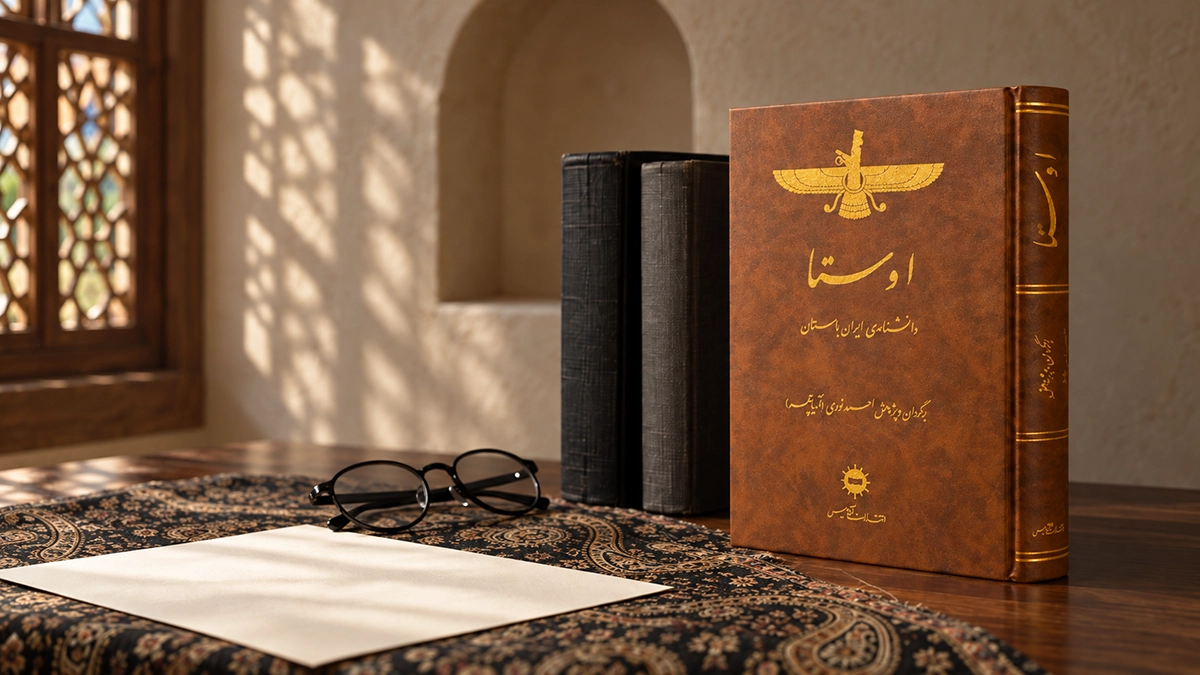
Persis Collection offers the original Persian edition of Boof-e-Koor for readers who want to experience Hedayat’s words directly.
We do not sell an English translation of The Blind Owl.
Our Experience at Persis Collection
At Persis Collection, we have offered the original Persian edition of The Blind Owl since September 2024. We have sold 18 copies, making it one of the bestselling titles in our Persian novels category.
Our edition is a 1402 Persian calendar printing. It has a hardback cover, 110 pages and a compact format similar to A5.
It is a short book that can be read in one or two sittings. Understanding its images and ideas, however, may take more time.
We source our Persian books from Persian publishers and send them worldwide from our London warehouse. Because stock sometimes runs out, we also offer The Blind Owl on backorder.
Many of our customers are second-generation Iranians or people who have a connection to Persian culture through their partners, families or friends.
Some have grown up hearing Persian at home but find written literary Persian more difficult.
For these readers, we recommend reading the Persian novel alongside an English translation. This makes it easier to follow the story while still understanding the original Persian expressions.
It can be a useful way to reconnect with the language through literature, especially when a novel contains cultural details that are difficult to express in English.
What to Read After The Blind Owl
If you enjoyed the unusual structure and psychological themes of The Blind Owl, there are other Persian novels and stories worth exploring. Books by Houshang Golshiri, Bozorg Alavi, Abbas Maroufi and Gholam-Hossein Sa’edi offer different views of Persian life and literature.
Shazdeh Ehtejab by Houshang Golshiri tells the story of the last prince of a Qajar family. He is ill and lonely, making the novel a possible next read for those interested in troubled characters and psychological fiction.
Chamedan by Bozorg Alavi is a collection of short stories. Alavi was a friend of Sadegh Hedayat and belonged to his literary circle. His work offers readers another way to explore Persian fiction from that wider literary world.
Symphony of the Dead by Abbas Maroufi explores a Persian family tragedy. It is another choice for readers interested in serious literary fiction.
Mourners of Bayal by Gholam-Hossein Sa’edi offers a further introduction to Persian fiction.
The following books are available through Persis Collection.
| Book | Edition details |
|---|---|
| Boof-e-Koor by Sadegh Hedayat | Original Persian text, hardback, 110 pages, currently on backorder |
| Shazdeh Ehtejab by Houshang Golshiri | Persian, paperback |
| Chamedan by Bozorg Alavi | Persian, paperback, 173 pages |
You can also explore our wider Persian books collection to find more works of Persian literature.
Conclusion
The Blind Owl is a short novel with a complex story. Its two parts follow the same narrator through strange visions, painful relationships and repeated images. By the end, his identity has become as uncertain as the events he describes.
To understand the novel, pay attention to what returns. The old man, the mysterious woman, the cypress, the nilufar and the painted qalamdan all help connect the story.
Knowing the Persian meanings behind these details makes the book easier to understand, especially when reading it in English.
If you want to discover more Persian literature, browse the Persian novels collection at Persis Collection, including the original Persian edition of The Blind Owl and other works of Persian fiction.
Frequently Asked Questions
Is The Blind Owl a good book?
The Blind Owl is widely regarded as one of the important works of modern Persian literature because of its unusual structure, psychological depth and powerful imagery. It is well suited to readers who enjoy literary fiction, symbolism and stories with unreliable narrators. Readers who prefer a simple plot and a clear ending may find it more challenging.
What happens at the end of The Blind Owl?
At the end of The Blind Owl, the narrator kills his wife and sees himself transformed into the elderly second-hand dealer. This links the two parts of the novel and suggests that the old man may represent part of the narrator’s own identity. The story never confirms which events were real.
Is The Blind Owl hard to read?
The Blind Owl can be difficult to understand because the same people and images appear in different forms. The narrator is unreliable, and the story does not follow a simple timeline. Following the repeated characters and objects makes it easier to read. The book is short, but its meaning takes time to explore.
Is The Blind Owl still banned in Persian?
The publication status of The Blind Owl has changed at different times in Persian. The first Bombay edition restricted its distribution in Persian, but the novel was later published in Tehran in 1941. It also faced periods of censorship and restrictions after 1979. Its current publication status is not confirmed here.
Which translation of The Blind Owl is best?
The best translation depends on your reading needs. D. P. Costello’s 1957 translation is well known and readable. Naveed Noori’s version is based on the original handwritten Bombay text. Alma Classics publishes Costello’s translation together with other stories by Hedayat, and a translation by Sassan Tabatabai also exists. If you can read Persian, comparing an English version with the original can help you understand details that may be lost in translation.
What genre is The Blind Owl?
The Blind Owl is generally considered a modernist psychological novel. It also has surreal and Gothic elements, including dreamlike scenes, unsettling images and an unreliable narrator. Its unusual structure makes it different from traditional realistic fiction.
Why is it called The Blind Owl?
The title refers to the narrator’s shadow, which looks like an owl, and to his inability to understand himself and the world around him. While owls are often linked with wisdom in Western culture, they can represent bad luck and ruin in Persian traditions. The title brings together these cultural meanings and the narrator’s confusion.

Comments