


How to Clean Tarnished Silver Jewellery at Home

- mahyar
- 7 October 2026
- Persian Jewellery
- 8 minutes
The safest way to learn how to clean silver jewellery at home is to start with lukewarm water, a small amount of mild washing-up liquid, a soft brush or lint-free cloth, thorough drying and, where needed, a silver polishing cloth. But the right method depends on the whole piece. A technique that works on plain 925 silver may damage turquoise, pearls, gold plating or deliberately darkened details.
This is particularly important with Persian silver jewellery, where silver is often combined with stones, plating, engraving or decorative techniques.
Why Silver Tarnishes
Silver tarnishes because its surface reacts with compounds in the surrounding environment. Sulphur compounds in the air are a major cause, while humidity, perfume, lotions and everyday wear can make tarnish appear more quickly.
Tarnish may look grey, brown or black. It is different from deliberately oxidised detail, where dark areas form part of the intended design. Some strong cleaning methods can remove both unwanted tarnish and intentional darkening, so the distinction matters.
Check Your Jewellery Before You Clean It
A simple three-step check helps you choose the safest cleaning method before you start.
- Look for the 925 mark. If your piece is marked 925, it indicates sterling silver. A hallmark is the quickest first check.
- Check everything attached to the silver. Look for turquoise, pearls, enamel, glued stones, gold plating, fine wirework, engraved recesses or deliberately blackened areas.
- Test cautiously. If you are unsure how a finish will react, begin with the gentlest method on a small, inconspicuous area.
If you cannot identify a material, plating or decorative finish, avoid stronger home methods until the piece has been assessed by a jeweller.
How to Clean Silver Jewellery at Home: The Basic Method
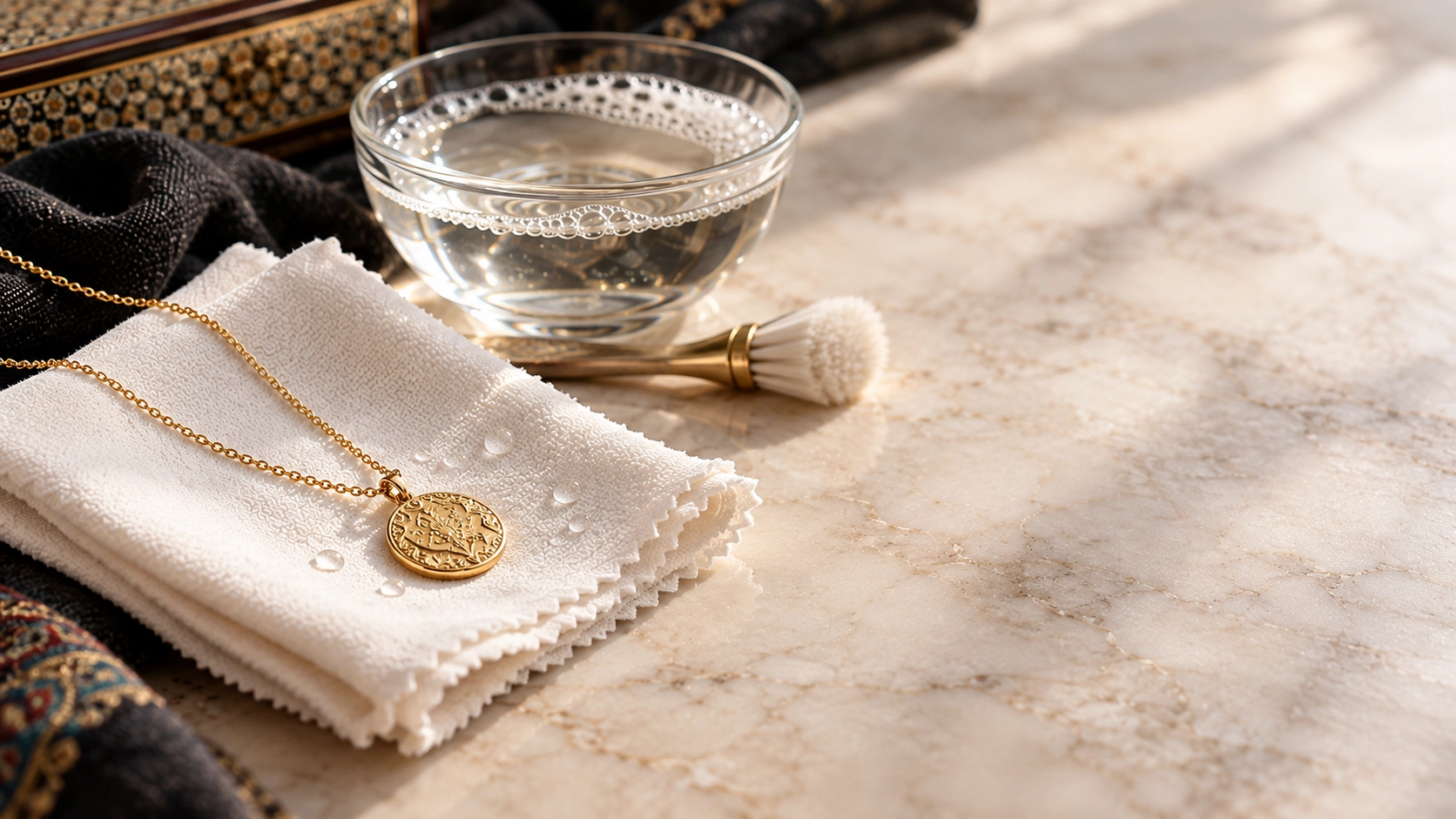
For plain sterling silver without vulnerable stones, plating or intentional oxidised detail, mild washing-up liquid and lukewarm water are the best starting point. This removes everyday oils and surface dirt without immediately using abrasive methods.
- Fill a small bowl with lukewarm water and add a small amount of mild washing-up liquid.
- Place suitable plain silver jewellery in the water and allow surface dirt to loosen.
- Use a very soft brush or lint-free cloth to clean the surface gently, paying attention to joins and recessed areas.
- Rinse away soap residue with clean water.
- Dry the piece thoroughly with a soft lint-free cloth, including any crevices.
- If light tarnish remains, use a silver polishing cloth with gentle pressure.
This method suits straightforward 925 silver pieces such as the 925 Silver Farvahar Necklace, the Lion and Sun 925 Silver Necklace and the Cyrus the Great Ring, provided the individual piece has no finish or detail requiring different care.
How to Clean Tarnished Silver Jewellery
If you are searching for how to clean tarnished silver, the safest approach is to begin with the basic soap-and-water method before moving to anything stronger. Heavy tarnish on suitable plain silver may respond to bicarbonate of soda or an aluminium foil method, but these techniques are not suitable for every piece.
Bicarbonate of soda (baking soda) paste
For those searching for how to clean silver with baking soda, a soft paste made from bicarbonate of soda and water can help with heavier tarnish on plain sterling silver. Apply it gently rather than scrubbing, because bicarbonate of soda is mildly abrasive.
Do not use this method on plated jewellery, vulnerable stones, pearls or delicate surface finishes. Rinse the silver thoroughly afterwards and dry it completely.
Aluminium foil and bicarbonate of soda
The aluminium foil method uses aluminium foil, bicarbonate of soda and hot water from a kettle to act on tarnish. It can work quickly on suitable plain silver, but speed does not make it suitable for every type of jewellery.
Avoid this method on deliberately oxidised jewellery, Ghalamzani with intentional darkened recesses, antique-style finishes, Malileh, turquoise, pearls, enamel, glued stones or gold-plated silver. The process may remove dark detail that forms part of the design.
Older, valuable or unfamiliar pieces are better handled by a professional jeweller rather than subjected to repeated home treatments.
Which Cleaning Method Is Safe for Your Silver Jewellery?
| Type of piece | Safer approach | Avoid |
|---|---|---|
| Plain sterling silver | Lukewarm water, mild washing-up liquid, soft cloth or brush, silver polishing cloth | Harsh scrubbing and abrasive household cleaners |
| Ghalamzani or deliberately oxidised detail | Gentle surface cleaning while preserving darkened recesses | Foil method and aggressive polishing over intentional dark areas |
| Malileh | Gentle cleaning with minimal pressure | Hard brushing, aggressive paste and methods that may disturb darkened detail |
| Silver with turquoise | Silver polishing cloth on the metal only | Soaking, cleaning solutions on the stone and aggressive cleaning around the setting |
| Silver with pearls | Gentle wiping and careful cleaning of accessible silver | Soaking and strong household cleaning mixtures |
| Gold-plated silver | Soft cloth and gentle surface care | Abrasive paste, strong chemicals and foil cleaning |
| Fine chains | Mild soap, lukewarm water where appropriate and gentle drying | Hard brushing, pulling or aggressive rubbing |
Plain sterling silver rings, necklaces and bracelets
If you want to know how to clean sterling silver, plain rings, necklaces and bracelets are usually the simplest pieces to care for at home. Begin with mild soap and lukewarm water, then use a polishing cloth if tarnish remains.
Stronger methods should be reserved for pieces you have confirmed are plain silver without vulnerable decorative elements.
Ghalamzani and oxidised detail
Ghalamzani jewellery and pieces with intentional oxidised detail should not be polished until every dark area disappears. The darkened recesses may be part of the intended visual contrast.
Concentrate on surface dirt and unwanted tarnish. You can also explore the wider Ghalamzani jewellery collection.
Malileh (filigree)
Malileh requires gentle cleaning because its fine structure contains small spaces where dirt and moisture can collect. Avoid hard brushing and aggressive paste.
If the finish includes intentional darkening or you are uncertain about the surface treatment, use the least aggressive method and consider professional cleaning.
Silver with turquoise
Turquoise should not be cleaned like plain silver. Do not leave turquoise jewellery soaking in water or immerse it in a home silver-cleaning solution.
For silver beside Firoozeh, or turquoise, Persis Collection recommends using a silver polishing cloth on the metal only and avoiding the stone. If tarnish has collected close to Neyshabur turquoise or Persian Heritage turquoise, let a jeweller deal with the difficult area.
The Persian Turquoise Ring in Hammered Sterling Silver and Persian Heritage Turquoise Ring show why the whole piece must be considered before cleaning. For more detail, read our guide to caring for turquoise jewellery.
Silver with pearls
Pearl jewellery should not be soaked or treated with strong household cleaning mixtures. Clean accessible silver gently while keeping cleaning products away from the pearl.
The Love Calligraphy Pearl Earrings are an example of a piece where the silver and pearl need different care.
Gold-plated silver
Silver with gold plating needs gentler cleaning because abrasive rubbing can affect the plated surface. Use a soft cloth and avoid bicarbonate paste, foil cleaning and strong household cleaners.
The Two-Tone Farvahar Necklace, 925 Silver with 18K Gold Plating is one example. Keep plated jewellery away from perfume and strong cleaning products.
How to clean a silver chain
To clean a plain silver chain, use mild washing-up liquid and lukewarm water, then dry it carefully without pulling or rubbing the links aggressively. A polishing cloth can help with accessible tarnished areas.
If the chain has turned black, first establish that the darkening is unwanted tarnish rather than an intentional finish.
What You Should Never Use to Clean Silver
Fast household remedies can cause scratches, damage plating or remove intentional surface detail. Avoid any method that relies on aggressive abrasion.
- Toothpaste: it can be abrasive and may scratch polished silver or affect surface finishes.
- Hard brushes or scouring materials: these can leave visible marks.
- Strong household cleaners: these may affect both the silver and other materials in the piece.
- Foil cleaning on oxidised detail: it may remove intentional dark contrast.
- Soaking turquoise or pearl jewellery: clean the metal selectively instead.
- Abrasive paste on gold plating: repeated rubbing can damage the plated surface.
Gold requires its own care routine. For gold pieces, use our separate guide on how to clean gold jewellery at home.
How to Stop Silver Jewellery Tarnishing
You cannot prevent every trace of tarnish indefinitely, but sensible storage and routine care can slow its development. Removing residue after wear and keeping pieces dry are two of the most useful habits.
After each wear
Wipe jewellery gently with a clean soft cloth before storing it. Remove pieces before swimming or showering, and keep perfume and strong cleaning products away from plated jewellery.
Regular care
Check frequently worn silver for dullness and early tarnish. Cleaning at this stage usually allows you to stay with gentler methods.
Store pieces separately so that chains, stones and polished metal surfaces do not rub against one another and cause scratches.
When to use a jeweller
Professional cleaning is sensible when tarnish sits directly beside turquoise or another vulnerable material, when a piece is old or valuable, when the finish is unclear, or when cleaning would require forceful rubbing.
If you are also choosing between jewellery metals, our guide to gold versus silver Persian jewellery covers the buying differences. We also have separate everyday jewellery care tips for Evil Eye pieces.
Our Experience at Persis Collection
Our silver collection shows why one cleaning method cannot suit every piece. Persis Collection sells handmade 925 silver jewellery made by Persian artists, and many designs combine silver with Neyshabur or Persian Heritage turquoise, pearls, agate, 18K gold plating or Ghalamzani work.
Our published care guidance therefore treats the complete piece as the starting point. For silver beside turquoise, we recommend polishing the metal only and avoiding the stone. Tarnish close to the setting is better left to a jeweller. Gold-plated pieces should be kept away from perfume and strong cleaning products, jewellery should be removed before swimming or showering, and individual pieces should be stored separately to reduce scratching.
| Example from Persis Collection | Current price |
|---|---|
| 925 Silver Farvahar Necklace | £100 |
| Lion and Sun 925 Silver Necklace | £136 |
| Cyrus the Great Ring, Handmade 925 Sterling Silver Persian Ring | From £77 |
| Two-Tone Farvahar Necklace, 925 Silver with 18K Gold Plating | From £109 |
| Persian Turquoise Ring in Hammered Sterling Silver | From £40 |
| Persian Heritage Turquoise Ring | From £120 |
| Love Calligraphy Pearl Earrings | £50 |
Conclusion
The safest answer to how to clean silver jewellery at home is to begin with a gentle method suited to the complete piece. Mild washing-up liquid, lukewarm water and a soft cloth work well for plain sterling silver, while a polishing cloth can help with light tarnish.
Bicarbonate of soda and aluminium foil are stronger options for suitable plain silver, not universal treatments. Oxidised detail, Ghalamzani, Malileh, turquoise, pearls and gold plating all require more care.
To explore 925 silver designs with Persian symbols, gemstones and traditional decorative details, browse our Persian silver jewellery collection.
Frequently Asked Questions
What is the best way to clean silver jewellery?
For plain sterling silver, start with lukewarm water, a little mild washing-up liquid and a soft cloth or brush, then dry the piece completely. Use a silver polishing cloth for remaining light tarnish.
What should you not clean sterling silver with?
Avoid toothpaste, hard brushes, abrasive household cleaners and aggressive scrubbing. Stronger methods should also be avoided on pieces with vulnerable stones, plating or intentional oxidised detail.
What cleans badly tarnished silver?
Suitable plain silver with heavier tarnish may respond to bicarbonate of soda paste or the aluminium foil method. Do not use these methods automatically on jewellery with stones, pearls, plating or decorative darkening.
How do you clean silver plated jewellery?
Clean silver plated jewellery gently with a soft cloth and avoid abrasive pastes, hard polishing and foil methods that may wear the plated surface. See the Gold-plated silver section above for the safer approach.
Can silver be permanently tarnished?
Many forms of surface tarnish can be reduced or removed, but not every dark or aged surface should be treated aggressively at home. Older, valuable or heavily altered pieces may need professional assessment.
Does white vinegar clean silver?
White vinegar appears in some home silver-cleaning methods, but it is not necessary for routine care. Mild soap and lukewarm water are a gentler starting point, especially when other materials are present.
Can aluminium foil clean silver?
Yes, aluminium foil with bicarbonate of soda and hot water can remove tarnish from suitable plain silver. Avoid it on oxidised detail, Ghalamzani, Malileh, turquoise, pearls, enamel, glued stones and plated jewellery.
Will toothpaste clean oxidised silver?
Do not use toothpaste on oxidised silver. It can be abrasive, and rubbing may alter intentional dark detail or scratch polished surfaces.
My silver bracelet has gone black. How can I fix it?
If the black colour is unwanted tarnish on plain sterling silver, begin with mild washing-up liquid, lukewarm water and a soft cloth. Use a polishing cloth afterwards if necessary.
How can I clean silver jewellery at home without baking soda?
Use lukewarm water, mild washing-up liquid and a soft lint-free cloth or very soft brush, then dry the piece thoroughly. A silver polishing cloth can help with light tarnish without bicarbonate of soda. The same cautious approach applies when American guides refer to cleaning silver jewelry at home.


Comments