


How to Tell If Silver Is Real: Hallmarks and Simple Tests
- Jafari
- 22 November 2026
- Persian Jewellery
- 12 minutes
If you have noticed a 925 stamp on your ring or necklace, you may have wondered whether it is really made of silver. A shiny surface or an engraved number alone cannot answer that question. This guide explains how to tell if silver is real, using the markings on a piece, a few safe checks you can carry out at home and the signs of worn plating. It also covers handmade and stone set pieces, including the Persian silver jewellery we send to customers around the world, and the point at which a jeweller is the sensible next step.
How Can You Tell If Silver Is Real?
To tell if silver is real, start by looking for a 925 stamp, which indicates sterling silver made from 92.5% silver and 7.5% other metals, usually copper. You can also check whether the jewellery is attracted to a magnet and look for signs of worn plating. However, no single home test can guarantee authenticity. If you are unsure, a professional jeweller can help verify the metal.
What Is Real Silver and How Is It Different from Silver-Plated Jewellery?
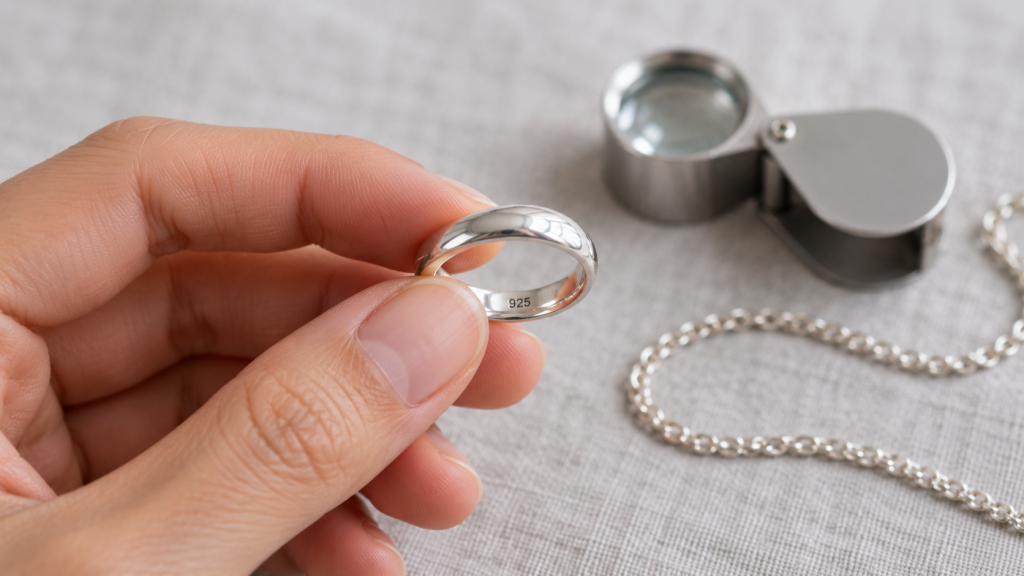
When we talk about real silver, we mean jewellery made from silver or a silver alloy throughout, rather than an item with only a thin layer of silver covering its surface.
Most silver jewellery designed for everyday wear is made from sterling silver. This type of silver is widely used for rings, necklaces, bracelets and earrings because it is more resistant to bending and losing its shape than almost pure silver.
Silver-plated jewellery, on the other hand, can look exactly like real silver at first glance. The main difference lies in the metal beneath the coating. If a ring is made from another metal and only its surface is coated with silver, the plating may wear away over time, revealing the colour of the metal underneath.
However, being silver-plated does not necessarily mean an item is poor quality. What matters is knowing exactly what you are buying and whether the product has been accurately described.
Sterling Silver vs Pure Silver
Almost pure silver is a relatively soft metal, which means it is not always the best choice for everyday jewellery. To make it more durable, a small amount of another metal is usually added.
Sterling silver, commonly identified by the number 925, is one of the most widely used types of silver in jewellery making. This alloy is suitable for many pieces designed to be worn regularly.
So, if you see the words Sterling Silver or the number 925 on a piece of jewellery, it does not mean the silver is fake or inferior. Sterling silver is a genuine type of silver.
What Does 925 Mean on Silver?
One of the first things to look for when examining a silver ring or necklace is a marking engraved or stamped into the metal.
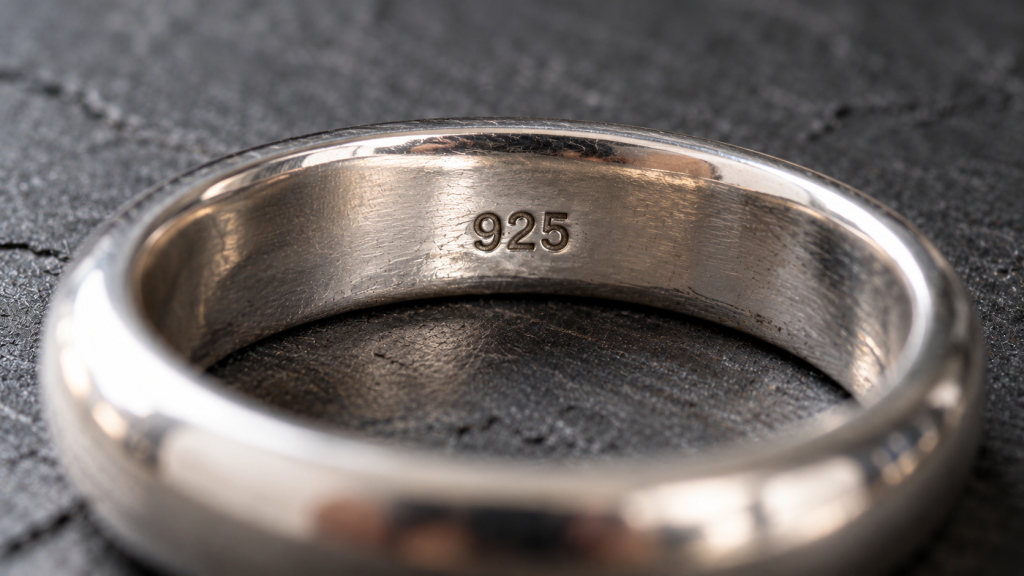
The number 925 means that sterling silver contains 92.5% pure silver and 7.5% other metals, usually copper. This combination makes the silver stronger and more suitable for everyday jewellery, such as rings, necklaces and bracelets.
A 925 stamp is one of the most common markings found on silver jewellery. However, the stamp alone does not guarantee that an item is genuine silver.
Markings are usually small and sit out of sight, so it helps to know where to look.
| Type of piece | Where the marking usually sits |
|---|---|
| Ring | Inside the band, often opposite the design |
| Necklace | On the back of the pendant, or on the tag beside the clasp |
| Bracelet | On the clasp or on a small plate at one end |
| Earrings | On the post, the hook or the fitting at the back |
Some markings are very small, so you may need good lighting or a magnifying glass to see them clearly.
Sometimes, instead of 925, you may find the word Sterling or Sterling Silver stamped onto a piece. These markings also refer to sterling silver.
Does Real Silver Always Have a Mark?
No. The absence of a 925 stamp does not necessarily mean a piece of jewellery is fake.
Some small or lightweight pieces of jewellery may not carry a fineness mark. Hallmarking and stamping rules also differ from one country to another, and in some countries very light silver items do not have to carry a mark at all.
It is also important to distinguish between a number stamped onto a product by its manufacturer and an official hallmark. An official hallmark is part of an established national system for testing and verifying the fineness of precious metals.
For an everyday buyer, the most important thing to remember is that a 925 stamp is a useful sign, but it does not guarantee that a piece is genuine silver.
How to Tell If Silver Is Real at Home
If you have a ring, bracelet or necklace and are not sure what it is made from, a few simple checks can provide useful clues.
These methods do not require specialist equipment and, when carried out carefully, present less risk to your jewellery. However, none can confirm with complete certainty that a piece is genuine silver.
A simple checklist for checking silver jewellery
- Look for a 925 stamp. Check the inside of rings, necklace clasps and the backs of pendants. A 925 marking indicates sterling silver.
- Try a magnet. If the main part of the jewellery is strongly attracted to a magnet, question whether it is silver.
- Check for worn plating. Look around edges and frequently worn areas for a different metal colour showing underneath.
- Check the product details. Look for a clear description of the metal, rather than terms such as silver colour or silver tone.
- Still unsure? Ask a jeweller. If the markings are missing, the results are inconsistent or the piece is valuable, arrange a professional check.
These steps can help you decide whether a piece needs further checking without risking damage to your jewellery.
The Magnet Test
One of the simplest ways to make an initial assessment of silver is to use a magnet.
Silver is not strongly attracted to an ordinary magnet in the way that iron is. So, if the main part of a ring or pendant is strongly attracted to a magnet, it may be made from another metal.
To try this check, simply bring a magnet close to the metal part of the jewellery. There is no need to drag it across the surface or let it touch the piece.
Keep in mind that some jewellery clasps and fittings may be made from different metals. It is therefore better to check the main body of the item.
Important: If your jewellery is not attracted to the magnet, you still cannot be certain that it is real silver. Many other metals are not attracted to magnets either.
Check the Colour and Surface of the Jewellery
The appearance of a piece can offer clues about what it is made from, especially if it has been worn for a long time.
Examine the edges of a ring, the back of a pendant and any areas that regularly come into contact with skin or clothing. If the silver-coloured coating has worn away in places and a yellow or copper-coloured metal is visible underneath, the piece may be silver-plated.
Some silver jewellery also has gold plating or other surface finishes that change in appearance over time. Check the product description to understand whether the visible colour comes from the silver itself or an additional coating.
You also cannot tell whether silver is genuine simply by how shiny or dull it looks. The finish and design of a piece can affect its appearance.
The Ice Test
You may have come across the ice test in guides about identifying real silver.
Ice may melt more quickly on silver than on some other metals.
However, the result depends on the surrounding temperature, the size of the piece and how the ice comes into contact with the metal. Ice may also melt quickly on other metals.
This makes the ice test unreliable for confirming whether jewellery is made from sterling silver.
For delicate rings, jewellery containing turquoise or pieces with sensitive fittings or finishes, it is better to avoid this test.
In general, checking the markings and appearance of your jewellery is more useful than relying on the ice test.
How to Check Handmade and Stone-Set Silver Safely
With handmade, stone-set silver, keep every check to what you can see and to the markings on the metal. Holding a magnet near the band is safe. Ice, flame, acid and scratching are not, because the stone and the engraving are the first things to be damaged.
Handmade Persian silver has three features that are often mistaken for faults.
The first is dark detail inside a pattern. Ghalamzani is the Persian art of engraving a design into metal by hand with a chisel. The engraved lines sit lower than the surface, they are often darkened on purpose, and that contrast is what makes the pattern readable. Dark lines inside a hand-engraved design are part of the work, not a sign of a cheap coating.
The second is a stamp in an unexpected place, or no stamp at all. On a handmade ring the mark often sits inside the band, and on a small pendant or a slim bracelet there may be no room for one. Judge the piece on its stated materials as well as its markings.
The third is a mix of metals and finishes in one piece. A bracelet can be made from gold-plated sterling silver combined with leather, and a ring can be sterling silver with a gold-plated finish. Neither is a sign that the silver is not real. What matters is that the base metal is stated clearly.
Turquoise needs more care than the metal around it. It is a porous stone that reacts badly to heat, household chemicals and polishing compounds, so a test that is harmless on a plain silver band can leave a permanent mark on the stone. Our guide to caring for turquoise jewellery covers this in more detail, and if you want to check the stone itself rather than the metal, read how to recognise genuine Persian turquoise.
Does Real Silver Turn Black?
Yes. Silver can darken or turn black over time, and this is a common occurrence. It does not mean that your jewellery is fake.
Silver may gradually darken over time, depending on how it is worn and stored.
For example, a ring you wear regularly may become discoloured in areas close to your skin, while other parts remain shiny.
On some handmade jewellery, darker areas are also part of the design. In hand-engraved jewellery, darker sections within the patterns help bring out the finer details of the work.
Some genuine sterling silver jewellery is coated with rhodium, a bright, silvery-white metal that helps protect the surface from tarnishing. This is one reason why certain silver rings, necklaces and earrings can stay shiny for longer without turning black.
Rhodium plating is a protective coating, not a different type of silver. It can gradually wear away with use, allowing the sterling silver underneath to tarnish. If your jewellery has a rhodium coating, check its care instructions before cleaning or polishing it.
So, if your silver jewellery has become darker, it can still be genuine. Equally, jewellery that stays shiny for a long time may simply have a protective coating, such as rhodium plating.
If you would like to know how to remove tarnish without damaging your jewellery, read our guide on how to clean silver jewellery.
Can Fake Silver Have a 925 Stamp?
Yes. A 925 stamp can be applied to an item without the metal being independently tested, so the marking alone should not be treated as proof of authenticity.
In some cases, fineness markings may also be used incorrectly.
That is why, when buying or examining jewellery, it is worth considering several things together: the markings on the piece, the product’s material description, the reputation of the seller and the information provided about how it was made.
For example, if a ring is sold as Sterling Silver, its product description should make clear that the main material of the ring is sterling silver.
Likewise, if a piece of jewellery is made from sterling silver and has gold plating, that is not in itself a sign that the item is fake. The Two-Tone Farvahar Necklace, for instance, is listed as 925 silver with 18K gold plating, so the base metal and the coating are both named.
If you are still unsure about the material of a valuable piece, it is better to have it examined by a qualified jeweller than to keep repeating home tests.
Which Silver Tests Can Damage Your Jewellery?
Various methods for identifying silver are suggested online, but not all of them are suitable for jewellery.
Acids and strong chemicals can damage the metal surface, plating or gemstones. Tests involving chemicals such as nitric acid should not be carried out at home without specialist knowledge and appropriate equipment.
Scratching the surface to see the metal underneath is not a good method either. It can leave marks on a ring or bracelet and damage its finish or delicate decorative details.
This is particularly important with handmade jewellery. A ring set with turquoise or decorated with hand-engraved patterns may be sensitive to impacts, chemicals and certain cleaning methods.
If your jewellery has financial or sentimental value, choose a way of checking the metal that will not alter the appearance or structure of the piece.
Our Experience at Persis Collection
Most of the uncertainty we see comes down to product information rather than the metal itself, so this is how our own silver listings are written.
Every silver piece states its metal in the product details, in the same words you would look for on a stamp. The Cyrus the Great Ring is listed as handmade 925 sterling silver, with its weight and the size of the head given as well. The Persian Heritage Turquoise Ring is listed as 925 sterling silver with gold plating, set with turquoise. The Neishabour Turquoise Bracelet is listed as 24k gold-plated 925 silver with leather and Neyshabur turquoise.
Three details are worth reading on any listing, ours or anyone else’s. The base metal, because that is what you are buying. Any plating, because a coating changes the colour but not the metal underneath. The weight and measurements, because a very light piece may have no room for a stamp.
If a listing names the colour but not the metal, treat that as the gap it is and ask the seller before buying.
What to Look for When Buying Silver Jewellery
Buying silver jewellery, especially online, involves more than simply choosing a beautiful design. Before making a purchase, it is worth knowing what the item is made from and what materials are listed in its description.
The first thing to check is the product’s material information. Terms such as Sterling Silver and 925 Silver refer to a particular silver alloy, while descriptions such as Silver Colour or Silver Tone may refer only to the item’s colour and appearance.
If a product is gold-plated, it is also worth checking what metal lies beneath the coating. For example, a ring made from gold-plated sterling silver is different from one with a brass base, even if they look similar.
With handmade jewellery, the quality of the craftsmanship, the type of gemstone and the details of the design also matter. Turquoise rings, necklaces featuring Persian motifs and hand-engraved bracelets have artistic qualities beyond the metal itself. If you are weighing up silver against gold for a particular piece, our guide to gold and silver Persian jewellery compares the two.
However, a beautiful design or handmade craftsmanship does not, on its own, prove that jewellery is made from genuine silver. The metal’s composition should be considered separately from its appearance.
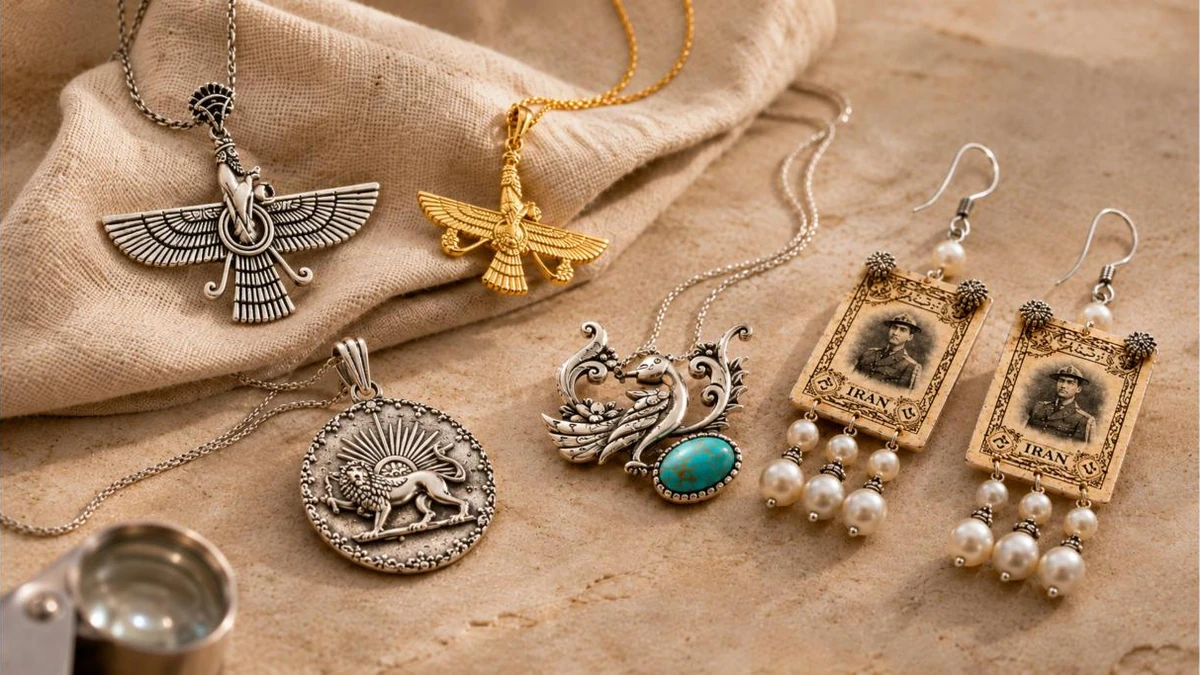
These four pieces from the Persian silver jewellery collection show how the metal is stated alongside the design.


Choosing Silver Jewellery With Confidence
Before buying silver jewellery, check three things: the stated metal, any markings on the piece and the rest of the seller’s product information. If all three agree, you have a clear basis for your decision. If something does not match, or the material is described only as a colour, ask the seller before you buy.
With a piece you already own, start with the markings and the surface, keep a magnet as a quick second opinion and leave acids, flames and scratching alone. For anything valuable or inherited, a jeweller or an assay office will tell you more in a few minutes than a week of home tests.
When you are ready to look at new pieces, each item in our Persian silver jewellery collection lists its metal, its stone and its measurements on the product page, so you can judge the craft and the material side by side.
Frequently Asked Questions
Can Real Silver Leave Green Marks on Your Skin?
Yes. Genuine sterling silver can sometimes leave green marks on your skin because it usually contains a small amount of copper. When copper reacts with sweat, moisture or skincare products, it can leave a green residue on the skin.
A green mark does not automatically mean your jewellery is fake. It can occur with genuine sterling silver as well as copper-based or plated jewellery. The mark is usually temporary and can be washed off with soap and water.
To help prevent it, keep your jewellery clean and dry, remove rings before using cleaning products and avoid leaving moisture trapped beneath them. If you notice itching, redness or a rash rather than just a green mark, stop wearing the piece and seek medical advice, as this may be skin irritation or a metal allergy.
Do Dark Lines in a Hand-Engraved Silver Ring Mean It Is Fake?
No. On hand-engraved silver, the lines of the pattern sit below the surface and are often darkened deliberately so the design stands out. That contrast is part of the craft. Tarnish from wear looks different, because it spreads across flat, open areas rather than following the engraved lines.
Can You Tell If Silver Is Real Just by Looking at a Photo?
No. A photograph may show engraved markings or changes in appearance, but it cannot confirm the actual composition of the metal. For a more reliable assessment, you need trustworthy product information or an expert evaluation.
Is an Old Silver Ring Always Genuine?
No. Just because a ring is old does not mean it is made from genuine silver. Jewellery was also made from different metals and with various coatings in the past.
How Can You Tell If Unmarked Silver Is Genuine?
Start by checking its appearance and the product’s stated specifications. If you are still unsure, particularly with valuable jewellery, having it examined by a jeweller or a recognised assay office is a more reliable option.
Comments