


Creatures of Persian Mythology: Simorgh, Homa, Div and Rakhsh
- mahyar
- 21 November 2026
- Persian Literature
- 7 minutes
Persian mythical creatures appear in ancient stories, the Shahnameh and works of Persian art. Four of the best known are Simorgh, the wise bird; Homa, the bird of fortune; Div, a powerful supernatural being; and Rakhsh, the loyal horse of Rostam. Each has a different story, appearance and meaning. Some have roots in ancient beliefs, while others are best known through Persian literature. This guide explains how to recognise them, where their stories come from and how they appear in art. You can also explore these tales through Persian books and illustrated Shahnameh stories.
Persian Mythical Creatures at a Glance
The four figures in this guide do not belong to one simple group. Simorgh and Homa are legendary birds, Div is a supernatural being, and Rakhsh is a remarkable horse from the Shahnameh.
The Shahnameh, written by Ferdowsi, is one of the main literary sources for these stories.
| Creature | Main Story Source | Role | Visual Clue |
|---|---|---|---|
| Simorgh | Ancient Persian tradition and Shahnameh | Wise bird, protector and guide | Large bird with a long tail, often near a nest |
| Homa | Persian literature and artistic tradition | Bird of fortune | Bird used as a symbol, sometimes in a symmetrical pair |
| Div | Ancient Persian tradition and Shahnameh | Powerful supernatural opponent | Large humanlike figure, often with horns |
| Rakhsh | Shahnameh | Rostam’s loyal horse | Horse with reddish markings, often beside Rostam |
This table is a starting point, not a fixed rule for every painting or object. The surrounding story often gives the strongest clue.
Simorgh, the Wise Bird Who Raised Zal
Simorgh is one of the most important legendary birds in Persian storytelling.
From Saena to Simorgh in the Shahnameh
The older name of Simorgh appears as Saena in the Avesta, an ancient collection of Persian religious texts. In Yasht 12.17, a great tree stands in the sea of Vourukasha. It holds the seeds of plants and has a connection with healing.
Zal, the son of Sam, is born with white hair. His father abandons him on a mountain. Simorgh finds the child, carries him to its nest and raises him.
When Sam returns for his son, Simorgh gives Zal a feather. He can burn it whenever he needs the bird’s help. Simorgh then carries him down from the mountain.
Later, when Zal’s wife Rudabeh struggles to give birth to Rostam, Simorgh guides the family through a difficult delivery.
According to the Encyclopaedia Iranica, the story connects Simorgh with the idea of farr, a form of royal glory and good fortune.
Simorgh also appears in Attar’s Conference of the Birds. In that story, thirty birds reach the end of a long journey and find their own reflection. The Persian words si morgh mean thirty birds.
What Does Simorgh Look Like in Persian Art?
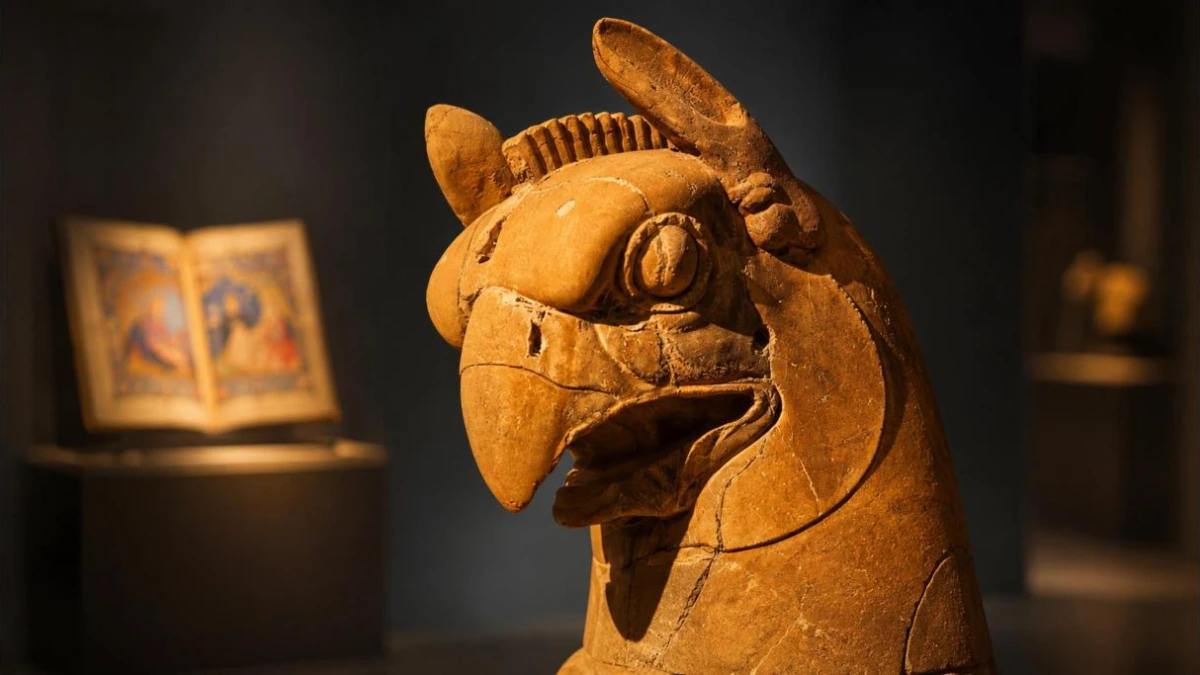
Simorgh is often shown as an enormous bird with flowing feathers and a long, curved tail. Some later descriptions give it a doglike head, a peacock’s body and a lion’s claws.
In illustrated stories, look for a mountain, a nest or a child beside the bird.
The name is also written Simurgh. At Persis Collection, the puzzle and storybook use Simorgh, while the silver pendant is listed as Simurgh. A buyer who searches only one spelling can miss the other.
Our silver pendant with a Simorgh motif shows the bird through Ghalamzani, the art of engraving metal with a hammer and small tools.
For more about the meaning of this bird in jewellery, read our guide to Persian motifs in jewellery and their meanings.
For a separate look at protective symbols in Persian culture, see our article on the history of the evil eye symbol.
Homa, the Bird of Fortune
Homa is widely regarded as a bird of happiness and good fortune. Persian stories describe a bird that spends its whole life in the sky and never lands. Its shadow is believed to bring luck, and in some retellings even the promise of kingship.
Homa in Persian Literature and Art
Homa is also known as Homay. Another common English spelling is Huma bird.
In Attar’s Conference of the Birds, Homa refuses to join the journey.
Older tales also say that Homa cannot be caught alive. In some retellings, anyone who kills one is said to die within forty days.
The name Homa is also linked locally with the paired animal capitals at Persepolis, the royal centre built under Darius I. This is a local name for those carvings, not proof that every similar bird image shows Homa.
For more about the visual culture of ancient Persian courts, our guide to Achaemenid and Sassanid clothing offers a separate introduction.
How to Tell Homa from Simorgh
Homa and Simorgh are both extraordinary birds, but their stories differ. Homa is associated with fortune and kingship.
A large bird beside Zal or a mountain nest is a stronger clue for Simorgh.
Look at the full scene before identifying an ancient or handmade object.
Div and Div-e Sepid, the Demons of the Shahnameh
Div refers to a supernatural being that often opposes the heroes of Persian stories. One of the best known is Div-e Sepid, the White Div.
From Daeva to Div
The word Div comes from the older Avestan word Daeva.
In the Shahnameh, Div characters often have great strength or unusual powers. In older Persian tradition, these beings stand on the side of disorder. Div-e Sepid is also described as skilled in magic.
These features help readers recognise Persian mythology demons in illustrated books.
Rostam and the White Div
Div-e Sepid is the powerful leader of the Div beings of Mazandaran. In the story, Kay Kavus and his army are trapped and lose their sight.
Rostam sets out to save them. His journey is known as the Haft Khan, or seven labours.
In the last of the seven labours, Rostam defeats Div-e Sepid and helps restore the king’s sight.
Persian artists have often shown Rostam wearing the head of the White Div like a helmet.
The Metropolitan Museum of Art’s illustration of Rostam and the White Div offers a historical example of this subject.
Parents introducing this story to children can choose versions that focus on Rostam’s courage and problem solving rather than the more difficult parts of the battle.
Rakhsh, Rostam’s Brave Horse
Rakhsh is the horse of Rostam, one of the great heroes of the Shahnameh. He is a horse with extraordinary strength, loyalty and courage.
Why Rakhsh Is Different from the Other Three
The name Rakhsh means bright or shining. Rostam chooses him as a young horse from animals brought from Zabulistan and Kabul.
The Shahnameh describes his chest and shoulders through a comparison with a lion, and his strength through a comparison with an elephant. No other horse can carry Rostam, and nobody else rides Rakhsh.
During the first of the seven labours, Rakhsh protects Rostam from a lion while the hero sleeps. Afterwards, Rostam asks his horse to wake him if danger comes again.
Rakhsh remains Rostam’s companion throughout his adventures. Their final story ends with both dying because of a trap arranged by Shaghad, Rostam’s half brother.
How Artists Depict Rakhsh
Rakhsh is described with reddish markings over a saffron coloured coat.
A powerful hero beside a marked horse may help identify Rostam and Rakhsh together.
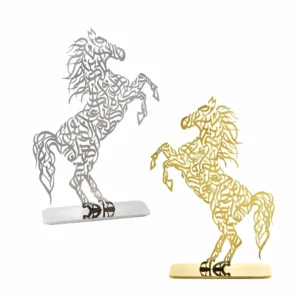
Horses also appear in Persian decorative art beyond the Shahnameh. Our metal horse sculpture inspired by Persian calligraphy is one example of a horse form used in modern Persian art. It is not presented as a depiction of Rakhsh.
How to Recognise Persian Mythical Creatures in Art
Start with the whole image, not just one small detail.
- Simorgh: Look for a large bird, flowing feathers, a mountain nest or the young Zal.
- Homa: Look for a symbolic bird, sometimes in a balanced pair, with no clear story scene.
- Div: Look for a large humanlike figure, horns or patterned skin, often facing a hero.
- Rakhsh: Look for a horse with reddish markings, usually beside Rostam.
A bird with long feathers is not automatically Simorgh. A decorated horse is not necessarily Rakhsh.
Ghalamzani uses tools to create marks on metal. Minakari uses coloured enamel decoration on a surface.
Our guide to Minakari and how to judge Persian enamel work explains that craft in more detail.
The characters and setting often reveal more than the decorative style alone.
Introducing Persian Mythology to Children Through Books
Illustrated stories are a gentle way to introduce children to Persian mythical creatures. The story of Zal and Simorgh is a useful starting point because it focuses on care, family and help.
Stories about Rostam and Rakhsh can introduce courage, loyalty and friendship.
Where to Start with the Shahnameh
For children who read both Persian and English, a bilingual book can connect the story with its original names.
The illustrated Shahnameh storybook set for children includes stories about Zal and Simorgh.
Our Persian mythology puzzle featuring Zal and Simorgh offers another way to explore the stories. It has 270 pieces and is suitable for ages eight and above.
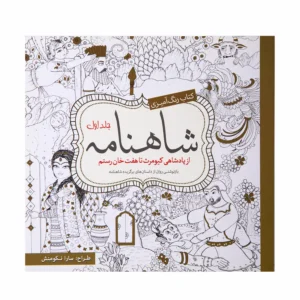
Children who enjoy drawing may prefer the Shahnameh colouring book. Its 61 pages cover characters and scenes from Keyumars to the seven labours of Rostam.
For more help choosing suitable titles, read our guide to Persian storybooks for children by age.
What We Have Learned From Our Customers
Our own sales records show that the more accessible story products have attracted more orders than the larger art pieces in this selection.
From the launch of our mythology puzzle in September 2025 to 21 November 2026, we sold 86 puzzles. We also sold 23 bilingual Shahnameh storybook sets and 21 copies of a bilingual Shahnameh edition.
Over the same reporting period, we sold one Simorgh silver pendant and two metal horse sculptures.
These figures describe our own customers, not the wider market. They suggest that illustrated and bilingual products have been a popular way to explore these stories within our collection.
We have also learned that spelling matters. Our catalogue uses different spellings for the same characters, including Zal and Zaal. Searching both forms can help readers find the right item.
Persis Collection sends orders worldwide from its London warehouse, including to the UK, USA, Canada and Europe.
Persian Mythology Books and Art at Persis Collection
You can see some of these pieces below.


The illustrated encyclopaedia by Yaser Mali offers a broader visual look at the Shahnameh. The language of this edition is not stated.
Readers interested in the wider background can also explore our collection of Persian history books.
Where to Explore These Persian Legends Further
Simorgh, Homa, Div and Rakhsh each reveal a different part of Persian storytelling. One protects a child, another represents good fortune, one challenges a hero, and the last stands beside him.
Knowing their names, stories and visual clues makes it easier to understand a Shahnameh illustration or an object decorated with Persian motifs.
A bilingual book, illustrated edition or carefully made artwork can help bring these characters into focus.
Frequently Asked Questions
What are Persian fairies called?
Persian fairies are known as Peri or Pari. According to World History Encyclopedia, Peri and jinn do not fit neatly into simple groups of good and evil. Their roles are more neutral.
What are Persian mythology demons?
Div beings are among the best known supernatural opponents in Persian mythology. Their name comes from Daeva, and they appear in the Shahnameh. Div-e Sepid is a famous example from Rostam’s seven labours.
Are Simorgh and Simurgh the same bird?
Yes. These are two English spellings of the same Persian legendary bird. Both refer to the wise creature associated with Zal in the Shahnameh.
How is Homa different from Simorgh?
Homa is mainly associated with fortune and kingship, while Simorgh is known for wisdom, care and guidance. Simorgh also has a major role in the Shahnameh story of Zal.
Is Rakhsh a mythical creature or just a horse?
Rakhsh is Rostam’s extraordinary horse in the Shahnameh. He is not a supernatural bird or a Div. His unusual strength, courage and loyalty make him a remarkable figure in Persian heroic storytelling.
Where can I find an Persian mythical creatures book?
Books about the Shahnameh are a useful place to begin. Persis Collection offers illustrated stories for children, a colouring book and an illustrated encyclopaedia. You can choose a title based on the reader’s age and interest.


Comments