


The History of the Evil Eye Symbol in Persian Culture
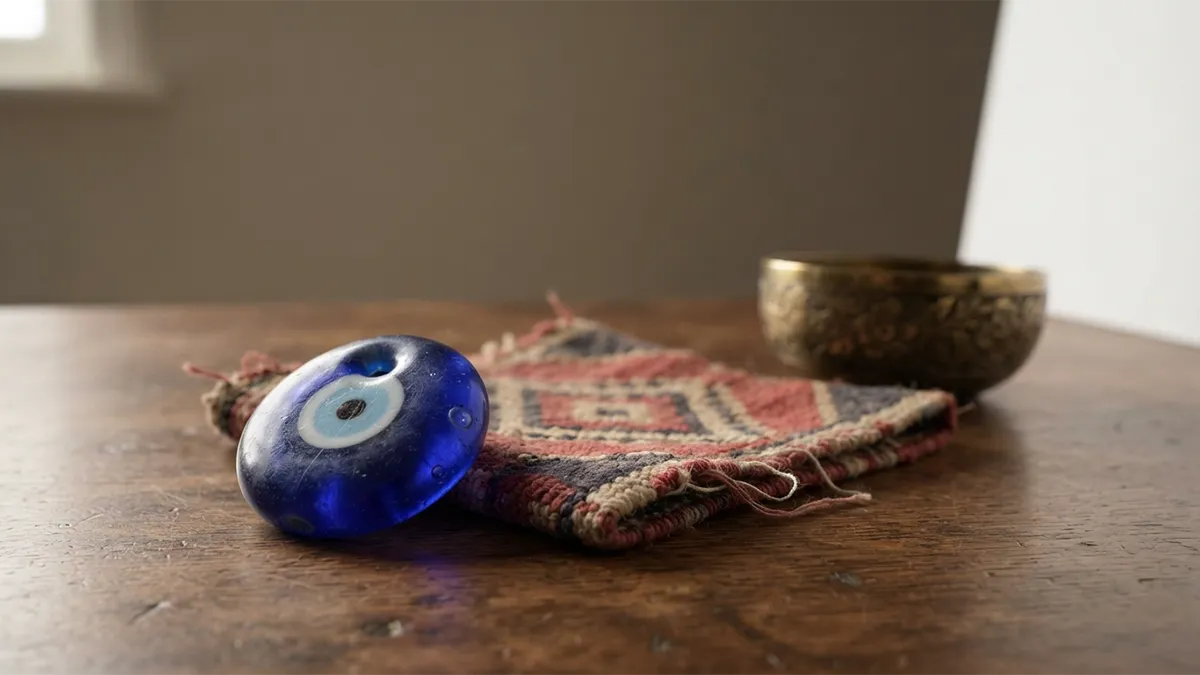
Evil eye history in Persian culture stretches back further than most people expect, with references to protective eye symbols and belief in a harmful gaze appearing in Mesopotamian and Persian sources thousands of years before the blue glass beads familiar today were first made. Understanding this history helps explain why the symbol has stayed so consistent in meaning and design across centuries, rather than being a modern invention dressed up as tradition. This guide traces the evil eye’s roots in Persian culture, how the belief and its imagery developed, and how it’s carried into the jewellery worn today.
How far back does the evil eye belief actually go?
Written references to a harmful or envious gaze appear in some of the earliest Mesopotamian texts, predating the Persian empires by centuries, and the belief was well established across the ancient Near East by the time of the Achaemenid period. Ancient Persian culture absorbed and developed this belief alongside neighbouring civilisations, weaving it into everyday folk practice rather than formal religious doctrine. By the time glassmaking techniques advanced enough to produce the blue and white beads recognisable today, the underlying belief the beads represented was already ancient.
Why did blue become the colour most associated with protection?
Blue pigment and blue glass were historically rare and difficult to produce, which gave the colour an association with value, the sky, and by extension divine or protective qualities across many ancient cultures, not just Persian ones. Some historians also point to the fact that blue eyes were relatively uncommon in the region, making them stand out and, in folk belief, seem more likely to carry an unusually powerful or dangerous gaze, which the protective symbol was designed to counter. Whatever the exact origin, the specific shade of cobalt blue has remained remarkably consistent in evil eye jewellery for centuries.

How did the symbol travel and spread across the region?
Trade routes connecting Persia with the wider Mediterranean, Anatolia and the Levant carried the belief and its imagery outward over many centuries, which is why such similar versions of the symbol appear today in Greek, Turkish, Arab and Persian cultures despite their otherwise distinct traditions. The Silk Road in particular played a role in spreading both the belief and the glassmaking techniques used to produce the beads, connecting Persian artisans with markets and materials from across Asia. This shared history is part of why the evil eye feels instantly familiar across so many different cultures today, even though each developed its own specific customs around it.
How has the symbol’s meaning stayed consistent while its use has evolved?
The core belief, that an envious or ill-wishing gaze can cause harm and that a symbolic eye can deflect it, has remained essentially unchanged since antiquity, even as the specific ways people use the symbol have expanded considerably. Where it was once mostly worn as a simple bead or displayed in the home, it now appears across the full range of modern jewellery styles, from fine gold necklaces to fashion-forward layered bracelets. Our guide to evil eye jewellery’s symbolism and importance covers how this traditional meaning translates into the pieces worn today.
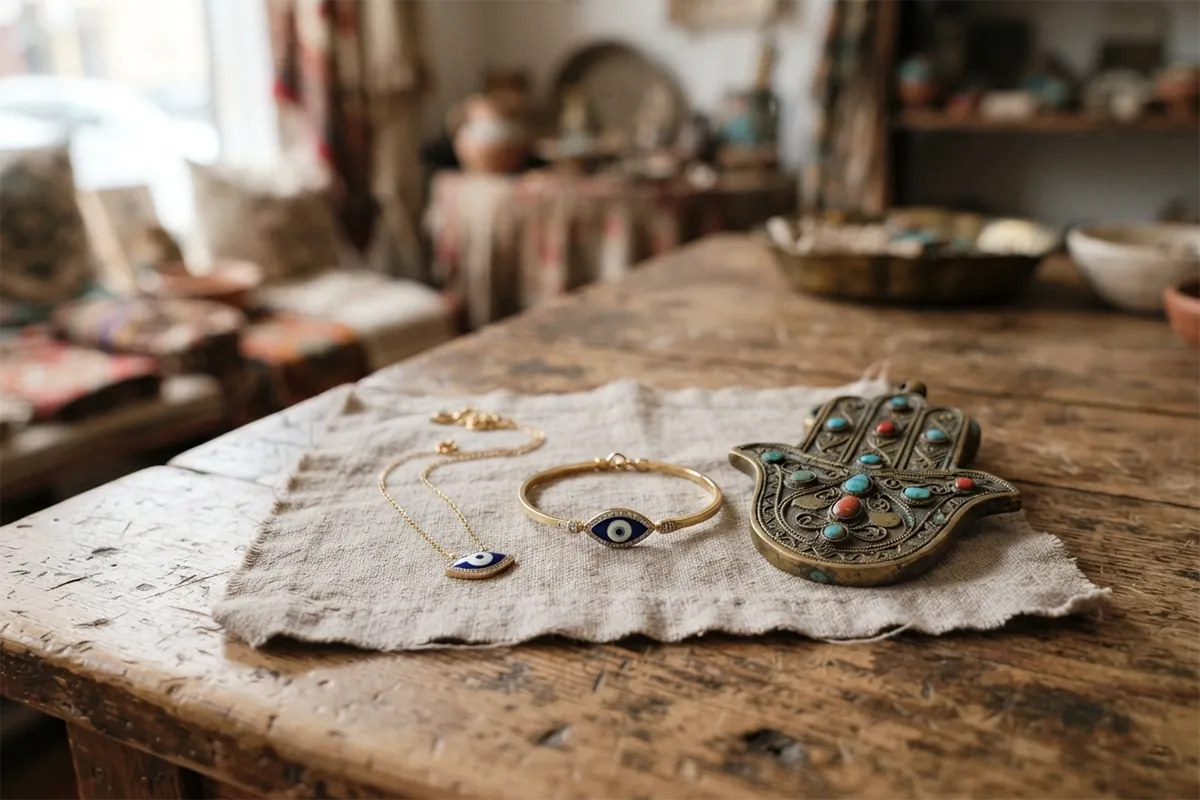
Why does the evil eye remain culturally significant in Persian and the diaspora today?
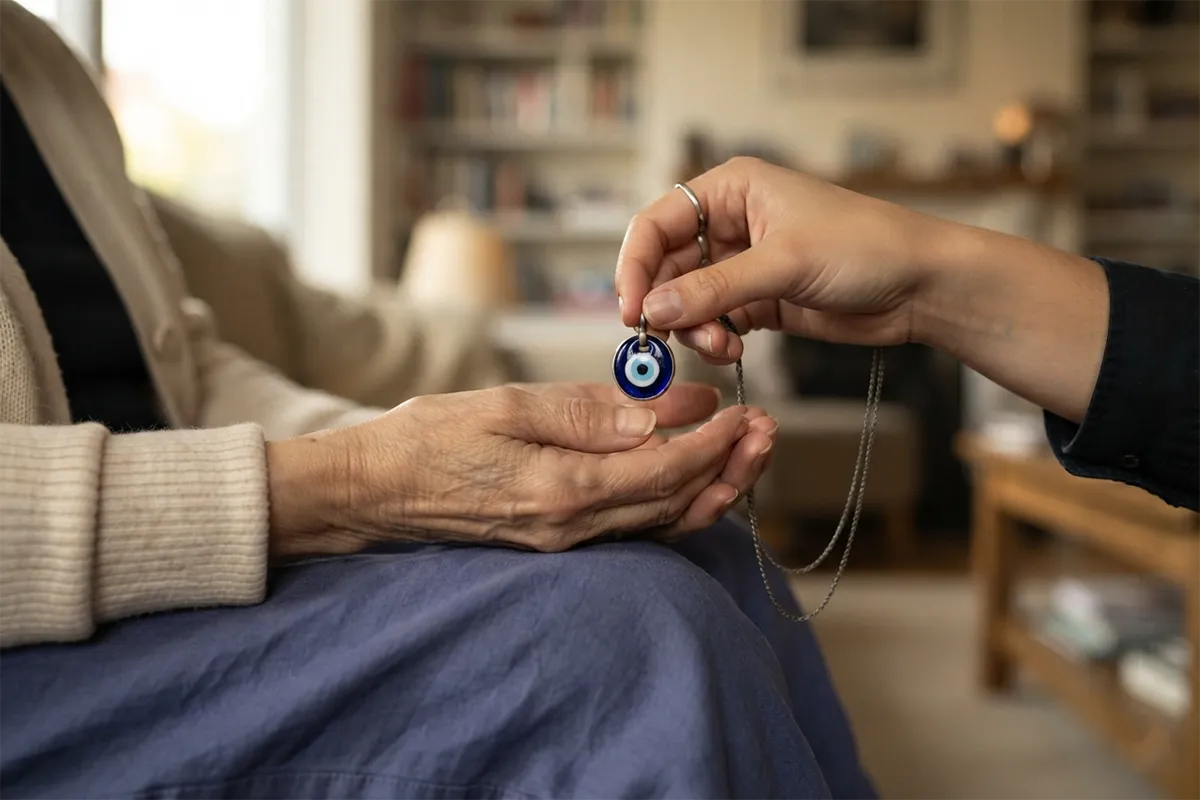
For many Persian families, both inside Persian and abroad, the evil eye remains one of the most immediately recognisable and consistently used cultural symbols, passed down through generations without needing much explanation. In diaspora communities specifically, wearing or displaying the symbol has also become a quiet, everyday way of maintaining a connection to Persian heritage, particularly for families raising children outside Persian. This continuity, thousands of years of essentially unchanged meaning, is relatively rare among cultural symbols and is a large part of what makes the evil eye still feel genuinely significant rather than purely decorative.
Conclusion
Evil eye history in Persian culture stretches back to some of the earliest recorded beliefs in the ancient Near East, and the blue and white symbol familiar today has carried essentially the same meaning for thousands of years. Its spread across trade routes connected Persia with neighbouring cultures that each adopted and adapted the belief in their own way, which is why such similar versions appear across the region today. For Persian families in particular, the symbol remains a genuine, living link to that long history rather than a rediscovered or reinvented tradition.
Frequently Asked Questions
Did the evil eye symbol originate in Persian specifically?
The belief itself predates ancient Persia and likely originated in the wider Mesopotamian region, but Persian culture was one of the earliest and most consistent adopters of the belief and its imagery, and has maintained it continuously since.
Is the evil eye mentioned in Persian literature or poetry?
Yes, references to the harmful gaze and protective measures against it appear throughout classical Persian literature and folk sayings, reflecting how deeply embedded the belief has been in everyday culture for centuries.
How old are the oldest known evil eye artifacts?
Protective eye amulets and beads have been found at archaeological sites dating back several thousand years across the ancient Near East, making the evil eye one of the oldest continuously used protective symbols still worn today.
Is the modern evil eye bead the same design used historically?
The core blue, white and dark centre design has remained remarkably consistent, though modern manufacturing has introduced variations in size, setting and material that weren’t available to ancient artisans.
Where can I see this heritage reflected in jewellery today?
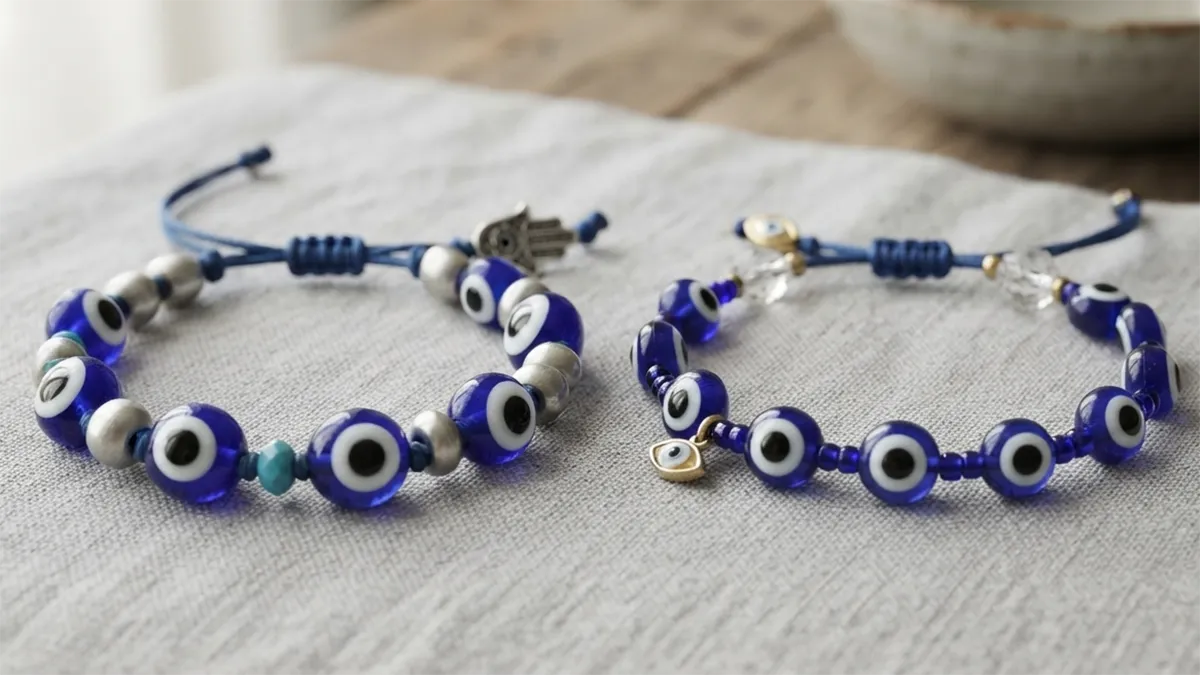
Our Persian jewellery collection includes evil eye pieces made with the same traditional design principles behind this long history.


Comments