


Evil Eye Bracelet vs Nazar Bracelet: What’s the Difference?
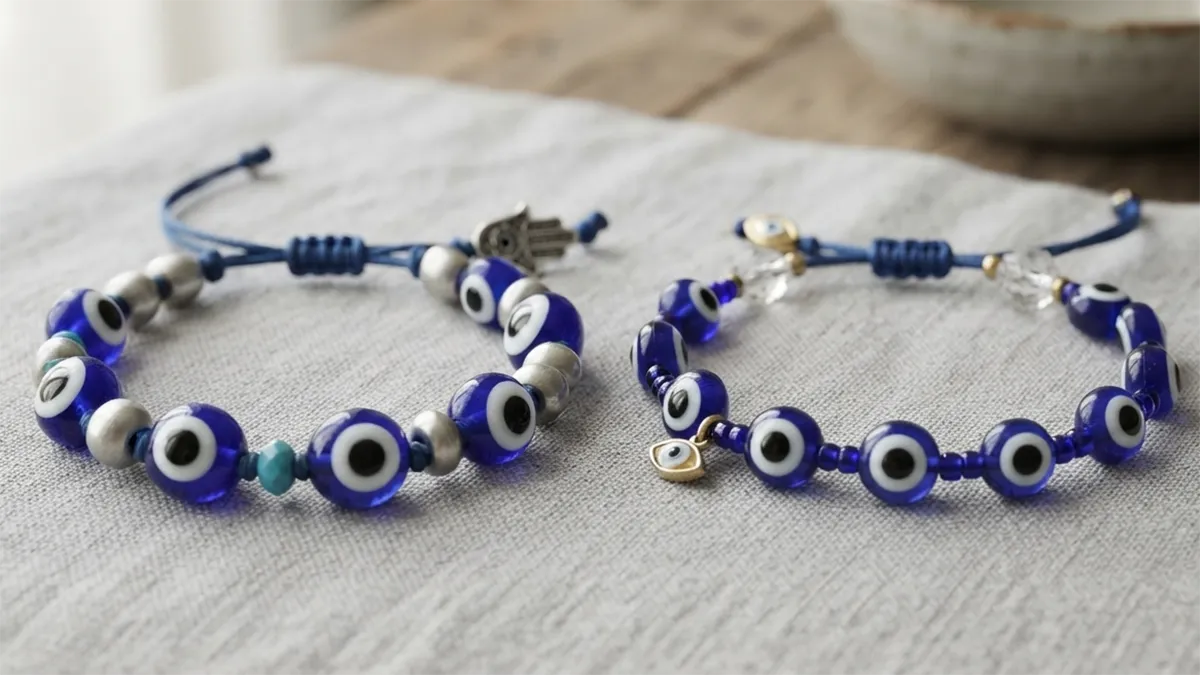
The nazar bracelet tradition and the evil eye bracelet are, for the most part, the same thing wearing two different names, though the terminology can genuinely cause confusion when you’re shopping. Nazar is simply the Persian and Turkish word for the evil eye symbol itself, so a nazar bracelet is, in nearly all cases, an evil eye bracelet by another name. This guide explains where the two terms come from, whether there are any real design differences worth knowing, and how to shop confidently regardless of which term a seller uses.
Where does the word “nazar” actually come from?
Nazar comes from Arabic and is used across Persian, Turkish and several other Middle Eastern languages to mean “sight” or “gaze,” and by extension refers to the harmful gaze the evil eye symbol protects against. In Persian specifically, the fuller phrase cheshm nazar, meaning “eye of envy” or “evil eye,” is often shortened simply to nazar in everyday conversation. English speakers and sellers, particularly outside Persian and Turkish-speaking communities, tend to default to “evil eye” as the more familiar translated term, which is why both names circulate widely for what’s essentially the same piece.
Is there any actual design difference between the two?
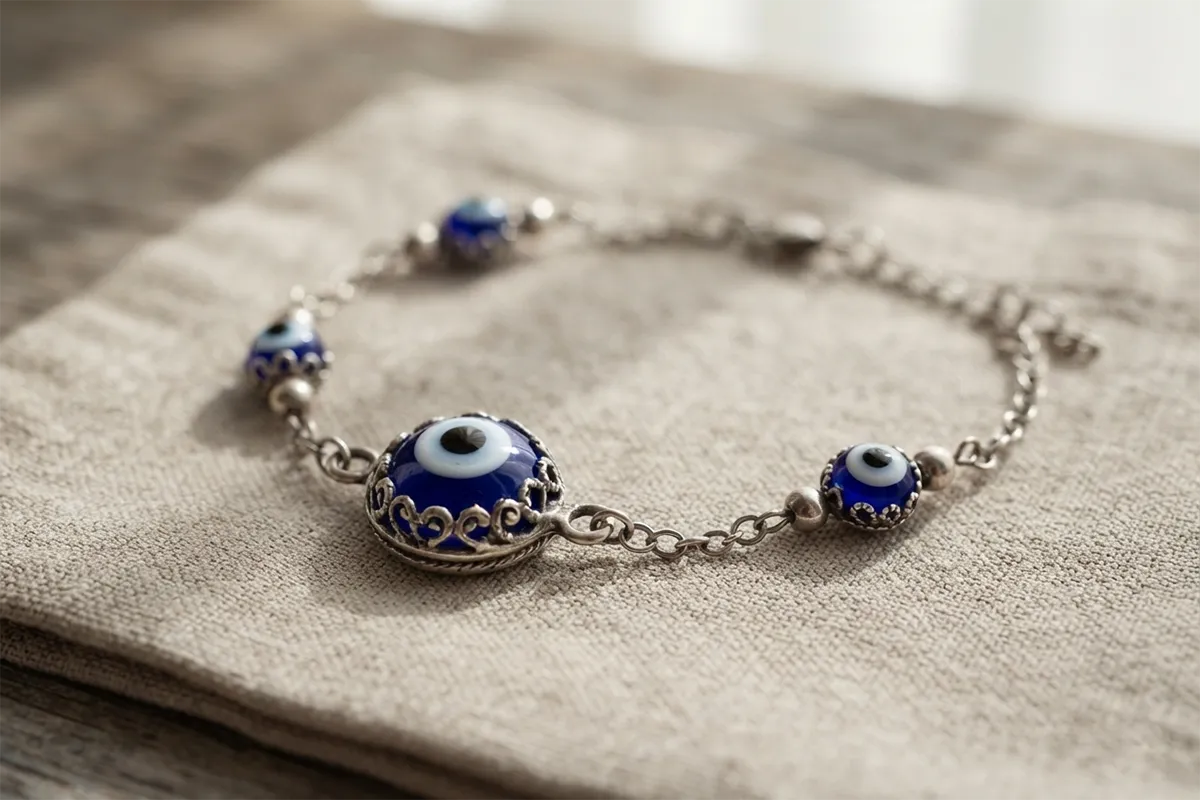
In practice, no, both terms describe jewellery featuring the same blue and white concentric-circle eye motif, usually in glass, enamel or a similar material set into metal. Occasionally a seller will use “nazar” specifically to signal a piece made in a more traditional Persian or Turkish style, while “evil eye” is used more loosely for any variation on the design, including modern reinterpretations with different colours or materials. This isn’t a firm rule though, and the two terms are frequently used interchangeably even by sellers specialising in traditional pieces.
Does it matter which term I use when shopping?
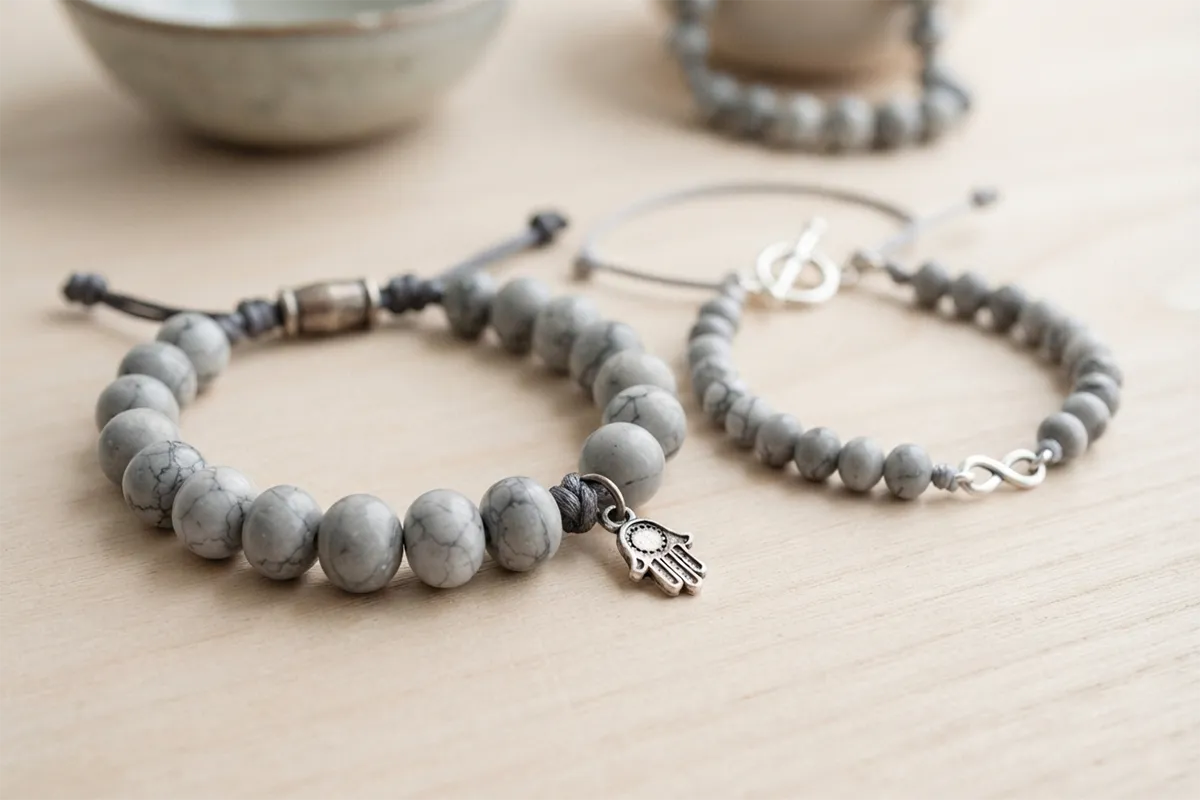
Not really, though using “nazar” when speaking with a seller who specialises in Persian or Turkish jewellery can sometimes signal that you’re specifically looking for a more traditional or culturally authentic piece rather than a mass-market fashion version. If you’re shopping online, it’s worth searching both terms, since some sellers categorise their products under one name or the other, and you may find different pieces depending on which word you use. Neither term is more correct than the other, and using either is perfectly acceptable regardless of your own background.
Are there other regional names for the same symbol?
Yes, the symbol goes by different names across the cultures that use it, mati in Greek, nazar boncuğu in Turkish (literally “evil eye bead”), and simply “evil eye” in most English-language contexts. Despite the different names, the underlying belief and the blue-and-white design are remarkably consistent across all these cultures, which reflects just how far back and how widely this protective tradition spread historically. Our guide to evil eye jewellery’s symbolism and importance covers more on the shared history behind these regional variations.
Should I ask specifically for a “Persian nazar bracelet” if that’s what I want?
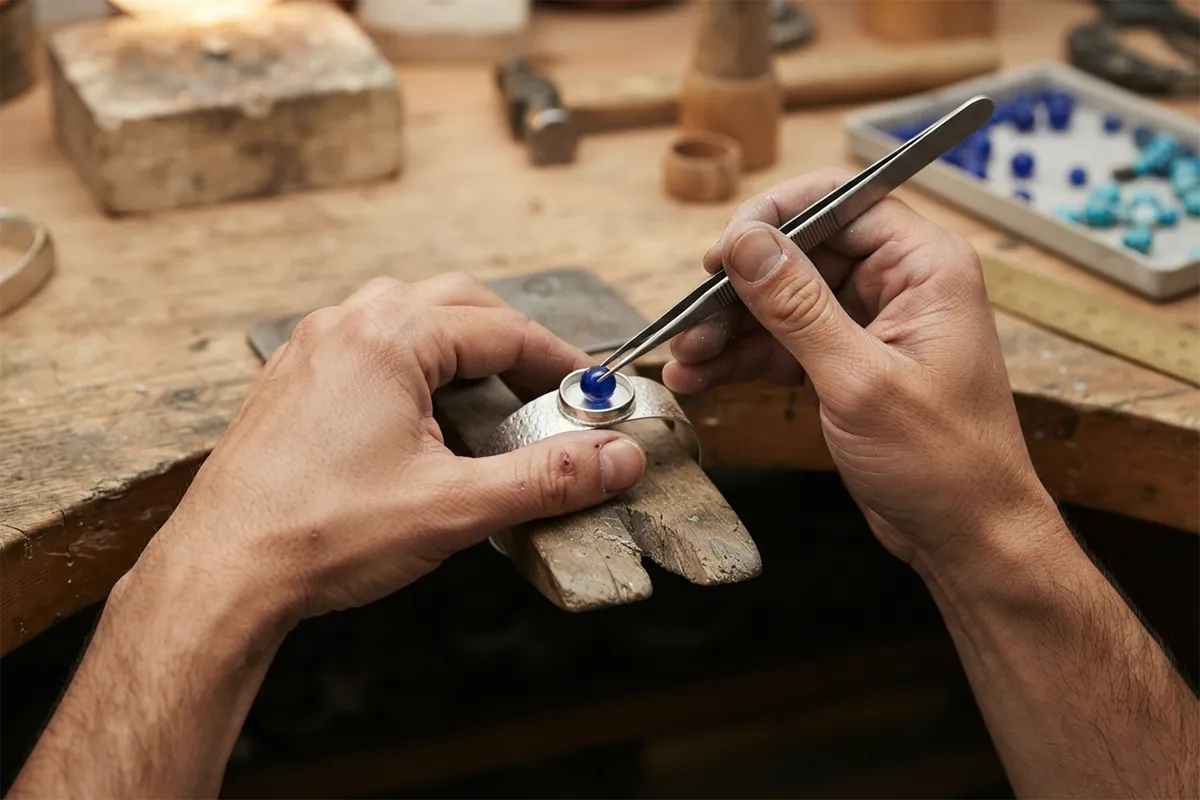
If you’re specifically after a piece made in a traditional Persian style, it’s worth being explicit about that with the seller rather than relying on the word “nazar” alone, since the term itself doesn’t guarantee a particular design or origin. Asking about the craftsmanship, where the piece is made, and what materials are used will give you a clearer picture than the terminology on its own. A seller with genuine knowledge of Persian jewellery traditions should be able to answer these questions specifically rather than giving a generic answer.
Conclusion
An evil eye bracelet and a nazar bracelet are, in almost every practical sense, the same piece of jewellery, with nazar simply being the Persian and Turkish word for the evil eye symbol. There’s no meaningful design rule separating the two terms, though “nazar” can sometimes signal a more traditional style depending on the seller. Whichever term you use when shopping, focusing on the materials and craftsmanship will tell you far more about the piece’s quality than the name attached to it.
Frequently Asked Questions
Is nazar a religious term?
No, nazar refers to the evil eye belief, which is a cultural and folk tradition found across several religious communities rather than being tied to one specific religion.
Why do some sellers only use one term and not the other?
This usually comes down to the seller’s own background or target audience rather than any strict rule, sellers focused on a Persian or Turkish customer base may lean toward “nazar,” while others default to “evil eye” as the more widely recognised English term.
Does a nazar bracelet have to be blue?
Traditionally yes, blue and white is the classic colour combination, though modern variations in other colours exist. The blue version remains the most historically and culturally accurate choice.
Can I use the terms interchangeably when talking to family or friends?
Yes, both terms are widely understood and used interchangeably in everyday conversation, so there’s no risk of causing confusion by choosing one over the other.
Where can I find genuine Persian-style evil eye and nazar pieces?
Our Persian jewellery collection includes evil eye and nazar-style pieces made with traditional craftsmanship.


Comments