


Yalda Night Recipes: Ash Reshteh, Sweets and Warm Drinks
- mahyar
- 16 November 2026
- Yalda Night
- 14 minutes
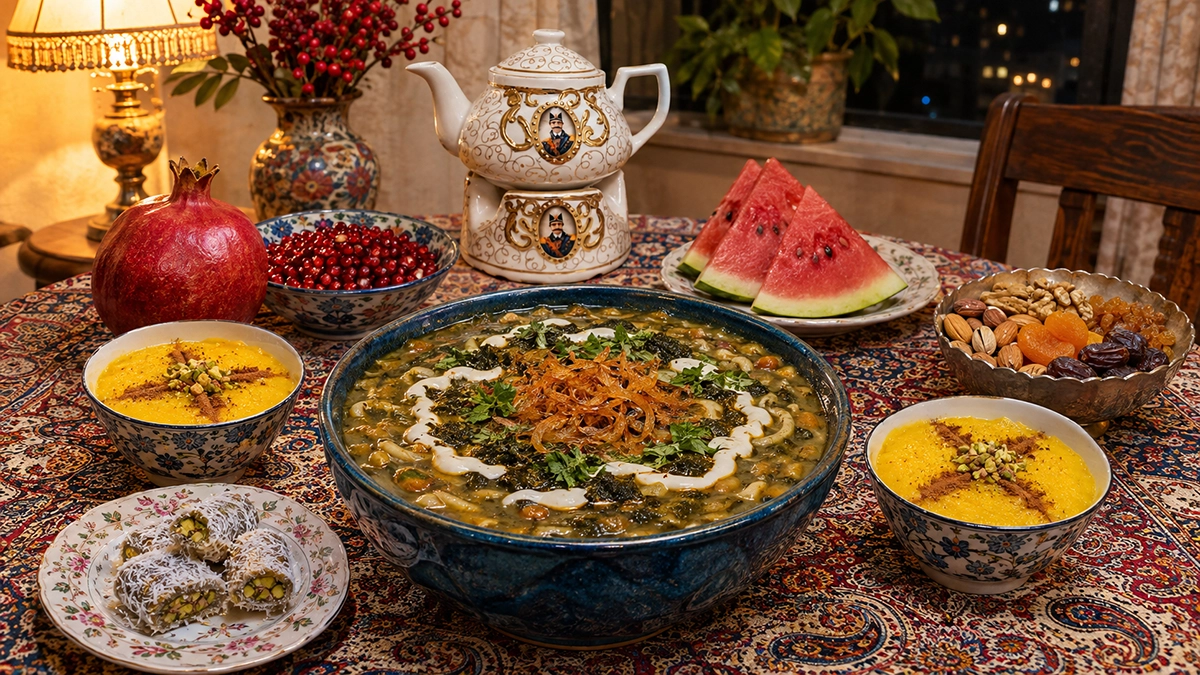
Yalda night recipes bring together warm soups, Persian sweets, fresh fruit, nuts and tea for an evening shared with family and friends. A practical menu can start with Ash Reshteh, followed by Sholeh Zard, baslogh, pomegranate, watermelon and freshly brewed tea. The key is to prepare food in stages, so you can enjoy the gathering instead of spending the evening in the kitchen.
This guide covers what to cook, what to prepare ahead, how much food to allow for guests and how to replace Persian ingredients that may be hard to find abroad. It also explains how to serve each dish. For bowls, tea sets and other serving pieces, explore the Persian Yalda table decorations collection.
Planning Your Yalda Night Recipes
A good Yalda menu needs a warm dish, a few sweets, seasonal fruit and drinks that can be served throughout the evening. You do not need to cook everything at once. Divide the work between the days before Yalda and the gathering itself.
These traditional Yalda night recipes can be prepared in a home kitchen without a large dining table or a complicated menu. Choose the dishes your guests will enjoy and leave enough time to sit together.
What to Prepare Two Days Before Yalda
Start with jobs that do not require last minute attention. Check your pantry for rice, beans, lentils, noodles, sugar, herbs and tea. Choose your menu before shopping, especially if you need to find ingredients in a Persian grocery shop.
Wash and dry your serving dishes. Check that you have enough bowls for soup, smaller dishes for sweets and cups for tea. If you plan to make baslogh, prepare it ahead so it has time to set.
What to Cook and Set Out on Yalda Day
Begin with the dishes that take the most work. Prepare your Ash Reshteh or Ash-e Anar, then make Sholeh Zard. Keep cooked food covered and refrigerate it promptly if you are not serving it straight away.
Wash your fruit and prepare the nuts. Cut the watermelon closer to serving time and keep it chilled. Pomegranate seeds can be prepared ahead and stored in a covered container in the fridge.
What to Serve Later in the Evening
Serve the warm dish first, while guests are ready for something filling. Bring out the fruit, sweets and ajil, the Persian mix of nuts and dried fruit, as the evening continues. Brew fresh tea when people are ready for another cup.
| When | What to prepare | What to serve |
|---|---|---|
| Two days before | Plan the menu, shop, check serving dishes and make baslogh | Nothing needs to be served yet |
| Earlier on Yalda day | Cook soup and pudding, wash fruit and prepare pomegranate seeds | Keep prepared dishes stored safely |
| When guests arrive | Heat the soup thoroughly and prepare the table | Ash Reshteh or Ash-e Anar |
| Later in the evening | Cut watermelon and arrange sweets and nuts | Fruit, ajil, Sholeh Zard and baslogh |
| Throughout the gathering | Brew fresh tea as needed | Persian tea and other warm drinks |
For the meaning of the celebration and its date each year, read our guide to Yalda Night traditions.
Ash Reshteh and Other Warm Yalda Dishes
Ash Reshteh is a thick Persian soup made with beans, lentils, herbs and noodles. It is a useful centrepiece for a Yalda menu because it can be prepared ahead and served in bowls. Ash-e Anar offers another choice, with pomegranate giving the soup a tart flavour.
How to Make Ash Reshteh
Ash Reshteh is one of the most practical dishes to include in a collection of easy Yalda night recipes. The ingredients are simple, although the beans need planning and the noodles must be added at the right stage.
Serves: 6 to 8 people.
These quantities are a home cooking guide. Adjust the seasoning, liquid and ingredients to your taste and the size of your pot.
Ingredients:
- 100 g dried chickpeas, about 1/2 cup
- 100 g dried kidney beans, about 1/2 cup
- 150 g dried lentils, about 3/4 cup
- 100 g chopped parsley, about 2 cups
- 100 g chopped coriander, about 2 cups
- 200 g chopped spinach, about 6 loosely filled cups
- 100 g chopped spring onions, about 1 cup
- 300 g onions, about 2 cups chopped
- 20 g garlic, about 4 cloves
- 5 g turmeric, about 2 teaspoons
- 60 ml oil, about 4 tablespoons
- 180 g reshteh noodles, about 2 cups broken into shorter pieces
- 2.5 litres water, about 10 cups, plus more if needed
- 150 g prepared kashk, about 2/3 cup, for serving
- Salt and pepper to taste
Kashk is a tangy fermented dairy product traditionally used as a topping for Persian soups. Reshteh noodles are wheat noodles made for Persian soup.
- Soak the dried chickpeas and kidney beans in plenty of cold water for 8 to 12 hours. Drain them and cook in fresh water for about 60 to 90 minutes, or until tender. Some beans may take longer. Canned beans can reduce the preparation work.
- Cook the lentils separately for about 20 to 25 minutes, or add them once the beans are nearly ready. They should become soft without disappearing into the soup.
- Fry chopped onions in a little oil for about 12 to 15 minutes until golden. Add garlic and turmeric, stirring gently for another 1 to 2 minutes so the garlic does not burn.
- Put the cooked beans, lentils, chopped herbs and most of the onion mixture into a large pot. Add enough water to cover the mixture generously.
- Simmer for about 25 to 35 minutes until the herbs soften and the flavours come together. Stir occasionally, especially as the soup becomes thicker.
- Break the reshteh noodles into shorter pieces. Add them to the soup and cook for about 10 to 15 minutes, or according to the noodle instructions, stirring to prevent sticking.
- Adjust the water, salt and pepper. Simmer for another 5 minutes if needed. The finished soup should be thick enough to serve in a bowl but still easy to stir.
- Serve hot with the remaining fried onions and garlic. Add prepared kashk as a topping if you have it.
For serving, choose a bowl that leaves room for toppings. Keep the extra fried onions and kashk separate so guests can adjust their portions. Ash Reshteh becomes thicker as it stands, so add a little water while reheating if needed.
Ash-e Anar with Pomegranate and Herbs
Ash-e Anar is a Persian soup flavoured with pomegranate. Its tart taste makes it a natural choice for a Yalda table, where pomegranate is already an important fruit. Recipes vary, so this is a simple home cooking approach rather than a fixed regional version.
Serves: 6 people.
These quantities are a home cooking guide. Adjust the sourness, liquid and seasoning to your taste and the size of your pot.
Ingredients:
- 200 g dried lentils, about 1 cup
- 100 g rice, about 1/2 cup
- 200 g onions, about 1 1/2 cups chopped
- 100 g chopped parsley, about 2 cups
- 100 g chopped coriander, about 2 cups
- 25 g chopped fresh mint, about 1 cup loosely filled
- 500 ml pomegranate juice, about 2 cups
- 15 to 30 ml pomegranate molasses, about 1 to 2 tablespoons, if available
- 1.5 litres water, about 6 cups, plus more if needed
- 30 ml oil, about 2 tablespoons
- 2.5 g turmeric, about 1 teaspoon
- Salt and pepper to taste
- 60 g pomegranate seeds, about 1/3 cup, for garnish
Cooked beans can also be added for a heartier soup.
- Fry chopped onions with oil and turmeric for about 10 to 12 minutes until soft and golden.
- Add rinsed lentils, rice and water. Simmer gently for about 25 to 30 minutes until the lentils and rice begin to soften.
- Stir in chopped herbs and continue cooking for about 20 to 25 minutes until the mixture thickens.
- Add pomegranate juice gradually, tasting as you go. Use a little pomegranate molasses if you prefer a stronger tart flavour.
- Simmer for another 10 to 15 minutes, stirring regularly. Adjust the seasoning and serve warm. A few fresh pomegranate seeds make a simple garnish.
If the pomegranate juice is especially sour, use less at first. You can add more near the end of cooking. Serve the soup with bread and let the pomegranate flavour remain the focus.
Preparing the Soup Ahead of Time
Both soups suit advance preparation, but the noodles in Ash Reshteh continue to absorb liquid. If you plan to cook it early, leave the soup slightly looser than usual. Reheat thoroughly and stir in hot water as needed.
Cool prepared soup promptly, store it in the fridge and reheat only the portion you need. Avoid leaving cooked soup at room temperature throughout the gathering. Keep fresh toppings separate until serving.
Traditional Sweets and Yalda Night Desserts
A Yalda night dessert can be prepared before guests arrive, leaving the evening free for conversation. Sholeh Zard and baslogh offer different textures, while fresh fruit provides a simple finish. You can serve small portions of each instead of preparing a large dessert for everyone.
Sholeh Zard, Persian Saffron Rice Pudding
Sholeh Zard is a sweet Persian rice pudding made with rice, saffron, sugar and rosewater. It is usually served in small bowls and can be prepared in advance.
Makes: 6 to 8 small bowls.
These quantities are a home cooking guide. Adjust the sweetness, liquid and consistency to your taste and the size of your saucepan.
Ingredients:
- 180 g rice, about 1 cup
- 1.5 litres water, about 6 cups, plus more if needed
- 250 g sugar, about 1 1/4 cups
- A small pinch of saffron, about 0.25 g
- 60 ml hot water, about 1/4 cup, for brewing the saffron
- 30 ml golab (rosewater), about 2 tablespoons
- 20 g butter, about 1 1/2 tablespoons, if preferred
- Cinnamon or chopped nuts for decoration, about 1 to 2 tablespoons in total
- Rinse the rice and cook it in plenty of water over a gentle heat for about 45 to 60 minutes.
- Continue cooking until the grains become very soft and begin to break apart. Stir regularly and add water if the mixture becomes too thick.
- Steep the saffron in the measured hot water for about 10 minutes. Add sugar and brewed saffron to the rice, stirring until evenly mixed.
- Stir in golab and butter if using. Cook gently for another 15 to 20 minutes until the pudding has a soft, spoonable texture.
- Pour into small bowls. Leave to cool, then refrigerate if serving later.
- Decorate with cinnamon or chopped nuts just before serving.
Homemade Baslogh
Baslogh is a soft Persian sweet with a chewy texture. A simple version uses starch, sugar and rosewater, often finished with coconut or walnuts. It works well as a small sweet beside tea.
Makes: One small plate of baslogh.
These quantities are a home cooking guide. Adjust the sweetness and final thickness to your taste and the size of your saucepan.
Ingredients:
- 120 g cornflour (cornstarch), about 1 cup
- 480 ml cold water, about 2 cups
- 200 g sugar, about 1 cup
- 30 ml golab (rosewater), about 2 tablespoons
- 80 g desiccated coconut, about 1 cup, for coating
- 50 g walnuts, about 1/2 cup chopped, if desired
- Mix the starch with cold water until smooth, then add sugar. Stir for about 2 minutes to dissolve the mixture evenly.
- Heat gently in a saucepan, stirring constantly for about 20 to 30 minutes as the mixture thickens. The mixture should become glossy and very thick.
- Add golab and continue stirring for about 5 minutes until the mixture becomes thick and holds together.
- Remove from the heat. Allow it to cool for about 15 to 20 minutes, or until cool enough to handle. Shape into small pieces with lightly dampened hands.
- Roll in coconut and add walnuts if desired. Leave to set for about 1 to 2 hours before arranging on a serving plate.
Serving Pomegranate, Watermelon and Ajil
Pomegranate, watermelon and ajil are familiar foods on a Yalda table. Serve them in separate dishes so guests can choose what they enjoy. Keeping them apart also helps preserve their textures.
Cut watermelon into manageable pieces and keep it chilled until serving. Remove the pomegranate seeds and place them in a bowl with a spoon. Our guide to pomegranate traditions and serving ideas for Yalda explains more about the fruit and its place on the table.
Ajil can include pistachios, almonds, walnuts and dried fruit. Choose a mixture that suits your guests, and provide separate options if anyone has a nut allergy. For more help choosing the mixture, see our guide to Persian nuts and ajil.
Small sweets such as baslogh and Noghl, the sugar coated sweets often served with tea, can sit on a separate plate. If you prefer a simple menu, choose one homemade dessert and complete the table with fruit and nuts.
Warm Drinks for a Long Yalda Evening
Warm drinks are part of the rhythm of a Yalda gathering. Persian tea can be brewed in fresh batches, while rose tea offers another gentle floral flavour. Keep the preparation simple so the drinks do not interrupt the meal.
Brewing Persian Tea
Persian tea is commonly made by brewing loose tea leaves in a teapot and diluting the strong tea with hot water to taste. It can be served with sugar, nabat or small sweets. Nabat is crystallised sugar, often sold on sticks.
Warm the teapot, add the tea leaves and pour in hot water. Let the leaves brew gently until the tea reaches the strength you prefer. For more detail, follow our guide to making Persian tea with a samovar.
Rose Tea and Nabat
Rose tea is another warm drink for the Yalda table. Use culinary dried rose petals or rosebuds and steep them in hot water until the flavour develops. You can serve the tea plain or with nabat.
For more about the flowers and their use in drinks, see our guide to Persian rose tea and dried rosebuds.
A teapot and warmer can make serving easier by keeping tea warm between rounds. Brew fresh tea when needed rather than leaving the same leaves steeping throughout the evening.
Substitutes for Persian Ingredients Abroad
You can prepare a Yalda menu abroad without finding every traditional ingredient. The best approach is to understand what each ingredient does before choosing a replacement. Some substitutes change the flavour or texture, but they can still make a pleasant home cooked dish.
Look for Persian or Middle Eastern food shops where available. If an ingredient is missing, use the table below to make a practical choice. These are kitchen alternatives, not exact matches.
| Ingredient | Role in the recipe | Practical substitute | What changes |
|---|---|---|---|
| kashk | Tangy dairy topping for Ash Reshteh | Plain thick yoghurt, added at serving time | A milder flavour and a different texture. Yoghurt does not replace the fermented taste of kashk |
| reshteh noodles | Thickens the soup and gives it a soft noodle texture | Plain wheat noodles or broken spaghetti | The thickness and taste may differ. Check the cooking time on the packet |
| golpar | A fragrant spice used with some Persian foods | Leave it out, or use a little ground cumin for a different warm flavour | Cumin is not a flavour match. Use it only if you enjoy its taste |
| nabat | Sweetens tea | Ordinary sugar or sugar cubes | The sweetness remains, but the traditional crystal presentation changes |
| barberries | Adds small, sharp bursts of flavour | Finely chopped dried cranberries with no added flavouring | Cranberries are usually larger and may taste sweeter |
| golab | Gives sweets and drinks a floral scent | Use less or leave it out when unavailable | The dessert loses its rose aroma. Do not replace it with cosmetic rosewater |
| Pomegranate molasses | Adds concentrated tartness to Ash-e Anar | Pomegranate juice, added gradually | The flavour will be less concentrated and the soup may need more simmering |
| Persian soup herbs | Builds the fresh herb flavour of Ash Reshteh | Use available parsley, coriander, spinach and spring onions | The balance will vary, but the soup remains herb based |
For Ash Reshteh, the most important substitute to plan is the noodle. Choose a plain wheat noodle without strong added flavour. Add it near the end and stir gently, as different noodles cook at different speeds.
For kashk, use thick yoghurt as a topping rather than boiling it into the soup. This keeps the substitution simple. Check the dietary needs of your guests because both ingredients contain dairy.
In sweets, use only rosewater labelled for cooking. If you cannot find it, make a simpler dessert rather than adding perfume or a cosmetic product. The same principle applies to other flavourings: use food ingredients intended for consumption.
If you have access to a Persian grocery shop, buy the distinctive ingredients before the day of the gathering. If not, choose the substitutions that change the recipe least. A well cooked, simple soup is better than a complicated recipe with unsuitable replacements.
How Much Food to Prepare for Your Guests
Plan portions around the whole evening, not just the main meal. Yalda often includes several rounds of eating, so large servings of every dish are unnecessary. A modest bowl of soup followed by shared fruit, sweets and nuts usually creates a more balanced menu.
Start with your guest count. Consider whether people will arrive hungry, whether children are joining and whether the soup is the main meal. Use the table as a planning guide rather than a fixed serving rule.
Suggested amounts: The quantities below are approximate home entertaining estimates per guest, not fixed rules. Adjust them to the rest of your menu and your guests’ preferences.
| Food or drink | Suggested allowance per guest | Approximate quantity per guest | How to adjust |
|---|---|---|---|
| Ash Reshteh or Ash-e Anar | A modest soup bowl | 250 to 350 ml, about 1 to 1 1/2 cups | Prepare a fuller portion if it is the main meal. Allow smaller servings when another main dish is planned |
| Ajil | A small handful as part of a shared selection | 30 to 50 g, about 1/4 to 1/3 cup depending on the mixture | Allow more if nuts are the main snack. Keep separate dishes for guests with different preferences |
| Pomegranate | A small dessert bowl of seeds | 80 to 100 g, about 1/2 to 2/3 cup | Serve more if it replaces a cooked dessert or is used in several dishes |
| Watermelon | A few manageable pieces | 150 to 200 g prepared fruit, about 1 cup of pieces | Cut additional pieces only when needed to avoid leaving prepared fruit out |
| Sholeh Zard | A small dessert bowl | 100 to 150 g, about 1/2 cup | Use smaller portions when baslogh and other sweets are also offered |
| Baslogh and small sweets | A small selection to share | 30 to 50 g of sweets | Put out more gradually as guests finish the first serving |
| Persian tea | A cup for each serving round | 2 to 3 small cups of about 100 to 150 ml each across the evening | Plan for repeat cups and brew fresh tea as the evening continues |
Think about the order of serving. If soup comes first, guests may want less pudding later. If people arrive after dinner, focus on fruit, nuts, sweets and tea instead.
Keep extra food refrigerated and refill serving dishes when needed. This helps avoid preparing a crowded table too early. Check allergies and dietary needs before deciding how much of each dish to make.
These are flexible serving suggestions, not measured catering quantities. For a gathering with many guests, use a recipe with tested ingredient amounts before scaling it up. You can also offer smaller first servings and let guests ask for more.
Our Experience at Persis Collection
At Persis Collection, we see how important serving pieces are to the Yalda table. Our London warehouse supplies Persian handicrafts to customers in the UK, Europe, North America and Australia. Our Yalda range includes table decorations, bowls and tea sets made for gatherings.
Our Yalda Night Collection currently includes 149 products, with 71 products in the Yalda Table Decorations category. These include pieces for arranging and serving food during the celebration.
Based on our store sales, the Persian Teapot and Warmer and Persian Pomegranate Bowls are among the most frequently ordered Yalda serving products. This gives us a practical view of the types of pieces customers choose for their celebrations.
The handmade pomegranate bowls come in a larger size suited to pomegranate seeds or ajil and a smaller size suited to sweets. Their glazed ceramic surface can be washed after use.
For a more decorative arrangement, the red ceramic pomegranate serving set includes plates and a bowl with gold leaf edging. The ceramic serving plates with Kilim patterns offer another option for presenting food.
For tea, the Persian teapot and warmer set includes a ceramic teapot with a 750 ml capacity, suitable for four people. Fresh batches are useful for a long evening. The red Shah Abbas tea set is another serving option.
You can see each of these pieces below.


Our ceramic pieces with enamel decoration should be washed by hand. Follow the care instructions for each product rather than using a dishwasher. Persis Collection offers the serving pieces shown here, not the food ingredients used in these recipes.
Bringing Your Yalda Menu Together
A good Yalda menu does not need many complicated dishes. Choose a warm soup, prepare a sweet you enjoy making, and complete the table with pomegranate, watermelon, ajil and tea. Organise the cooking ahead of time and keep the serving plan flexible.
If you would like to learn more about Persian cooking beyond Yalda, explore our guide to popular Persian dishes.
When planning your table, consider which bowls and plates make the food easy to share. You can explore our Yalda table serving pieces and decorations for a setting that brings the meal together.
Frequently Asked Questions
What do Persians eat on Yalda?
Persians commonly enjoy pomegranate, watermelon, ajil, sweets and tea on Yalda. Families may also prepare warm dishes such as Ash Reshteh or Ash-e Anar. There is no single menu that every household follows.
Can Ash Reshteh be made ahead of time?
Yes, Ash Reshteh can be prepared ahead and reheated before serving. The noodles absorb liquid as the soup rests, so you may need to add water when reheating. Cool and refrigerate the soup promptly after cooking.
Is there a vegetarian Yalda night menu?
Yes, you can prepare a vegetarian Yalda menu with Ash Reshteh, Sholeh Zard, baslogh, fruit, nuts and tea. Use vegetable based ingredients in the soup and check the noodles and toppings. For a vegan menu, replace dairy ingredients with suitable plant based alternatives.
What do you drink on Yalda Night?
Persian tea is a familiar drink for Yalda Night. Rose tea is another option, and both can be served with sugar or nabat. Freshly brewed drinks are easy to offer throughout the gathering.
What do Iranians do on Yalda Night?
Iranians gather with family or friends, share food and spend time together on Yalda Night. Many families read poetry by Hafez and enjoy pomegranate, watermelon and nuts. Traditions differ between households, so the gathering can be simple or elaborate.

Comments