


Ancient Persian Inventions We Still Use Today: From Water to Games
- mahyar
- 7 November 2026
- Persian History
- 8 minutes
Some ancient persian inventions still shape how we live, play and build today. Underground water channels, natural cooling systems and early board games all have roots in ancient Persian. Others survive through art, craft and objects we can still enjoy at home.
Persian history also includes inventions whose origins are less certain than popular accounts suggest. This guide explores ten important examples, explains the historical evidence and shows how their ideas remain relevant. From the qanat to traditional games, the connection between past and present is often surprisingly clear. You can also explore this heritage through handcrafted Persian backgammon sets, which bring a centuries-old gaming tradition into modern homes.
Ancient Persian Inventions at a Glance
The most significant persian inventions cover water, cooling, communication, games and decorative arts. Some began in ancient Persian. Others arrived from neighbouring cultures and developed into distinct Persian traditions.
| Invention or tradition | Historical connection | Modern relevance |
|---|---|---|
| Qanat | Underground water channels | Water supply and irrigation |
| Yakhchal | Traditional ice storage | Passive cooling design |
| Badgir | Natural ventilation towers | Building ventilation |
| Chapar Khaneh | Achaemenid postal stations | Organised delivery networks |
| Takhteh nard | Early board games in Persian | Backgammon and traditional game sets |
| Chatrang | Chess developed in Sasanian Persia | Modern chess |
| Chogan | Persian horseback ball game | Modern polo |
| Knotted carpets | Ancient weaving traditions | Handmade rugs |
| Rhyton | Animal-shaped ceremonial vessels | Decorative replicas |
| Early winemaking | Ancient wine residues in Persian | Historical knowledge of fermentation |
These examples also show why ancient persian technology should be understood through evidence rather than simple claims about who invented something first.
Water, Cooling and Engineering
Water management and natural cooling were major achievements in ancient Persian. Persian builders developed ways to move water underground, store ice and improve airflow without modern machinery.
Qanat: Underground Water Channels
A qanat carries groundwater through a gently sloping underground tunnel. It brings water to settlements and farmland, often across dry landscapes where surface water is scarce.
In 2016, UNESCO added The Persian Qanat to its World Heritage List. The listing covers eleven qanats, including the historic system at Gonabad. These structures show how carefully planned water channels could support communities over long periods.
Unlike a modern powered pumping system, a traditional qanat uses gravity to move water. The idea remains relevant wherever careful water use matters. For more about the region’s historic buildings and crafts, read our guide to the heritage of Yazd.
Yakhchal: Ice Storage in the Desert
A yakhchal is a traditional structure used to make and store ice. Its thick earthen construction helps protect stored ice from desert heat.
These distinctive domed buildings are often dated to around 400 BCE, although the surviving buildings are much later. That early date should not be treated as firmly proven archaeological evidence.
The word yakhchal now means refrigerator in everyday Persian. The older structures offer an example of passive cooling, which reduces heat through building design rather than mechanical refrigeration.
Badgir: Natural Cooling with Windcatchers
A badgir, or windcatcher, is a tower designed to move air through a building. Openings near its top help direct airflow into rooms below.
Yazd is famous for its windcatchers and traditional earthen architecture. UNESCO recognised the Historic City of Yazd as a World Heritage Site in 2017.
Windcatchers show how local architecture responded to a hot, dry climate. Their use of natural airflow remains useful when studying ways to reduce dependence on mechanical cooling.
Communication and Travel Across Ancient Persia
Persian engineering was not limited to buildings. The Achaemenid Empire also organised roads and communication stations across large distances.
Chapar Khaneh and the Royal Road
Chapar Khaneh refers to the traditional Persian postal station system. Riders could change horses at stations along important routes, helping messages travel across the empire.
The Royal Road connected major centres of Achaemenid administration. Herodotus described the Persian system of mounted messengers in his Histories, Book 8. His account emphasised their determination to continue despite difficult weather and darkness.
That description later inspired the unofficial postal motto displayed on the James A. Farley building in New York.
The system was an early example of organised long-distance communication. Its relay approach has a clear connection to later postal networks. The wider setting is explored in our article about the history of the Persian Empire.
Ancient Games We Still Play
Games provide one of the clearest links between ancient Persian culture and modern life. Early gaming objects, Sasanian chess traditions and the horseback game Chogan each have a different history.
Takhteh Nard and the Shahr-e Sukhteh Board
Takhteh nard is the Persian name for backgammon. The history of board games in Persian reaches back thousands of years, although ancient games did not necessarily follow modern rules.
At Shahr-e Sukhteh, the Burnt City in Sistan, archaeologists discovered a game board with playing pieces and dice. Dating to around 3000 BCE, it is widely regarded as the oldest complete board game.
However, its exact rules remain uncertain. The discovery provides evidence of early board gaming, not proof that modern backgammon was played in exactly the same way.
The backgammon origin story therefore requires care. Our detailed guide to the history and craft of takhteh nard explores the game’s heritage and traditional board design.
Today, Khatam, or Persian marquetry, keeps this gaming tradition connected to handmade craft. Artists arrange small decorative pieces into detailed geometric patterns on wooden surfaces. The Chogan Khatam backgammon and chess set combines both games on opposite sides of one wooden board.
Chatrang: How Chess Reached Persia
Chess was not originally invented in Persia. It reached Sasanian Persian from India around 600 CE, where it developed under the name chatrang.
The Middle Persian text Wizarishn i Chatrang records part of this cultural history. The expression shah mat, associated with the king’s defeat, also helped shape the English word checkmate.
The history of chess in Persia shows how a borrowed game can become part of another culture. Persian traditions influenced its language and development, while the game continued to spread.
For a closer look, see our article about Persian chess history and the rules of the game.
Modern craft also reflects this heritage. Our Achaemenid-inspired chess pieces use historical designs in a set of 32 handmade brass pieces with silver and gold coloured finishes. They are sold without a board.
Chogan: The Persian Roots of Polo
Chogan is a traditional Persian horseback game involving a ball and long mallets. It belongs to the wider history of polo, which is still played internationally.
UNESCO added Chogan to its Intangible Cultural Heritage List in 2017. The recognition includes the game’s links to music, storytelling and traditional Persian culture.
The scenes of horses and riders also became decorative subjects in Persian art. Our hand-painted Minakari plate depicting Chogan carries this theme into decorative metalwork. Minakari is the craft of painting enamel decoration onto metal and firing it in a kiln.
Persian Art and Objects That Survive Today
Not every important Persian contribution was a machine or practical system. Weaving and decorative vessels also preserve knowledge of ancient materials, design and craftsmanship.
The Pazyryk Carpet and Persian Weaving
The Pazyryk carpet is one of the most important surviving examples of ancient pile weaving. Dating to the fifth or fourth century BCE, it is the oldest surviving pile carpet known.
It is preserved at the State Hermitage Museum in Saint Petersburg. Although its exact origin remains uncertain, the carpet is widely attributed to Achaemenid Persia.
Its detailed design reveals the skill involved in early textile production. Handmade Persian rugs continue a long tradition of decorative weaving, even though modern examples should not be presented as direct copies of the Pazyryk carpet.
Learn more about related techniques through our history of Persian handicrafts.
Rhyton: Animal-Shaped Drinking Vessels
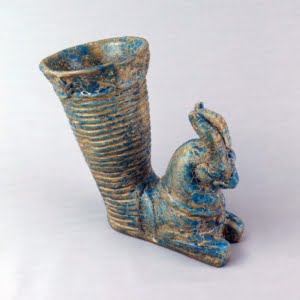
A rhyton is an ancient vessel often shaped around the head or body of an animal. These objects were especially prominent in Achaemenid decorative arts.
The Metropolitan Museum of Art holds a gold lion rhyton dating to around 500 BCE. The British Museum also preserves an important silver griffin rhyton. Both show the close relationship between ancient metalwork and animal imagery.
Today, the same shapes inspire decorative objects. The Persian lion rhyton replica at Persis Collection is made from fired grey pottery with a turquoise glaze. It is offered as a decorative piece, not as a vessel for drinking.
Early Winemaking in Ancient Persian
Archaeological discoveries in Persian also provide important evidence for early winemaking. These findings help explain the history of food and drink without claiming that one region invented every technique.
Wine Residues at Hajji Firuz Tepe
At Hajji Firuz Tepe in northwestern Persian, researchers identified chemical evidence of wine inside ancient pottery jars. The material dates to around 5400 to 5000 BCE.
Research associated with Patrick McGovern and the Penn Museum places these finds among the earliest known evidence of winemaking.
However, older evidence has been found in Georgia. The Persian discovery is therefore an important early example, not proof that winemaking began in Persian.
What About Other Famous Persian Inventions?
Some popular lists of persian empire inventions and contributions mix ancient discoveries with later achievements. Others repeat claims whose evidence remains uncertain.
A pottery vessel from Shahr-e Sukhteh, showing five successive images of a goat moving towards a tree, is widely described as the earliest known animation sequence. It is held by the National Museum of Persian, although the images are not animation in the modern technical sense.
Vertical windmills, including the asbad structures at Nashtifan, belong to later Persian innovation. The first written records date from between the 5th and 9th centuries CE. They should not be placed among firmly dated Achaemenid inventions.
The Baghdad Battery is sometimes described as an ancient electrical device, but its electrical purpose has not been established. Claims that Persians invented the guitar through the tar are also too uncertain to treat as fact.
Algebra is closely associated with the ninth-century scholar al-Khwarizmi, whose work belongs to a later period. Similarly, the Cyrus Cylinder is often described as an early charter of human rights, but that modern interpretation needs historical context. Our guide to what the Cyrus Cylinder says examines its meaning.
What We Have Learned From Our Customers
At Persis Collection, we see how interest in ancient Persian culture influences the choice of handmade objects. Customers often want pieces that connect historical subjects with something they can display or use.
Among the four pieces featured here, Achaemenid chess pieces receive the most frequent orders. Customers commonly buy them separately to place on chessboards they already own. Khatam backgammon sets are often chosen as gifts for weddings, Nowruz and new homes.
Searches for rhyton cup also bring people to our collection. Many customers are unfamiliar with the meaning of rhyton before discovering these decorative objects.
Our backgammon and chess sets are handmade by artists in Persian. Each Khatam board has small natural differences because of the work involved. Orders are checked and carefully packed at our London warehouse before tracked delivery to customers worldwide.
Bringing Persian Craft into the Modern Home
The lasting appeal of these traditions lies in both their history and their craftsmanship. A board game can still be played, while a decorative rhyton or Minakari plate can bring historical imagery into a modern room.
The following pieces connect the subjects in this guide with contemporary Persian handcraft.



For those interested in the living history of Persian games, our collection of handmade Persian backgammon boards offers a natural place to explore the craft in more detail.
Frequently Asked Questions
What things did the Persians invent?
Ancient Persians developed important systems for water management, communication and cooling. Qanats, postal stations and traditional ice storage are notable examples. Other traditions, including chess, developed in Persia after arriving from elsewhere.
What has Persian given to the world?
Persian has contributed to architecture, water engineering, decorative arts, games and literature. Many Persian inventions and cultural traditions continued to develop over centuries, so their historical periods should be distinguished.
What are the top 10 ancient Persian inventions?
Ten important examples and traditions include qanats, yakhchals, windcatchers, postal relays, early board games, Persian chess, Chogan, knotted carpets, rhytons and early winemaking. These have different origins and levels of archaeological evidence.
Who invented backgammon?
No single inventor of modern backgammon is firmly established. Early board gaming is documented at Shahr-e Sukhteh, but the rules of that ancient game remain uncertain. The later development of backgammon involved a much longer history.
Is backgammon the oldest board game?
Backgammon should not simply be called the oldest board game. The Shahr-e Sukhteh discovery is widely regarded as the oldest complete board game, but it cannot be identified with complete certainty as modern backgammon.
Did the Persians invent chess?
No. Chess reached Sasanian Persia from India around 600 CE. Persian players developed their own traditions and language around the game, including chatrang and the expression shah mat.


Comments