


Why Pomegranates Belong on the Yalda Table and How to Serve Them

- mahyar
- 1 November 2026
- Yalda Night
- 7 minutes
The yalda night pomegranate represents warmth and life during the longest night of the year. Its red colour brings warmth to the winter table, while its many seeds make it a familiar symbol of abundance. This is why anar, the Persian word for pomegranate, has a special place on the Sofreh Yalda, the traditional Yalda spread.
You can serve fresh seeds, arrange whole fruit or add a ceramic pomegranate that stays on display long after the evening ends. In this guide, we explain the meaning behind the fruit and share practical ways to prepare and present it. You can also explore our Yalda table decorations for pieces that work alongside fresh fruit.
What the Yalda Night Pomegranate Stands For
Pomegranates symbolise warmth, life and abundance at Yalda Night. Their deep red colour stands out against the cold winter season. Their many seeds also make them a natural image of plenty and shared food.
What Does the Red Colour Symbolise?
The red colour of the pomegranate represents warmth and the vitality of life. This meaning is part of the wider Yalda tradition, where families gather on the longest night of the year.
According to UNESCO’s description of Yaldā/Chella, red fruits such as pomegranates, watermelons, beetroot, jujubes and grapes symbolise warmth and life. UNESCO recognised Yaldā/Chella as intangible cultural heritage in 2022, jointly for Persian and Afghanistan.
The pomegranate therefore has both a visual and cultural role. Its bright colour makes the Sofreh Yalda feel warm, even on a cold December evening.
What Do Pomegranate Seeds Represent?
The many seeds inside a pomegranate are often associated with abundance. A single fruit contains numerous small, edible seeds that can be shared among family and friends.
This is a familiar example of pomegranate symbolism in Persian culture. It does not mean that every seed stands for a separate wish. The wider meaning is one of life, plenty and togetherness.
The Pomegranate in Persian Culture and History
The pomegranate, known as anar in Persian, has long been part of the region’s food culture. Its scientific name is Punica granatum. Its history also helps explain why it remains a familiar fruit on the Yalda table.
In the study Dispersion, Biodiversity and Genetic Resources of Pomegranate (Punica granatum) in Persian, S. A. Mirjalili and E. Poorazizi describe Persian and its surrounding countries as the fruit’s place of origin. Their research, published in Acta Horticulturae through the International Society for Horticultural Science, also describes wild pomegranate trees in different parts of Persian.
Yalda Night, also called Shab-e Yalda or Shab-e Chelleh, marks the final night of autumn. It is widely regarded as a celebration of light, family and the changing seasons. Yalda Night 2026 falls on the evening of Monday 21 December.
Families traditionally gather, share food, tell stories and read poetry. The fruit is one part of a much larger celebration. For the full history, customs and other foods, read our complete guide to Yalda Night.
How Many Pomegranates Do You Need for a Yalda Table?
You do not need a large amount of fruit to make an attractive Yalda spread. The right number depends on your guests and whether you plan to serve seeds, display whole fruit or do both.
How Many Pomegranates Should You Buy?
At Persis Collection, we suggest one large pomegranate for every two to three guests. This is our practical serving guide, not a fixed tradition. You may want more if pomegranate is the main fruit being served.
For decoration, we suggest adding two or three whole pomegranates. Leave them unopened so they can remain part of the table throughout the evening.
For example, a gathering of six people could start with two or three large pomegranates for eating. Another two could sit on the table as decoration. Adjust the amount if your guests particularly enjoy the fruit.
Whole Pomegranates or Seeds in a Bowl?
Both belong on the Sofreh Yalda, but they serve different purposes. Whole pomegranates add colour and shape. Loose seeds are easier to share and eat.
A simple arrangement uses a few whole fruits in the centre and one bowl of seeds within reach. Small serving bowls also let you place pomegranate beside other foods without crowding the table.
How to Prepare and Serve Pomegranate for Yalda Night
Fresh pomegranate is easy to serve when some of the work is done before guests arrive. Choose the fruit ahead of time, prepare the seeds on the day and keep them covered until serving.
Choosing and Buying Fresh Pomegranates
We recommend buying pomegranates two or three days before Yalda Night. This gives you time to choose the fruit and prepare the table without rushing.
At the shop, check for obvious cuts, splits or damaged areas. Ask the seller which fruits are ready to eat. Appearance alone should not be treated as proof of ripeness.
Pomegranates are available during the autumn and winter season in Britain and North America. Families living outside Persian can usually make them the centre of the table without needing every traditional Yalda fruit.
Removing the Seeds Without Making a Mess
A little preparation can help keep the worktop cleaner. Pomegranate juice can leave visible marks, so use a board that is easy to wash.
- Wash the pomegranate and place it on a clean board.
- Use a sharp knife to make shallow cuts through the skin.
- Open the fruit gently into sections.
- Hold each section over a large bowl and loosen the seeds with your fingers.
- Remove any white membrane mixed with the seeds.
- Transfer the seeds into a clean serving bowl.
You can prepare the seeds during the afternoon before your guests arrive. We recommend keeping them in a covered container in the fridge until serving. This is a practical approach we share with customers.
Serving Pomegranate with Golpar or Salt
In Persian, pomegranate seeds are often served with a little golpar or salt. Golpar is a spice made from the Persian hogweed plant. It adds a distinctive flavour to the fruit.
Serve the seasoning separately so guests can choose how much they want. Plain pomegranate seeds are also a good choice, especially when serving people who are unfamiliar with golpar.
For a fuller spread, place the seeds beside ajil, a mixture of nuts and dried fruit. Our guide to Persian nuts and ajil explains the different varieties.
How to Decorate a Yalda Table with Pomegranates
A pomegranate can be both food and decoration. Fresh fruit brings colour and texture, while ceramic pieces keep the same familiar shape on the table after the food has been eaten.
Fresh Pomegranates as the Centrepiece
Start with a few whole red pomegranates. Their round shapes make a simple centrepiece without needing a complicated display.
Place a serving bowl of seeds nearby, then leave enough room for plates, cups and other Yalda foods. A plain cloth or a patterned Ghalamkar tablecloth can give the arrangement a clear base. Ghalamkar is a traditional method of printing patterns onto fabric.
Ceramic Pomegranates and Decorative Bowls
A ceramic pomegranate is useful when you want the symbol of Yalda to remain visible after the fresh fruit is finished. It can stand beside real pomegranates or become a small centrepiece on its own.
At Persis Collection, our handmade Persian pomegranate bowls come in two sizes. The larger bowl works for seeds or nuts. The smaller one can hold sweets. White and red ceramic pomegranates offer different ways to bring the familiar fruit shape into a room.
For more designs, see our collection of ceramic pomegranate sculptures.
Tablecloths, Colours and Serving Pieces
A red and white colour scheme is an easy starting point. You can also choose a patterned cotton tablecloth and let the pomegranates provide the main colour.
Our handprinted Ghalamkar cloth features a pomegranate pattern. It works as a base for serving bowls and decorative pieces. The Golden Pomegranate Dish Set offers a different option, with red ceramic and gold leaf details.
You can see a few of these pieces below.


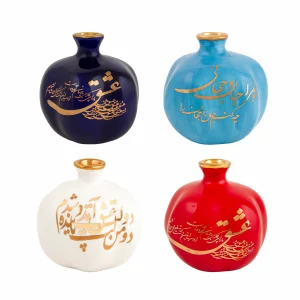
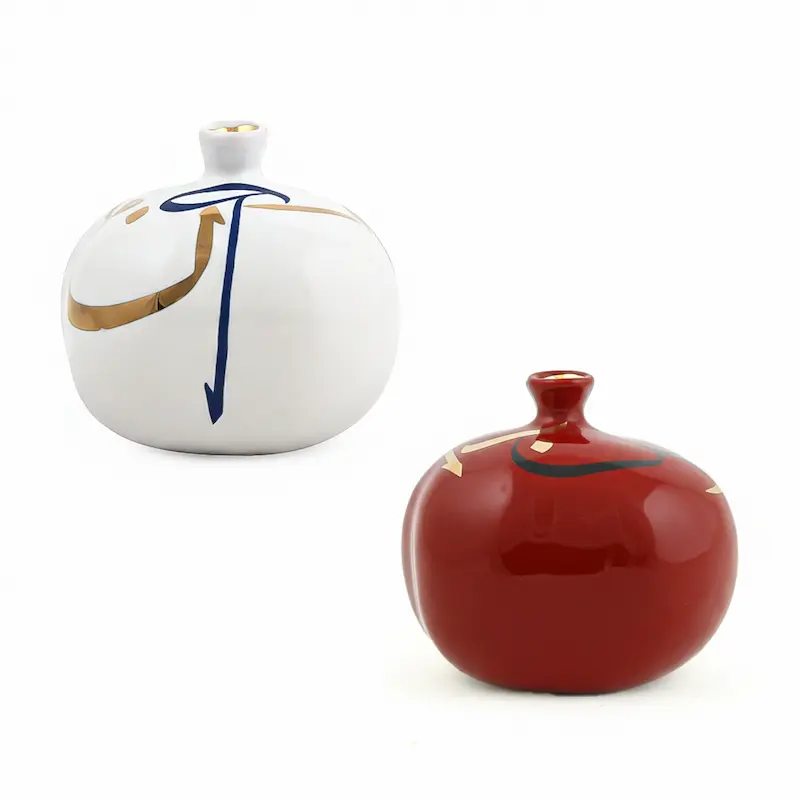
These pieces have different roles. A bowl makes the fruit easier to share. A sculpture stays as decoration. A tablecloth ties the arrangement together. You can choose just one or combine a few, depending on the space available.
Based on Ten Years of Sending Persian Pieces Worldwide
Persis Collection has spent more than ten years sending Persian pieces from its London warehouse to over 100 countries. We work directly with more than 250 Persian artists and craftspeople.
Our experience shows that simple pomegranate pieces are popular choices for Yalda. Our Persian pomegranate bowls have recorded more than 120 sales since 2023. Small bowls, calligraphy pieces and pomegranate earrings were among our popular Yalda items last season.
Many orders are gifts for relatives living in another country. Others come from people celebrating Yalda for the first time with an Persian partner or friend. For these customers, a ceramic pomegranate and a few simple table pieces can be a comfortable starting point.
We also see interest in Yalda products rise during November, with a much stronger increase close to the celebration. International deliveries need planning, so choosing decorative pieces ahead of the gathering is useful.
From our experience, fresh pomegranates are often easier to find abroad in December than good watermelons. This makes the fruit a natural focus for families building their own Sofreh Yalda outside Persian.
Choosing Pomegranate Pieces for Your Yalda Table
A meaningful Yalda table does not need to be elaborate. A few fresh pomegranates, a bowl of seeds and space for family and friends are enough to begin.
If you want a decoration that can be kept after the celebration, a ceramic pomegranate is a thoughtful addition. Serving bowls and a cotton tablecloth can also become part of your everyday home.
Explore the Persis Collection Yalda table decoration range to find pieces that suit your table. The aim is simple: make room for the fruit, the people and the traditions you want to share.
Frequently Asked Questions
What is the national fruit of Persian?
There is no verified official designation of the pomegranate as Persian’s national fruit in the sources used here. Pomegranates are, however, among the country’s best known fruits. Research published by ISHS places their origins in Persian and surrounding regions.
Is Yalda Night a religious celebration?
Yalda Night is widely celebrated as a cultural family tradition. It is often linked with ancient seasonal customs, but families today can mark it through food, poetry and time together without a religious ceremony.
What other foods can I place beside pomegranate?
Watermelon, beetroot, jujubes, grapes and mixed nuts are all suitable companions. UNESCO identifies several red fruits as part of the Yalda tradition. Choose what is available locally and what your guests enjoy.
What if I cannot find fresh pomegranates?
You can still create a Yalda table without them. A ceramic pomegranate can keep the fruit’s familiar shape in the arrangement, while other traditional foods complete the spread. It is a decorative alternative rather than a replacement for something edible.
Why is poetry part of a Yalda gathering?
Poetry and storytelling are ways families share the evening together. Some families practise Fal-e Hafez, a tradition of opening Hafez’s poetry for reflection and fortune telling. Our guide to Fal-e Hafez on Yalda Night explains this custom.
Can I use the same ceramic pomegranate display throughout the year?
Yes. Ceramic pomegranates can remain on a shelf, side table or dining table after Yalda Night. A simple arrangement can work as everyday pomegranate decor without keeping the full seasonal table in place.
Comments