


10 Persian Storybooks Every Child Should Own
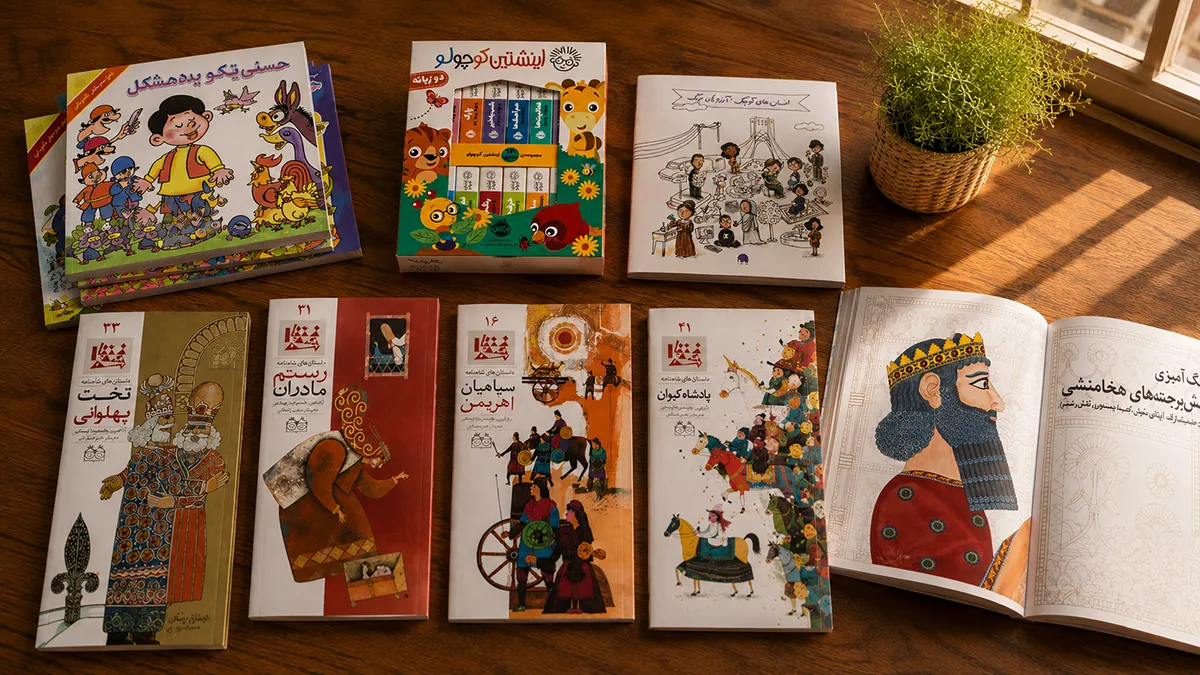
Choosing the right Persian storybooks for kids can be surprisingly difficult when most bookshops carry little beyond a handful of well known Western titles. Whether you are raising bilingual children, buying a gift for a niece or godson, or simply want your child to hear the stories you grew up with, a good Persian storybook does more than entertain. It carries language, rhythm and cultural memory in a form small children actually want to sit still for. Below are ten storybooks worth owning, chosen for a mix of ages, reading levels and themes, from Rumi’s animal fables to modern bilingual picture books that work just as well for a five year old in London as they do in Tehran.
What makes a Persian storybook genuinely good for children, not just decorative?
A good Persian storybook for children balances three things: language a child can actually follow, illustrations that hold their attention, and a story with enough substance that adults enjoy reading it aloud more than once. Many books marketed to diaspora families are beautifully produced but written in formal literary Farsi that is closer to adult prose than children’s language, which makes them hard-going for a five or six year old, however well intentioned the purchase. The strongest titles use everyday spoken vocabulary, short sentences and repetition, the same techniques any good children’s author uses in English, just applied to Farsi or a bilingual format.
Should you buy bilingual editions or Farsi-only storybooks?
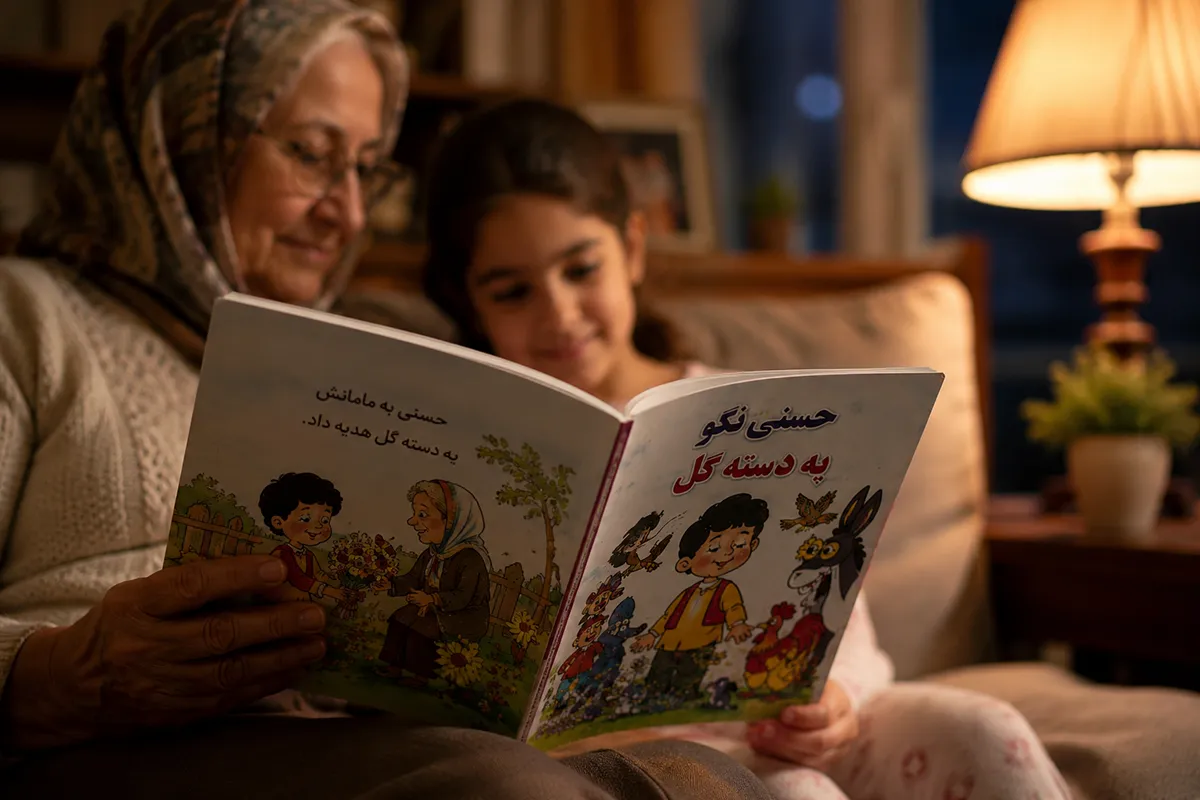
For most second-generation families, a bilingual Farsi-English edition is the more practical choice, because it lets a parent who is more confident in English still read the story aloud while the child sees the Farsi text alongside it. Farsi-only editions suit households where at least one adult reads Farsi comfortably and wants the child immersed without an English crutch. A sensible approach many of our customers use is to mix the two: bilingual books for daily bedtime reading, and one or two Farsi-only picture books for when a grandparent or Farsi-speaking relative is doing the reading.
Which Persian storybooks suit which age group?
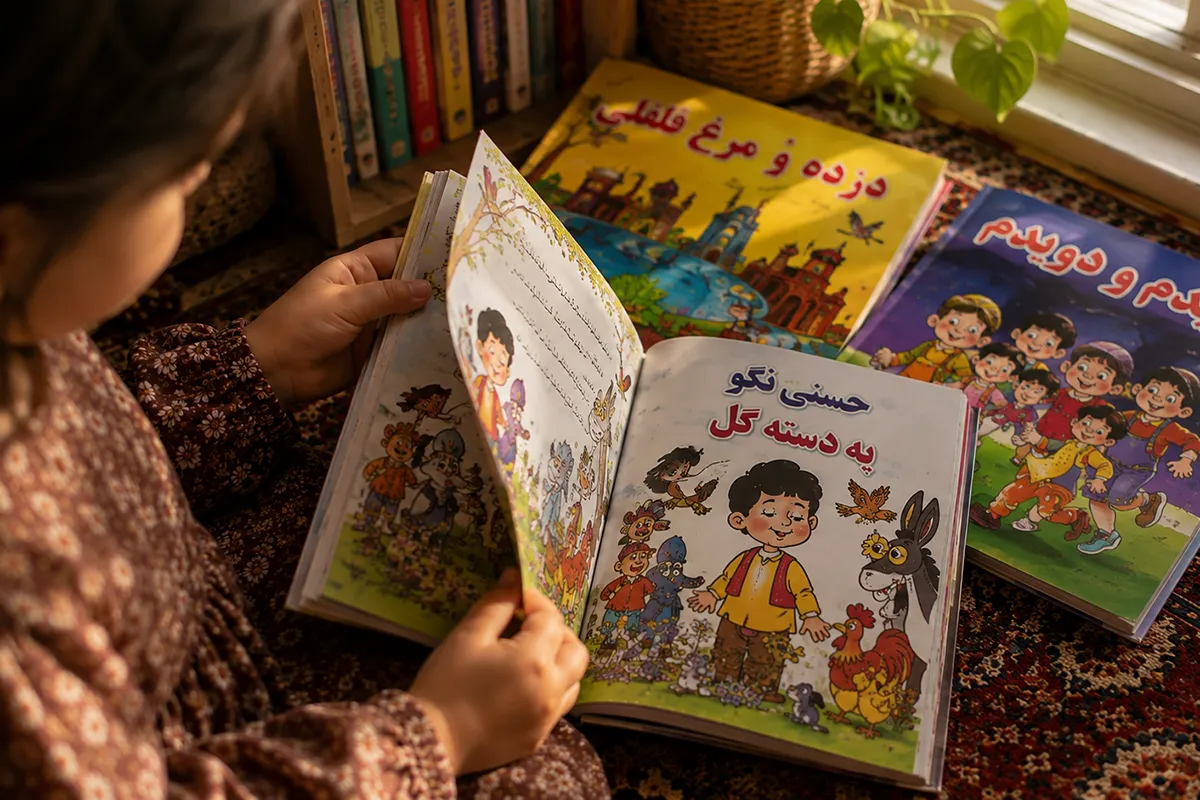
For toddlers aged two to four, look for board books or simple picture books built around a single repeated phrase or rhyme, such as counting books using Farsi numbers or short animal stories with bright, uncluttered illustrations. For early readers aged five to seven, folk tales like “Amu Nowruz” or simplified retellings of Nasreddin Hodja stories work well, since each chapter is short and self-contained, so a child can finish one story in a single sitting and feel a sense of achievement. For confident readers aged eight and up, abridged prose retellings of Shahnameh episodes, such as the story of Rostam and Sohrab told for younger audiences, introduce genuine Persian literary heritage without the density of Ferdowsi’s original verse.
Which classic Persian tales work best when retold for children?
Three sources consistently produce the best children’s material: the Shahnameh, Rumi’s fables from the Masnavi, and the trickster tales of Mulla Nasreddin. Shahnameh retellings tend to focus on single, self-contained episodes such as Rostam’s seven labours or the story of Zal and the Simorgh, rather than attempting the full epic, which keeps the pacing right for a young audience. Rumi’s animal fables, originally written as teaching parables for adults, translate surprisingly well into children’s stories because they already have the shape of a fable: a simple plot, a clear lesson, and animal characters children respond to naturally. Nasreddin Hodja stories are the easiest entry point of all, since each one is a short, funny anecdote that works as a standalone bedtime story with no prior context needed.
How does reading Persian stories help second-generation children connect with their heritage?
Children absorb culture through story before they absorb it through explanation, which is why a shelf of Persian storybooks tends to do more for a child’s sense of identity than an occasional conversation about “where the family is from”. Hearing Rostam described as brave, or Nasreddin Hodja’s jokes landing the same way they did for a parent’s own childhood, gives a child a lived connection to Persian culture rather than an abstract one. For families raising children outside Persian, this matters even more, because storybooks often become the primary source of Farsi vocabulary a child hears outside conversations at home, reinforcing language alongside identity.
What should you look for when buying Persian storybooks as a gift?
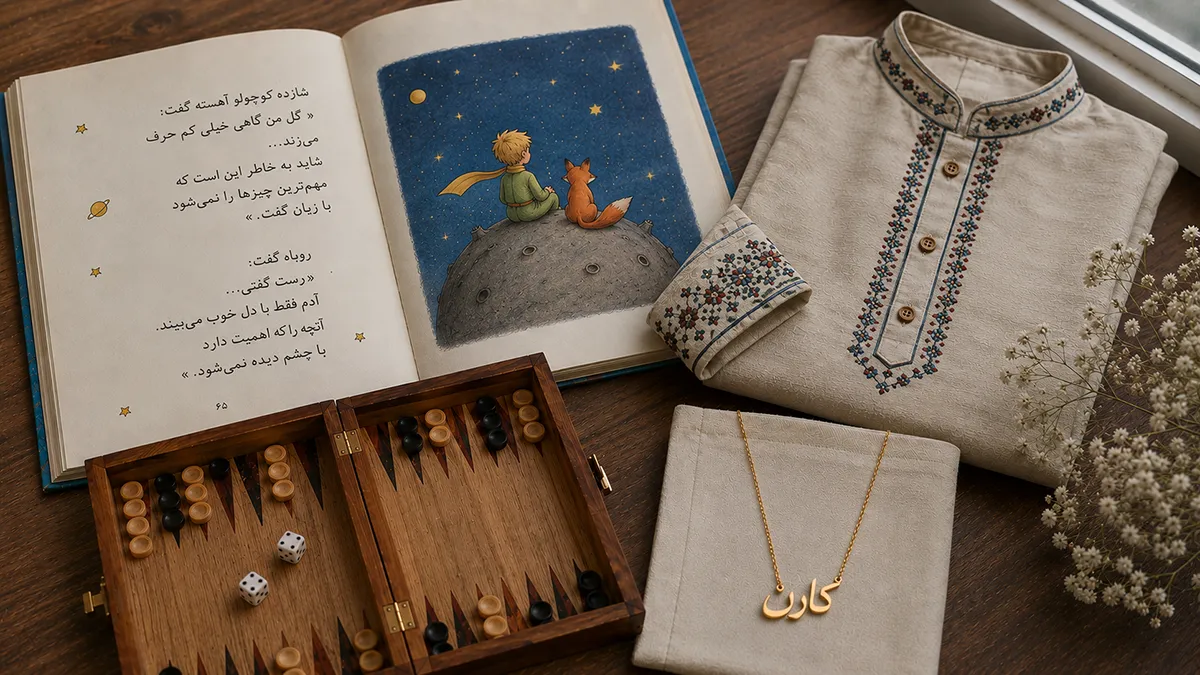
When buying for someone else’s child, choose a book with strong, simple illustrations that hold a child’s interest even before they can follow the words, since a good picture book earns repeat readings on visuals alone. Check the age recommendation printed on the book rather than guessing from the child’s age in years, since Farsi reading level and English reading level for the same child are often quite different at first. A number of our customers buying gifts for Nowruz or a child’s birthday pair a storybook with a small toy or piece of children’s jewellery from our kids’ collection, which turns a single book into a fuller gift set without much extra cost.
How do you build a Persian storybook collection over time rather than buying everything at once?
Start with one bilingual book your child will genuinely revisit, since a single well-loved storybook read forty times teaches more Farsi vocabulary than ten books skimmed once each. Add a second title timed to a cultural occasion, such as a Nowruz story bought in early spring, so the book becomes tied to a memory rather than sitting neutrally on a shelf. From there, follow your child’s own preferences, favouring more folk tales if they gravitate towards Nasreddin Hodja’s humour, or more epic-style stories if they are drawn to Rostam and the Shahnameh heroes, which keeps the collection growing around what actually holds their attention rather than what looks complete on paper. Our own Kids’ Collection guide covers how storybooks fit alongside toys, clothing and jewellery if you are building out a broader set of Persian-heritage pieces for a child.
Conclusion
The best Persian storybooks for kids share a few traits regardless of the exact title: language a child can follow, illustrations strong enough to hold their attention, and stories rooted in genuine Persian heritage rather than a generic “world stories” approach. Bilingual editions suit most diaspora households best, while Farsi-only books work well alongside a Farsi-speaking relative’s reading time. Building a collection gradually, starting with one book your child actually loves and adding titles tied to occasions like Nowruz, does more for a child’s connection to Persian culture than buying a full shelf at once. Whichever titles you choose, reading them together remains the part that matters most.
Frequently Asked Questions
What age should a child be before starting Persian storybooks?
There is no fixed starting age. Board books with simple Farsi words or counting rhymes work from around age one, read aloud by a parent, well before a child can follow a full story. Structured picture books with a plot usually suit children from around age three upward.
Do bilingual Persian storybooks actually help with Farsi fluency?
Bilingual books help most with vocabulary and listening comprehension rather than reading fluency on their own, since a child following the English text can still absorb Farsi words and sentence rhythm from repeated read-alouds. For reading fluency specifically, Farsi-only books read alongside an adult tend to be more effective once a child is a little older.
Are Shahnameh stories too violent or intense for young children?
Children’s retellings of the Shahnameh are edited specifically for a young audience, focusing on courage, cleverness and loyalty rather than the more intense passages of Ferdowsi’s original text. As with any epic retold for children, it is worth a quick skim before reading aloud if you know your child is sensitive to intense scenes.
What is the difference between a Shahnameh retelling and a Rumi fable book for kids?
Shahnameh retellings are hero stories built around courage, battles and loyalty, aimed slightly older, from around age seven upward. Rumi’s fables are shorter animal stories with a clear moral, closer in format to Aesop’s fables, and generally suit a younger age range from about four upward.
Can I buy Persian storybooks as part of a larger children’s gift set?
Yes. Storybooks pair naturally with items from our kids’ collection, such as a small piece of Farsi name jewellery or a traditional toy, for a gift that combines a story with something tangible from the same cultural theme.
Comments