


Caring for Your Turquoise Jewellery: Dos and Don’ts
- mahyar
- 27 July 2026
- Persian Jewellery
- 5 minutes
Turquoise is one of the most loved stones in Persian jewellery, prized for centuries for its sky blue colour and its place in Persian craft and folklore. If you already own a piece cut from Neyshabur turquoise, or you are thinking about buying one, proper turquoise jewelry care is what keeps that colour rich and the stone stable for decades rather than months. Persian turquoise is softer and more porous than many other gemstones, which means it reacts to everyday things such as skin oils, perfume, sweat, sunlight and even the humidity in a bathroom. None of this makes it a poor choice. It makes it a stone that rewards a little care with a piece that can genuinely be passed down. Here is what actually matters, and a few habits worth breaking.
Why Turquoise Needs More Care Than Most Gemstones
Turquoise sits at around 5 to 6 on the Mohs hardness scale, softer than sapphire, ruby or even quartz, and it is naturally porous rather than a solid, non absorbent crystal. That porosity is exactly what gives Persian turquoise its soft, slightly waxy lustre, but it also means the stone can soak up oils, cosmetics and chemicals the way a piece of unglazed pottery would. Over months of everyday wear, anything the stone comes into contact with, from hand cream to washing up liquid, can work its way into the surface and gradually dull or darken the colour. This is not a manufacturing fault. It is simply the nature of the material, and it is the reason turquoise is treated differently to harder gemstones in any well informed care routine.
The Dos of Turquoise Jewellery Care
Do Wipe It Down After Every Wear
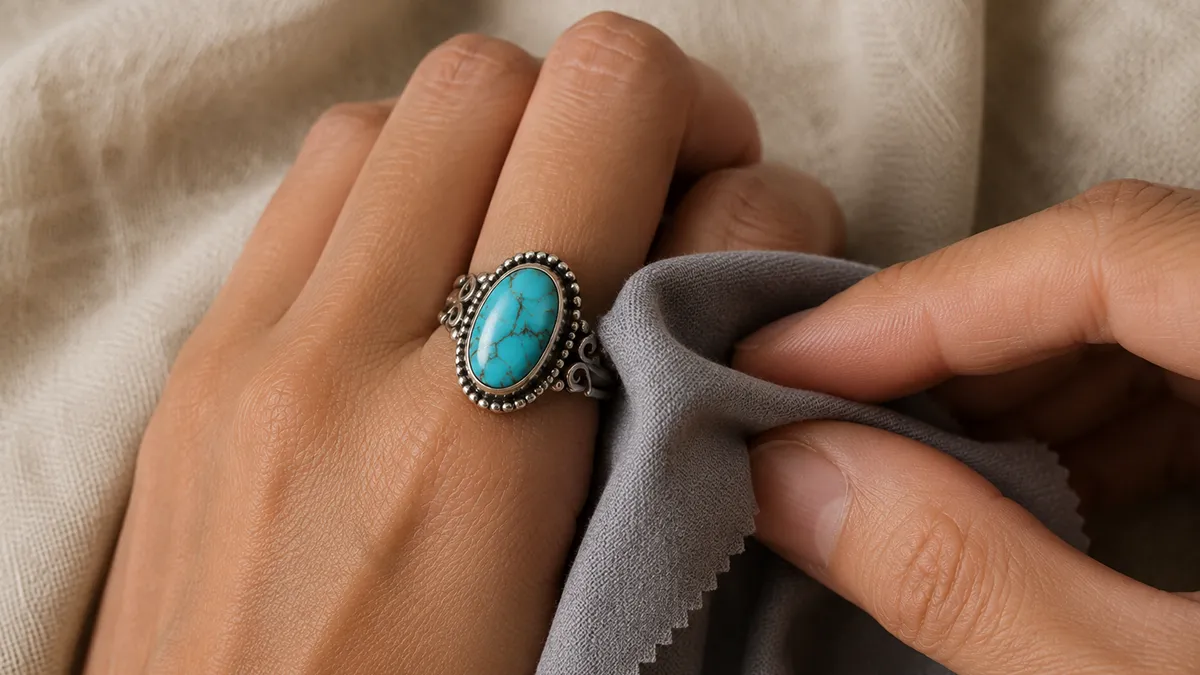
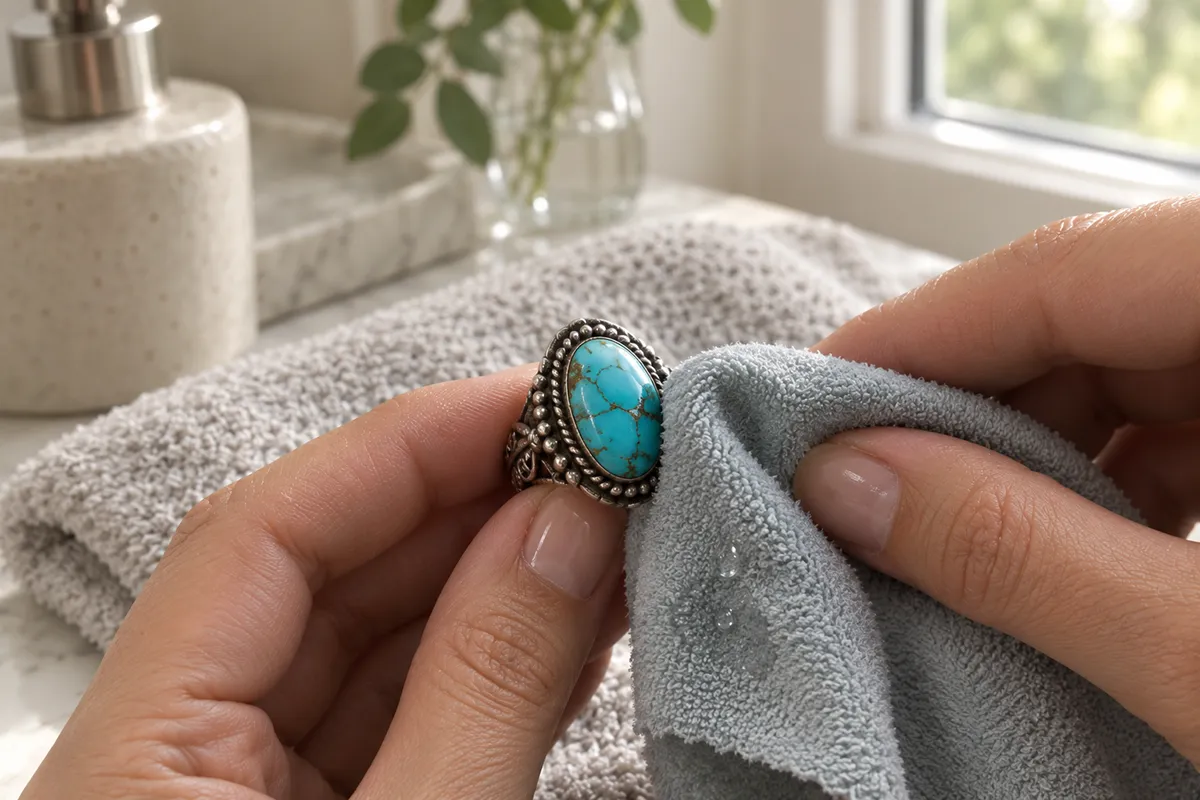
Before you put a turquoise ring, bracelet or necklace away, wipe it gently with a soft, dry cloth. This removes the light layer of skin oils and perspiration that builds up during the day before it has a chance to sit against the stone for hours. It takes a few seconds and it is the single most useful habit for keeping the colour true.
Do Store It Away From Light and Heat
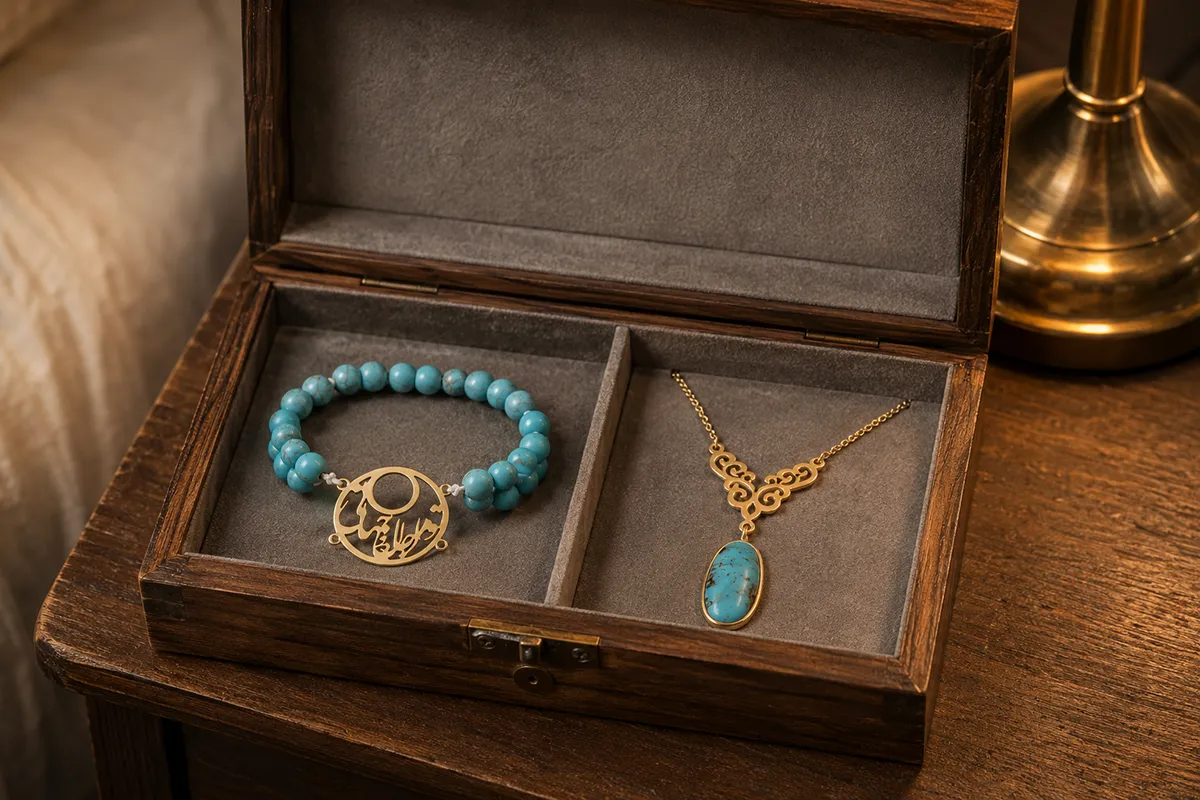
Prolonged direct sunlight and dry heat can gradually fade turquoise and dry out any wax or resin stabilising treatment used on the stone. Keep pieces in a soft pouch or a lined jewellery box, away from a sunny windowsill or a radiator, and separate from harder stones that could scratch the surface in storage.
Do Take It Off Before Water, Chemicals and Exercise
Swimming pools, hot tubs and even tap water with a high chlorine content can react with turquoise over time, and household cleaning products are worse still. The same goes for perfume, hairspray and sun cream, all of which are typically applied before jewellery goes on, so a simple rule is: turquoise goes on last and comes off first.
Do Have It Restrung or Reset by a Professional
If you own a turquoise necklace or bracelet on silk or cotton thread, have it restrung every few years, particularly if you wear it often. Threads weaken with wear long before the stones do, and a professional reset or restring protects the piece far better than waiting for a bead to be lost.
The Don’ts of Turquoise Jewellery Care
Don’t Use Ultrasonic or Steam Cleaners
Ultrasonic and steam jewellery cleaners are fine for many harder gemstones but they are one of the fastest ways to damage turquoise. The vibration and heat can crack a porous stone or strip away a protective wax finish almost immediately. Hand cleaning only, always.
Don’t Apply Perfume, Lotion or Hairspray While Wearing It
This is the habit that causes the most avoidable discolouration. Alcohol based products in particular can be absorbed quickly by turquoise and leave a permanent change in tone. Get dressed, apply everything else, then put your jewellery on last.
Don’t Store It Loose With Other Jewellery
Turquoise is soft enough to be scratched by harder stones and even by other metal settings knocking against it in a drawer or jewellery box. Give each piece its own compartment or pouch.
Don’t Panic If the Colour Shifts Slightly
A gradual, gentle deepening of colour over years of wear, often called patina, is normal and is not the same as damage from harsh chemicals. Genuine untreated Persian turquoise will always change a little with age and exposure to natural skin oils. Collectors often see this as part of the stone’s character rather than a flaw.
How Persian Turquoise Differs From Other Turquoise
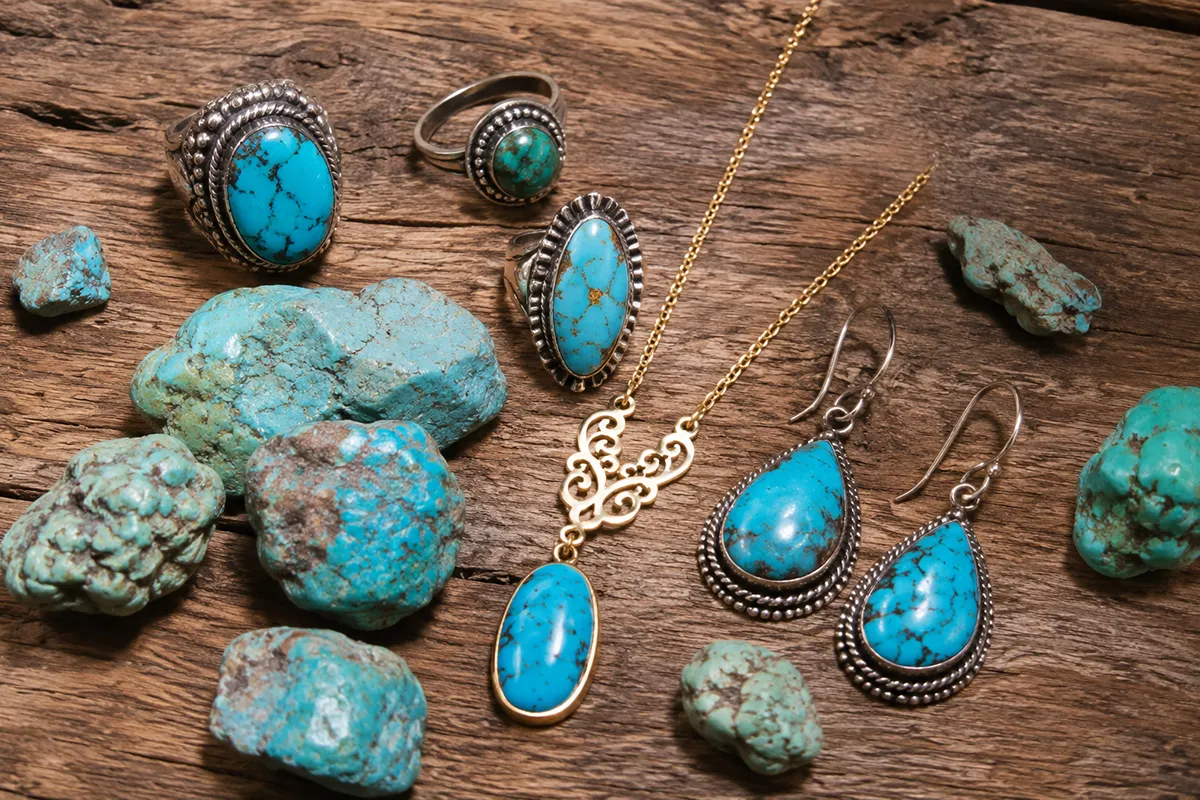
Much of what is sold internationally as turquoise today is either heavily treated, reconstituted from turquoise dust, or mined outside Persian using different processes. Persian turquoise, historically sourced from the Neyshabur mines in Khorasan, is known for its distinctive robin’s egg blue and its lack of the dark matrix veining seen in American turquoise. It is typically softer and more porous than stabilised commercial turquoise, which is exactly why the care habits above matter more, not less, with an authentic piece. When we select turquoise for Persis Collection, we look for that clean Persian colour and natural surface rather than heavily treated stones, because it is that unstabilised character that makes the stone worth caring for properly in the first place. You can see the range in our Persian turquoise jewellery collection, alongside pieces from our wider Persian jewellery collection that pair turquoise with 18k gold and sterling silver settings.
How to Clean Turquoise Jewellery at Home Safely
If a piece needs more than a quick wipe, dampen a soft cloth with lukewarm water only, no soap, no jewellery cleaning solution, and gently wipe the surface of the stone. Never soak turquoise or hold it under running water, since the stone can absorb moisture and swell slightly, which may loosen a bezel setting over time. Dry it immediately and thoroughly with a clean, soft cloth before putting it away. If a piece is particularly precious or has an intricate silver setting, such as those in our Persian gold jewellery pieces, it is worth having a jeweller check and clean it during a routine inspection rather than experimenting at home.
Conclusion
Good turquoise jewelry care comes down to a handful of simple habits: wipe the stone after wearing it, keep it away from water, chemicals and direct heat, store it separately from harder jewellery, and leave deep cleaning or restringing to a professional. Do this consistently and a piece of Persian turquoise will hold its colour and character for a lifetime, which is exactly why turquoise jewelry care history is full of pieces passed down through generations rather than replaced. If you are ready to learn about turquoise jewelry care in practice, the easiest way to start is with a piece you will actually enjoy wearing every day, cared for using the routine above. If you are new to buying Persian pieces online, our guide on choosing an authentic Persian handicrafts shop is a good place to start.
Frequently Asked Questions
Can turquoise jewellery get wet?
Brief contact with a few drops of water will not ruin turquoise, but it should never be soaked or worn while swimming, showering or washing up. Chlorinated and soapy water in particular can dull the colour over time, so it is best treated as a piece to put on once you are dry and dressed.
Why does turquoise change colour over time?
Natural, untreated turquoise is porous and reacts to skin oils, air and light, which can deepen or shift its colour gradually over years. This gentle ageing is normal and is different from the sudden discolouration caused by perfume, chemicals or ultrasonic cleaning, which is avoidable.
How do I clean the silver setting without damaging the turquoise?
Use a polishing cloth designed for silver and work only on the metal, avoiding contact with the stone itself. If tarnish has built up close to the setting, a jeweller can clean it professionally without exposing the turquoise to polishing chemicals.
Should I get my turquoise jewellery professionally checked?
Yes, particularly for rings worn daily or necklaces strung on thread. A jeweller can check that a bezel setting is still secure, that prongs have not loosened and that a thread has not worn thin, all before a stone is at real risk of falling out or being lost.
Is Persian turquoise more delicate than turquoise from other countries?
Often, yes. Much commercial turquoise sold today is stabilised with resin to make it harder and less porous, while genuine untreated Persian turquoise keeps its natural softness and colour depth. That is part of its appeal, but it does mean the care habits in this guide matter more with an authentic piece than with a heavily treated one.

Comments