


Sofreh Aghd: The Persian Wedding Ceremony Table Explained

- Persis Collection
- 19 June 2026
- Persian Wedding
- 4 minutes
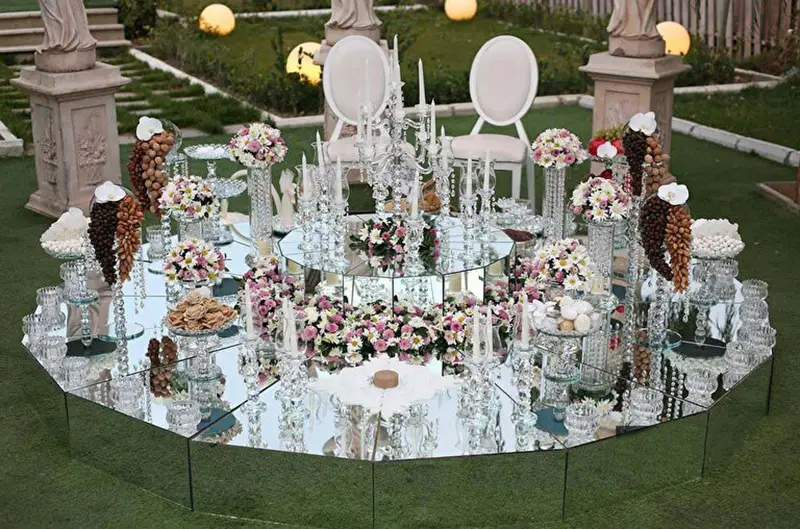
If you have ever been to a Persian wedding, the first thing you notice is the breathtaking spread laid out before the couple. This is the Sofreh Aghd, the ceremonial cloth at the heart of every Persian marriage ceremony. Every item on it is chosen with care and carries a wish for the couple, from sweetness and prosperity to protection and lasting love. At Persis Collection we work with Persian artisans to make many of these pieces, and we help couples across the world set a Sofreh Aghd far from home. This guide explains what it is, what each item means, and how to set up your own.
What is the Sofreh Aghd?
Aghd is the formal marriage ceremony, and the Sofreh is the cloth on which the ceremony is set. The couple sit facing the spread while an officiant reads the vows, surrounded by family. The tradition has deep roots in ancient Persian and Zoroastrian culture, and although the details vary between families and faiths, the spirit is always the same: to bless the couple with a happy, abundant and loving life together.
The base is traditionally a length of Termeh, the luxurious handwoven Persian fabric, or another fine cloth, often passed down through a family. Everything else is arranged on top.
The mirror and candelabras
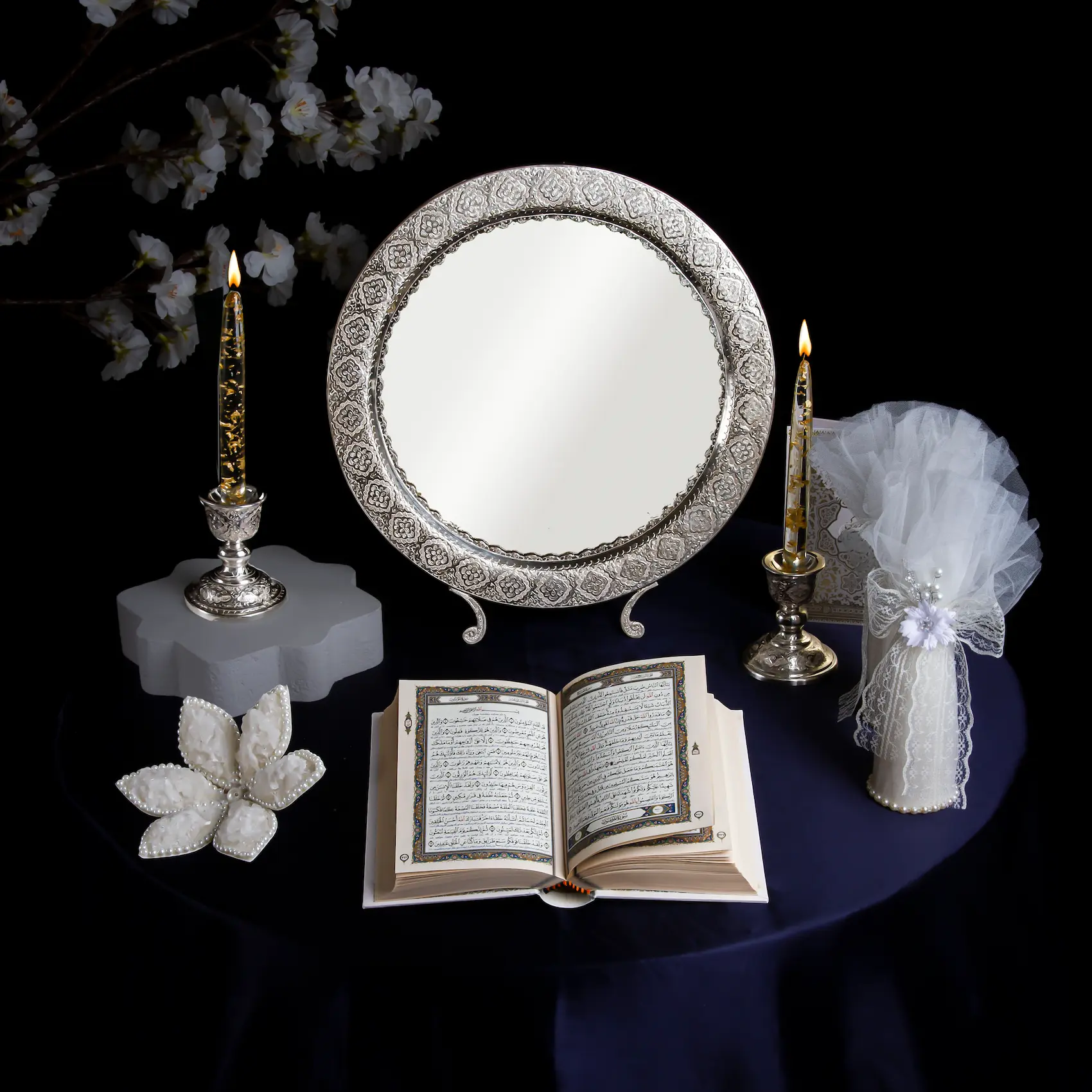
At the centre sit the mirror of fate, the Ayeneh-ye Bakht, and a pair of candelabras, the Shamdan, one on each side. The candles stand for light, fire and energy, a nod to the Zoroastrian reverence for light. By tradition the bride is seated first, and the groom sees her reflection in the mirror as she lifts her veil, their first shared image as a couple. A beautiful mirror and candelabra set is the centrepiece of the whole Sofreh.
What goes on the spread, and what it means
Beyond the mirror and candles, families add a collection of symbolic items. The most common include:
- A holy book or book of poetry. Often the Quran, or for many a treasured Divan of Hafez or the Shahnameh, placed for blessing and guidance.
- Honey. The couple each dip a little finger into the honey and feed one another, so the marriage begins with sweetness.
- Decorated flatbread. A sheet of sangak bread, often inscribed with a blessing such as mobarak baad, for prosperity and to feed the new household.
- Eggs and nuts. Painted eggs, almonds, walnuts and hazelnuts, all symbols of fertility and a fruitful life.
- The tray of spices. A tray of seven colourful herbs and spices to guard against the evil eye and keep bad energy away.
- Wild rue (esfand). Burned on a small brazier, its scented smoke is believed to drive away ill fortune.
- Rosewater. Golab, to perfume the air and the gathering.
- Gold coins. For wealth and prosperity in the years ahead.
- Flowers and sweets. Roses, jasmine and noghl, sugared almonds shared with the guests.
Two of the most loved moments use items on the Sofreh directly. Above the couple, a fine scarf is held while two sugar cones, the kalleh ghand, are gently ground together, showering sweetness over their marriage. And a needle with seven coloured threads is used to sew a few light stitches, a playful wish to sew up any unkind tongues so the couple are left in peace.
How to set up your own Sofreh Aghd
There is no single correct way, and part of the joy is making it personal. A few simple steps help it come together beautifully.
- Begin with a Termeh cloth or an elegant fabric as the base, laid where the couple will sit.
- Place the mirror at the centre back, with a candelabra on each side.
- Arrange the holy book or poetry, the honey, bread, eggs, spices and flowers around them, balancing colour and height.
- Keep the rosewater, coins and sweets within easy reach for the rituals.
- Choose a style that suits you. A traditional spread leans on hand-painted ceramics, copper and Termeh, while a modern Sofreh uses cleaner lines and a softer palette.
For couples marrying outside Persian, gathering authentic pieces can be the hardest part. We make and curate Sofreh Aghd items, mirror and candelabra sets, and custom pieces with our artisans, and we ship worldwide, so you can set a truly Persian table wherever you are. You can explore our Persian wedding collection, our Sofreh Aghd pieces and our mirror and candelabra sets, with a Termeh cloth to lay underneath.
Frequently asked questions
What is a Sofreh Aghd? It is the decorated ceremonial cloth and spread at the heart of a Persian wedding, where the couple sit while their vows are read. Each item carries a blessing for their life together.
What items go on the Sofreh Aghd? A mirror and candelabras, a holy book or poetry, honey, decorated bread, eggs and nuts, a tray of spices, rosewater, gold coins, flowers and sweets, usually on a Termeh cloth.
Why does the couple eat honey? They feed each other a little honey so the marriage starts with sweetness and happiness.
Can I keep and reuse my Sofreh Aghd pieces? Yes. Quality items such as the mirror set, candelabras and Termeh are often kept as heirlooms and passed down through the family.
Where can I buy Sofreh Aghd items? Persis Collection offers handmade Persian wedding pieces with worldwide delivery, so you can set an authentic Sofreh Aghd wherever you are marrying.
However you choose to arrange it, the Sofreh Aghd turns a wedding into a living piece of Persian heritage. When you are ready, explore our handmade Persian wedding collection to begin building yours.

Comments