


How to Set a Haft Seen Table for Nowruz: A Simple Guide
- Persis Collection
- 18 June 2026
- Haftsin
- 4 minutes
Every spring, the busiest moment of our year at Persis Collection arrives with Nowruz, the Persian New Year. For more than ten years we have helped families around the world set their Haft Seen tables, working directly with over 250 Persian artists who make the ceramics, mirrors and decorations that go on them. In that time we have answered the same warm questions again and again, so we have gathered everything you need into one simple guide.
Below you will find what goes on the table, what each item means, how to arrange it, and when to set it up. Nowruz falls on the spring equinox, around 20 or 21 March, the moment day and night are equal and winter gives way to spring, and the Haft Seen sits at the very heart of the celebration.
What does Haft Seen mean?
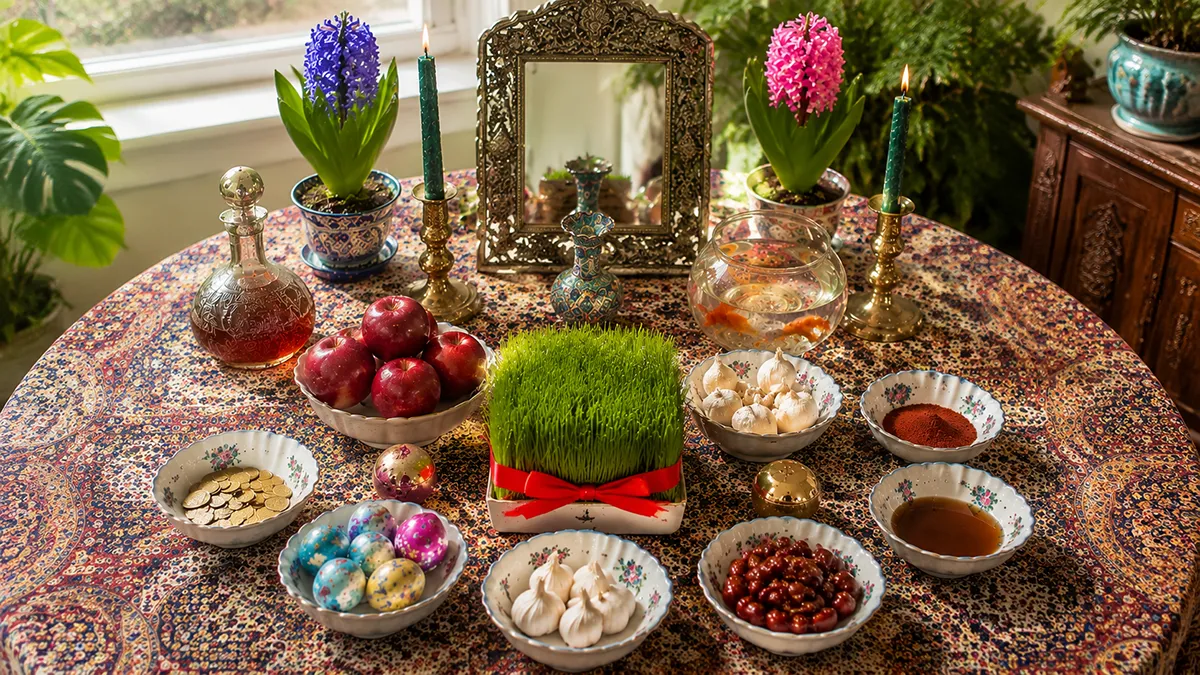
Haft Seen means seven S sounds. Haft is the Persian word for seven, and Sin is the Persian letter S. The table takes its name from seven symbolic items that each begin with that letter. You will see it written as both Haft Seen and Haft Sin, and both are correct. Around these seven items, families add other meaningful objects such as a mirror, candles and painted eggs to complete the display.
The seven traditional items
These seven pieces are the foundation of any Haft Seen table, and each one carries a wish for the year ahead.
- Sabzeh (sprouts). Wheat, barley or lentil sprouts grown in the days before Nowruz, symbolising new growth and the rebirth of life in spring.
- Samanu (sweet pudding). A rich wheat pudding that reflects strength, abundance and patience.
- Senjed (dried oleaster). The dried fruit of the oleaster tree, representing deep love and family bonds.
- Seer (garlic). Garlic, which many believe wards off evil and illness and offers protection through the year.
- Seeb (apple). Apples, bringing wishes of beauty and good health.
- Somaq (sumac). A tart red spice the colour of sunrise, symbolising the triumph of light over darkness.
- Serkeh (vinegar). Vinegar, a reminder of the wisdom that comes with age and experience.
Other symbolic items to add
Beyond the core seven, most families personalise the table with a few more meaningful pieces.
- Mirror. Placed at the back of the table to reflect light and symbolise clarity and reflection on the year past and the year to come.
- Candles. For warmth and enlightenment in the home, often one for each child.
- Coloured eggs. A symbol of fertility and new life, traditionally one for each member of the family.
- A fish. A goldfish adds motion and life to the table. Many families now choose a ceramic or decorative fish, such as our Nowruz goldfish candle, which is kinder to animals and can be kept and reused each year while carrying the same meaning.
- A holy book or poetry. Often the Quran or a volume of Hafez, adding spiritual depth and a blessing for the year.
You will also often see coins for prosperity, hyacinth flowers for the scent of spring, and plenty of sweets, fruit and nuts to make the table feel generous and welcoming.
How to arrange your Haft Seen table
There are no rigid rules, and part of the joy is making the table your own. A fresh, colourful and generous display matters more than perfect placement, but a few steps help it come together.
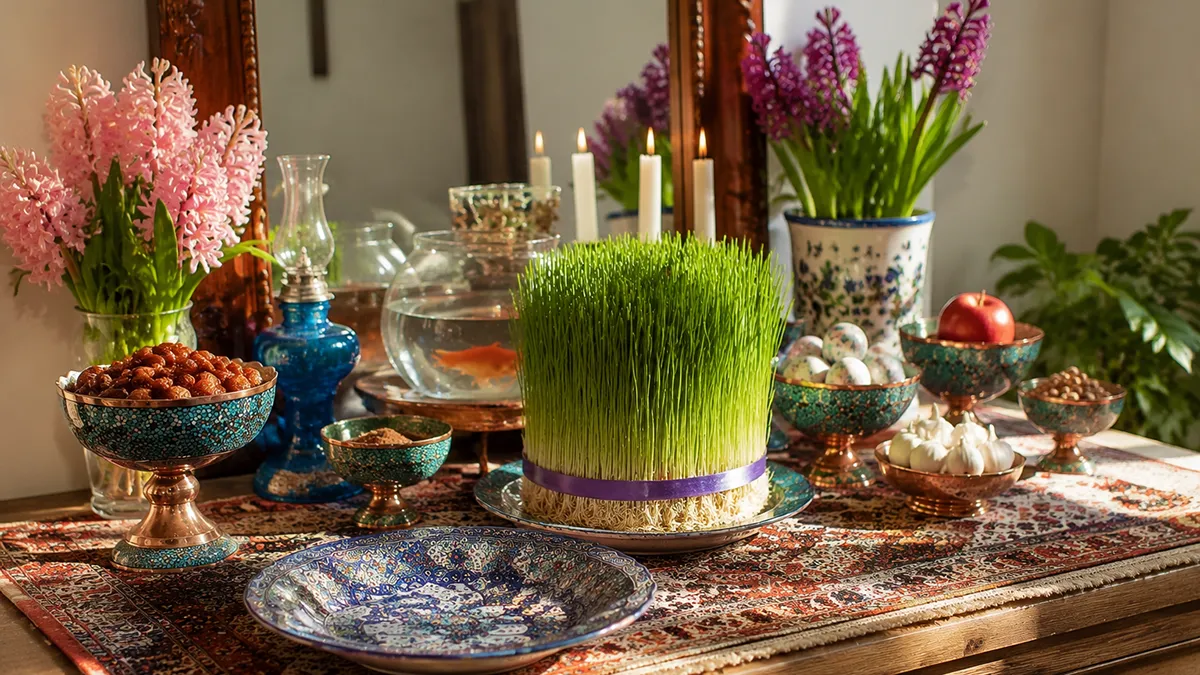
- Start with a beautiful cloth as the base. A Termeh runner, with its traditional woven patterns, makes an elegant foundation.
- Place the mirror at the back, with candles in front so the light reflects.
- Set the sabzeh as a centrepiece, since it is the very symbol of spring.
- Group the seven items together, then arrange the eggs, fish, coins, flowers and book around them.
- Fill any gaps with sweets, fruit and nuts so the table feels plentiful.
When to set it up and how long to keep it
Set up your Haft Seen in the days before Nowruz, so it is ready for the exact moment of the new year, known as Saal Tahvil, when families gather around the table to welcome spring together. The table then stays in place through the thirteen days of Nowruz.
On the thirteenth day, called Sizdah Bedar, families head outdoors for a picnic and release the sabzeh into running water, a gentle way of letting go of the old year and any bad luck with it.
Choosing a Haft Seen set
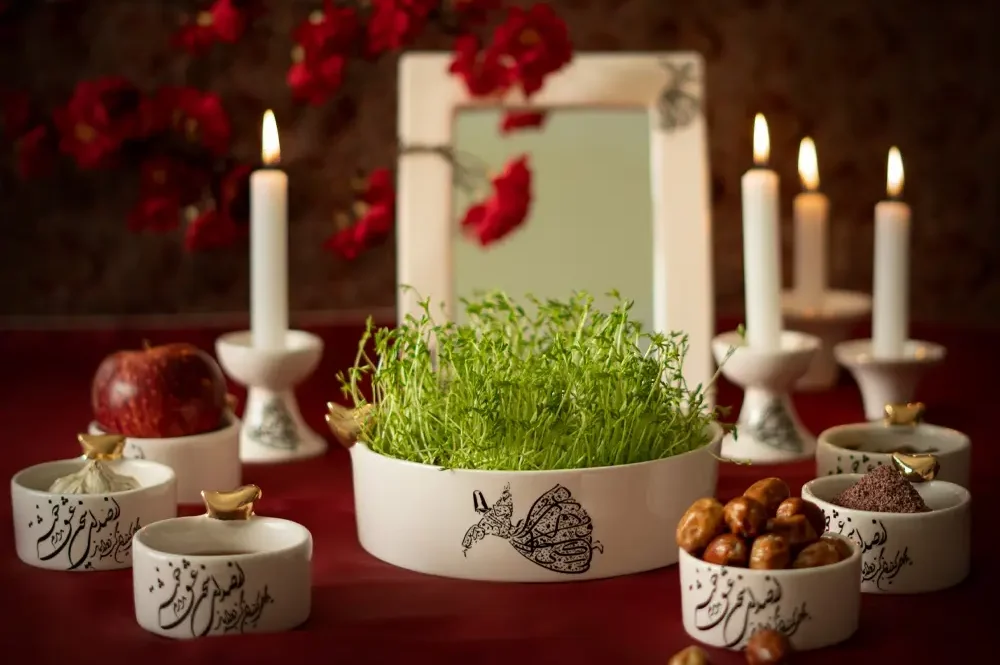
Growing sabzeh and gathering every item takes time, which is why many people, especially those living away from Persian, choose a ready-made set. We celebrate both the old and the new: our traditional sets feature hand-painted Persian patterns and ceramic dishes made by our artisans, while our modern designs offer minimalist elegance for a contemporary table. If you would like to start from a set, explore our handmade Haft Seen and Haft Sin sets and the wider Nowruz shop. For help comparing styles and materials, read our guide on how to choose a Haft Sin set, or start with our complete Nowruz guide.
Frequently asked questions
Will my order arrive in time for Nowruz? We ship worldwide with express delivery to the USA, the UK and Europe, usually within a few business days. The most popular sets sell out before Nowruz and sabzeh needs time to grow, so we recommend ordering two to three weeks ahead.
What are the seven items of Haft Seen? Sabzeh (sprouts), Samanu (sweet pudding), Senjed (dried oleaster), Seer (garlic), Seeb (apple), Somaq (sumac) and Serkeh (vinegar), each beginning with the Persian letter S.
Is it called Haft Seen or Haft Sin? Both are used and both are correct. Sin is the Persian letter S, and the table is named after seven items beginning with it.
When is Nowruz? Nowruz falls on the spring equinox, around 20 or 21 March each year.
Can anyone celebrate Nowruz? Yes. Nowruz is marked by people of many backgrounds across Persian, Central Asia and beyond, and everyone is welcome to celebrate it.
What do you do with the sabzeh afterwards? On the thirteenth day of Nowruz, Sizdah Bedar, families traditionally release the sabzeh into running water.
However you set your table this year, the Haft Seen is a beautiful way to welcome spring and carry a little Persian tradition into your home.
Comments