


Farsi Alphabet Books: Teaching Children Persian Heritage
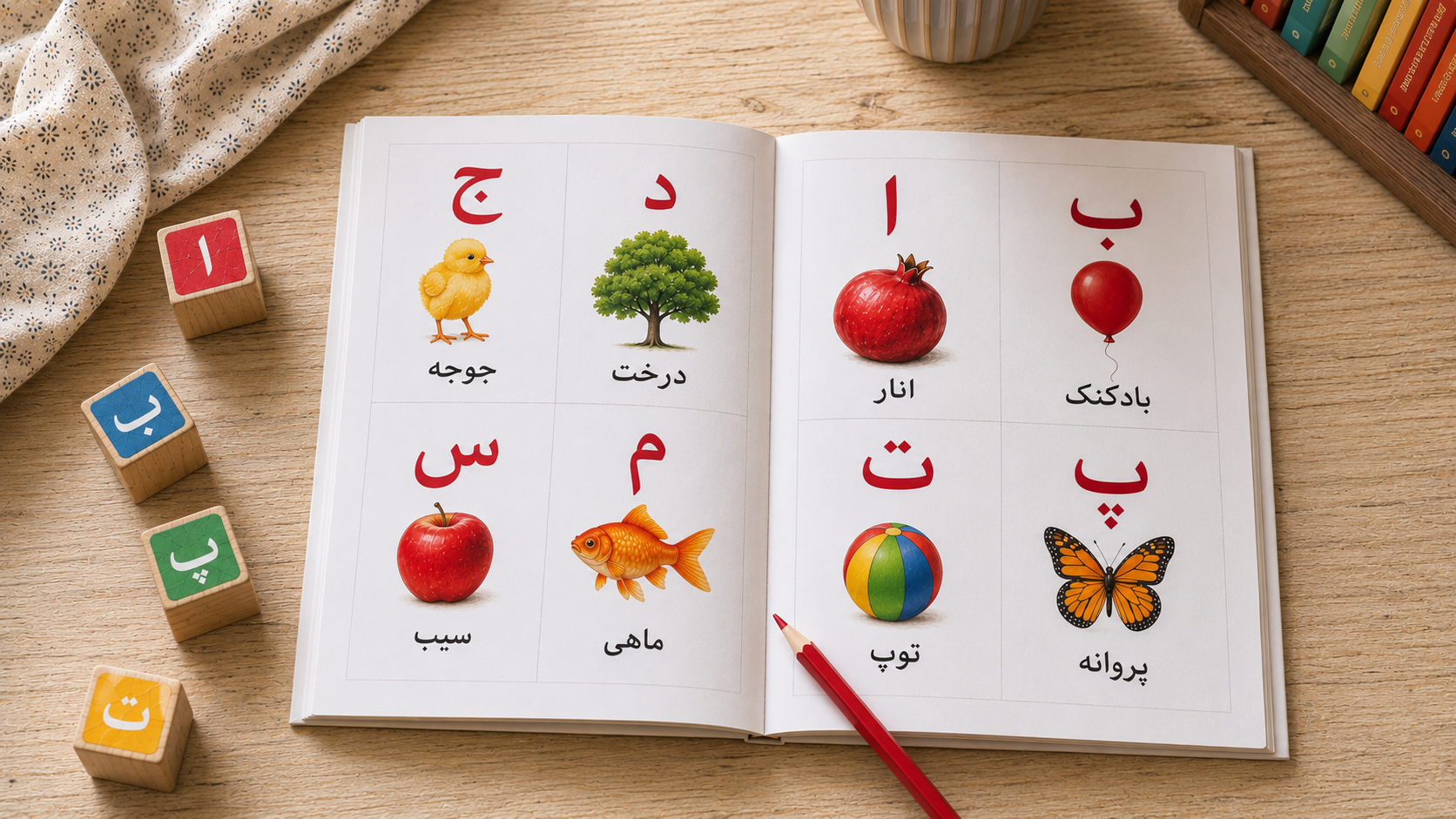
A good Farsi alphabet book is often the first real step a child takes toward reading their heritage language, long before they can hold a full conversation in Farsi. For parents raising children outside Persian, choosing the right one matters more than it might seem, since the wrong book can put a child off before they’ve properly started, while the right one turns learning the alefba into something they actually enjoy. This guide covers what to look for in a Farsi alphabet book for kids, how to introduce it at home, and how it fits alongside spoken Farsi in raising a bilingual child.
What should a good Farsi alphabet book for children actually include?
A strong Farsi alphabet book pairs each letter with a simple, recognisable word and a clear illustration, the same approach used in English phonics books, rather than listing all 32 letters of the alefba in isolation. Look for books that show each letter in its different forms, since Farsi letters change shape depending on whether they appear at the start, middle or end of a word, which is one of the trickier parts of learning Farsi script for a child used to the fixed letterforms of English. The best books also include transliteration alongside the Farsi script for the first few readings, then drop it once the child is confident, rather than removing that support all at once.
At what age should a child start learning the Farsi alphabet?
Most children are ready to begin recognising individual Farsi letters from around age four, once they already show interest in shapes and symbols, though there’s no strict cut-off and older children starting later catch up just as well. Children who are already learning to read in English sometimes find the transition easier, since they understand the concept of letters representing sounds, even though Farsi is written right to left and uses a completely different script. It helps to introduce the Farsi alphabet gradually rather than all at once, starting with letters that appear in the child’s own name or in words they already use at home.
How is a Farsi alphabet book different from a general bilingual storybook?
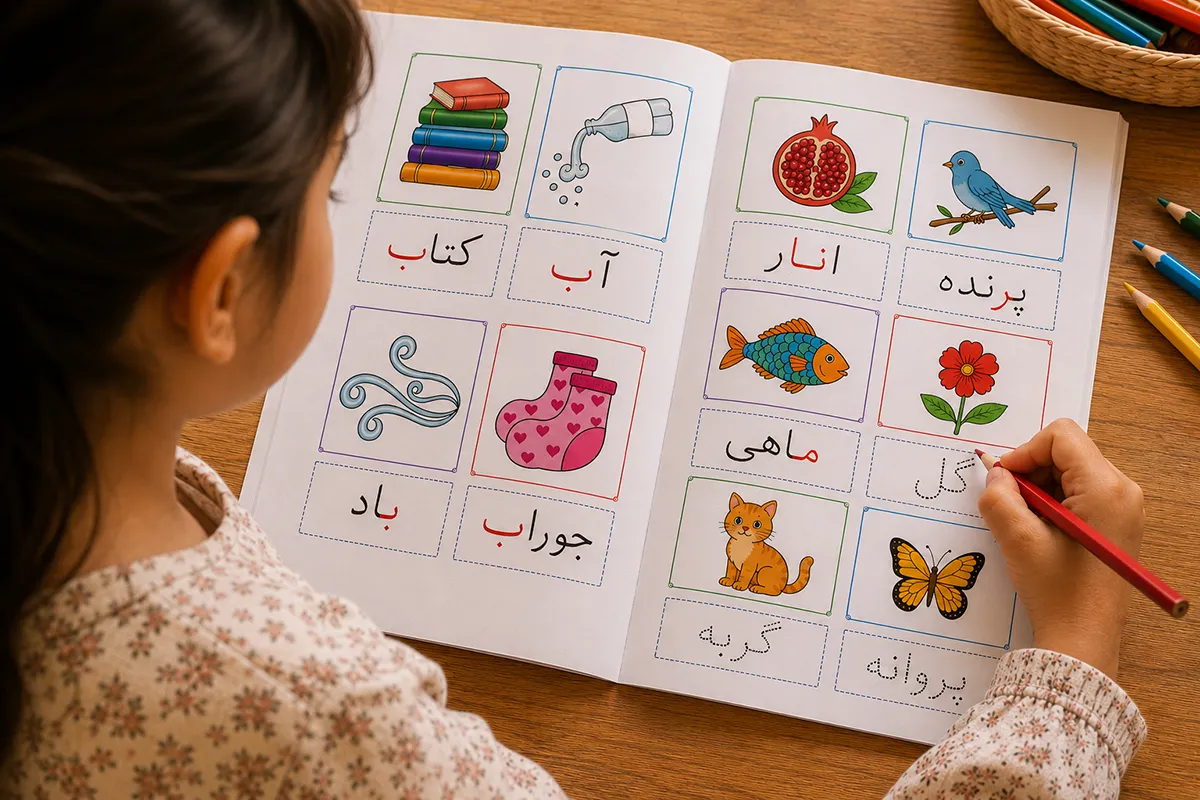
A Farsi alphabet book is a teaching tool built specifically around letter recognition and early phonics, while a bilingual storybook is built around narrative and vocabulary, and the two serve different purposes even though they often sit on the same shelf. Alphabet books tend to be used in short, repeated sessions, tracing letters or matching sounds, whereas storybooks are read straight through for enjoyment. Most families find the two work best together: the alphabet book teaches the building blocks, and storybooks give a child a reason to actually want to read them.
Can you find good Farsi alphabet books online, or is it better to buy in person?
Buying a Farsi alphabet book online is now the more practical option for most diaspora families, since specialist Persian bookshops are rare outside major cities with large Persian communities, and a good online seller will list the exact edition, age range and whether transliteration is included before you buy. When shopping for a Farsi alphabet book online, check reviews specifically from other parents rather than general star ratings, since they tend to flag whether the transliteration is accurate and whether the letterforms are printed clearly enough for a young child to trace. It’s also worth checking whether the seller ships to your country reliably, since some smaller Persian bookshops only serve a limited number of markets.
How can parents who don’t read Farsi confidently still teach it to their children?
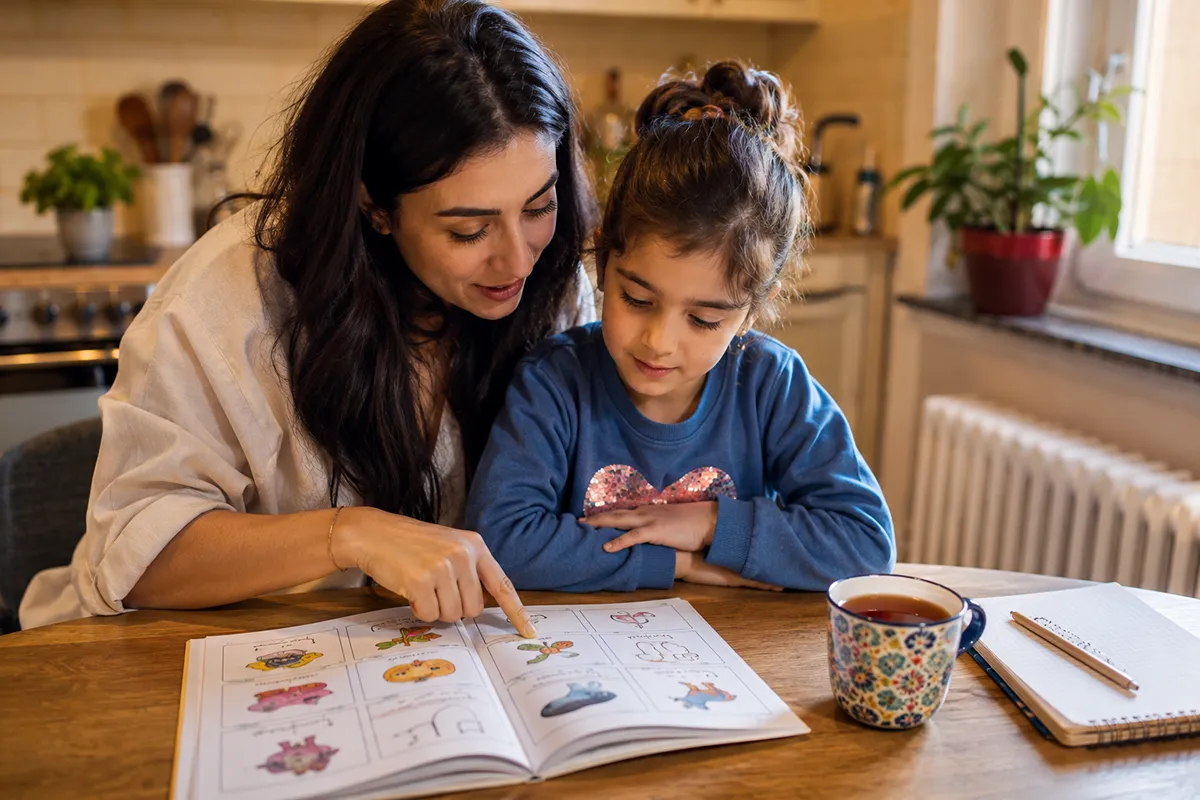
A parent who doesn’t read Farsi fluently can still teach the alphabet effectively by learning alongside their child rather than trying to stay a step ahead, which often makes the process feel more like a shared activity than a lesson. Many alphabet books designed for diaspora families include audio pronunciation guides or QR codes linking to recordings, specifically because publishers know a large share of buyers are parents in exactly this position. Involving a grandparent or Farsi-speaking relative for even ten minutes a week, in person or over a video call, adds pronunciation practice that a book alone cannot provide.
How does learning the Farsi alphabet connect a child to their Persian heritage beyond language?
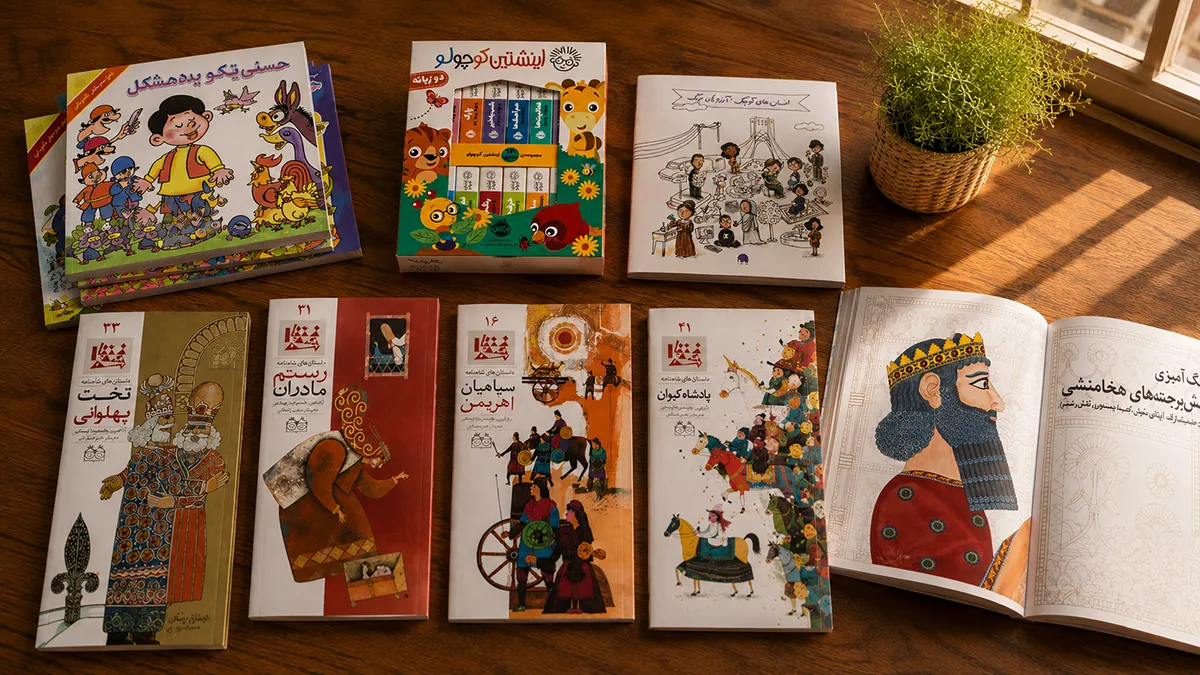
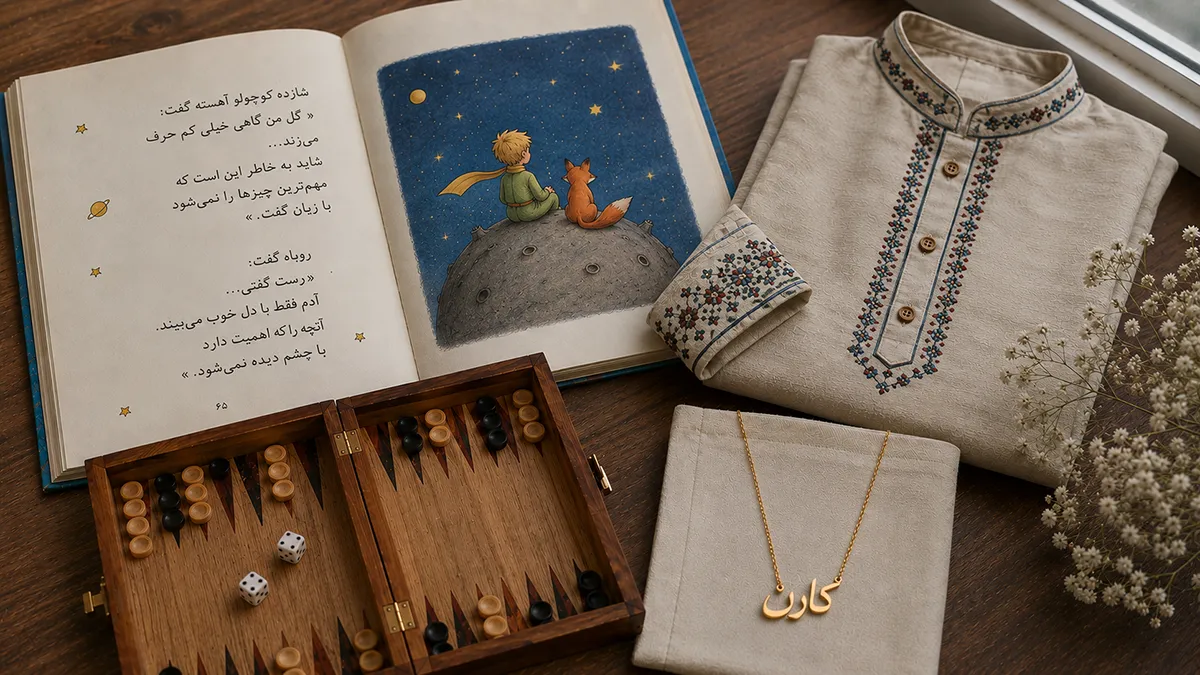
Learning to read Farsi script gives a child direct access to their family’s culture, letters, greeting cards, and eventually books and poetry, rather than relying entirely on translation or a parent’s retelling. For many second-generation children, being able to recognise their own name written in Farsi, or read a simple greeting on a Nowruz card, is a genuinely meaningful moment of connection to their heritage. It also lays the groundwork for reading more advanced material later, from children’s versions of Shahnameh stories to, eventually, Persian poetry in its original script. Our Kids’ Collection guide covers other ways to build that connection alongside language learning, from storybooks to traditional clothing and jewellery.
Conclusion
A good Farsi alphabet book gives a child a clear, achievable way into their heritage language, pairing each letter with recognisable words and illustrations rather than overwhelming them with the full alefba at once. Buying a Farsi alphabet book online is usually the most practical route for families outside Persian, provided you check reviews and confirm transliteration and shipping details first. Whether a parent reads Farsi fluently or is learning alongside their child, starting with the alphabet is the first real step toward a lifelong connection with Persian language and culture.
Frequently Asked Questions
How many letters are in the Farsi alphabet?
The Farsi alphabet, or alefba, has 32 letters, four more than the Arabic alphabet it is adapted from, to represent Persian-specific sounds. Most children’s alphabet books introduce these gradually rather than all in one sitting.
Is it harder for a child to learn Farsi if they already read English?
Not necessarily. Children who already understand that letters represent sounds often grasp the concept of the Farsi alphabet quickly, even though the script itself, direction of writing and letterforms are entirely different from English.
Should transliteration be included in a Farsi alphabet book?
Transliteration is helpful in the early stages, especially for parents who are less confident reading Farsi themselves, but it’s worth choosing a book that gradually reduces reliance on it so the child moves toward reading the Farsi script independently.
What is the best way to practise the Farsi alphabet at home?
Short, regular sessions work better than occasional long ones. Ten minutes a few times a week, tracing letters, naming objects that start with each letter, or reading a page of an alphabet book together, builds recognition more reliably than an occasional hour-long session.
Can a Farsi alphabet book be part of a wider Persian heritage gift for a child?
Yes. A Farsi alphabet book pairs naturally with a storybook or a small piece of Farsi name jewellery from our kids’ collection, making a thoughtful gift set for a birthday, Nowruz, or simply to encourage a child’s interest in their heritage.
Comments