


How to Set Up a Backgammon Board

A backgammon board looks complicated the first time you open one, but the starting position is fixed and takes about thirty seconds to lay out once you know it. This guide covers the standard setup, how the board is numbered, and the small differences you will meet if you learn the game the Persian way, where it is called takhteh nard.
What is on the board
A backgammon board has 24 narrow triangles called points, twelve on each side, split into two halves by a ridge down the middle known as the bar. Each player has fifteen checkers, two dice, and a doubling cube if you are playing for stakes.
The points alternate in colour, but the colours mean nothing. They exist only so you can count spaces quickly.
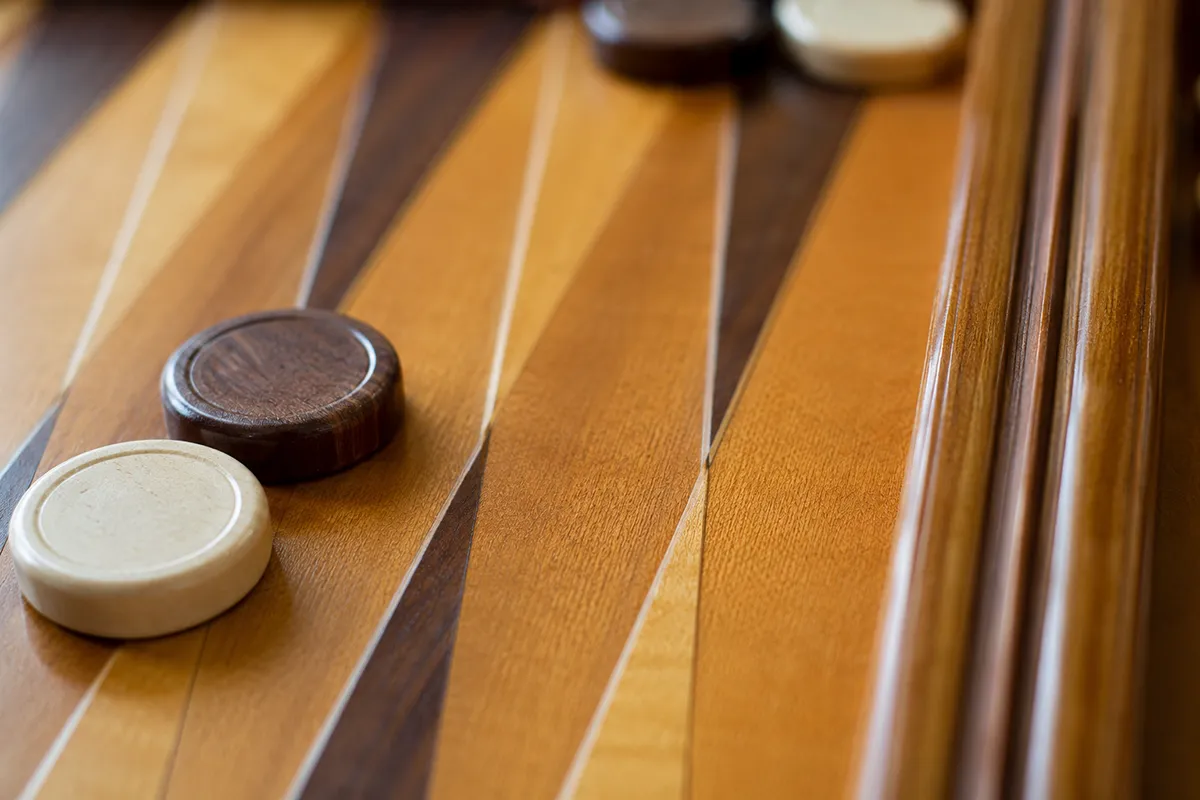
The standard starting position
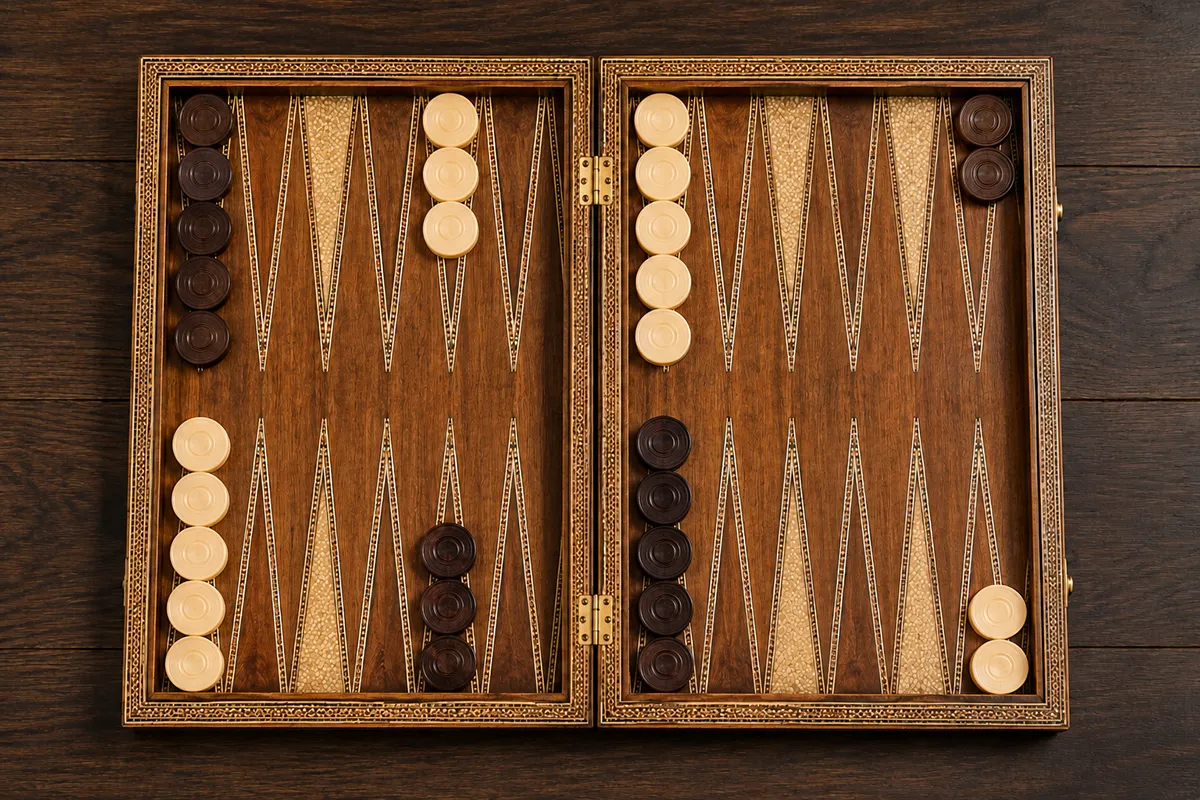
Each player sets out fifteen checkers across four points. Counting from your own home board outwards:
- Two checkers on your 24 point, the far corner of the board, diagonally opposite your home.
- Five checkers on your 13 point, on the far side of the bar directly across from you.
- Three checkers on your 8 point.
- Five checkers on your 6 point, inside your home board.
That is 2 plus 5 plus 3 plus 5, which comes to fifteen. Your opponent mirrors this exactly, so their two checkers sit on the point where your five checkers are, and so on. If the position looks symmetrical when you step back, you have set it up correctly.
Which way do the checkers move
Each player moves in the opposite direction to the other, both travelling towards their own home board. Your home board is the quadrant nearest you, and by convention it sits on your right.
The simplest way to check you have it right is this: your two lone checkers in the far corner have the longest journey, and they must travel all the way round to reach your home. If they are already close to home, the board is set the wrong way round.
Setting up for the first game
- Open the board flat and make sure the hinge, which forms the bar, runs down the middle.
- Decide which side is your home board. Traditionally it sits to the right of each player, and both home boards should be on the same side of the bar.
- Place the fifteen checkers on the four points listed above.
- Each player rolls one die. The higher number goes first, and that player uses both dice as their opening move rather than rolling again.
- If both players roll the same number, roll again.
Takhteh nard, the Persian way
The board and the starting position are the same. What differs is the culture around it, and a few points of practice.
Persian players usually play a series of games rather than a single one, and the doubling cube is often left out entirely. The counting is done aloud in Persian, and the numbers on the dice have their own names borrowed from Persian and Turkish. A one and a one is hep yek, a six and a six is dosheh, and a five and a six is panj o shesh. You will pick them up quickly if you play with an Persian family, largely because nobody will slow down to explain them.
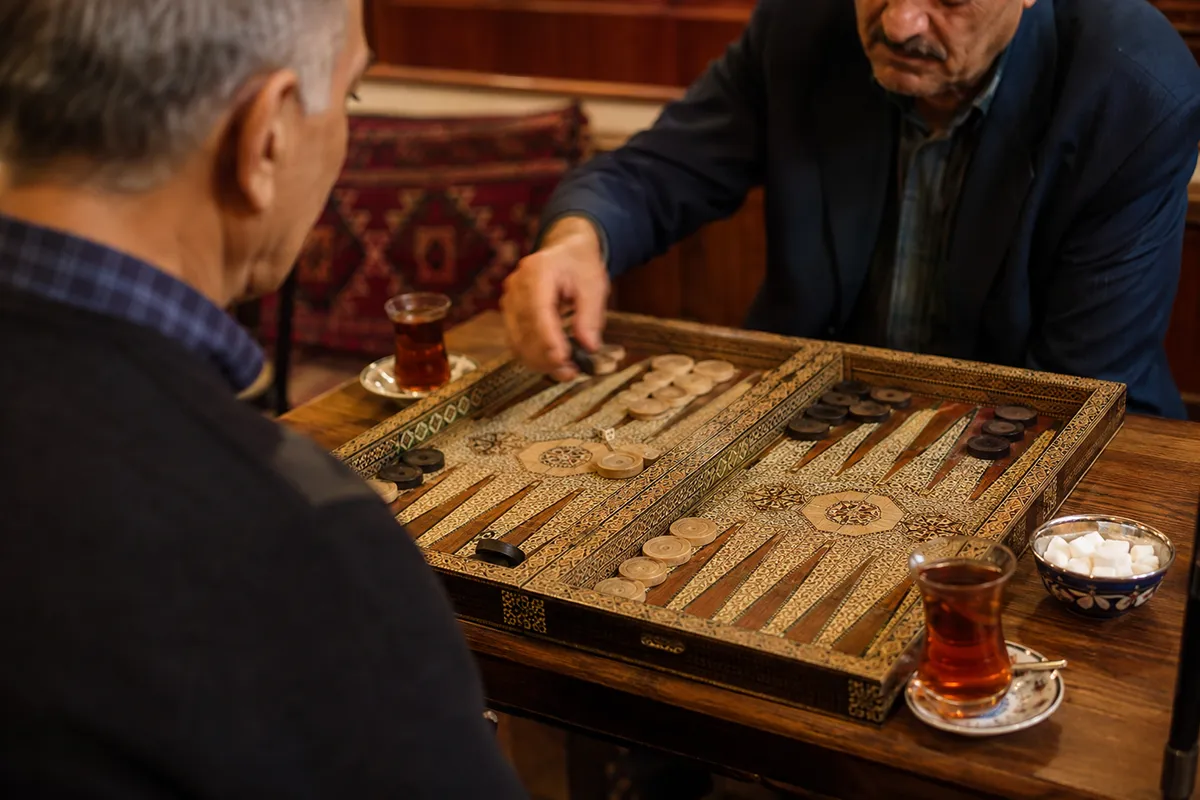
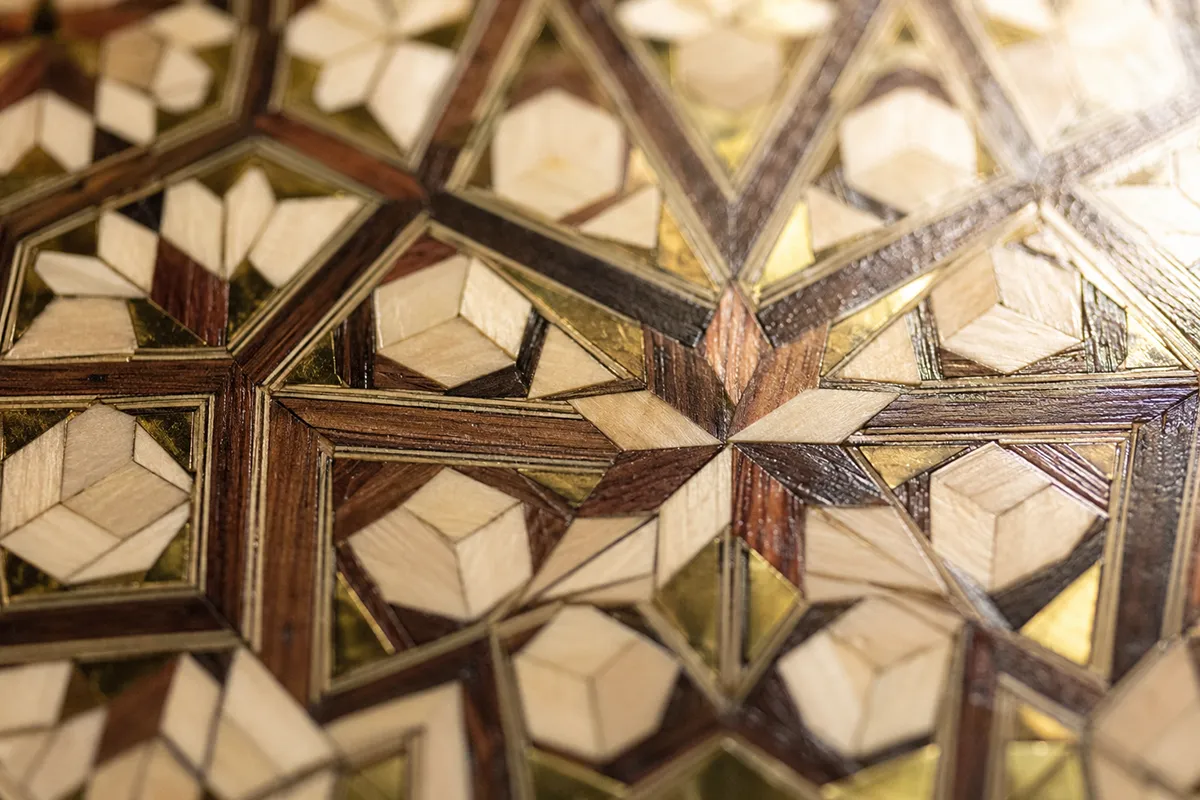
The other difference is the board itself. A Persian backgammon board is usually a piece of craft rather than a game accessory. The finest are made in Persian Heritage using khatam kari, a marquetry technique that sets tiny rods of wood, bone and brass into geometric stars. A single board can carry hundreds of thousands of individual pieces, and the surface is polished flat so the checkers slide across it.
Common setup mistakes
Home boards on opposite sides. Both players’ home boards must be on the same side of the board. If yours is on the right and your opponent’s is on the left, one of you is moving the wrong way.
Five and three swapped. The 8 point takes three checkers and the 6 point takes five. It is the most common slip, and it changes the opening game completely.
Counting the bar as a point. The bar is not a point. It is where hit checkers wait to re-enter.
Choosing a board
If you are buying rather than borrowing, three things are worth checking.
Size. A board around 40cm wide suits most tables and travels reasonably. Larger boards of 50cm and above are better to play on but heavier to move.
Surface. The playing surface should be smooth enough for checkers to slide without catching. On a khatam board this means the inlay has been properly finished and lacquered.
Hinges and closure. The board is also the box. Weak hinges are the usual failure point on cheap boards, because the whole weight of the checkers hangs on them.
You can see our range in the Persian backgammon collection, including khatam inlaid boards made in Persian Heritage. Most of them are also chess boards on the reverse.
Frequently asked questions
- How many checkers does each player have?
Fifteen each, laid out on four points at the start. - Which side is my home board?
By convention the quadrant to your right. Both players’ home boards must be on the same side of the bar. - Who goes first?
Each player rolls one die and the higher number starts, using both dice for the opening move. - Is takhteh nard different from backgammon?
The rules and setup are the same. The differences are cultural: Persian play often drops the doubling cube and uses Persian names for the dice rolls. - What is a khatam backgammon board?
A board decorated with Persian marquetry, made by inlaying fine rods of wood, bone and brass into geometric patterns. It is an Persian Heritage speciality.


Comments