


What Is a Sofreh Aghd? A Guide to the Persian Wedding Spread
- mahyar
- 28 August 2026
- Persian Wedding
- 4 minutes
If you have ever seen photos from an Persian wedding, you have almost certainly seen the sofreh aghd, the elaborate cloth spread laid out for the couple during the ceremony itself. It is one of the most visually striking parts of a Persian wedding, but every item on it carries meaning rather than being purely decorative. This guide explains what the sofreh aghd actually is, what belongs on it, and why it remains central to Persian weddings today.
What is a sofreh aghd, exactly?
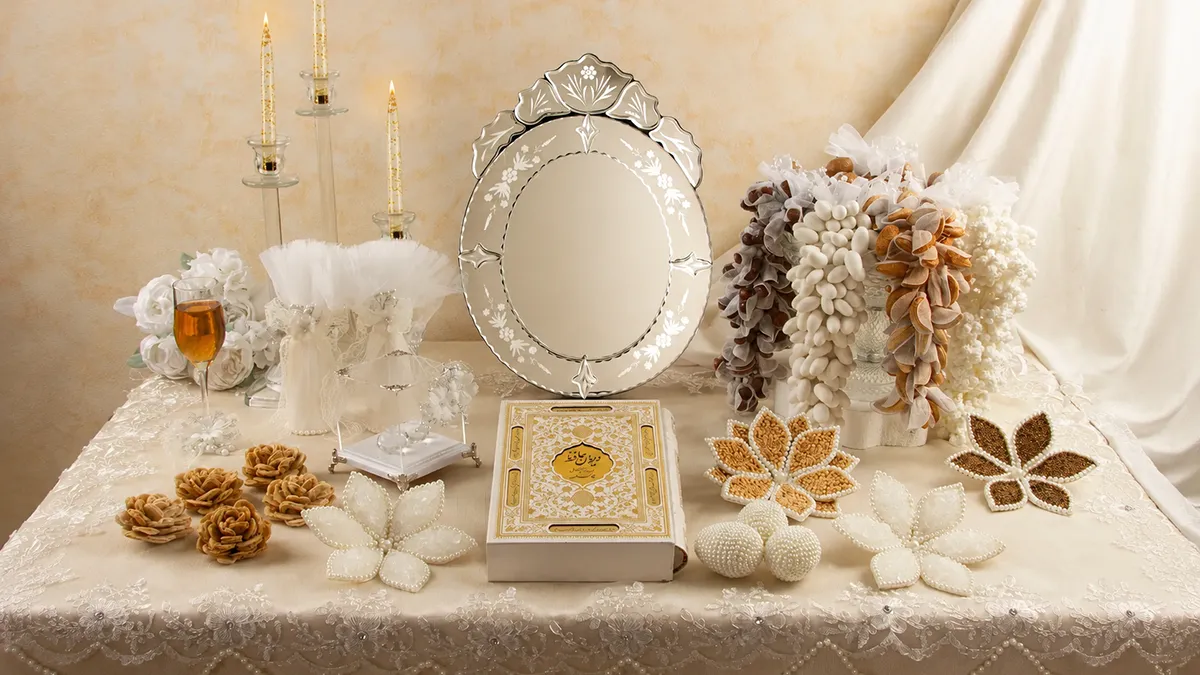
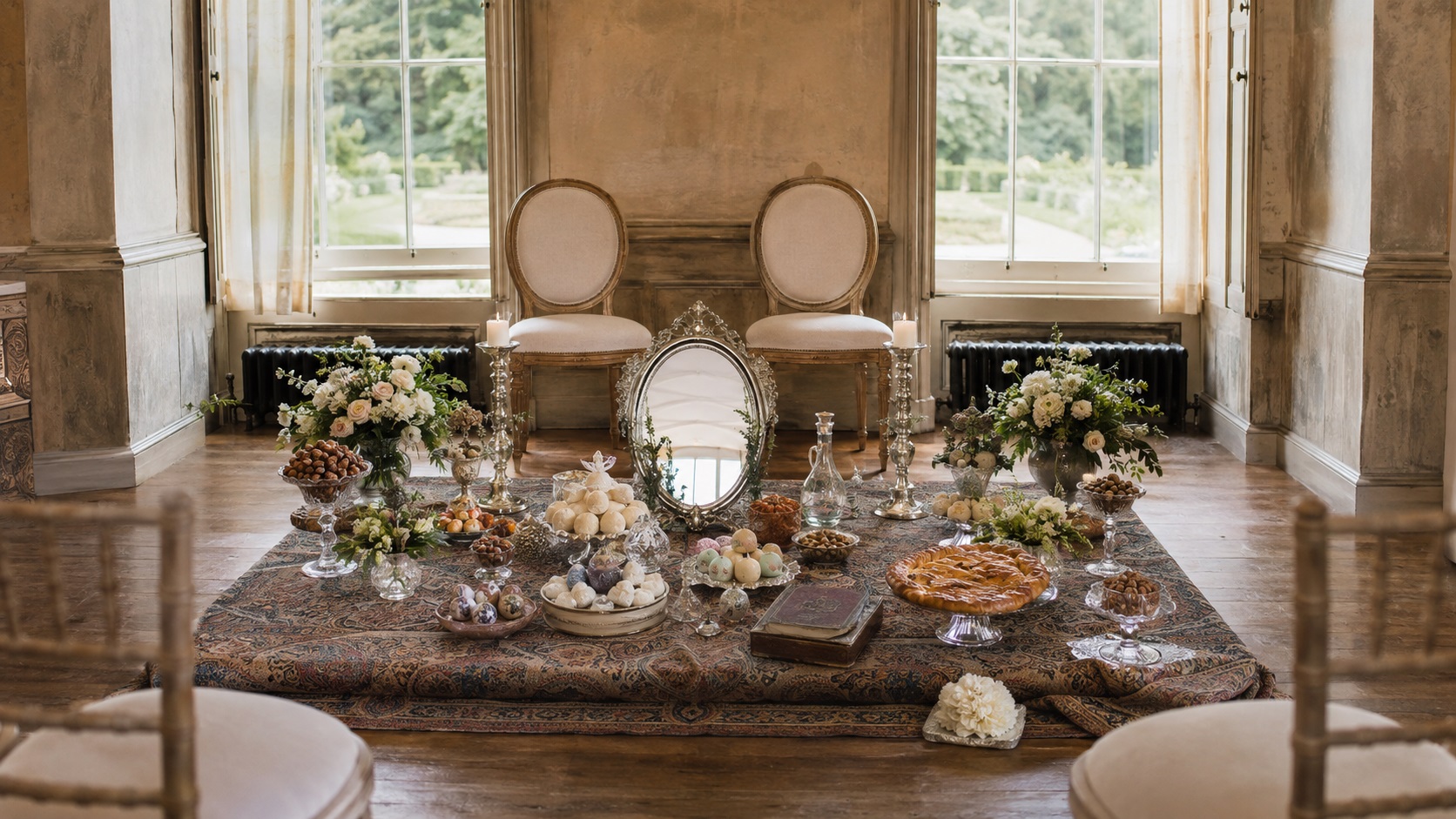
The sofreh aghd is the ceremonial spread, traditionally an ornate cloth, laid on the floor or a low table where the bride and groom sit during the marriage ceremony itself. Family and close friends gather around it while the officiant conducts the ceremony, so it functions as both the visual centrepiece of the wedding and the literal setting where the couple is married. Unlike a Western altar, it is fully decorated in advance with dozens of symbolic items, each with its own meaning rooted in Persian and Zoroastrian tradition.
What items traditionally appear on the spread?
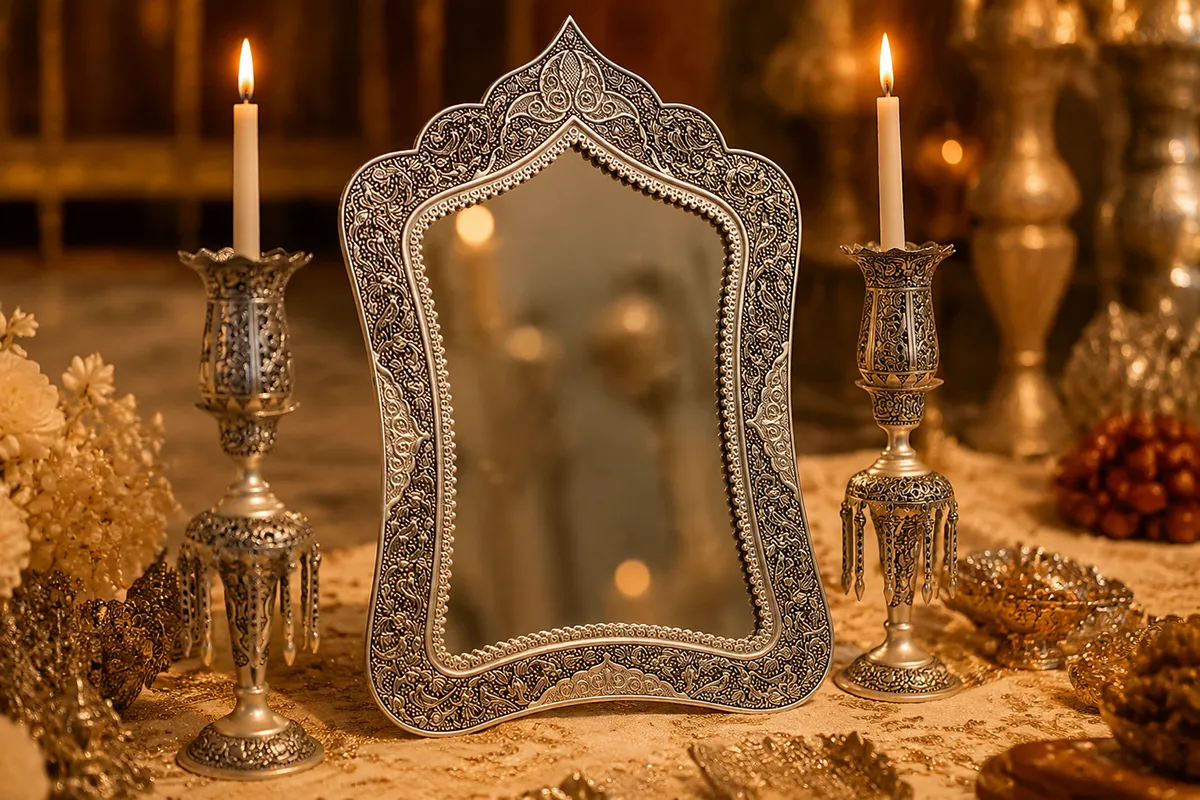
A mirror and a pair of candlesticks are placed facing the couple, symbolising light and the reflection of their future together, and are usually the first items guests notice. A copy of a holy book or a book of Persian poetry, most often Hafez, sits at the centre, alongside decorated eggs and other symbols of fertility and a new beginning. Sweets, pastries, and a bowl of honey are also placed on the spread, since the couple traditionally feeds each other a small amount of honey after the ceremony as a wish for a sweet life together.
Why do mirrors and candles feature so prominently?
The mirror is meant to represent light and clarity, and, according to tradition, the groom sees the bride’s reflected image in it as the first true look at his bride during the ceremony, a moment that carries real symbolic weight even when the couple has long been dating beforehand. The candlesticks flanking the mirror represent a bright and illuminated future, and are often kept by the couple afterwards as a memento of the day. Together, the mirror and candles create the focal point that most sofreh aghd photographs centre on, precisely because of how much meaning is packed into such a simple arrangement.
Does every family’s spread look the same?
The core items, mirror, candles, sweets, a holy or poetry book, are fairly consistent across Persian weddings, but families do personalise the spread with regional touches, additional decorative elements, and items specific to their own traditions. Some families include a bowl of gold coins for prosperity, a cone of sugar that is rubbed together above the couple’s heads during the ceremony, or specific flowers and herbs tied to their family’s background. This is part of why no two sofreh aghd setups look quite identical, even though the overall structure is recognisably the same.
How is the sofreh aghd typically arranged before the ceremony?
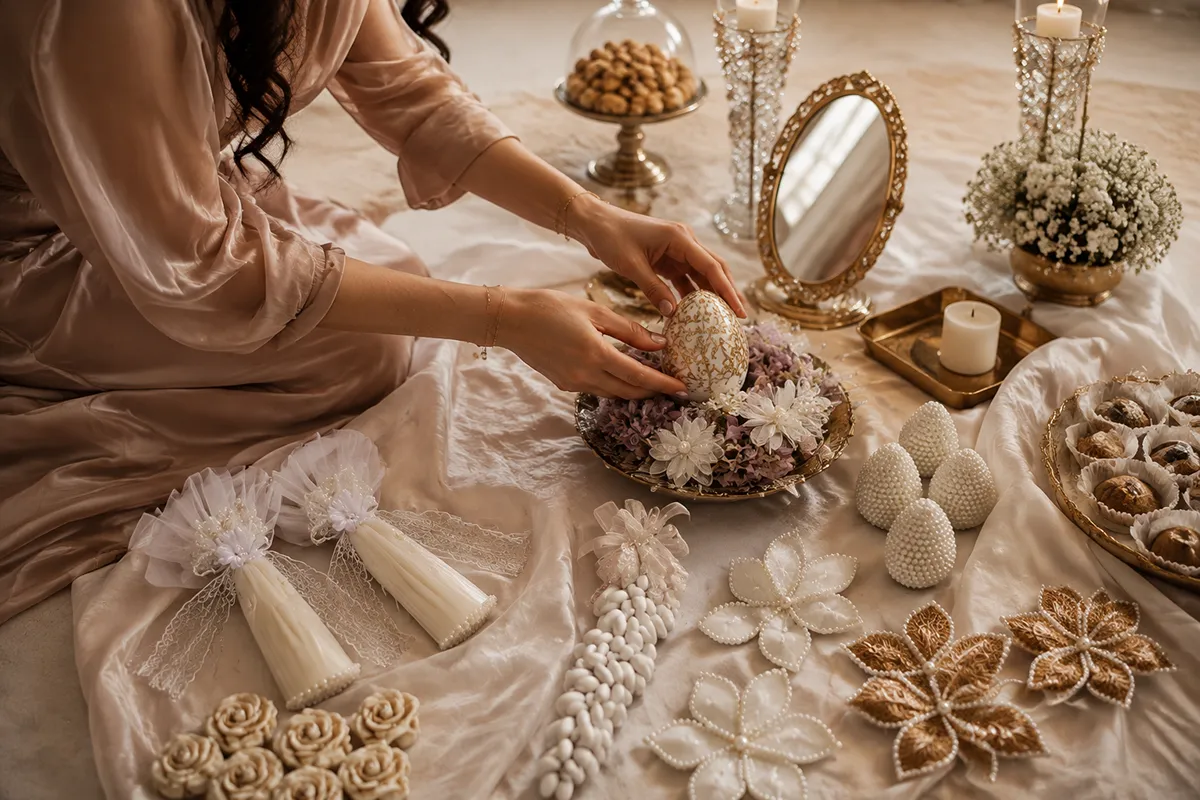
The spread is usually set up by close family, often the bride’s mother or a close female relative, in the hours before the ceremony begins, since it needs to be complete and correctly arranged before guests arrive. Placement matters: the mirror and candles are positioned so the couple, seated facing each other or side by side depending on family tradition, can see them clearly during the ceremony. Getting this right is treated as an important task, and in many families, it is considered an honour to be asked to help prepare the sofreh aghd.
Conclusion
The sofreh aghd is far more than decoration: every mirror, candle, and sweet on the spread carries meaning built up over generations of Persian wedding tradition. If you want to see how the spread fits into the wider ceremony, our guide to the Persian wedding table and the sofreh aghd covers this in more detail, and our piece on the Persian wedding ceremony as more than a celebration looks at the day as a whole. Once the ceremony itself is planned, our guide to Persian wedding gift ideas for the bride and groom is a good next stop. You can browse handcrafted sofreh aghd pieces in our sofreh aghd collection.
Frequently Asked Questions
Who is responsible for setting up the sofreh aghd?
It is traditionally arranged by close family before the ceremony, often the bride’s mother or another close female relative, since it needs to be fully ready before guests and the couple arrive.
Can a sofreh aghd be reused for another wedding?
Many of the decorative items and the cloth itself can be reused or passed down within a family, though some families prefer to have a fresh setup for each wedding as a personal touch.
Is the sofreh aghd used in both religious and civil Persian weddings?
Yes, the sofreh aghd is a cultural tradition rather than a strictly religious one, so it appears across Persian weddings regardless of the specific religious ceremony being performed.
What does the honey ritual during the ceremony mean?
The couple feeding each other a small amount of honey from the spread symbolises a wish for a sweet and harmonious life together, and is one of the most photographed moments of the ceremony.
How long does it take to arrange a sofreh aghd?
Depending on how elaborate the spread is, arranging it properly can take anywhere from an hour to most of a morning, since each item needs to be placed thoughtfully rather than simply laid out.

Comments