


What Does the Evil Eye Bracelet Really Mean?
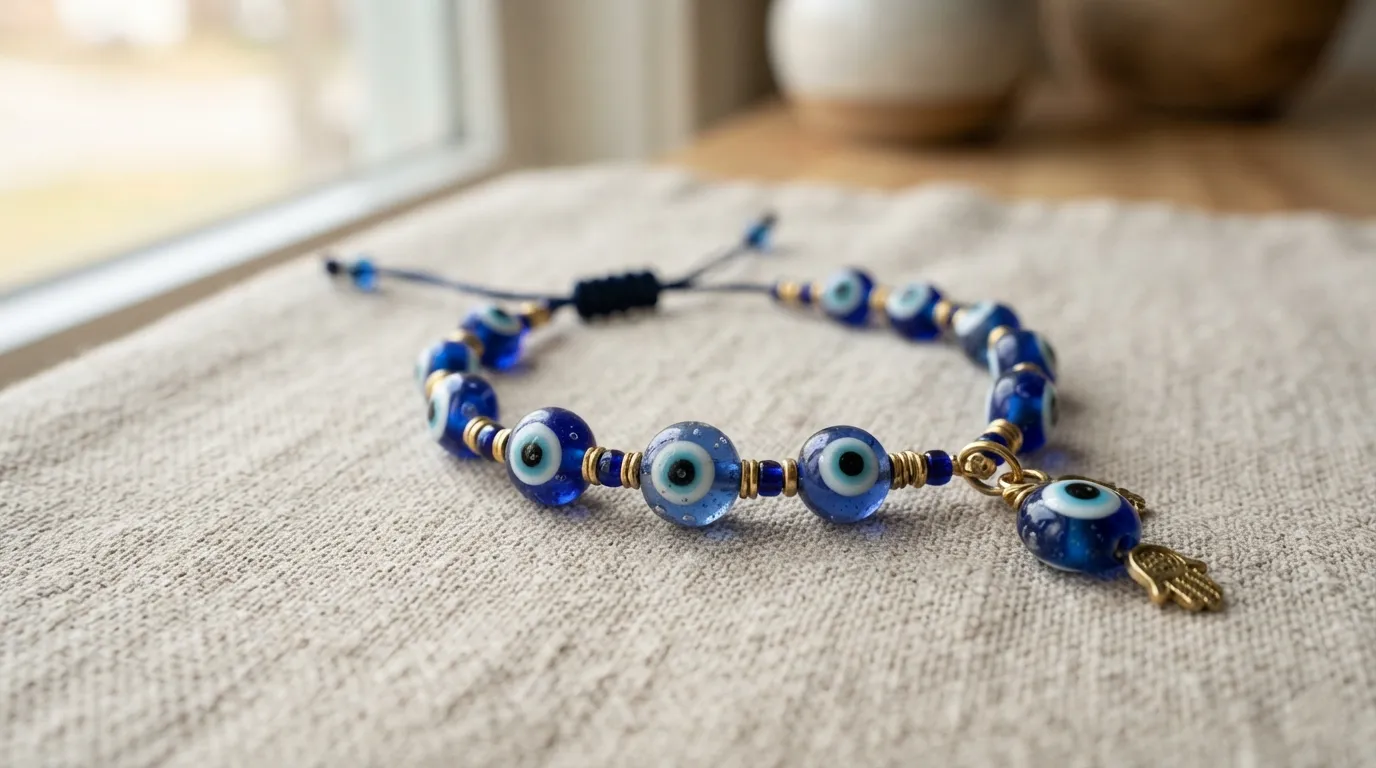
The evil eye bracelet meaning goes back thousands of years, long before it became the everyday jewellery piece it is today. In Persian, the symbol is known as cheshm nazar, or simply nazar, and it’s worn to protect against the harm believed to come from envious or ill-wishing looks, not to bring luck in the way a four-leaf clover might. Understanding what the bracelet actually represents, rather than treating it as a generic fashion symbol, helps explain why it’s remained meaningful across so many cultures and generations. This guide covers where the belief comes from, what the blue-and-white design represents, and how people wear it today.
What is the evil eye, and why is it something people protect against?
The evil eye refers to a belief, found across Persian, Turkish, Greek and many Mediterranean and Middle Eastern cultures, that a envious or malicious glance can cause misfortune, illness or bad luck to the person it’s directed at, often without the person giving the look even intending harm. It’s less about deliberate curses and more about protecting against the ordinary envy that can follow good fortune, a new baby, a new job, a happy relationship. Wearing a symbol to deflect this kind of attention has been part of daily life in Persian and neighbouring regions for centuries, long predating its current popularity as jewellery.
What does the blue and white design actually represent?
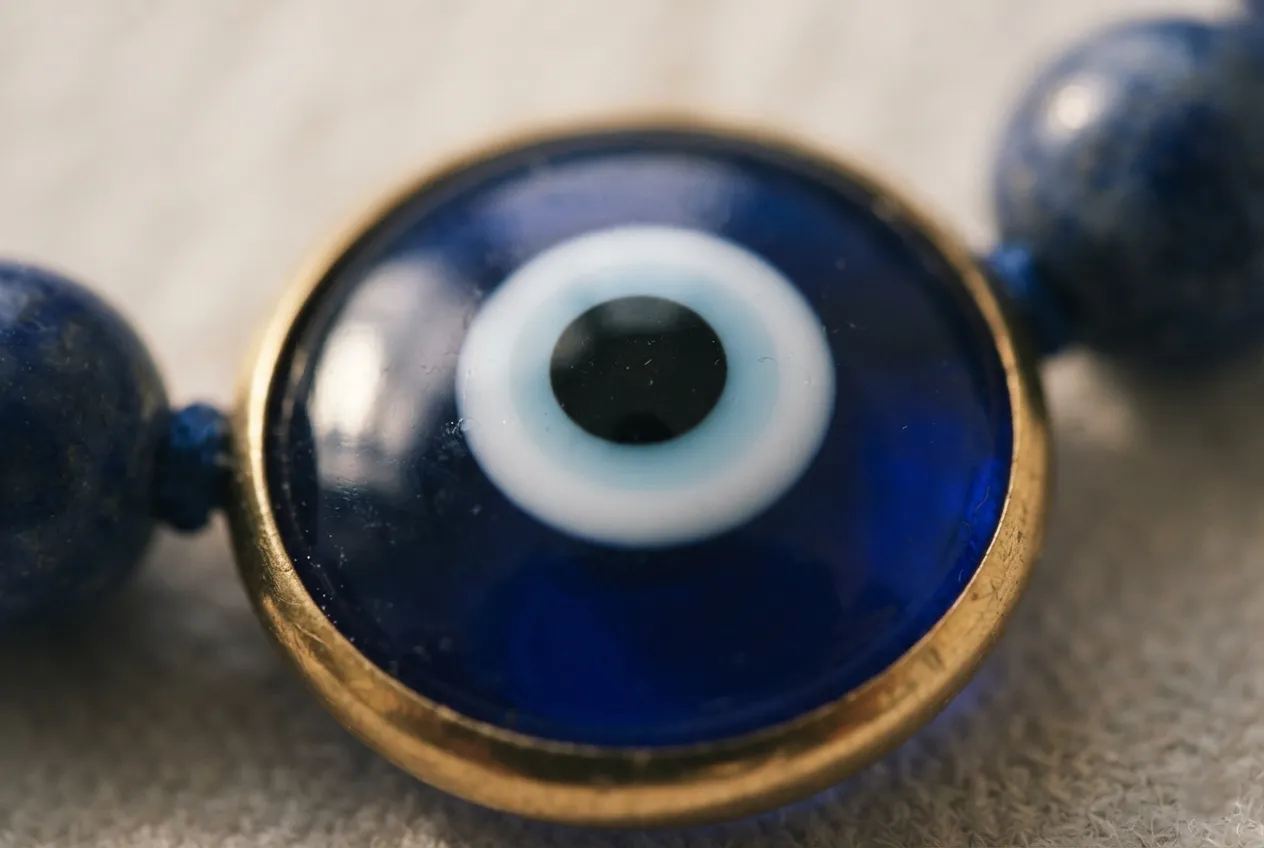
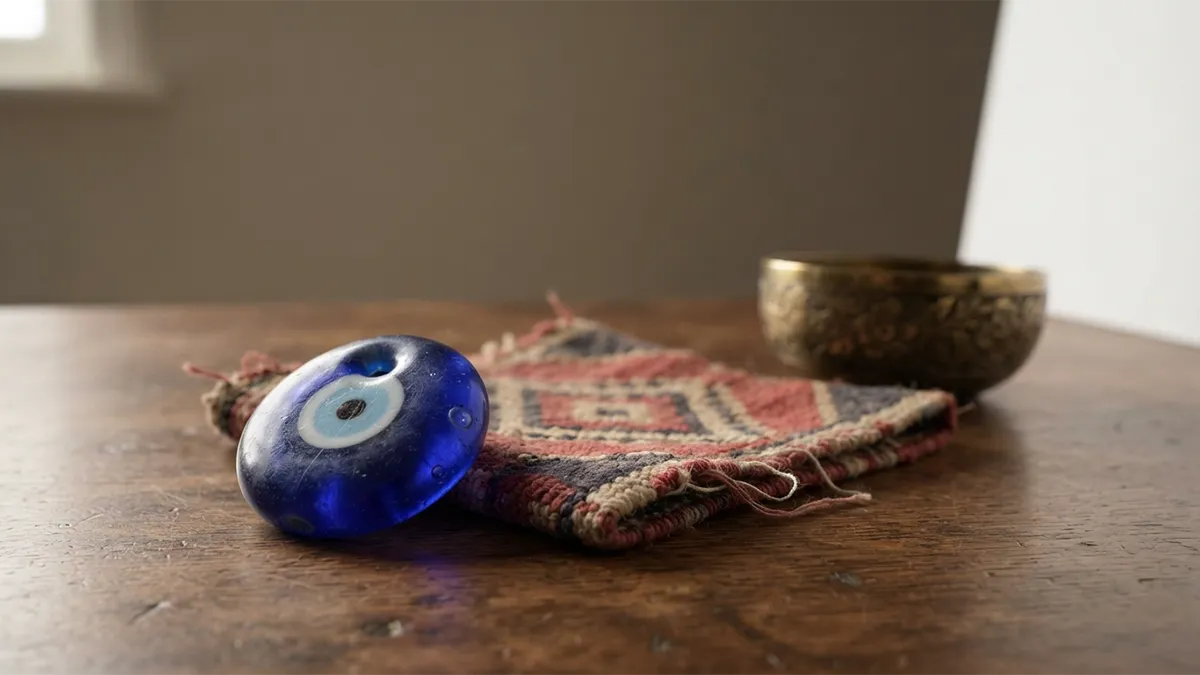
The distinctive blue and white concentric circles are designed to resemble an eye looking back, the idea being that the symbol absorbs or reflects a harmful glance before it can take effect. The specific shade of blue, often a deep cobalt, is traditionally significant too, since blue was historically a rare and valued colour associated with protection and the sky. Some pieces include a small central dot resembling a pupil, which is thought to represent the watchful, protective quality of the symbol rather than anything decorative.
Is the evil eye bracelet a religious symbol?
The evil eye belief predates and sits outside any single religion, though it’s been absorbed into the everyday culture of many religious communities across the Middle East and Mediterranean without being tied to a specific faith. In Persian, it’s worn by people of different religious backgrounds as a cultural and folk tradition rather than a religious requirement, which is part of why it’s crossed so easily into mainstream fashion elsewhere. This is worth knowing if you’re buying one as a gift, since it’s generally seen as a cultural symbol of protection rather than something with religious restrictions on who can wear it.
Why has the evil eye bracelet become so popular outside Persian and Mediterranean communities?
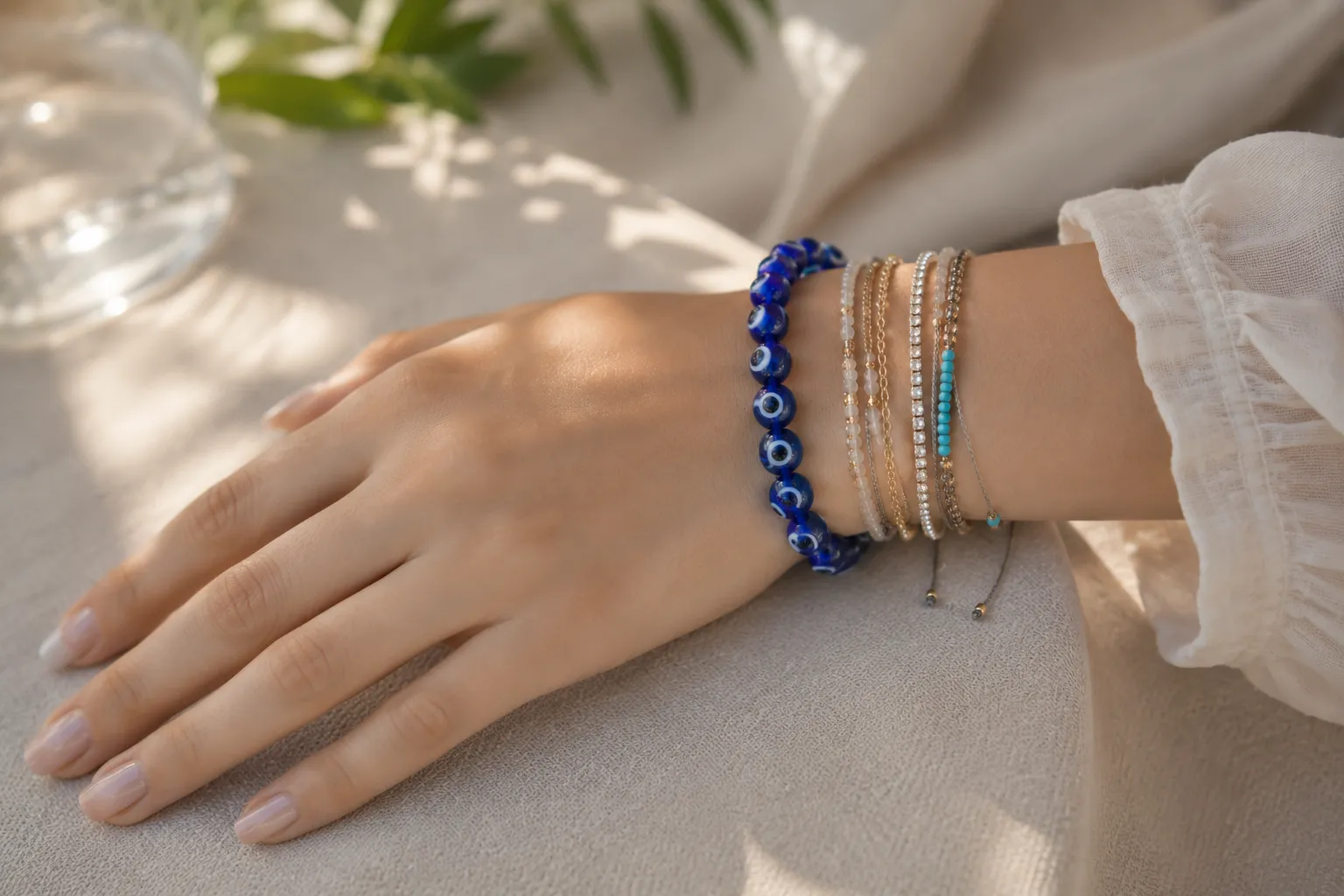
Part of the appeal is simply aesthetic, the blue and white design is striking and pairs easily with other jewellery, but the deeper draw for many wearers is the idea of a piece that actively means something rather than being purely decorative. As more people outside these cultures have learned the story behind the symbol, wearing one has increasingly become a way of acknowledging and engaging with that heritage respectfully, rather than treating it as an empty trend. For anyone with a personal connection to Persian or Mediterranean culture, gifting or wearing an evil eye bracelet often carries added significance as a nod to that heritage. More on how evil eye jewellery is worn and chosen is covered in our guide to evil eye jewellery’s symbolism and importance.
Does the bracelet need to be gifted rather than bought for yourself?
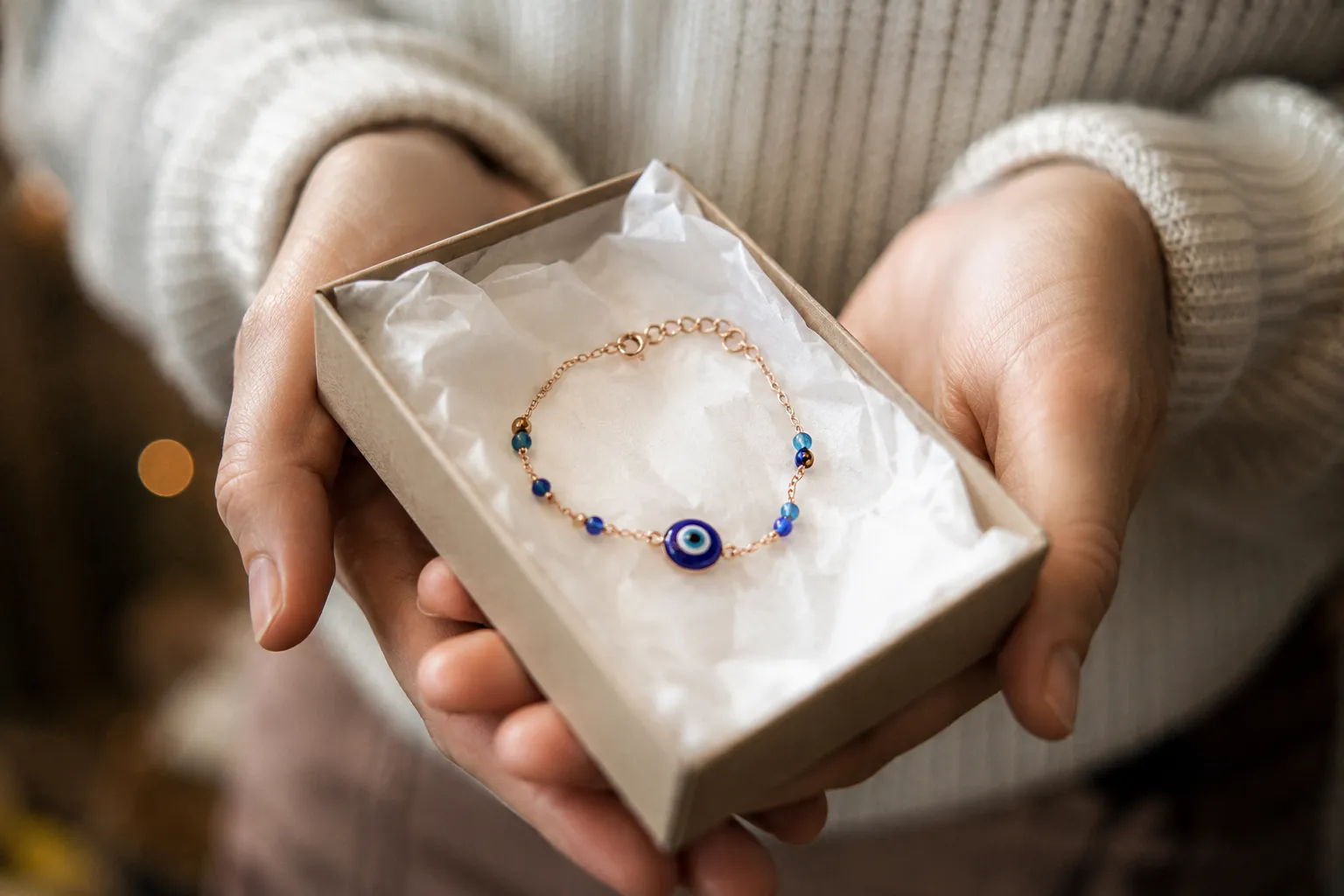
There’s a common belief in some traditions that an evil eye piece is most effective when it’s given as a gift rather than bought for yourself, since the protective intent is thought to be strengthened by another person’s care. In practice, plenty of people buy one for themselves without any concern, and it’s not treated as a strict rule the way some other folk traditions are. If you’re choosing one as a gift, our Persian jewellery collection has a range of evil eye and heritage pieces suited to different budgets and styles.
Conclusion
The evil eye bracelet meaning is rooted in centuries-old Persian and Mediterranean belief around protection from envious or harmful looks, expressed through the recognisable blue and white eye design. It’s a cultural rather than religious symbol, which is part of why it’s been so widely adopted well beyond the communities it originated in. Whether you’re drawn to the story, the design, or both, understanding what the symbol actually represents makes wearing or gifting one feel far more considered than picking up a generic trend piece.
Frequently Asked Questions
Does the evil eye bracelet actually protect against anything?
This depends entirely on personal belief. For many people it’s worn as a meaningful cultural tradition rather than a literal protective device, similar to how a lucky charm is worn without a strict expectation of a physical effect.
Is it disrespectful to wear an evil eye bracelet if I’m not from a culture that uses it?
Generally no, since the symbol has been shared across many cultures for centuries and is widely worn today as a cultural rather than exclusive religious symbol. Learning the meaning behind it, as with any cultural piece, is a respectful way to wear it.
What happens if an evil eye bracelet breaks?
In folk tradition, a broken evil eye piece is sometimes seen as having done its job by absorbing negative energy directed at the wearer. Practically, it simply means the piece needs repairing or replacing.
Can men wear an evil eye bracelet too?
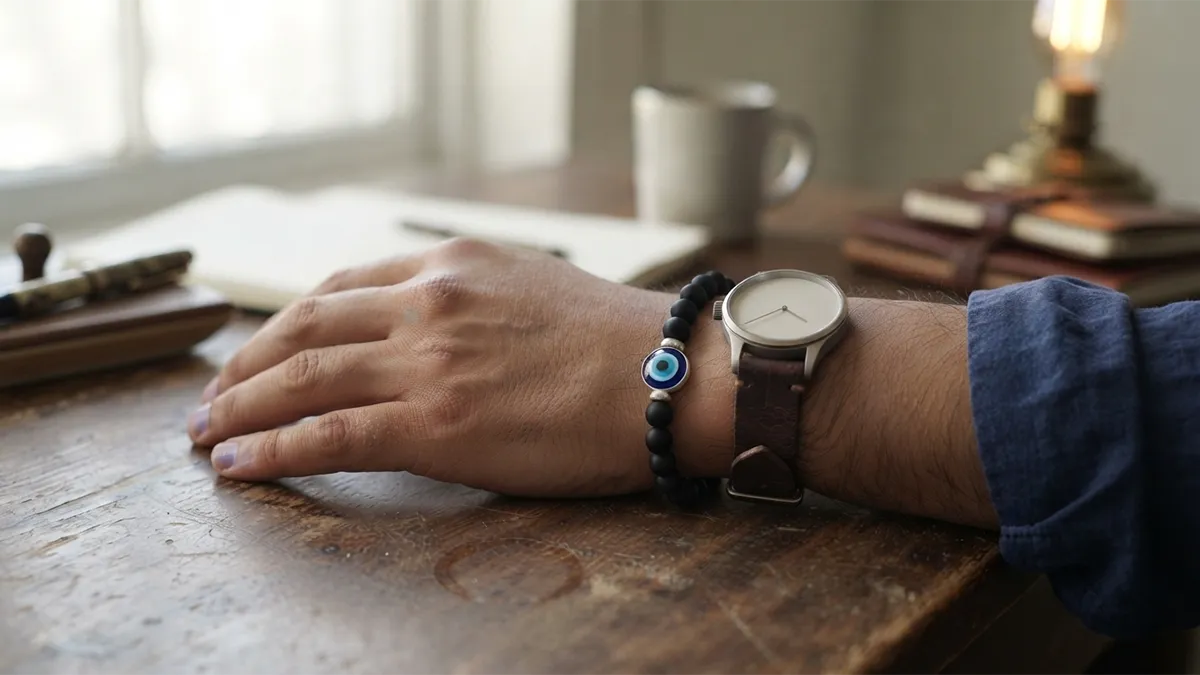
Yes, the evil eye symbol isn’t gendered, and it’s worn by men and women alike, often in different bracelet styles or metal finishes to suit personal taste.
Where does the evil eye symbol appear besides bracelets?
It appears widely in necklaces, earrings, home decor and even displayed in cars and doorways in some cultures. Our guide to why people wear the evil eye covers its broader use beyond jewellery.

Comments