


Evil Eye Jewellery: A Complete Buying Guide
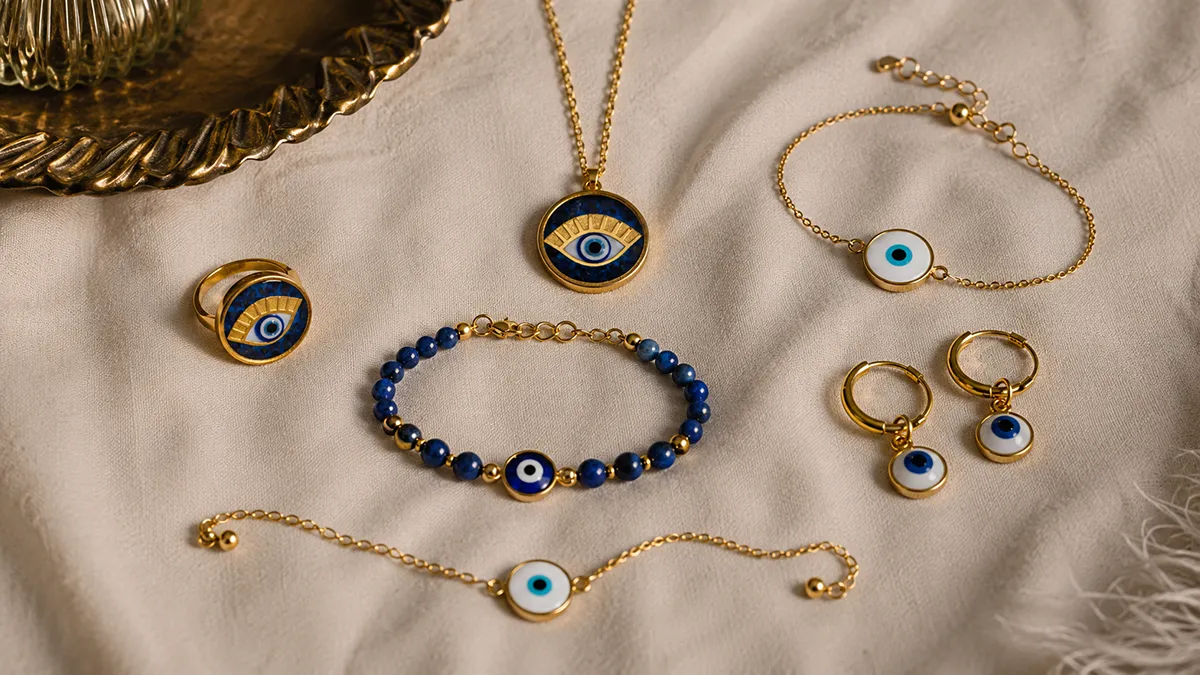
Buying evil eye jewelry has become easy in the sense that it’s everywhere, but that also makes it easy to end up with a mass-produced piece that fades or tarnishes within months. A well-made piece, whether it’s a bracelet, necklace or pair of earrings, should hold its colour and shape for years, and knowing what separates genuine craftsmanship from a cheap import makes a real difference to how long it lasts. This guide covers the materials, styles and practical details worth checking before you buy, whether it’s a first piece for yourself or a gift for someone else.
What materials are evil eye pieces typically made from?
The eye motif itself is usually hand blown or moulded glass, sometimes enamel, set into a metal frame or bead that’s typically sterling silver, gold-plated silver, or solid gold for higher-end pieces. Cheaper mass-produced versions often use plastic or resin for the eye bead and base metals that tarnish or discolour quickly, especially with regular wear or contact with water. Genuine glass beads have a slight weight and depth to the colour that plastic versions lack, which is one of the easiest ways to spot the difference when you’re buying in person.
How do you tell a well-made piece from a cheap one online?
Product photography that shows the piece from multiple close angles, rather than a single stock-style image, is usually a good sign the seller is confident in the actual craftsmanship rather than hiding flaws. Genuine sellers will usually state the metal purity clearly, sterling silver marked 925 or gold marked with its karat, rather than vague terms like “silver plated” or “gold tone” without further detail. Reviews and photos from other buyers, where available, are worth checking specifically for comments about colour fading or the setting coming loose, which are the most common complaints with lower-quality pieces.
Which style of evil eye jewellery suits different occasions?
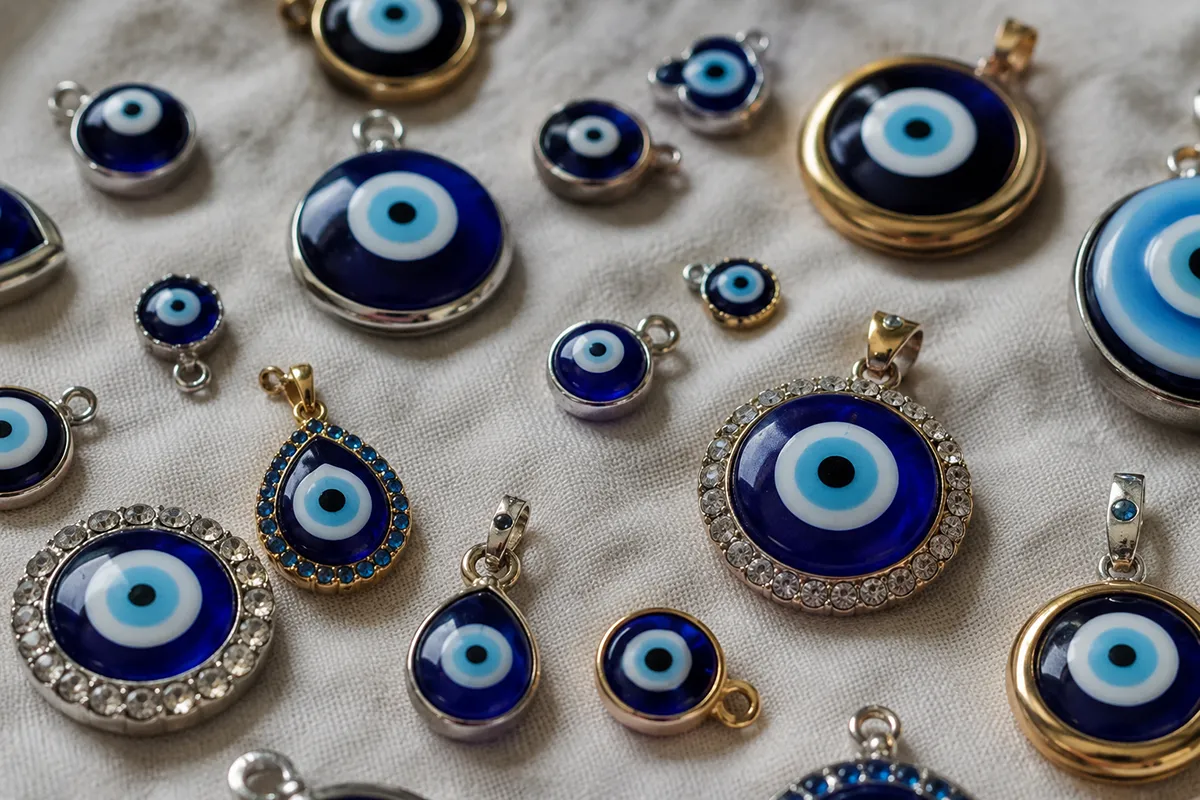
A single, understated evil eye pendant or a slim bracelet works well for everyday wear and suits most workplaces without feeling overly symbolic or statement-making. Layered necklaces or stacked bracelets with multiple evil eye charms tend to suit more casual or fashion-forward settings, where the piece is meant to be noticed rather than subtle. For gifting, a boxed single piece, like a bracelet or small pendant, tends to feel more considered than something bought as part of a bulk set, even if the bulk set is cheaper per item.
What should you check for sizing, especially with bracelets?
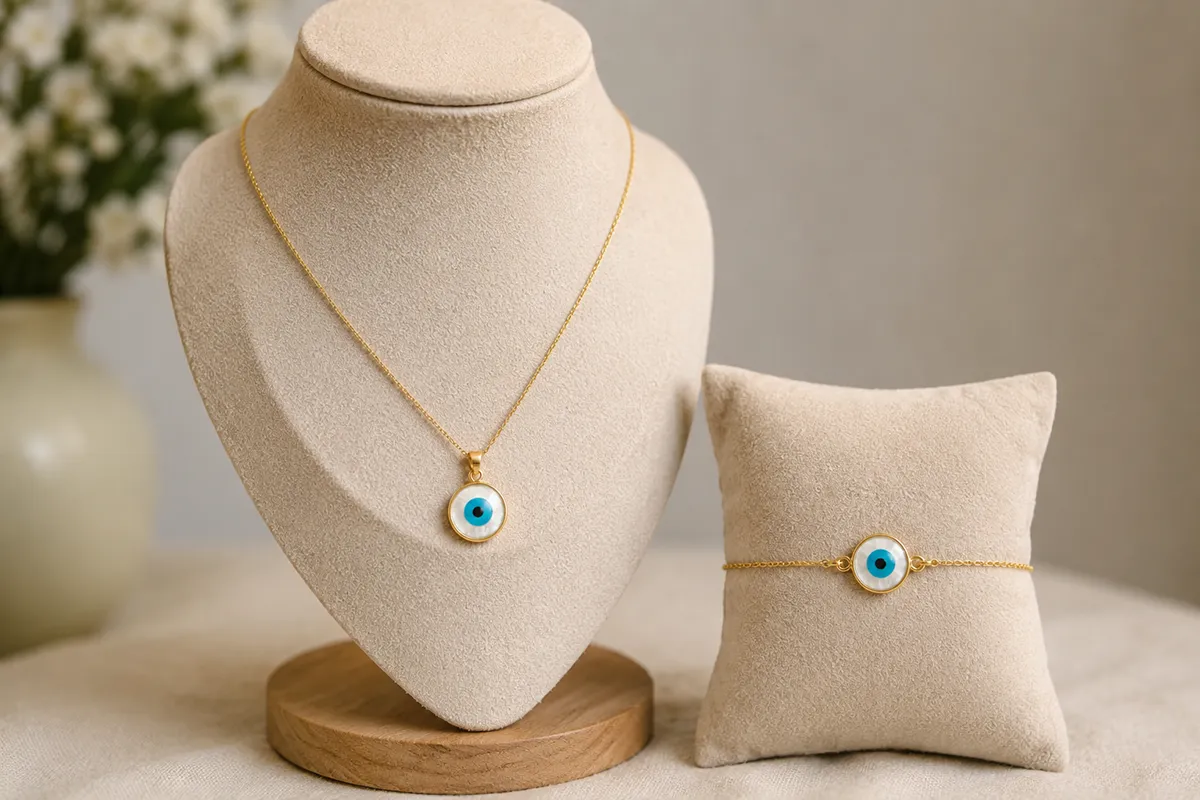
Evil eye bracelets typically come with either a fixed chain length, an adjustable slider, or an elasticated bead style, and each suits a different wrist size and preference. An adjustable slider clasp is generally the safest choice if you’re buying as a gift and unsure of the recipient’s exact wrist size, since it avoids the piece being unwearably tight or loose. For necklaces, an 16 to 18 inch chain suits most people for everyday wear, with longer lengths working better for a layered look with other pieces. Our broader guide to evil eye jewellery’s symbolism and importance covers more on how the piece is traditionally worn.
How much should you expect to pay for a genuine piece?
Prices vary considerably depending on the metal and craftsmanship, with a simple sterling silver bracelet typically costing noticeably less than a solid gold pendant, but within each category a genuine handmade piece will usually sit above the very cheapest mass-produced options. It’s worth treating an unusually low price as a signal to check the material details carefully rather than assuming it’s simply a good deal. A well-made piece is a reasonable investment precisely because it’s meant to be worn for years rather than replaced within a season.
Conclusion
Buying evil eye jewelry well comes down to checking the material, the metal purity, and the seller’s transparency about both, rather than choosing purely on price or a striking product photo. Glass or enamel eye beads set in genuine silver or gold will hold their colour and shape far longer than plastic or base-metal alternatives, and an adjustable clasp is worth prioritising if you’re buying as a gift. Taking a little time to check these details means the piece you choose is one that lasts, rather than one that needs replacing within the year.
Frequently Asked Questions
Does evil eye jewellery need special care to stop it fading?
Genuine glass or enamel pieces hold their colour well with normal care, though it’s worth avoiding prolonged contact with perfume, chlorine or harsh cleaning products, which can affect both the bead and the metal setting over time.
Is gold or silver better for an evil eye piece?
Neither is objectively better, it comes down to skin tone preference and how the piece will be worn. Silver tends to suit cooler skin tones and everyday wear, while gold often reads as slightly more formal or special-occasion.
Can I buy matching evil eye pieces for a group, like bridesmaids?
Yes, many sellers can accommodate multiple matching pieces, which is a popular choice for bridesmaid gifts or matching family jewellery.
What’s the difference between an evil eye bracelet and a nazar bracelet?
They’re generally the same thing, nazar is simply the Persian and Turkish word for the evil eye symbol, though some sellers use the terms slightly differently depending on design details.
Where can I browse a full range of evil eye and Persian jewellery?
Our Persian jewellery collection includes a range of evil eye pieces alongside other heritage jewellery styles.

Comments