


Guide to buying and introducing nuts
Persian nuts are more than a snack. Pistachios, almonds, saffron-dusted seeds and the mixed nut blend known as Ajil turn up at almost every Persian gathering, from a quiet afternoon with tea to the spread laid out for Nowruz. If you’re buying them for the first time, either for yourself or as a gift, it helps to know what separates a good batch from an average one.
Pistachios from Persian Heritage and Rafsanjan
Persian’s south-eastern province of Persian Heritage, and the town of Rafsanjan within it, is the country’s main pistachio-growing region. The dry heat and mineral-rich soil there produce pistachios with a firmer bite and a deeper, slightly sweet flavour than pistachios grown elsewhere. Two varieties are worth knowing: Akbari, which are long and considered the most prized, and Ahmad Aghaei, which are rounder and often used for roasting with salt. A good Persian Heritage pistachio should have its shell split open naturally, a sign it ripened fully on the tree rather than being forced open mechanically.
When you’re choosing pistachios, look at the shell colour first. It should be a pale cream, not grey or blotchy. Give the bag a shake; a faint rattle from loose, dry nuts is normal, but a musty or oily smell means they’ve gone stale.
Saffron-Flavoured Nuts
Saffron shows up in Persian snacking in a few forms. Some producers steep whole almonds or pistachios in a light saffron and rosewater syrup before roasting, which gives the nuts a golden tint and a floral edge that plays well against their natural bitterness. Others simply dust roasted nuts with ground saffron and a little sea salt. Either way, the saffron should be genuinely visible, either as a colour change in the shell or as fine red threads mixed through the bag. If a product claims to be saffron-flavoured but looks and tastes identical to a plain roasted nut, the saffron content is probably minimal.
Ajil: The Traditional Persian Nut and Dried Fruit Mix
Ajil (اجیل) is the catch-all Persian term for a mixed bowl of nuts, seeds and dried fruit, and it’s the one most people picture when they think of Persian entertaining. There isn’t a single fixed recipe. Every family, and every shop, has its own ratio, but the mix usually pulls from the same core ingredients.
What Goes Into a Good Ajil Mix
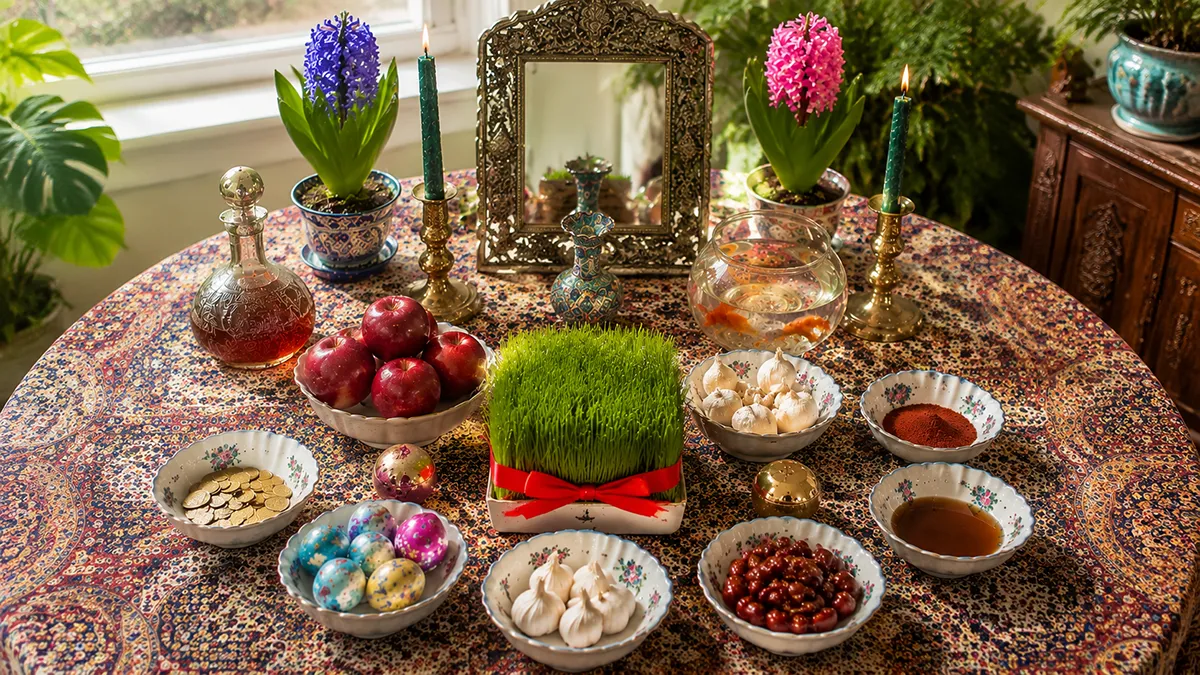
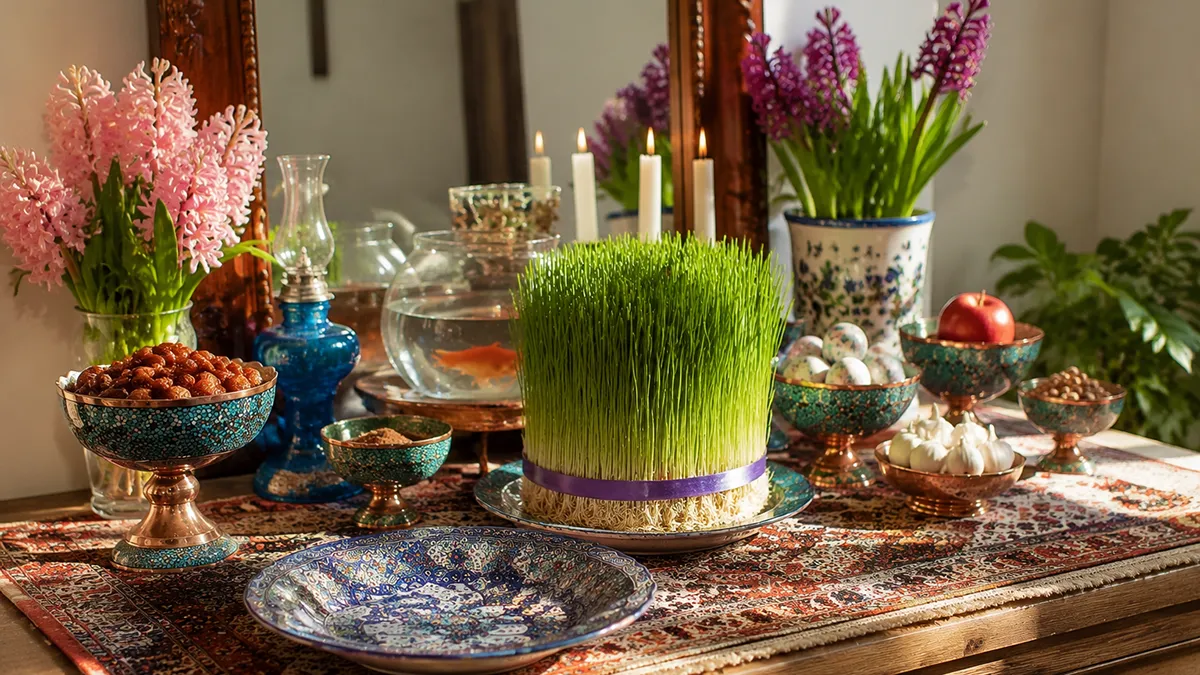
A typical Ajil bowl includes roasted pistachios and almonds, dried mulberries, raisins, dried figs, apricots, roasted chickpeas, watermelon and pumpkin seeds, and sometimes hazelnuts or walnuts. At Nowruz especially, Ajil-e Moshkel Gosha, literally “the problem-solving mix”, is prepared with seven or more dried fruits and nuts and shared among family and neighbours as part of the new year celebrations. Outside Nowruz, a simpler version is kept in a bowl on the table for guests to pick at over tea. The balance of sweet dried fruit against salty roasted nuts is what makes a good Ajil moreish rather than one-note.
How to Judge Freshness and Quality
Nuts turn rancid through oxidation, and the process speeds up once a bag is opened or a shell is cracked. A few practical checks help before you buy or use a bag:
- Smell first. Fresh nuts smell mild and slightly toasty if roasted, or clean and neutral if raw. A sharp, paint-like or bitter smell means the oils have turned.
- Bite one. It should snap cleanly. A soft, rubbery or chewy texture is a sign of age or poor storage.
- Check the colour. Pale, even colouring is good. Dark spots, unusual shine or a greyish film point to age or damp storage.
- Ask about the harvest year where you can. Pistachios and almonds keep well for around a year in good conditions, but flavour drops off after that even if the nut is technically still edible.
Once you’re home, keep nuts in an airtight container away from direct light and heat. Refrigeration extends their life considerably, particularly for anything already roasted or flavoured.
Gifting Occasions for Persian Nuts
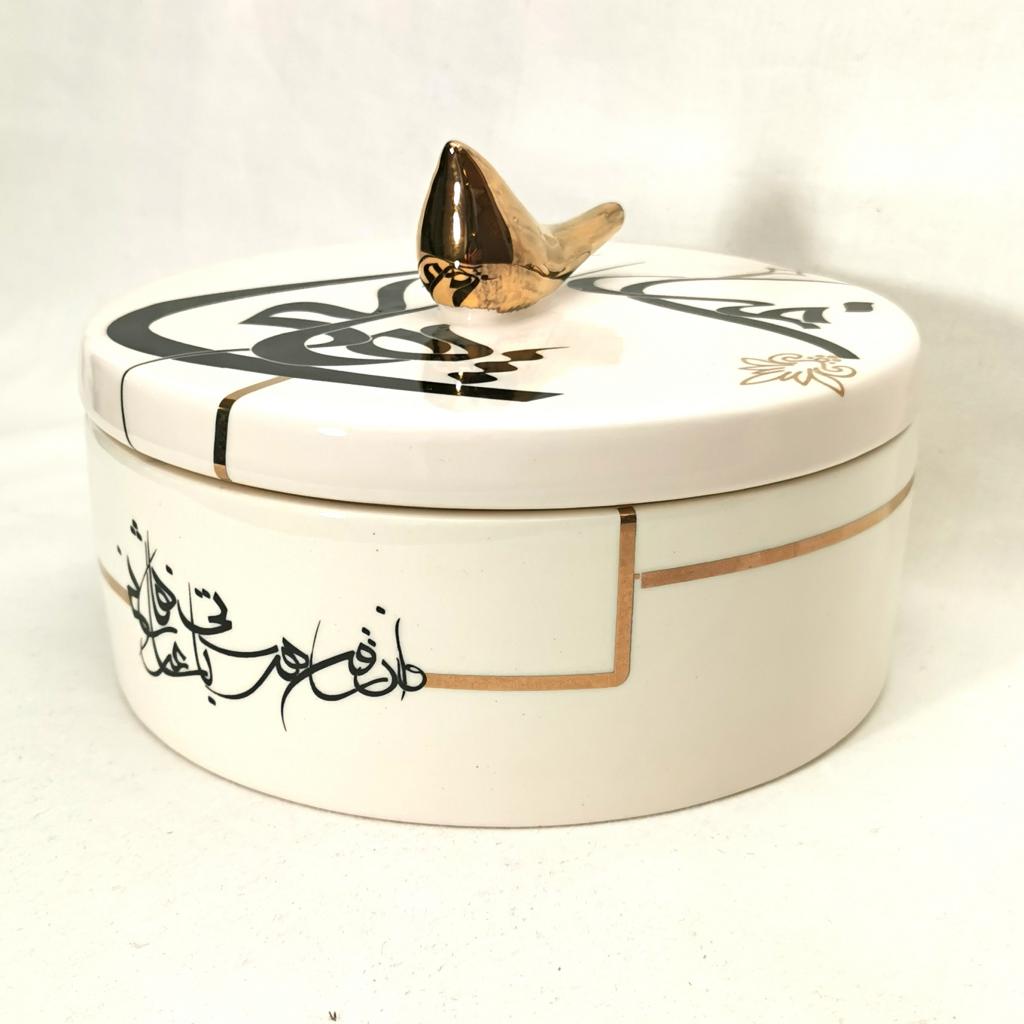
A well-presented tin or bowl of pistachios, saffron nuts or Ajil works as a gift for almost any occasion tied to Persian culture. Nowruz is the obvious one, when Ajil-e Moshkel Gosha is shared as part of the Haft-Seen table tradition. Yalda Night, the winter solstice celebration, is another, when pomegranates, watermelon and mixed nuts are set out for the long evening gathering with family. Nuts also make a practical, non-perishable gift for someone with a personal connection to Persian who’s living abroad and misses the taste of home, and a nicely finished serving bowl, such as a hand-inlaid Persian Khatam nut bowl, turns the gift into something that gets used well beyond the occasion itself.
Frequently Asked Questions
What is the best region for Persian pistachios?
Persian Heritage province, particularly around Rafsanjan, is generally regarded as Persian’s finest pistachio-growing region because of its dry climate and mineral-rich soil.
What does Ajil mean?
Ajil is the Persian word for a mixed bowl of roasted nuts, seeds and dried fruit, traditionally served to guests and eaten at Nowruz and other family gatherings.
How can I tell if pistachios are fresh?
Fresh pistachios have a pale, even shell colour, a clean snap when bitten, and a mild, toasty smell. Any rancid, oily or musty smell means they’re past their best.
Are saffron-flavoured nuts naturally coloured?
Genuine saffron-flavoured nuts get their golden colour and floral flavour from real saffron threads or saffron syrup, not artificial colouring. Look for visible red threads or a clear scent of saffron.
How should Persian nuts be stored?
Keep them in an airtight container away from heat and light. Refrigerating roasted or flavoured nuts extends their freshness by several months.
What is Ajil-e Moshkel Gosha?
It’s a mix of seven or more nuts and dried fruits prepared at Nowruz, whose name translates to “problem-solving mix”, traditionally shared with family and neighbours for good fortune in the new year.
Comments