


Persian Table Runners: How to Style Them in a Modern Home
- mahyar
- 22 July 2026
- Persian Textile
- 6 minutes
A Persian table runner does more work than most people expect from a single piece of fabric. It draws the eye down the length of a table, adds colour and texture without overwhelming a room, and carries a story of craftsmanship that mass produced homeware simply cannot match. If you already own one, or you are choosing your first, the question is rarely whether to use it. It is how to style it so it feels intentional rather than incidental, especially in a home with clean, modern lines.
This guide walks through practical ways to bring a Persian table runner, whether termeh, ghalamkar or silk, into a contemporary dining space, coffee table or everyday setting.
What makes a Persian table runner different
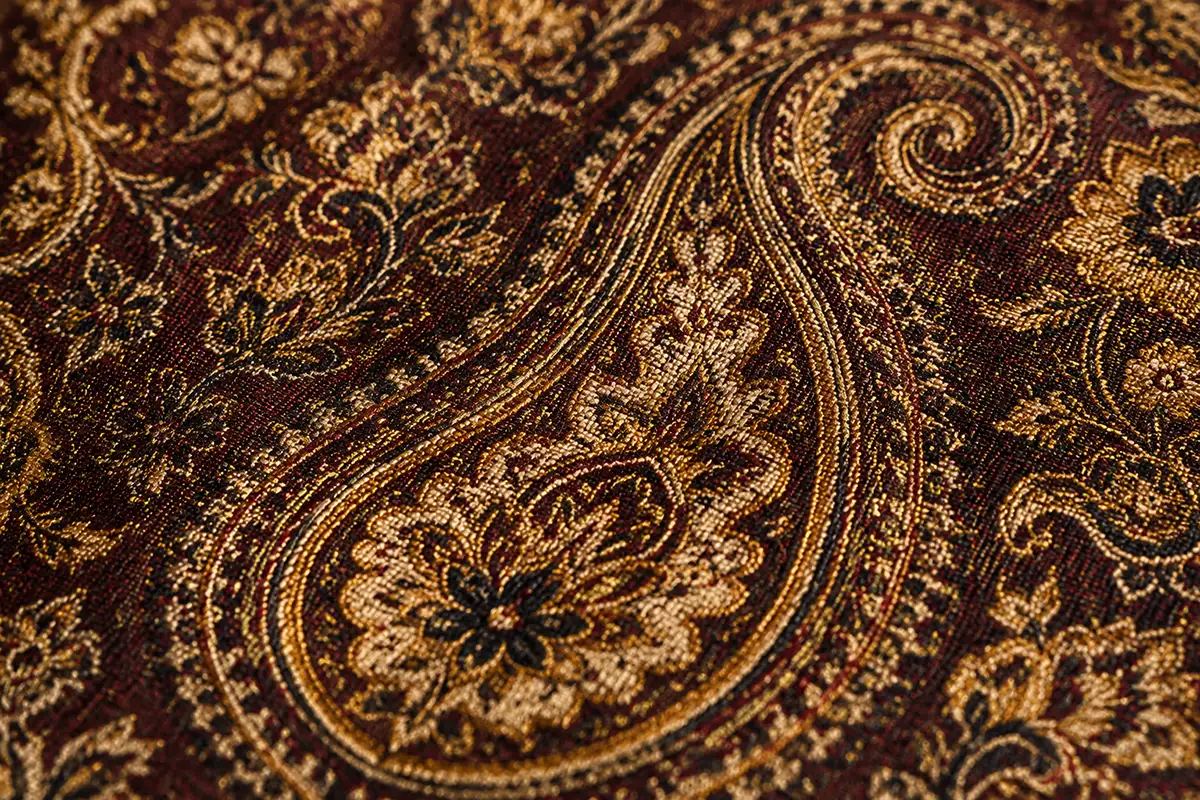
Most table runners sold online are printed cotton or polyester, made to a template and produced in bulk. A Persian table runner is a different object altogether. Termeh, the fine hand loomed wool and silk fabric historically reserved for Persian nobility, is woven with paisley (boteh) and floral motifs that take skilled artisans days to complete. Ghalamkar runners are hand block printed using carved wooden stamps, a technique passed down through generations in cities like Persian Heritage. Silk termeh runners, often finished with tasselled or fringed edges, catch the light in a way that no synthetic fabric can.
This is part of why a genuine Persian termeh table runner reads as luxury rather than decoration. The weight of the fabric, the density of the pattern and the slight irregularity of hand craftsmanship all signal that the piece was made by someone, not mass produced by a machine.
Choosing the right size and shape for your table
Before styling comes fit. A runner that is too short looks like an afterthought, and one that is too long will pool awkwardly on the floor or over the edge of a rounder table.
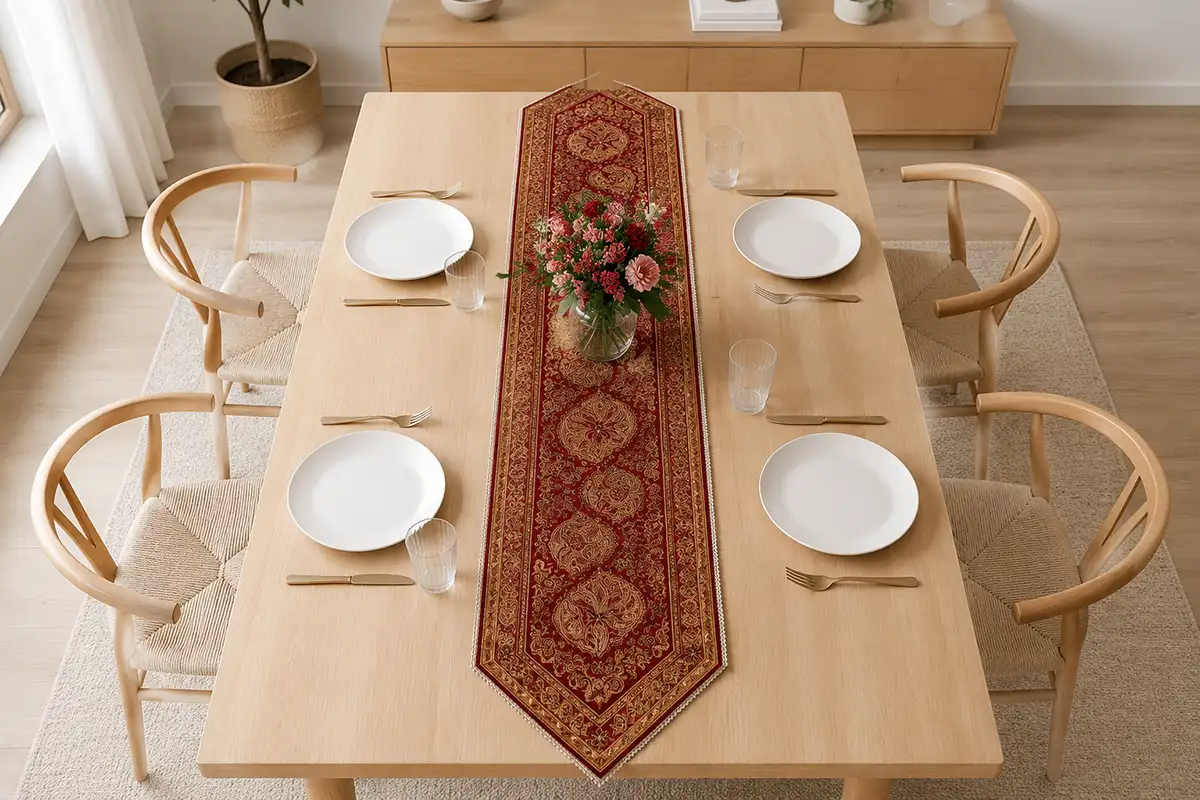
As a general rule, a table runner should overhang each end of the table by 15 to 20cm. For a standard six seat dining table (around 150 to 180cm long), a runner of 180 to 220cm works well. For a coffee table, 120 to 150cm is usually enough to let the ends drape gently without touching the floor.
Width matters too. Persian runners typically come in 30 to 40cm widths, which suits most dining and coffee tables. Narrower runners, closer to 25cm, sit nicely on console tables, sideboards or smaller round tables where a full width runner would look out of proportion.
If your table is round or oval, a runner can still work beautifully, simply let the fringed or tasselled ends hang over the curve rather than trying to match the shape exactly. This asymmetry is part of what gives the styling a relaxed, layered feel rather than a rigid one.
Styling a Persian table runner on a modern dining table
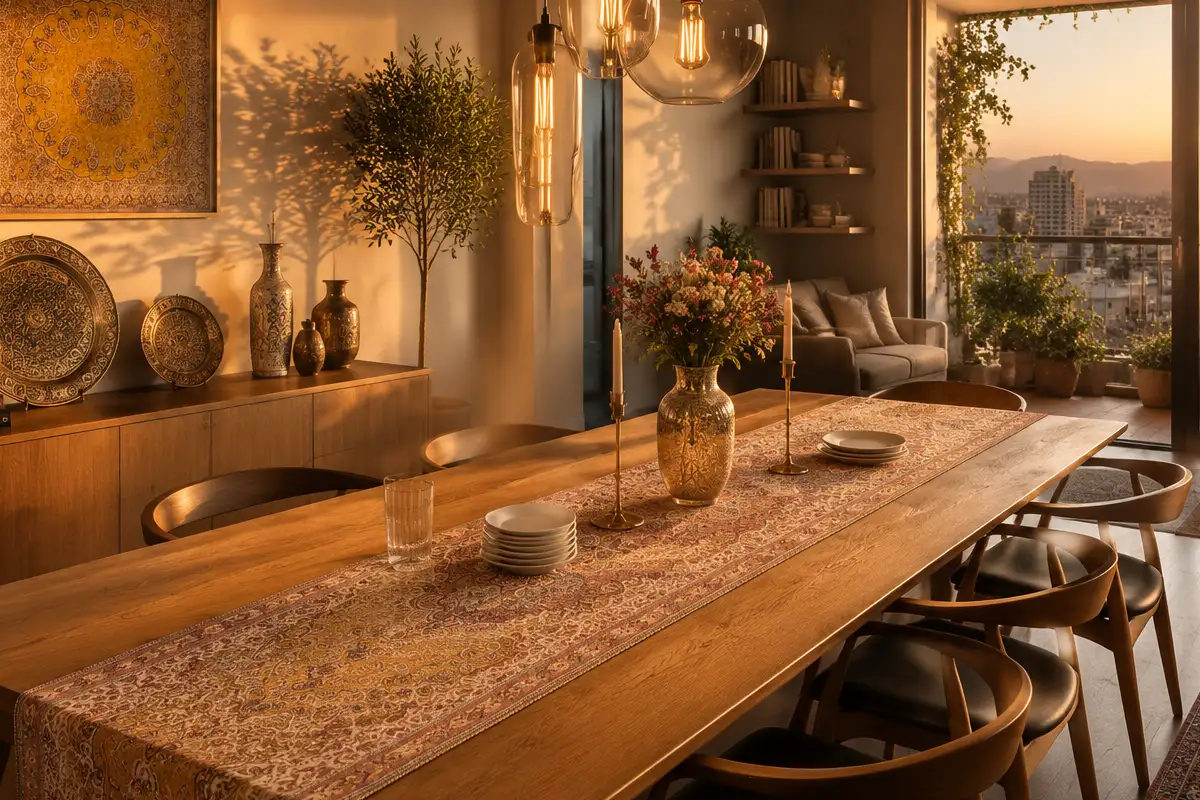
Modern interiors tend to favour simplicity, pale wood, matte black, marble or glass, and this is exactly where a Persian table runner earns its place. Rather than competing with a room full of pattern, it becomes the single decorative statement.
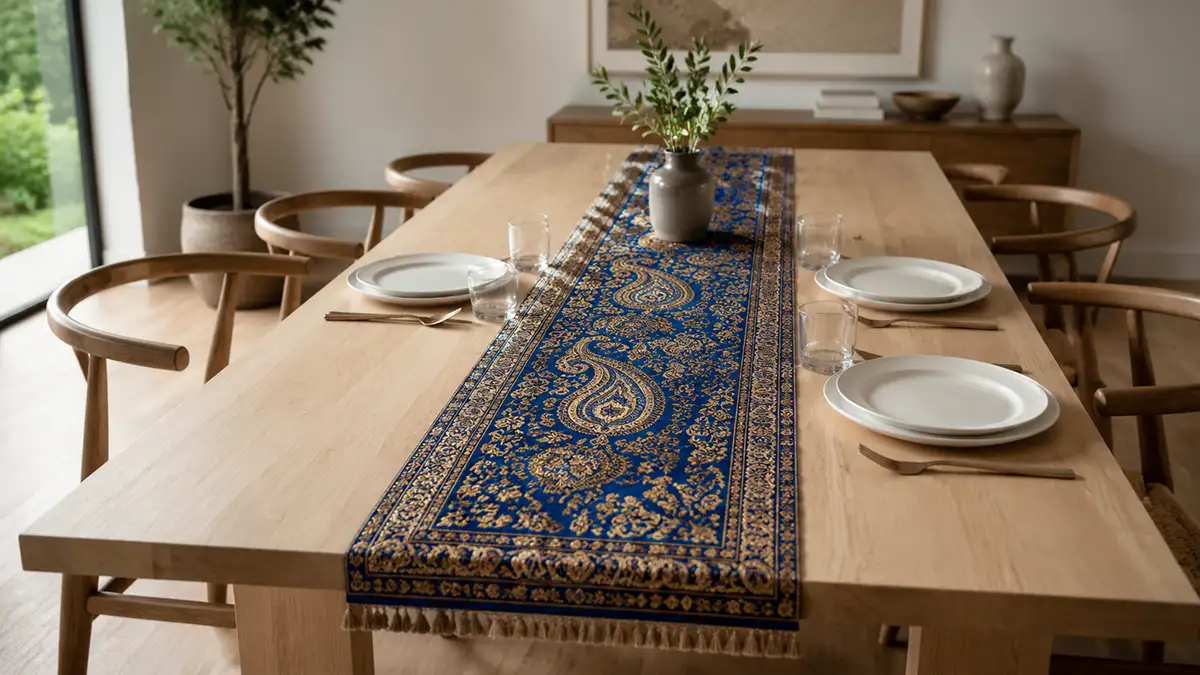
On a pale oak or white dining table, a deep blue or red termeh runner creates immediate contrast. Keep the rest of the table setting minimal, plain white or stoneware plates, simple glassware, and let the runner’s pattern do the talking. On darker walnut or black tables, a runner in cream, gold or soft pink will lift the surface and stop the whole setting from feeling heavy.
Glass and marble dining tables benefit from runners with more texture, since the smooth, cool surface underneath can make a flat printed fabric look thin by comparison. A silk termeh or a runner with visible embroidery adds the dimension these surfaces need.
Bringing the look to a coffee table or side table
A table runner is not only for dining. Running one across a coffee table, console or sideboard is one of the simplest ways to add warmth to a living room without a full redecoration.
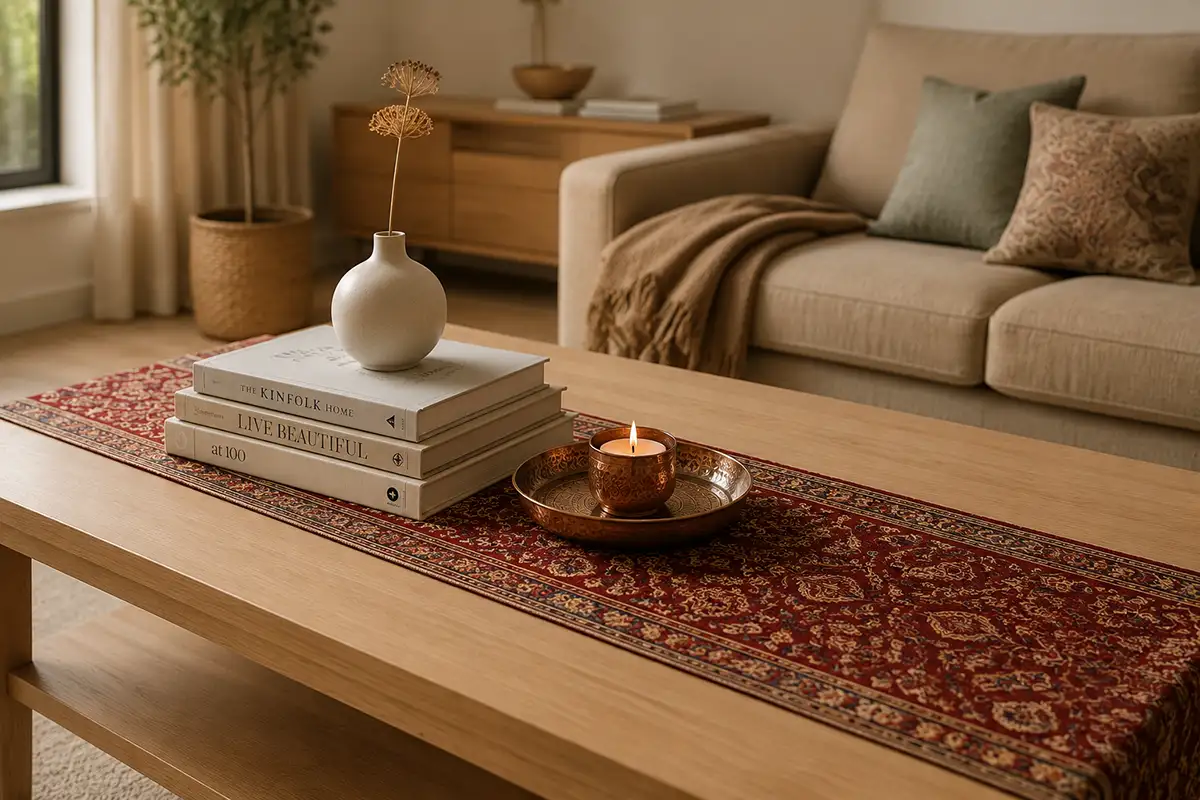
On a coffee table, layer the runner with a stack of books, a low ceramic vase and a small hand engraved tray. The runner acts as an anchor that pulls the styled objects together visually, rather than leaving them scattered across bare wood or glass. A Persian tray or placemat set placed on top of the runner adds another layer of craftsmanship and gives you somewhere practical to rest a candle or a cup of tea.
On a console table or sideboard, a narrower runner works well behind a lamp or a piece of art, adding colour to what is often an overlooked strip of furniture near an entryway or hallway.
Pairing colours and patterns without overdoing it
The easiest mistake to make with a patterned textile is pairing it with too much else that is also patterned. Persian table runners already carry a lot of visual detail, so the surrounding decor should generally stay calmer.
A useful approach is to pick one colour from the runner, often the background or the dominant motif colour, and repeat it once elsewhere in the room, in a cushion, a vase or a piece of artwork. This creates a sense of cohesion without matching everything exactly, which can start to look staged.
If you already own patterned cushions or a patterned rug, choose a runner with a simpler, more restrained design, a single repeating boteh motif rather than a dense, multicoloured one. The goal is for the eye to move comfortably around the room rather than stopping at every surface.
Layering with other Persian textiles
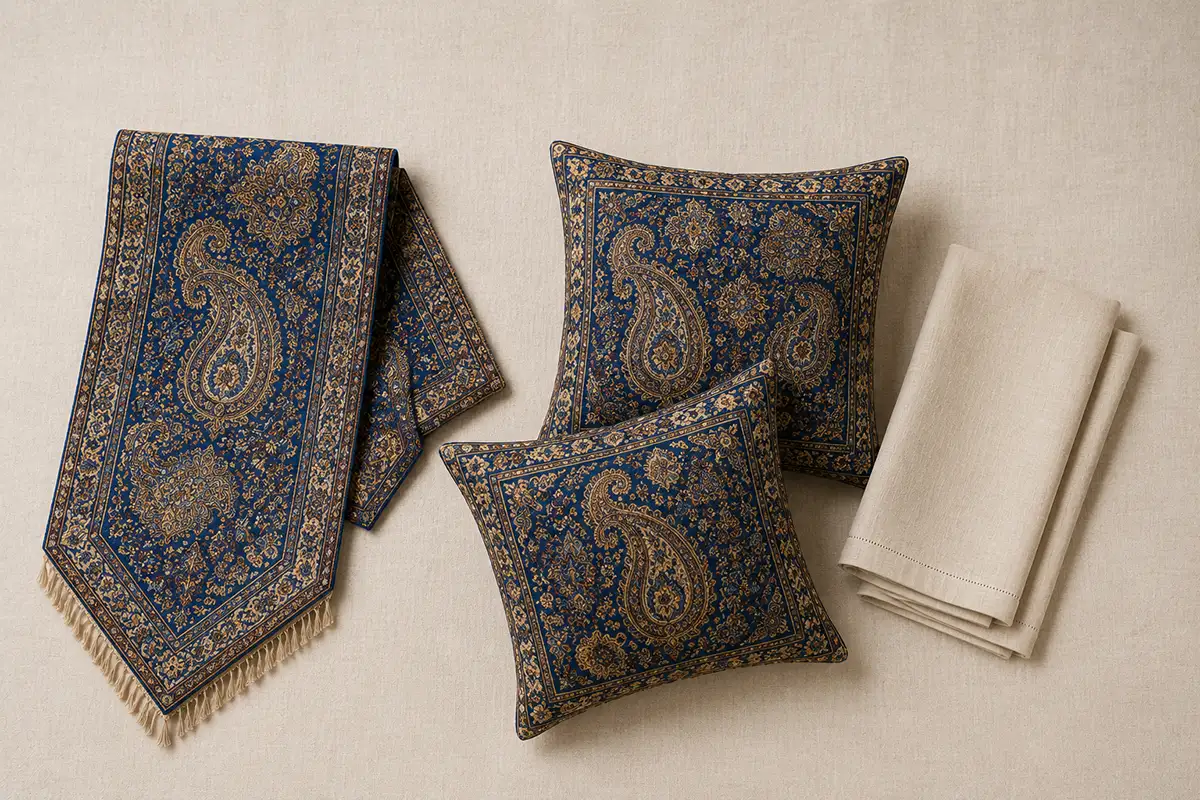
Persian table runners rarely need to work alone. Many customers pair a termeh runner with matching or complementary cushion covers, tablecloths or placemats to build a fuller, more considered look across a dining or living space.
A Persian tablecloth and runner set is an easy way to do this without having to colour match separate pieces yourself, since many collections are designed to sit together. Alternatively, a plain linen tablecloth with a patterned termeh runner on top keeps things simple while still giving the table a focal point.
For everyday use rather than special occasions, a single runner on a bare wood table, with no cloth underneath, tends to look most at home in a modern interior. Reserve the fuller layered look, cloth, runner, placemats and cushions, for dinner parties or seasonal gatherings.
Styling for Nowruz and other occasions
Table runners take on extra meaning around Persian celebrations. During Nowruz, a termeh runner is a natural centrepiece for a Haft Seen table setting, providing a base that ties together the symbolic items without competing with them for attention.
For everyday hosting, whether a family dinner or a small gathering, a runner instantly signals effort without requiring a full table redress. Adding a few candles or a small arrangement of fresh flowers along its length is often all that is needed to turn a weekday dinner into something that feels more considered.
Caring for your table runner
Because termeh and silk runners are handmade from natural fibres, they need gentler care than a typical cotton runner. Hand washing in cold water with a mild detergent is recommended, and the fabric should be dried flat, away from direct sunlight, to prevent the colours from fading. For everyday spills, blot rather than rub, and avoid placing very hot dishes directly on silk or embroidered sections.
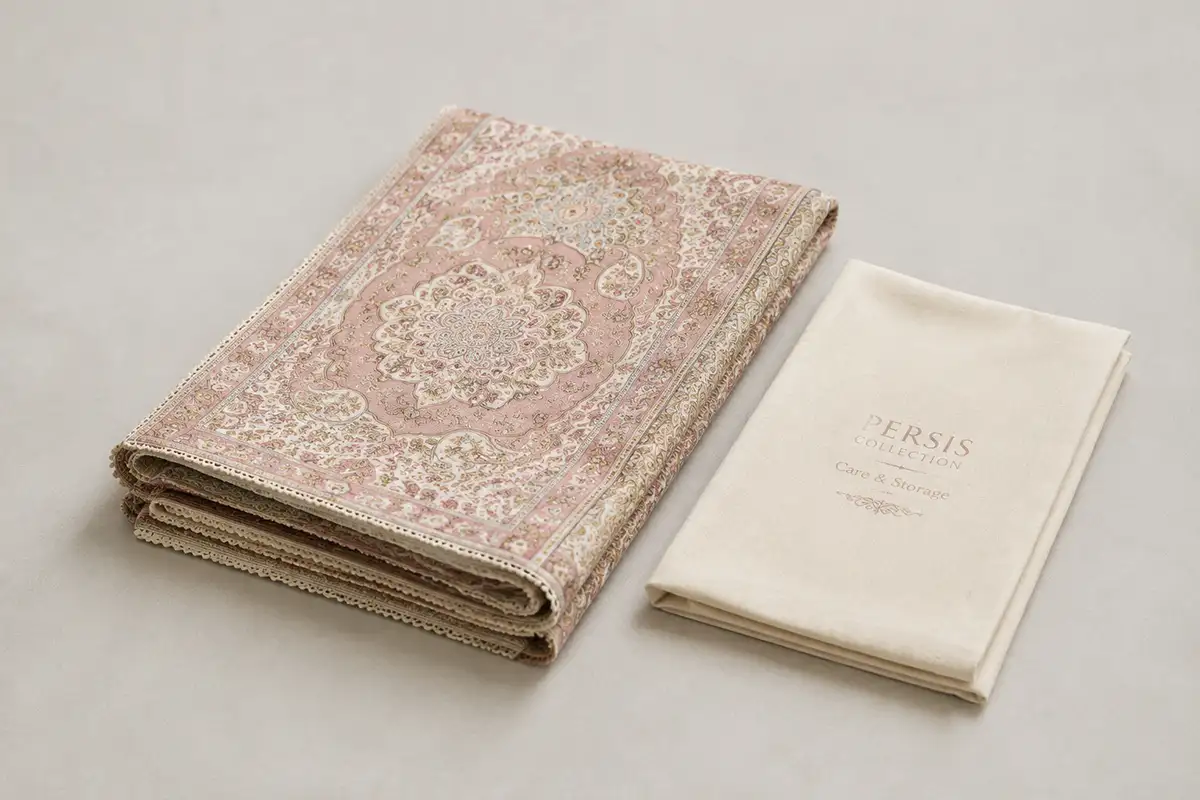
Stored flat or loosely rolled rather than tightly folded, a well made Persian runner will hold its shape and colour for years, which is part of why it is worth choosing a genuine handcrafted piece over a printed alternative.
Conclusion
Styling a Persian table runner in a modern home comes down to a few simple principles: choose the right length and width for your table, let the runner be the main pattern in the room, and layer it with one or two complementary pieces rather than an entire matching set. Whether it sits on a dining table for a dinner party, across a coffee table for everyday warmth, or as the centrepiece of a Haft Seen spread, a genuine termeh or ghalamkar runner brings a level of craftsmanship that is difficult to find anywhere else.
Frequently asked questions
What is the right length for a Persian table runner?
As a guide, the runner should overhang each end of the table by 15 to 20cm. For a standard six seat dining table of 150 to 180cm, choose a runner of 180 to 220cm. For a coffee table, 120 to 150cm is usually enough.
Can I use a table runner on a round or oval table?
Yes. A runner still works well on a round or oval table, simply let the fringed or tasselled ends drape naturally over the curve rather than trying to match the shape of the table exactly. This slightly asymmetrical look is part of the charm.
What is the difference between a termeh and a ghalamkar table runner?
Termeh is a fine, hand loomed wool and silk fabric woven with paisley and floral motifs, historically associated with Persian nobility. Ghalamkar is a hand block printed fabric, created by stamping patterns onto cloth using carved wooden blocks. Both are handcrafted, but termeh tends to be heavier and more formal, while ghalamkar has a lighter, more casual finish.
Can a table runner be used over a tablecloth?
Yes, and this is one of the most popular ways to style it. A plain linen or cotton tablecloth underneath keeps the base simple, while the patterned runner on top becomes the focal point. For everyday use, many people prefer the runner directly on a bare wood table without a cloth at all.
How do I clean a Persian table runner?
Hand wash in cold water with a mild detergent, then dry the fabric flat and away from direct sunlight to protect the colours. Blot spills rather than rubbing them, and avoid resting very hot dishes directly on silk or embroidered sections.
Is a Persian table runner suitable for everyday use, or only special occasions?
Both. A simple runner on a bare table works well for everyday dining, while a fuller layered look with a tablecloth, cushions and placemats suits dinner parties, Nowruz and other celebrations.


Comments