


What is a Persian Termeh Textile?
- tina atrg
- 12 June 2022
- Home Decor
- 3 minutes
Termeh is a hand-woven Persian textile made traditionally in Yazd from wool, and sometimes silk, worked on a special loom with coloured and gold thread to build up its distinctive paisley-like pattern. It is not cashmere. Cashmere is a fibre that comes from the undercoat of cashmere goats, raised mainly in the Kashmir region and parts of Central Asia, while termeh is a specific Persian weaving technique named for the fine wool traditionally used in it. The two are sometimes confused because both produce soft, patterned fabric, but they come from different fibres, different regions and different weaving traditions entirely.
The Origins of Termeh in Yazd
Yazd, a desert city on the old Silk Road in central Persian, has been the main centre of termeh weaving for centuries. The city’s dry climate and long-standing textile trade made it a natural home for fine weaving, and termeh workshops there have passed the craft down through families of weavers for generations. Yazdi termeh became known across Persian and beyond for its density of pattern and the quality of its finish, and the city is still where most authentic hand-woven termeh is produced today.
How Termeh Is Made
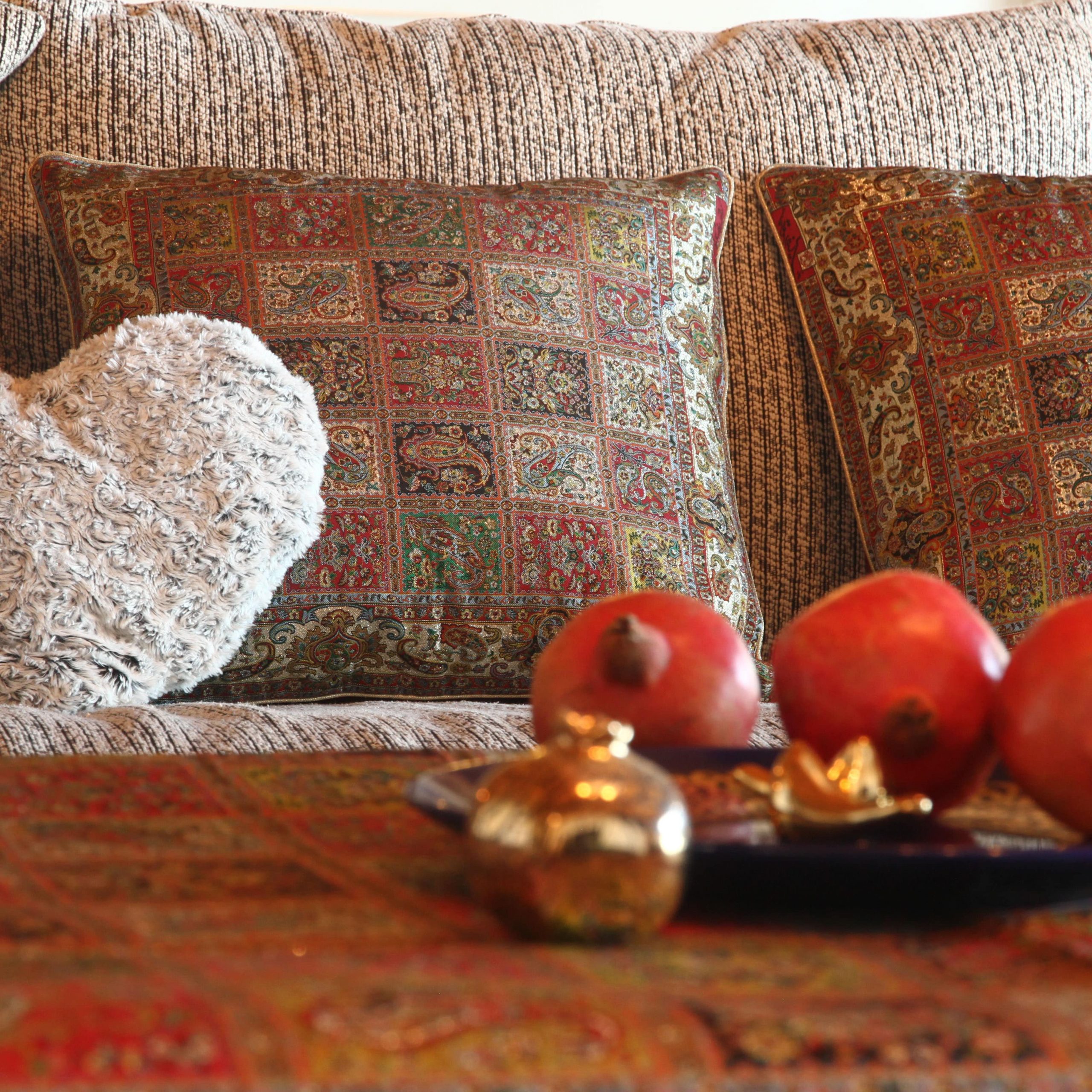
Termeh is woven on a traditional hand loom by a weaver known as a naghshband, who works from a pattern built up thread by thread rather than printed onto the cloth. The base fibre is wool, chosen for its ability to hold fine detail and a slight sheen, and finer pieces are woven with silk mixed in alongside metallic gold or silver thread, which catches the light within the pattern. The most recognisable motif is the boteh, a curved teardrop shape that later spread into paisley designs used across the world in other textiles. Weaving a single quality termeh piece by hand can take a skilled weaver many days or weeks, depending on its size and the density of the pattern, which is one reason hand-woven termeh commands a higher price than machine-woven imitations made from viscose or rayon.
What Termeh Is Used For
Termeh has long been used for household and ceremonial pieces rather than everyday clothing. Common uses include:
- Tablecloths and table runners, often brought out for Nowruz, the Persian New Year, and other family gatherings
- Shawls and wraps, worn over the shoulders for formal occasions
- Cushion covers and decorative throws for the home
- Ceremonial cloths, including pieces woven for weddings and used as part of a bride’s dowry
- Prayer cloths and mats in some households
Because it takes real skill and time to weave, termeh has traditionally been treated as a valued possession rather than a disposable item, often kept in a family for years and passed down.
How to Tell Genuine Hand-Woven Termeh Apart
Genuine hand-woven termeh from Yazd has a dense, tightly packed pattern, since the weaver builds it up thread by thread rather than printing it on. If you gently pull the fabric across the grain, well-made termeh has little stretch, while thin or poorly made pieces stretch more easily. The gold or coloured thread used in finer termeh is usually worked directly into the weave rather than sitting on top of the surface. Machine-made versions using viscose or rayon can look similar at a glance but tend to be lighter, glossier and less detailed in the pattern.
The Cultural Significance of Termeh
Termeh is one of the textiles most closely associated with Persian craftsmanship, alongside rug weaving and qalamkar block printing. It is often given as a wedding gift, used to dress a table for important family occasions, and kept as a household heirloom. For many Persian families, a termeh cloth carries the memory of the person who wove it or the occasion it was bought for, which is part of why the craft has survived in Yazd for so long despite competition from cheaper, machine-made imitations.
Frequently Asked Questions
Is termeh the same as cashmere?
No. Cashmere is a fibre from the undercoat of cashmere goats. Termeh is a Persian weaving technique, traditionally made from wool and sometimes silk, and the two are different materials from different traditions.
Where is termeh made?
Termeh is traditionally woven in Yazd, a historic city in central Persian, though the technique is also produced on a smaller scale elsewhere in the country.
What is the pattern on termeh called?
The main motif is the boteh, a curved teardrop shape that is the ancestor of the paisley pattern used widely in Western textiles today.
What is termeh traditionally used for?
It is used for tablecloths, shawls, cushion covers and ceremonial cloths, including pieces woven for weddings and given as part of a bride’s dowry.
How can I tell if termeh is hand-woven or machine-made?
Hand-woven termeh has a dense pattern with little stretch across the fabric, while machine-made versions in viscose or rayon tend to be lighter, glossier and less detailed.

Comments