


What is the Farvahar Symbol? A Quick Guide
- tina atrg
- 12 June 2022
- Home Decor
- 3 minutes
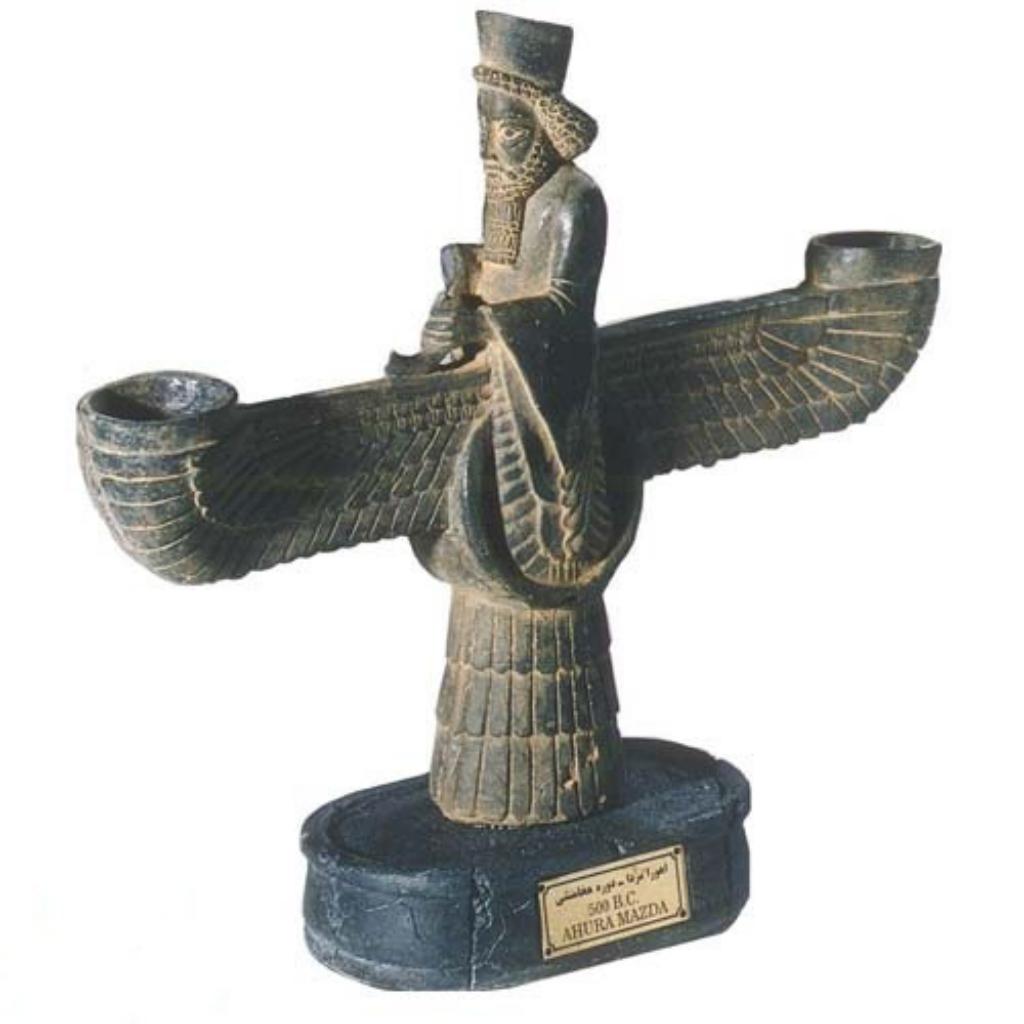
The Farvahar is one of the oldest symbols still in everyday use anywhere in the world. Carved into the stone of Persepolis more than two thousand five hundred years ago, this winged figure has outlived the empire that first raised it and gone on to become the single most recognised emblem of Persian. Also spelled Faravahar or Farohar, it is worn today by Iranians of every background as a mark of identity and heritage. This is the story of where it came from, what it originally meant, and why it still matters.
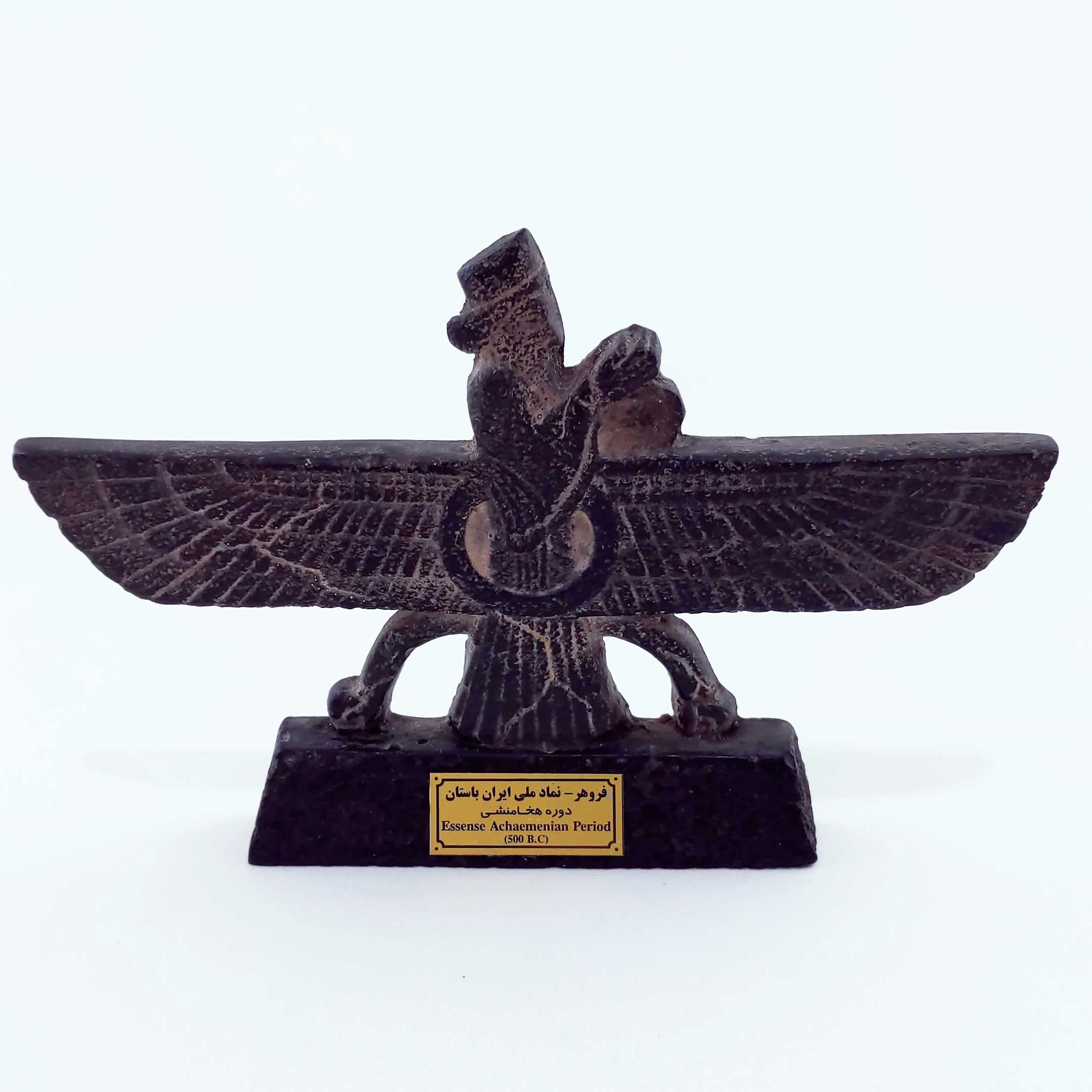
A Farvahar sculpture
Where the symbol came from
The Farvahar did not begin in Persian. Its basic form, a winged disc with a human figure at its centre, belongs to a much older family of symbols used across the Ancient Near East. Versions of the winged sun appear in Egyptian art, and the Assyrians carved a very similar figure, showing their god Assur rising from a winged disc above the sacred Tree of Life. When the Achaemenid Persians built their empire across this same region, they adapted the image and made it their own.
The Achaemenid kings and Persepolis
The clearest evidence for the symbol comes from the Achaemenid period, between the sixth and fourth centuries BC. It appears above the tombs of Darius the Great and Artaxerxes III, and in the great reliefs at Persepolis, Pasargadae and Naqsh-e Rostam, where it hovers above the king as a mark of divine favour. It later appeared on coins minted in Persis in the centuries after Alexander’s conquest, showing how long the image continued to carry meaning even as political power changed hands.
Two thousand years of silence, then a revival
What is less well known is that the Farvahar then disappeared from Persian art for roughly two thousand years. The Parthians, the Sassanians and the Islamic dynasties that followed did not use it. It only reappeared in the twentieth century, largely through the work of the Parsi scholar Jamshedji Maneckji Unvala, whose research in the 1920s brought the Achaemenid carvings back to public attention. From there it was adopted as a modern national emblem, and it is this twentieth century revival, more than the ancient carving itself, that explains why the symbol is worn so widely today.
What the figure actually represents
Scholars do not fully agree on what the original carving was meant to show, and it is worth being honest about that rather than picking one answer and presenting it as settled fact. Unvala’s original view was that the figure represents Ahura Mazda, the supreme god of Zoroastrianism. Other scholars, including Mary Boyce and Alireza Shapour Shahbazi, have argued instead that it shows khvarenah, the divine glory or fortune believed to surround a legitimate king. The interpretation most people know today, that the figure is a fravashi, or guardian spirit, is the most widely repeated explanation in modern times, though it is a comparatively recent reading rather than one confirmed by the ancient Persians themselves.
The fravashi: a guardian that outlasts a lifetime
Whatever the original carvers intended, it is the fravashi that gives the symbol its lasting emotional weight. In Zoroastrian belief, every person, living, dead or not yet born, has a fravashi, a guardian spirit that exists before birth and endures after death. Zoroastrian thought describes a person as made up of several parts working together: the tanu, or physical body, the urvan, the soul that is held to account for a person’s actions, and the fravashi itself, the protective, ancestral spirit that watches over that journey from beginning to end. Wearing the Farvahar is, in this sense, a way of carrying that idea of an enduring, protective self with you.
Why Iranians still wear it today
Over the past century the Farvahar has moved well beyond its religious origins. It is worn today by Zoroastrians, Muslims and people of every other background as a shared symbol of Persian identity, in much the same way a flag or a national emblem is worn with pride rather than as a statement of faith. That is exactly how it lives on in our Farvahar collection, handmade by Persian artisans in gold and silver. If you would like to see what each part of the design is thought to represent, and how we craft it into jewellery today, our guide to the meaning of the Farvahar covers that in full.
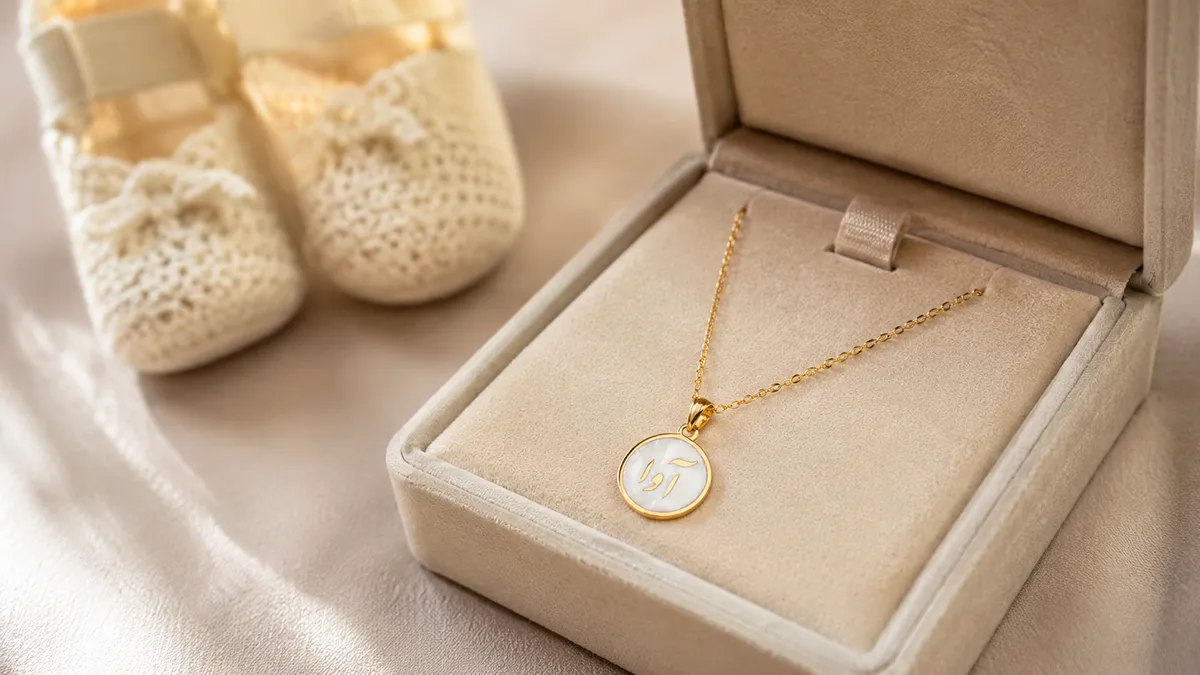
To wear the symbol, our Farvahar collection carries necklaces, rings and cufflinks made by Persian craftsmen, shipped worldwide.
Comments