


Qashqai Carpets
- maryam jafary
- 6 August 2025
- Persian Rug
- 5 minutes
The Qashqai are a nomadic and semi-nomadic tribal confederation from Fars province in southern Persian, the same region that is home to Shiraz and the ancient ruins of Persepolis. For generations they have herded sheep and goats between summer pastures high in the Zagros mountains and winter grazing land closer to the Persian Gulf coast, and it is this pastoral life, not a workshop or a design studio, that produced one of the most recognisable tribal rugs in the world.
Who Are the Qashqai?
The Qashqai confederation is made up of several tribes, including the Amaleh, Darashuri, Kashkuli, Shesh Boluki and Farsimadan, who speak a Turkic dialect distinct from the Persian spoken elsewhere in Fars. Historically they moved twice a year along fixed migration routes, a journey that could take weeks and cover hundreds of kilometres on foot with their flocks, tents and looms. Rug weaving grew directly out of this way of life: a family needed floor coverings, storage bags, tent bands and saddle covers that could be rolled up, carried on a mule and set up again at the next camp.
How Qashqai Rugs Are Made
Wool from Their Own Flocks
Unlike the city workshops of Tabriz or Persian Heritage, which typically buy wool commercially and sometimes blend it with silk, Qashqai weavers traditionally shear, wash, spin and dye the wool from their own sheep. This gives the finished rug a slightly heavier, lanolin-rich handle and a texture with natural variation from one hank of yarn to the next, since no two fleeces are identical. Over years of use, this wool develops a soft sheen that machine-spun, commercially sourced wool rarely achieves in the same way.
Natural Dyes and the Qashqai Colour Palette
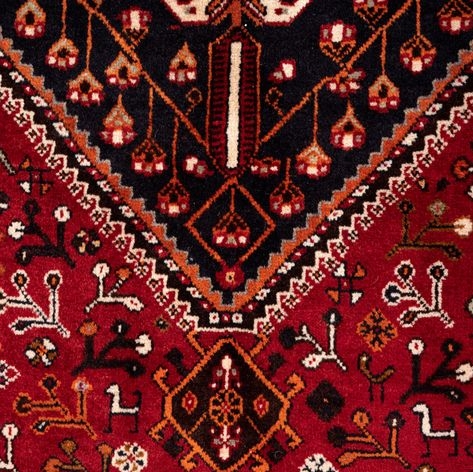
Older and finer Qashqai rugs are coloured with plant and mineral dyes: madder root for deep brick reds, indigo for blues that range from navy to a soft slate, walnut husks and pomegranate rind for browns and golden yellows, and undyed ivory or cream wool for highlights. The result is a palette of deep reds, blues and ivory that ages gracefully, mellowing over decades rather than fading unevenly the way some synthetic chrome dyes do.
Knotting and the Weaving Process
Weaving is traditionally women’s work, carried out on horizontal ground looms that can be dismantled and packed onto a mule for the next stage of migration, though settled Qashqai weavers in Fars villages such as Firuzabad also work on fixed vertical looms. Qashqai weavers typically use the symmetrical knot, sometimes called the Turkish or Ghiordes knot, which is common among Turkic-speaking tribes and differs from the asymmetrical knot favoured in many Persian city workshops. Alongside pile rugs, Qashqai weavers also produce flat-woven kilims and storage bags such as the mafrash and khorjin, essential for transporting household goods during migration.
Qashqai Design: Tribal Geometry, Not City Medallions
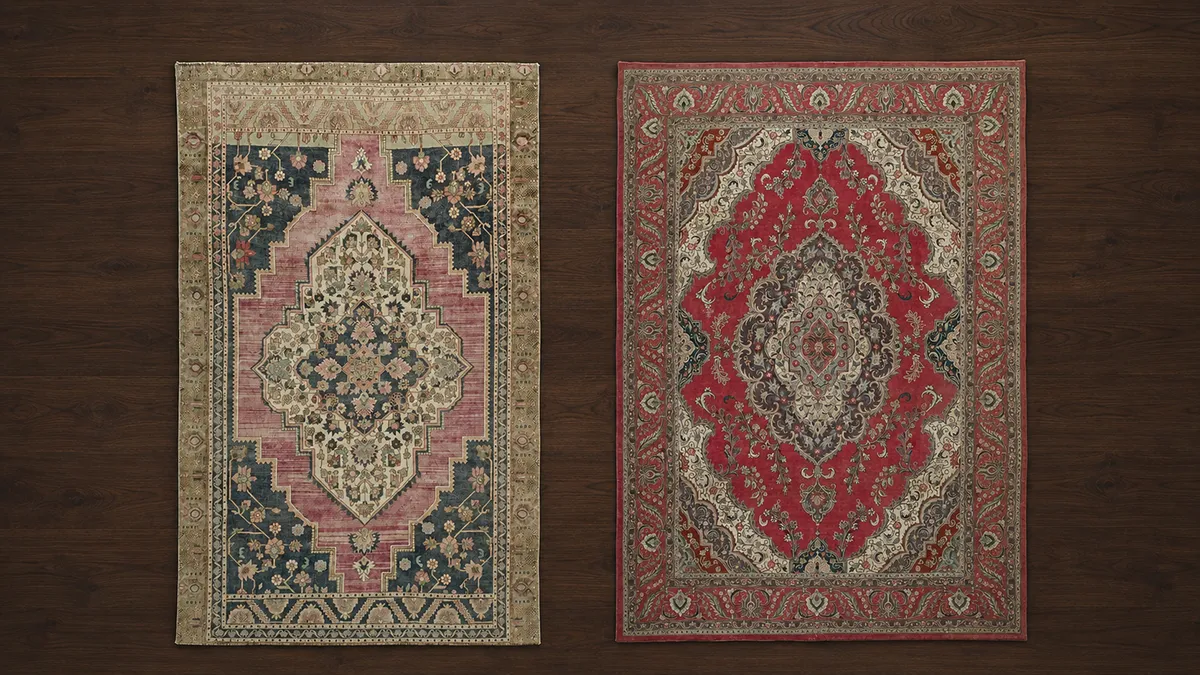
City rugs from Tabriz or Persian Heritage are usually planned in advance by a designer, or naqash, who draws out a curvilinear medallion pattern on graph paper for the weaver to follow stitch by stitch. A Qashqai weaver, by contrast, generally works from memory, building up a design as she goes. This produces the geometric, angular style the tribe is known for: diamonds, stepped stars, stylised birds and rams’ horn motifs, small tree of life figures, and, when a central medallion does appear, it is drawn with straight lines and sharp angles rather than the flowing curves of a formal city rug. Read more about how these two traditions differ in our guide to the Persian Tabriz rug.
How to Recognise a Genuine Qashqai Rug
A handful of details separate an authentic tribal Qashqai rug from a machine-made copy or a rug woven to a fixed commercial pattern.
- Irregularities in the weave. Because the design is carried in the weaver’s memory rather than copied from a chart, borders may not be perfectly symmetrical and the rug’s edges can waver slightly. This is a sign of hand weaving, not a flaw to avoid.
- Natural wool texture. The pile should feel slightly coarse with a soft, lanolin sheen rather than the uniform, almost plastic-smooth feel of synthetic fibres.
- Tribal colour palette. Look for the characteristic combination of deep madder red, indigo blue and ivory, often with small accents of mustard yellow or green. Because natural dyes are mixed in small batches, you may notice subtle colour banding known as abrash.
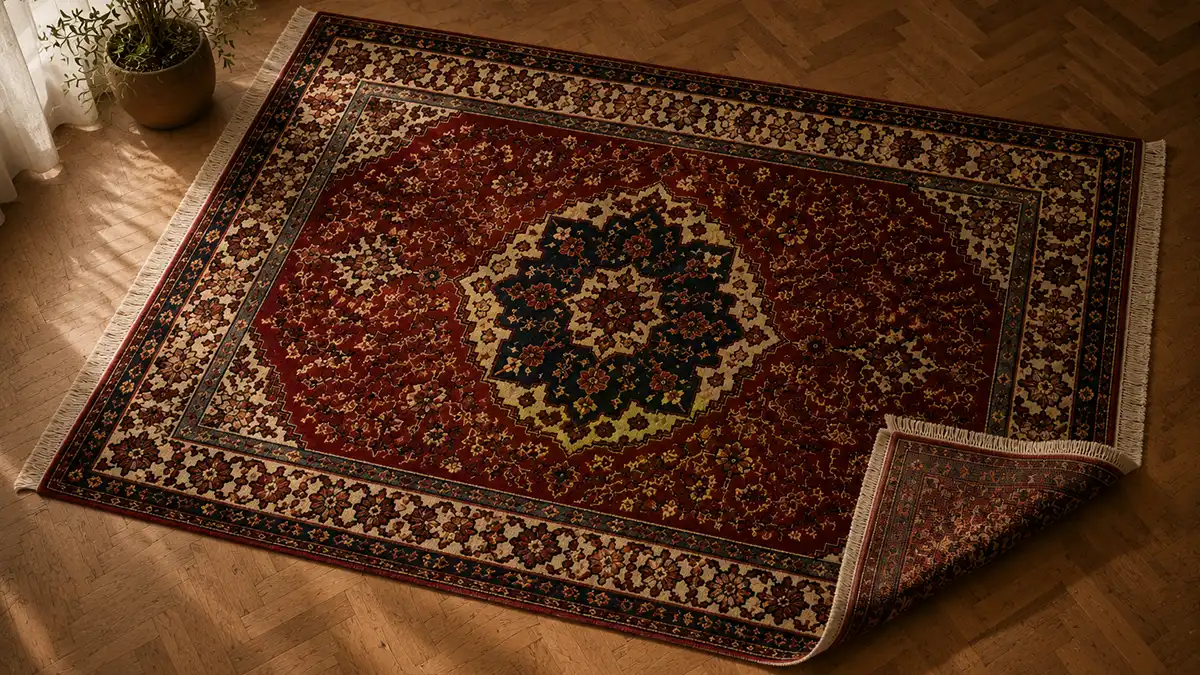
- The reverse of the rug. On a genuine hand-knotted piece, the knots should be clearly visible and consistent on the back, with no glued or printed backing.
Genuine Qashqai rugs are also still being produced today by settled and semi-settled weavers in and around Fars towns such as Firuzabad and Kavar, so age alone is not what makes a rug authentic. What matters is that it was hand-knotted with wool by a Qashqai weaver using the tribe’s traditional techniques, whether that rug was made fifty years ago or last year. If you are comparing options, our buyer’s guide to authentic Persian rugs covers the wider checks worth making before you buy.
Frequently Asked Questions About Qashqai Carpets
What makes a Qashqai rug different from a Tabriz or Persian Heritage rug?
Qashqai rugs are woven by nomadic and semi-nomadic tribespeople in Fars province, usually from memory and using geometric tribal motifs, while Tabriz and Persian Heritage rugs come from city workshops that follow a pre-drawn curvilinear medallion design and often use finer, commercially sourced wool or silk.
Are Qashqai rugs hand-knotted?
Yes. Genuine Qashqai rugs are hand-knotted, traditionally using the symmetrical knot, on either portable horizontal looms used during migration or fixed vertical looms used by more settled weavers.
What sizes do Qashqai rugs typically come in?
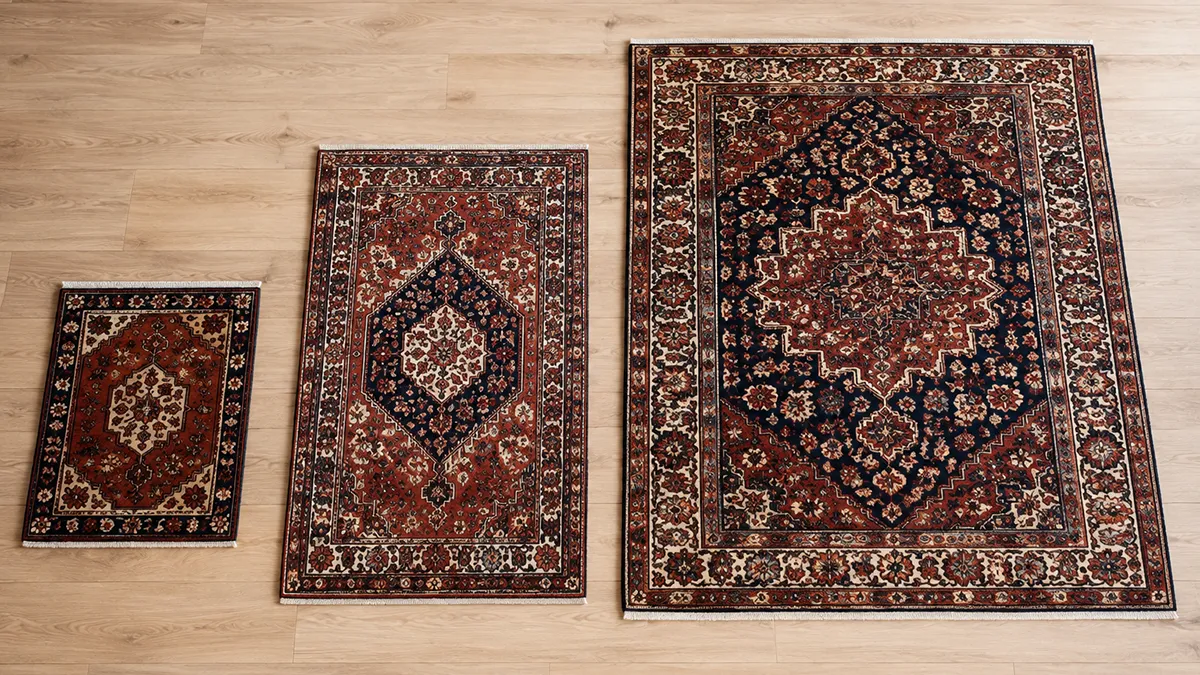
Because they were originally woven for use inside a tent, many antique Qashqai rugs are on the smaller side, though larger room-sized pieces and long runners are also woven, along with smaller bags and saddle covers.
How should I clean a Qashqai rug?
Regular light vacuuming and occasional professional hand washing are best. Avoid harsh chemical carpet shampoos, since these can strip the natural dyes, and always let a washed wool rug dry fully and flat before it goes back on the floor.
Do Qashqai rugs hold their value?
Well-made, hand-knotted Qashqai rugs with natural dyes and genuine tribal wool are collected internationally and tend to hold their value well, particularly older pieces in good condition with an even, well-worn patina.
Comments