


Persian Rug vs Turkish Rug: How to Tell Them Apart
- mahyar
- 27 August 2026
- Persian Rug
- 5 minutes
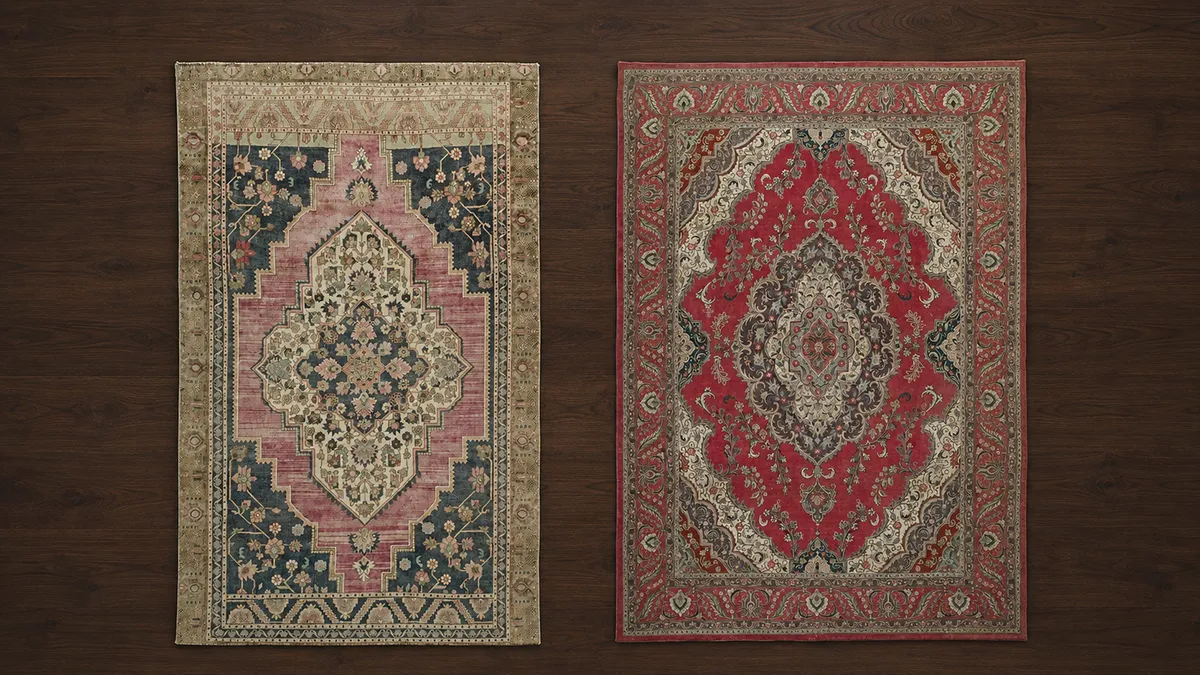
The clearest way to settle Persian rug vs Turkish rug is to turn the rug over and look at the knot, because everything else follows from that one structural difference. Persian rugs use an asymmetric knot that allows flowing, curvilinear designs; Turkish rugs use a symmetric knot that suits bolder geometry. Once you can see that, the differences in pattern, colour and feel stop being a matter of taste and start making sense as two related weaving traditions that took different paths.
What is the difference between the Persian and Turkish knot?
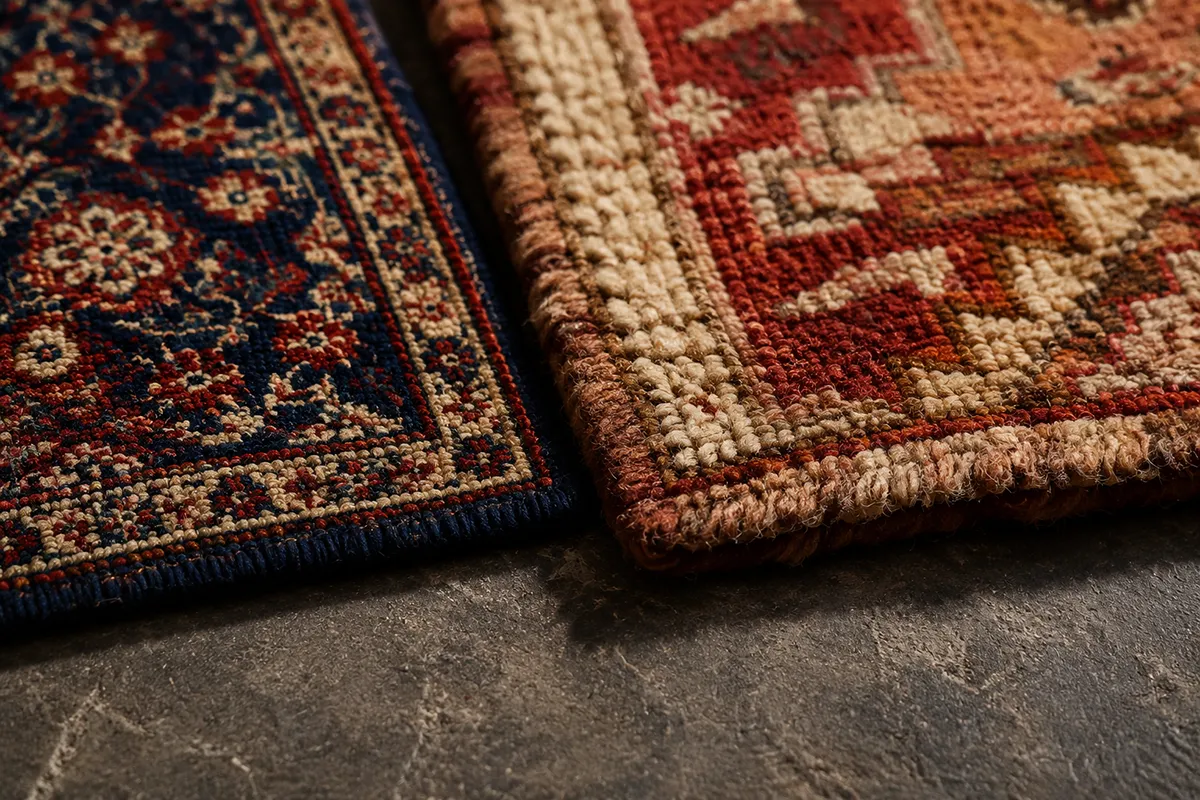
The Persian knot wraps around one warp thread and passes loosely behind the neighbouring one, while the Turkish knot wraps around two warp threads and pulls both together. That single detail sets the character of each tradition.
Because the Persian knot, also called the senneh or asymmetric knot, only grips one warp fully, weavers can pack knots more densely and place them with finer control. This is what makes the sweeping vine scrolls, curved medallions and delicate floral work of Persian carpets possible. The Turkish knot, also called the ghiordes or symmetric knot, is sturdier and more even, which favours strong geometry, bold repeats and the angular motifs seen across Anatolian weaving.
You can often tell them apart by bending the pile back at the base and looking at how the knot sits, or by looking at the reverse of the rug where the knot pattern shows through. Neither knot is better. They produce different results, and a great deal of Persian and Turkish weaving crosses over, particularly in the north-west of Persian where both are used.
How do the designs differ?
Persian rugs lean towards curved, botanical and narrative designs, while Turkish rugs lean towards geometry, symmetry and repeated tribal motifs. This is the difference most people notice first, even without knowing why it exists.
A classic Persian carpet from Tabriz, Persian Heritage or Kashan is likely to carry a central medallion surrounded by flowing arabesques, palmettes and vine work, with corner pieces that echo the medallion. Garden designs, hunting scenes and the tree of life appear regularly. The eye is led inward and around.
A Turkish rug from Hereke, Ushak or a village loom in Anatolia is more likely to use stepped medallions, strong borders, prayer niches and stylised motifs built from straight lines and diagonals. Even where a Turkish rug uses floral elements, they are usually squared off rather than drawn as curves. The eye reads the structure rather than following a line.
Are the materials and colours different?
Both traditions weave in wool, silk and cotton, but the balance and the dyeing habits differ. Persian rugs more often use a cotton foundation with a wool or silk pile, and Persian weaving has a long association with fine silk work in cities such as Qom and Kashan. Turkish rugs are more likely to be wool on wool, particularly in village and nomadic pieces, which gives them a heavier, more robust handle.
On colour, Persian palettes tend towards deep indigo, madder red, ivory and soft greens with many gradations between them, since curvilinear designs need subtle shifts to work. Turkish palettes often run warmer and higher in contrast, with strong reds, apricot, gold and dark blue used in flat blocks. Anatolian weaving also uses undyed natural wool tones more freely than most Persian workshops do.
None of this is a rule you can apply blindly. A Heriz rug from north-west Persian is geometric and uses the Turkish knot, and plenty of Turkish workshop pieces are finely drawn in curves. Region matters more than country, which is why our guide on what a Persian rug is made of is worth reading alongside this comparison.
Which one should you buy?
Choose by what the room needs rather than by which tradition has the better reputation, because both produce outstanding rugs at every level of the market. The practical questions are how much wear the rug will take, how much pattern the room can carry and what you want the piece to do over time.
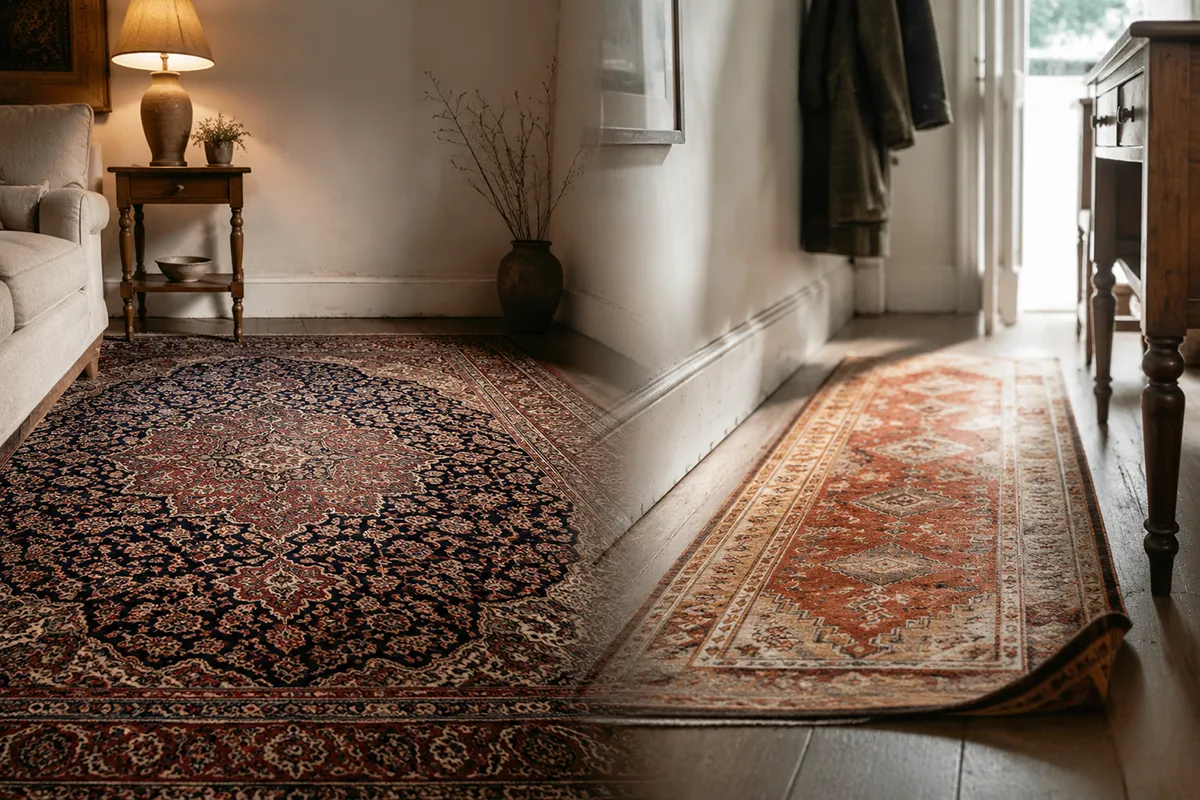
A finely knotted Persian carpet with a silk or silk-accented pile rewards a room where it will be seen and not walked over constantly, such as a formal sitting room or a bedroom. A heavier wool-on-wool Turkish village rug takes hard use well and suits hallways, kitchens and family rooms where a rug earns its place by surviving.
On design, a curvilinear Persian piece sits comfortably in a room with plain walls and restrained furniture, where it can be the main event. A bold geometric Turkish rug holds its own in a busier room and pairs well with modern furniture, because the straight lines echo rather than fight the architecture. If you are still deciding, our guide on how to choose an authentic Persian rug covers the quality checks that apply to both traditions.
How do you spot a machine-made copy of either?
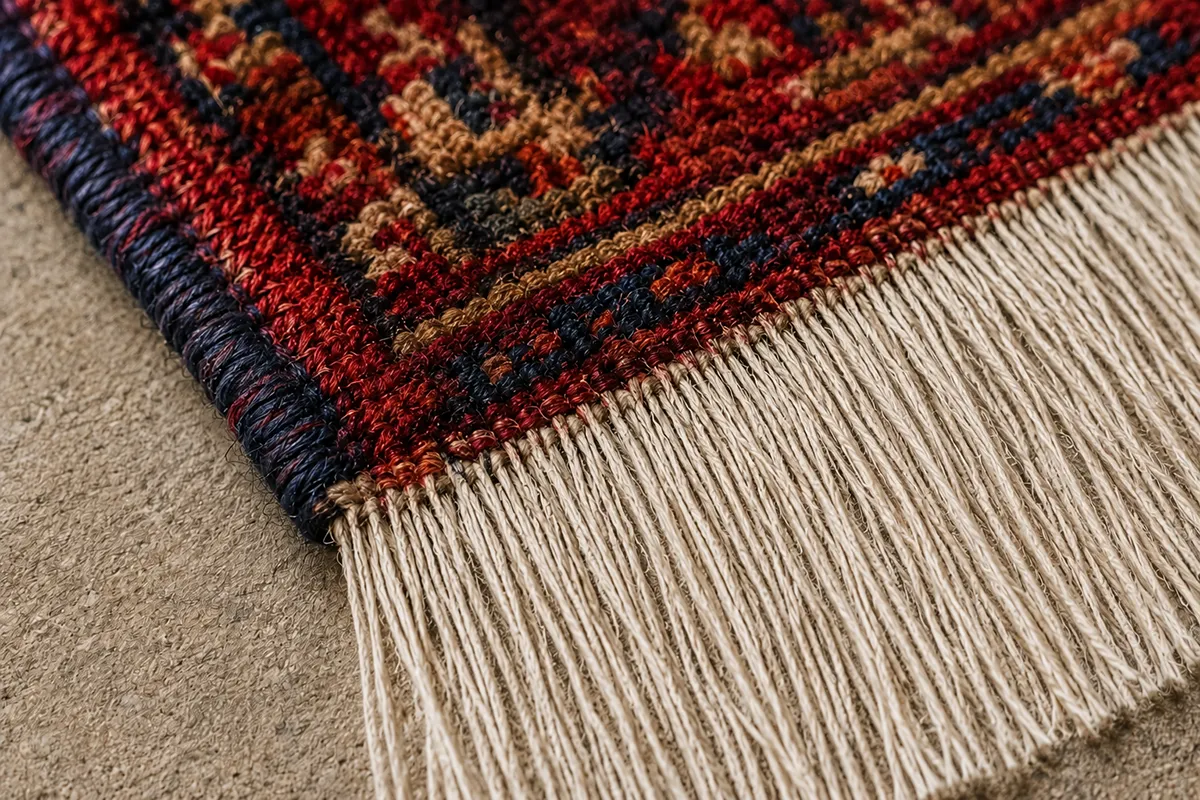
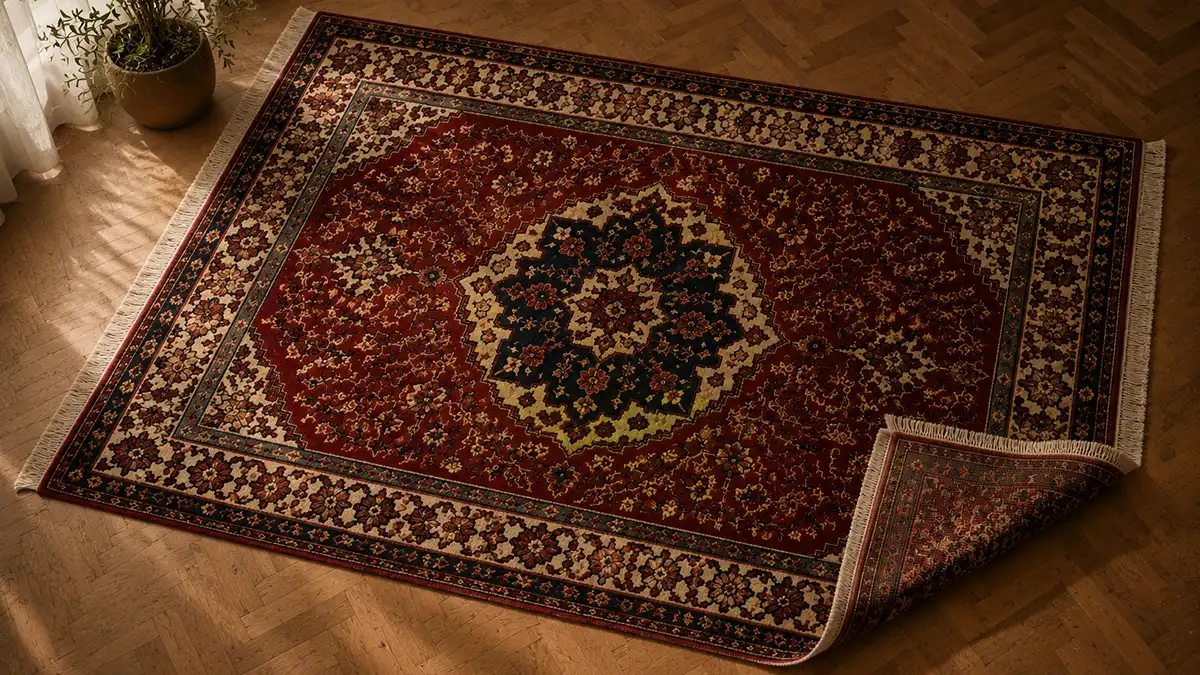
Turn the rug over. On a hand-knotted rug, Persian or Turkish, the design is visible on the reverse with the same clarity as the front, and the knots are slightly irregular. A machine-made rug shows a grid-like backing, often with a glued or latex layer, and the pattern on the reverse looks blurred or hidden.
Three more checks take seconds each. Look at the fringe: on a hand-knotted rug it is the continuation of the warp threads and is part of the structure, whereas on a machine-made piece it is usually stitched on. Look along the edges, where hand-finished selvedges are wrapped by hand and show small variations. And look at the whole rug from a distance for perfect symmetry, because a completely flawless repeat is a machine signature. Real weaving carries small asymmetries, and those are a mark of quality rather than a defect.
Conclusion
The difference between Persian and Turkish rugs starts at the knot and runs through everything else: the asymmetric Persian knot allows curves and fine detail, the symmetric Turkish knot favours geometry and durability. Once you know that, Persian rug vs Turkish rug stops being a question of which is better and becomes a question of which suits the room, the traffic and the look you want. If a flowing medallion, a cotton foundation and finely graded colour is what you are after, browse our Persian rugs and carpets collection, and use the Persian knot vs Turkish knot check on anything you are offered elsewhere.
Frequently Asked Questions
Is a Persian rug always better than a Turkish rug?
No. Quality depends on the wool, the dyes, the knot density and the weaver’s skill, not on the country. An excellent Anatolian village rug will outlast and outperform a poorly made Persian workshop piece.
Can a Persian rug use the Turkish knot?
Yes, and many do. Heriz, Tabriz and other north-west Persian weaving centres use the symmetric knot regularly. The knot tells you about the weaving tradition of the region, not the modern border it sits inside.
Which lasts longer, a Persian or a Turkish rug?
A wool-on-wool rug of either origin, with a dense knot count and natural dyes, will last for generations. Heavier village weaving of the kind common in Anatolia tends to handle heavy foot traffic better than a fine silk-accented city carpet, which is more delicate by design.
Are Turkish rugs cheaper than Persian rugs?
Not reliably. Prices in both traditions are driven by knot density, materials, age and condition. A fine Hereke silk rug can cost far more than a mid-range Persian carpet, and a coarse Persian village piece can be very affordable.
How can I tell the origin if the label is missing?
Start with the knot, then look at the design language, the foundation material and the edge finishing. Curvilinear floral work on a cotton foundation points to Persian city weaving; angular motifs on a wool foundation point to Anatolian. If the rug is unusual, a specialist can read the wool and the dye palette far more precisely than any single test.
Do the two traditions ever appear in one rug?
They do. Centuries of trade and migration across the region mean motifs, techniques and even weavers moved freely. Rugs from border regions frequently combine a Turkish knot with Persian design conventions, which is part of what makes the field interesting rather than confusing.
Comments