


How to Choose an Authentic Persian Rug: A Complete Buyer’s Guide
- mahyar
- 21 July 2026
- Persian Rug
- 5 minutes
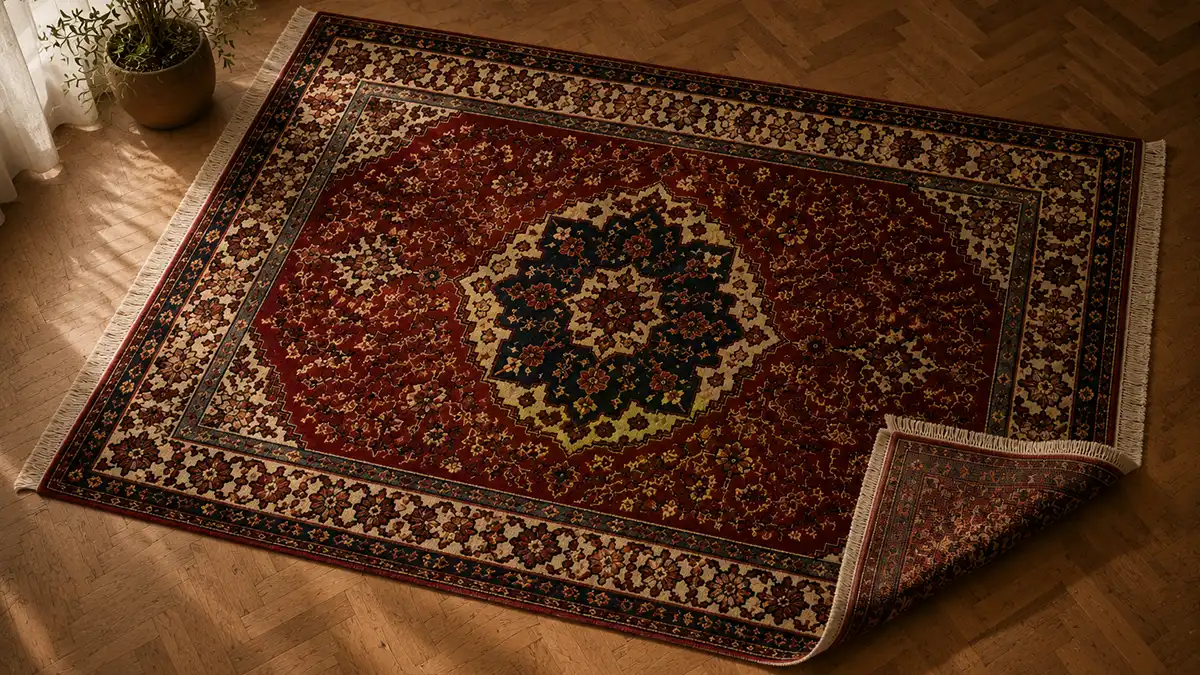
Buying your first Persian rug should be a joy, not a gamble. Yet the market is full of machine-made copies sold as handmade treasures, and prices that range from a few hundred pounds to tens of thousands. The good news is that you do not need to be an expert to buy well. You need to know what to look at, in what order. This guide walks you through exactly that: the knots, the materials, the regional styles, the dyes and the prices, so you can choose an authentic Persian rug with confidence.
The Quick Answer: Five Checks Before You Buy
If you remember nothing else from this guide, remember these five checks:
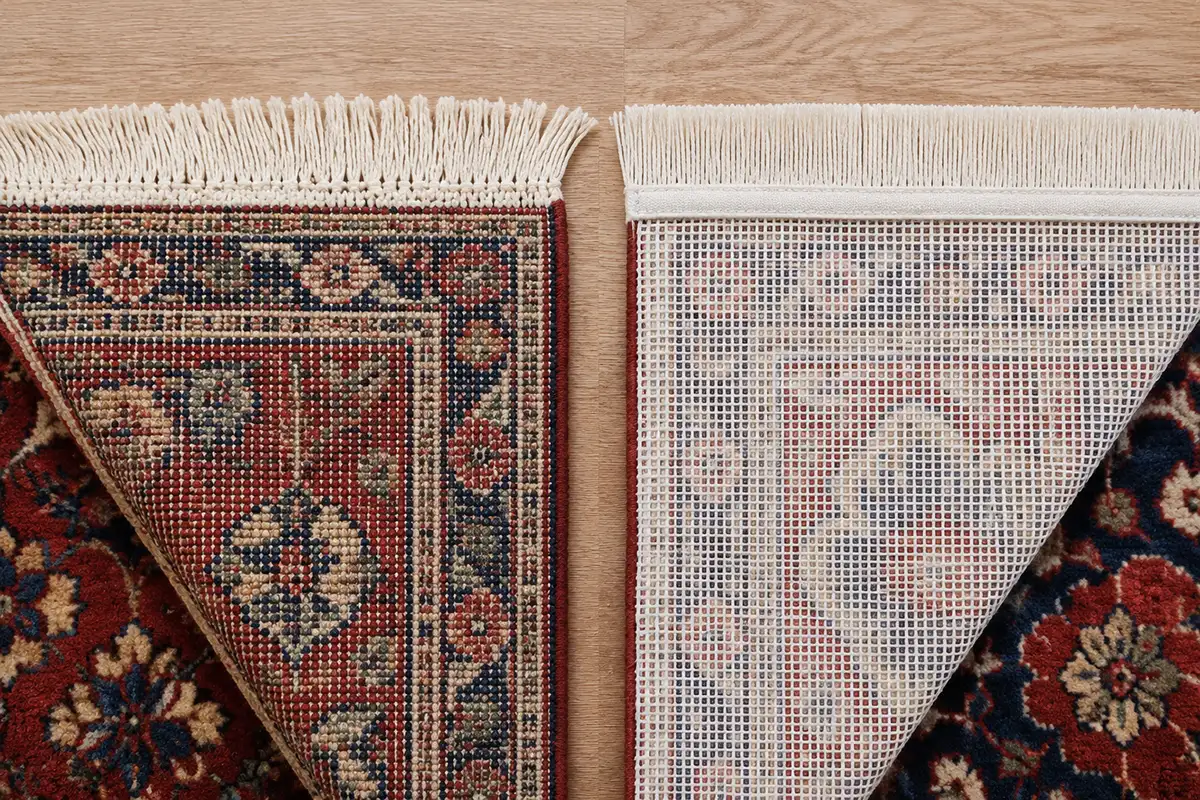
- Turn the rug over. The pattern should be clearly visible on the back and the knots slightly irregular.
- The fringe should grow out of the rug’s own foundation, not be sewn on.
- The fibres should be natural: wool, silk or cotton, never plastic-feeling synthetics.
- Expect gentle colour variation (abrash) and small imperfections. Perfect uniformity means a machine.
- Ask the seller about the weaving region and knot density. A genuine dealer will have answers.
Now let us look at each step properly.
Step 1: Read the Knots
Everything about a Persian rug’s quality begins at the back. Flip the corner over and look closely.
Hand-Knotted or Machine-Made?
On a hand-knotted rug, the design on the back mirrors the front almost as sharply, because every knot was tied individually by hand. The rows will be very slightly uneven, which is exactly what you want to see. A machine-made rug shows a muted or blurred pattern on the back, often with a stiff coating or a mesh backing, and the rows are perfectly, suspiciously regular.
Knot Density: What KPSI Actually Means
Dealers talk about knots per square inch (KPSI). As a rough guide, 120 KPSI is decent commercial quality, 300 KPSI is fine work, and the best Tabriz rugs can reach 700 KPSI. Higher density means sharper detail, longer weaving time and a higher price. It is not the only measure of quality, but it is the most objective one, and any serious seller should be able to tell you the approximate count.
Step 2: Know Your Materials
Authentic Persian rugs are made from three natural fibres, and what a Persian rug is made of shapes everything from feel to price.
Wool is the workhorse: soft, durable, naturally stain-resistant and right for rugs that will actually live on your floor. Silk gives a luminous sheen and allows extremely fine detail, which is why pure silk pieces are often hung on walls or collected rather than walked on. Cotton usually forms the hidden foundation that keeps the rug flat and strong.
A simple test when buying in person: press your palm into the pile. Wool feels springy and slightly oily, never squeaky or plasticky. If a “silk” rug is priced too good to be true, it is very likely mercerised cotton or artificial silk.
Step 3: Recognise the Regional Styles
In Persian, every weaving city and tribe has its own signature. Knowing a handful of them helps you buy the right character for your home, and helps you check that the rug matches the story the seller tells.
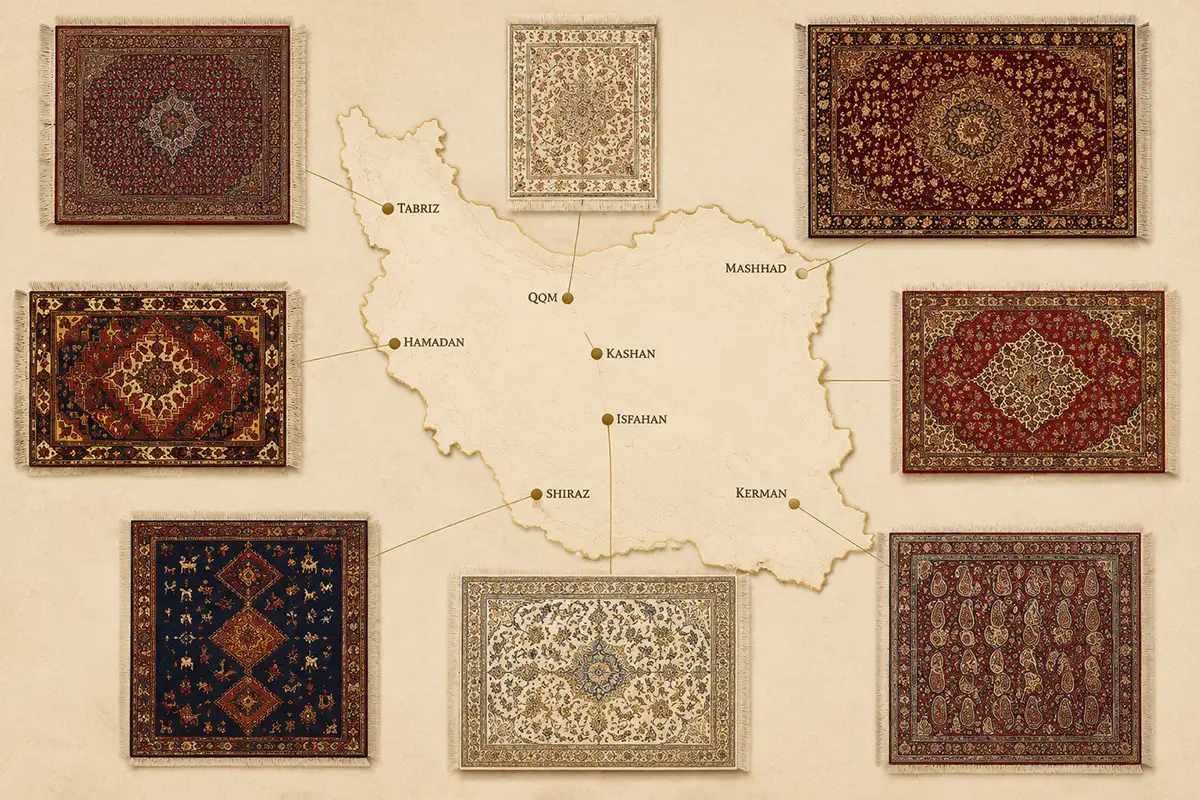
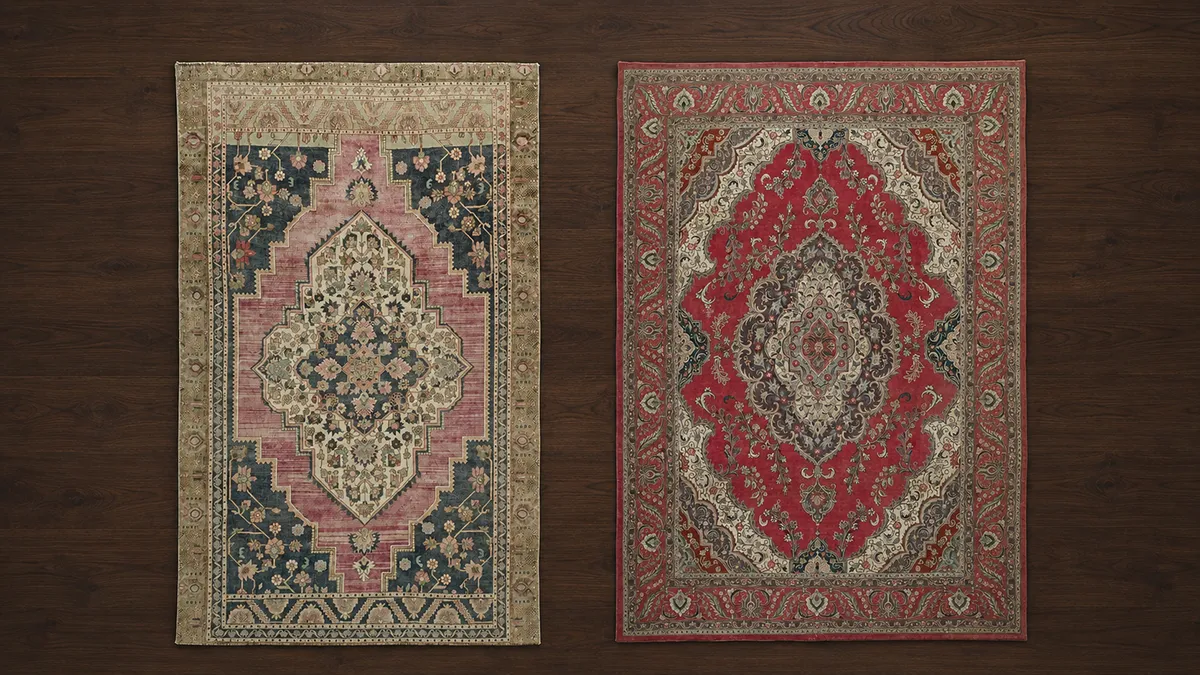
- Tabriz: exceptionally fine, precise work using the symmetrical Turkish knot; famous for medallion and Mahi (Herati) designs.
- Persian Heritage: elegant, harmonious floral compositions, often on silk foundations.
- Kashan: classic central medallions with rich reds and blues.
- Qom: small, jewel-like silk rugs of very high knot density.
- Mashhad: generous sizes and deep, dark palettes.
- Nain: light ivory and blue colourways with fine wool and silk highlights.
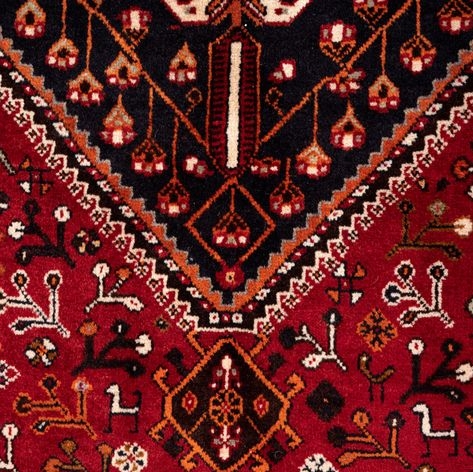
- Qashqai and Shiraz: bold tribal geometry, woven from memory rather than a drawn pattern.
- Hamadan: sturdy, honest village rugs that offer excellent value.
You can read more about the most famous of these traditions in our guide to Persian Tabriz rugs.
Step 4: Check the Colours and Dyes
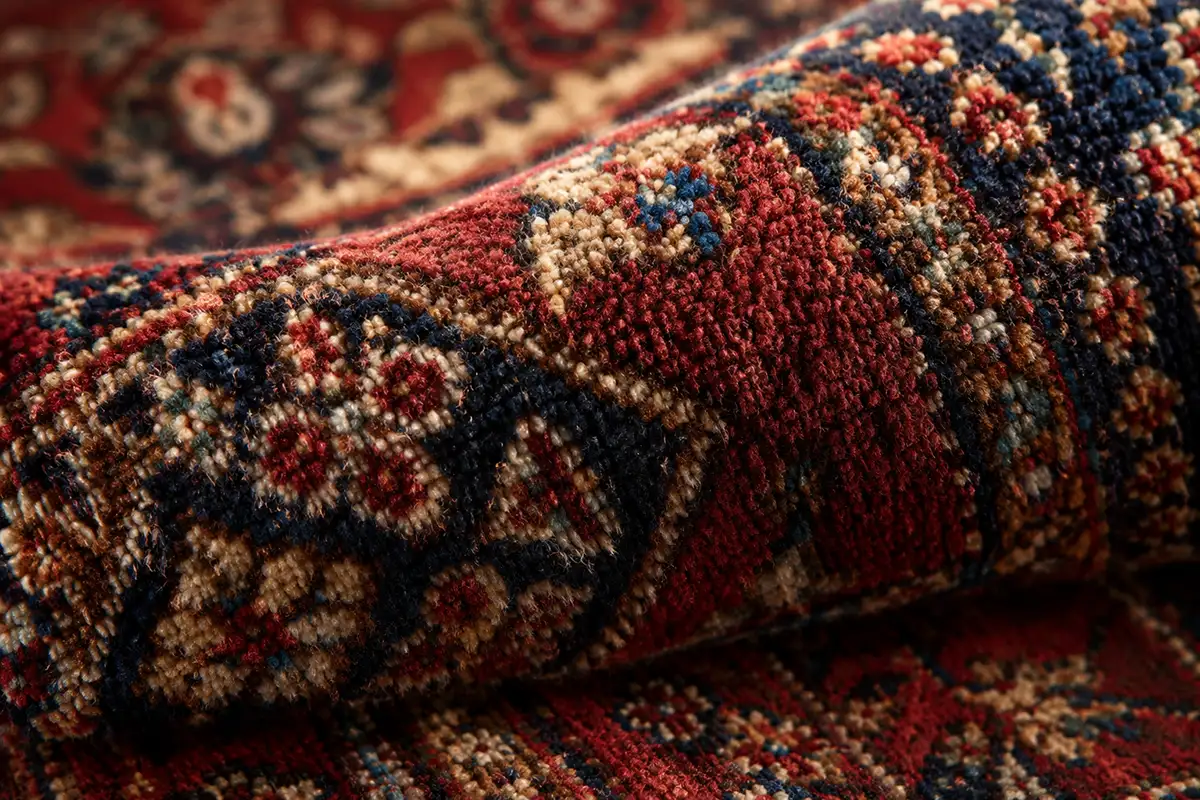
Traditional Persian rugs use vegetable dyes: madder root for red, indigo for blue, walnut husk for brown, pomegranate skin for yellow. Natural dyes age gracefully, softening into the warm patina that makes old rugs so loved. Synthetic dyes are not automatically bad, but harsh, neon-bright colours are a warning sign on a rug sold as traditional.
Look also for abrash: subtle horizontal bands where the colour shifts slightly, created when the weaver moved to a new batch of hand-dyed yarn. Far from being a fault, abrash is one of the most reliable fingerprints of authentic handwork.
Step 5: Understand the Price
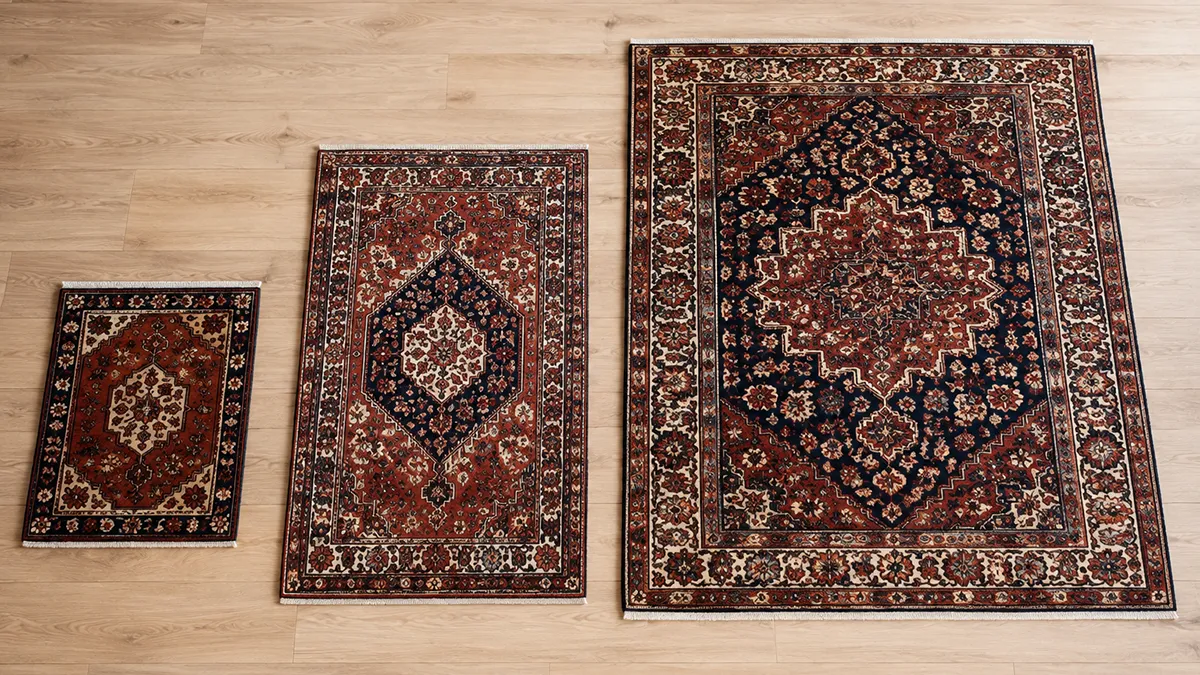
Five things drive the price of a genuine Persian rug: knot density, material (silk costs more than wool), size, age and the reputation of the weaving region or workshop. As an honest rule of thumb, a genuine hand-knotted piece of any meaningful size is very hard to find below a few hundred pounds, and exceptional silk or antique pieces climb steeply from there.
Be sceptical of two things: “closing down” sales that never end, and enormous discounts from inflated list prices. A fair dealer prices fairly from the start.
Red Flags: When to Walk Away
- The seller cannot or will not tell you the weaving region, materials or knot count.
- The back of the rug is covered by a glued backing you are not allowed to inspect.
- The fringe is stitched on rather than part of the foundation.
- The label says “Persian style” or “Persian design”, which usually means made elsewhere by machine.
- The price of a “handmade silk” rug is only slightly above a machine-made one.
If a Full-Size Rug Is Not in Your Budget Yet
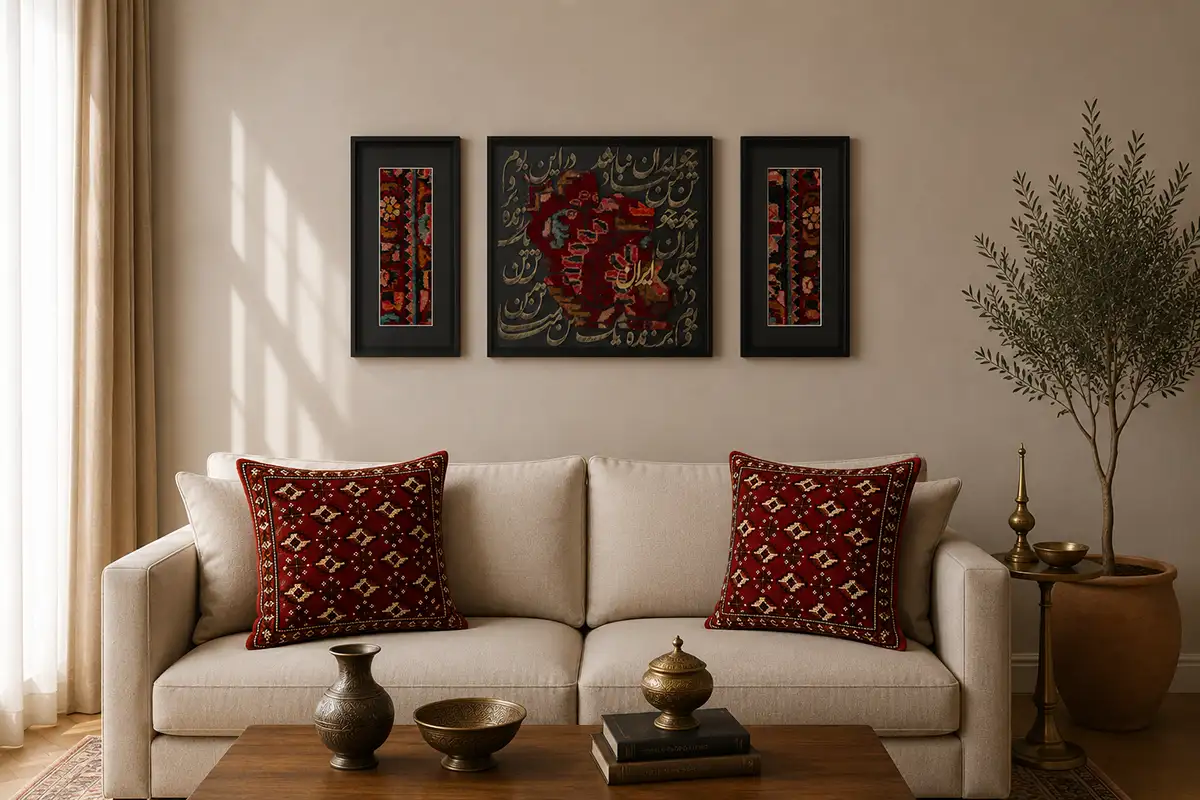
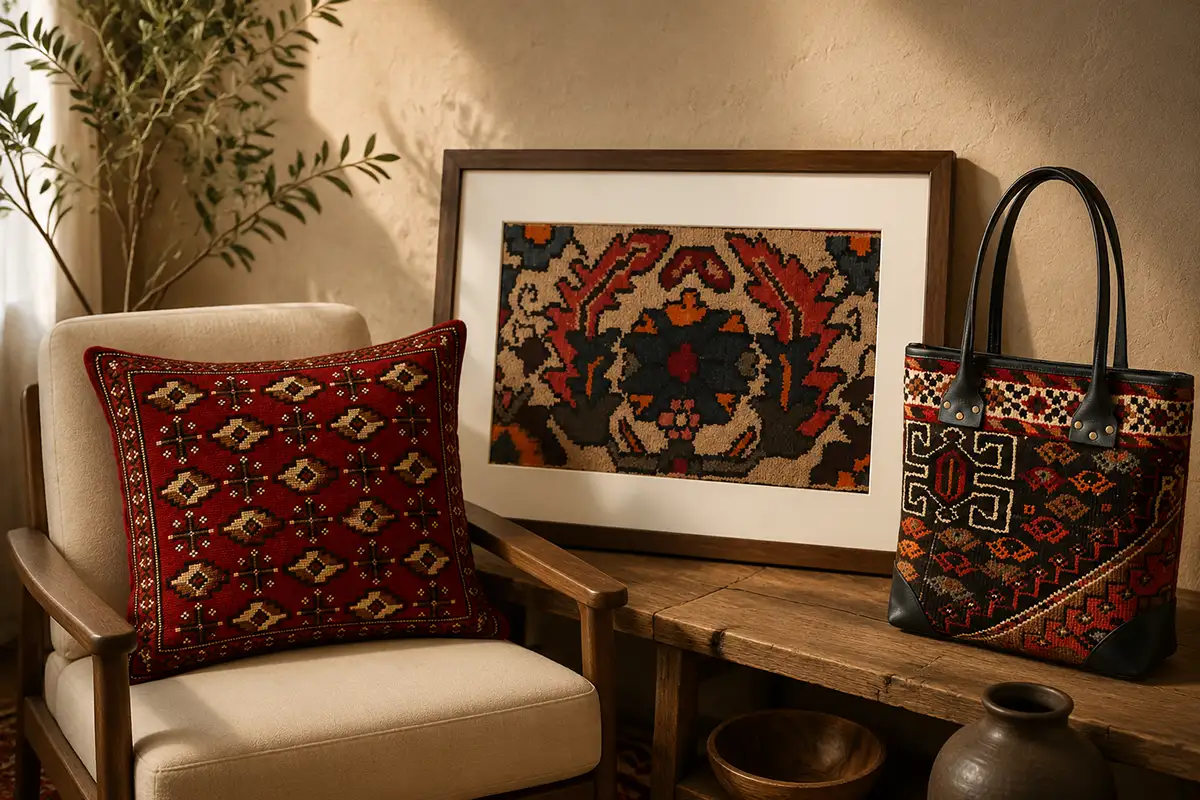
Persian carpet artistry does not only come floor-sized. At Persis Collection we carry handwoven pieces that bring the same patterns, wool and dyes into your home at gift-friendly prices: Persian tableau rugs (woven pictures for the wall), hand-woven kilim cushions and poshti covers, and carpet-weave bags and accessories. Each one is a genuine piece of the weaving tradition described in this guide.
Frequently Asked Questions
How can I tell if a Persian rug is handmade?
Check the back: the pattern should be clearly visible and the knots slightly irregular. Check the fringe: it should be a continuation of the rug’s foundation threads. Machine-made rugs have uniform backs, often with a coating, and sewn-on fringes.
What is a fair price for an authentic Persian rug?
It depends on knot density, material, size and age. Genuine hand-knotted rugs of a useful size rarely sell below a few hundred pounds, and fine silk or antique pieces cost considerably more. If a price seems impossibly low, the rug is almost certainly machine-made.
Which Persian rug style is best for a living room?
Hard-wearing wool rugs from Tabriz, Mashhad or Hamadan handle daily traffic well. Save pure silk pieces for walls or low-traffic rooms.
Do Persian rugs increase in value?
Well-made, well-kept rugs hold their value, and exceptional or antique pieces can appreciate. Buy first for love and quality; treat any investment gain as a bonus.
Does Persis Collection ship worldwide?
Yes. We ship all our handwoven pieces worldwide from London, with a focus on the UK, USA and Europe.
Comments