


Nowruz 2027: Persian New Year on 20 March
- Persis Collection
- 20 January 2024
- Nowruz
- 4 minutes
Nowruz is the Persian New Year, celebrated at the moment of the spring equinox and marking the start of the year in the Persian calendar. In 2027, Nowruz falls on Saturday 20 March, the day the sun crosses the celestial equator and day and night become equal in length. The exact moment is 20:24 GMT, which is 4.24pm in New York and 11.54pm in Tehran. For Iranians and the many other communities who mark it, Nowruz is less a single day than the opening of a whole season of visiting, cleaning, cooking and gathering that runs for close to two weeks.
What Is Nowruz?
The word Nowruz comes from Avestan and Old Persian roots meaning “new day”. It refers to the first day of Farvardin, the opening month of the Persian solar calendar, and it is calculated astronomically rather than fixed on a set date, which is why it can land on 20 or 21 March depending on the year. Nowruz is celebrated by well over 100 million people across Persian, Afghanistan, Tajikistan, Uzbekistan, Azerbaijan, and Kurdish communities in Iraq and Turkey, as well as by diaspora communities in cities such as London, Los Angeles and Toronto. UNESCO added Nowruz to its list of Intangible Cultural Heritage, and the United Nations recognises 21 March as International Nowruz Day.
When Does Nowruz Fall in 2027?
Nowruz 2027 begins on Saturday 20 March, the date of the vernal equinox that year, at 20:24 GMT. Because that moment falls close to midnight in Persian, the Persian calendar dates the first day of the new year, 1 Farvardin, to Sunday 21 March, while families in Britain and the United States mark the turn of the year on the Saturday evening. Because the equinox is an astronomical event rather than a fixed calendar date, Persian almanacs publish the exact hour and minute each year, and families often gather in front of the television or radio to hear the countdown, especially if it falls in the early hours of the morning. The new year itself is dated 1406 in the Persian solar calendar, known as the Hijri Shamsi calendar, which counts years from the migration of the Prophet Muhammad but follows a solar rather than lunar cycle.
The Origins of Nowruz
Nowruz is at least 3,000 years old and predates Islam in Persian by a long way. Its roots lie in Zoroastrianism, the ancient religion of pre-Islamic Persia, where the arrival of spring was tied to ideas of light overcoming darkness and good overcoming evil. Historical evidence suggests Nowruz was already an established royal festival during the Achaemenid Empire, when delegations from across the empire travelled to Persepolis to present gifts to the king at the new year. The festival survived the Arab conquest of Persia and the spread of Islam, and it remains a national rather than a religious holiday today, celebrated by Iranians of all faiths.
How Nowruz Is Celebrated
Khooneh Tekouni, the Spring Clean
In the weeks before Nowruz, households take part in khooneh tekouni, literally “shaking the house”, a thorough spring clean that covers everything from carpets and curtains to cupboards rarely opened the rest of the year. The idea is to enter the new year in a home that is physically and symbolically fresh, free of the previous year’s dust.
The Haft Seen Table
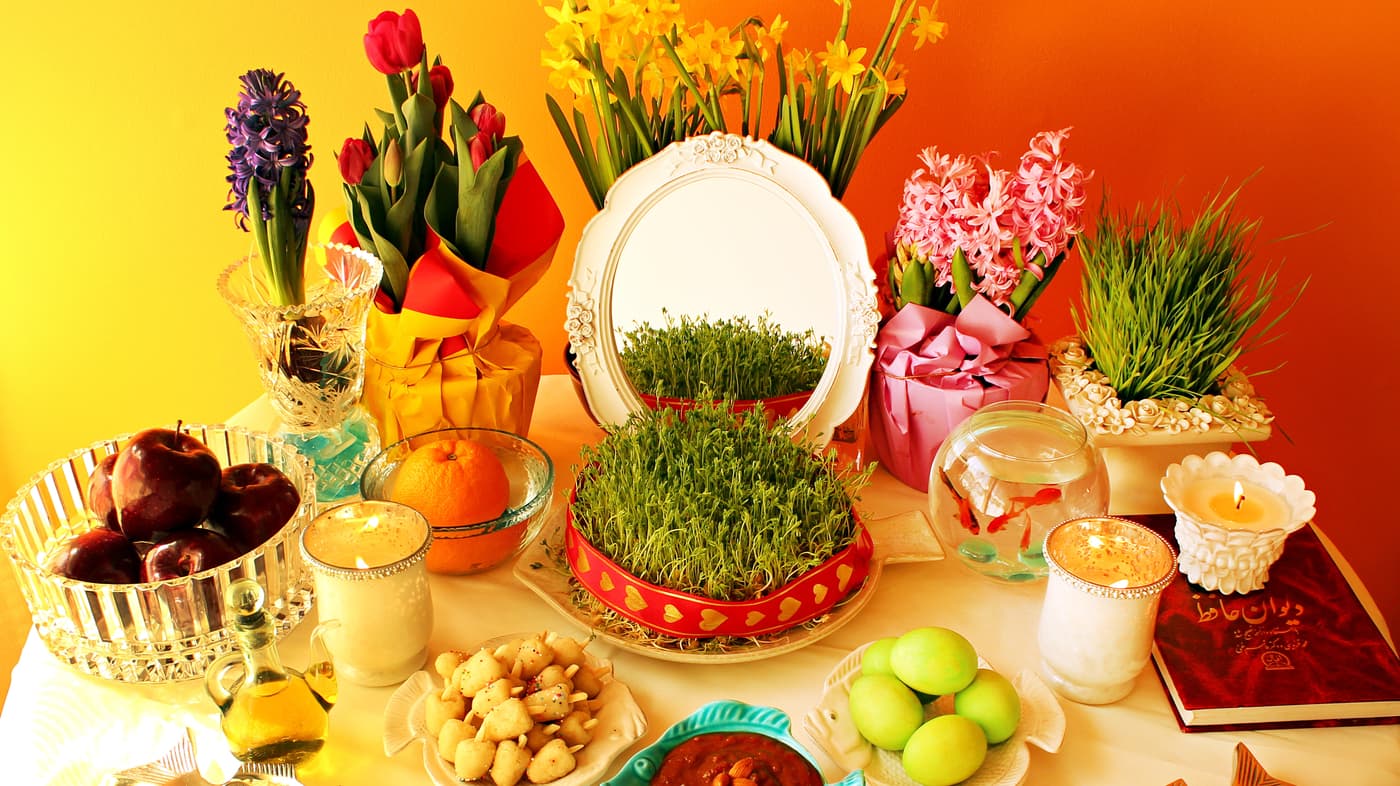
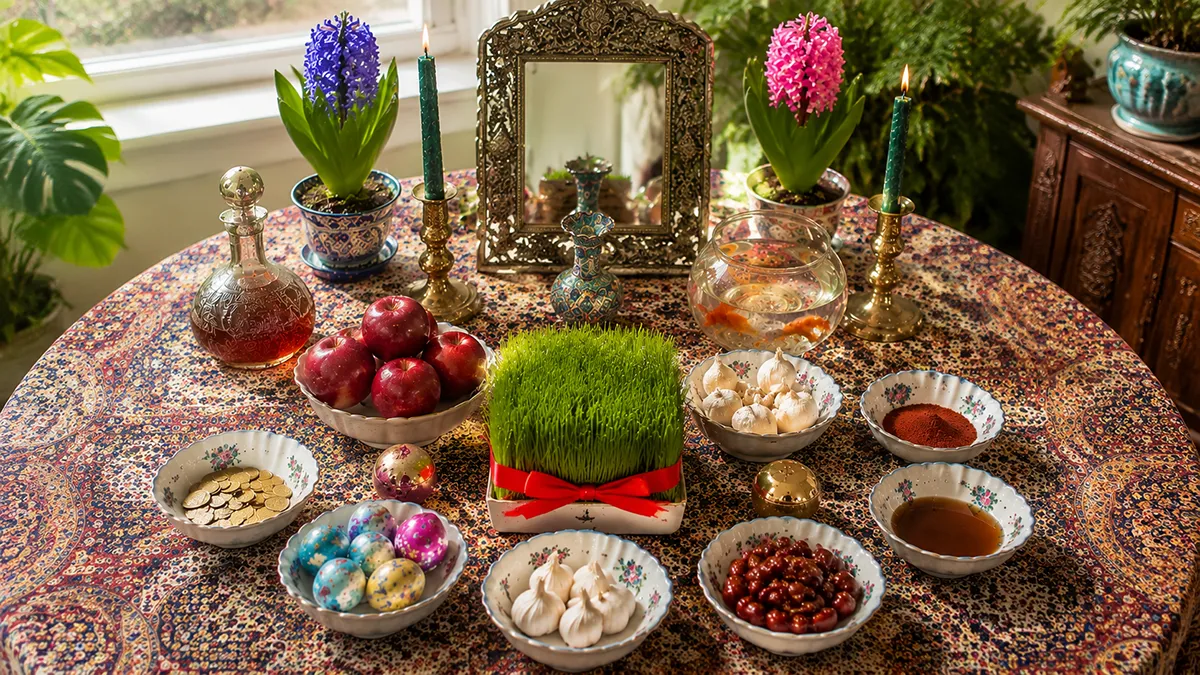
Most households set up a Haft Seen table, a display of seven symbolic items whose Persian names begin with the letter S, such as sabzeh (sprouted wheat or lentils) for rebirth and senjed (dried oleaster fruit) for love. The table usually stays up throughout the Nowruz period and often includes a mirror, candles, painted eggs, and a bowl of goldfish. This is a large tradition in its own right, covered in more detail in our dedicated Haft Seen guide.
Chaharshanbe Suri
On the eve of the last Wednesday before Nowruz, which in 2027 falls on 17 March, Iranians celebrate Chaharshanbe Suri, or Scarlet Wednesday. People light small bonfires in streets and gardens and jump over the flames, chanting a phrase that asks the fire to take their paleness and sickness and give them its warmth and colour in return. It is a noisy, sociable night, often accompanied by fireworks and a special dish of dried fruit and nuts called ajil.
The Thirteen Days and Sizdah Bedar
Nowruz celebrations traditionally last thirteen days, filled with visits to relatives, elders and neighbours, and an exchange of gifts and sweets. The period closes with Sizdah Bedar on the thirteenth day, which falls on 2 April in 2027. Families leave their homes to spend the day outdoors in parks or the countryside, picnicking and, in a well-known custom, tying blades of the sprouted sabzeh into knots before releasing them into running water to cast off any bad luck from the year ahead.
Nowruz Beyond Persian
While Nowruz is most closely associated with Persian, it is a national holiday in Afghanistan, Tajikistan, Uzbekistan, Kyrgyzstan, Turkmenistan, Kazakhstan and Azerbaijan, and it is widely celebrated among Kurdish communities across Iraq, Turkey and Syria, where it also marks a significant cultural and political occasion. Persian and Central Asian communities living abroad continue the traditions each spring, often adapting the timing of gatherings to weekends while keeping the core customs intact.
Frequently Asked Questions
What does the word Nowruz mean?
Nowruz means “new day” in Persian, combining “now”, meaning new, with “ruz”, meaning day. It refers to the first day of the Persian new year.
Is Nowruz always on 21 March?
No. Nowruz falls on the exact moment of the spring equinox, which can land on 19, 20 or 21 March depending on the year. In 2027 the equinox falls on 20 March and the Persian calendar begins the new year on 21 March.
How long do Nowruz celebrations last?
Traditionally thirteen days, starting on Nowruz itself and closing with Sizdah Bedar, an outdoor family day that falls on 2 April in 2027.
Is Nowruz a religious holiday?
No. Although it has roots in Zoroastrianism, Nowruz is a cultural and national celebration observed by Iranians of every religious background, as well as by several neighbouring nations.
What is Chaharshanbe Suri?
Chaharshanbe Suri is a fire-jumping festival held on the eve of the last Wednesday before Nowruz. In 2027 that falls on the evening before 17 March, and it is treated as the unofficial opening of the Nowruz season.
However early Nowruz falls, the table takes time to gather: our Haft Sin sets and Nowruz gifts ship worldwide from London.
Comments
Ghawar camij toschian
Please use international date standard like Nowruz 2024: Local Times Around the World Los Angeles United States 2024 March 19 20:06 It follows the rules of matematik. Noruz piruz
Marty Afkhami
Your article header and page metadata header **INCORRECTLY ** states norooz is on March 21