


Persian Baby Name Jewellery: A Gift Guide for New Parents
- mahyar
- 10 August 2026
- Persian Jewellery
- 5 minutes
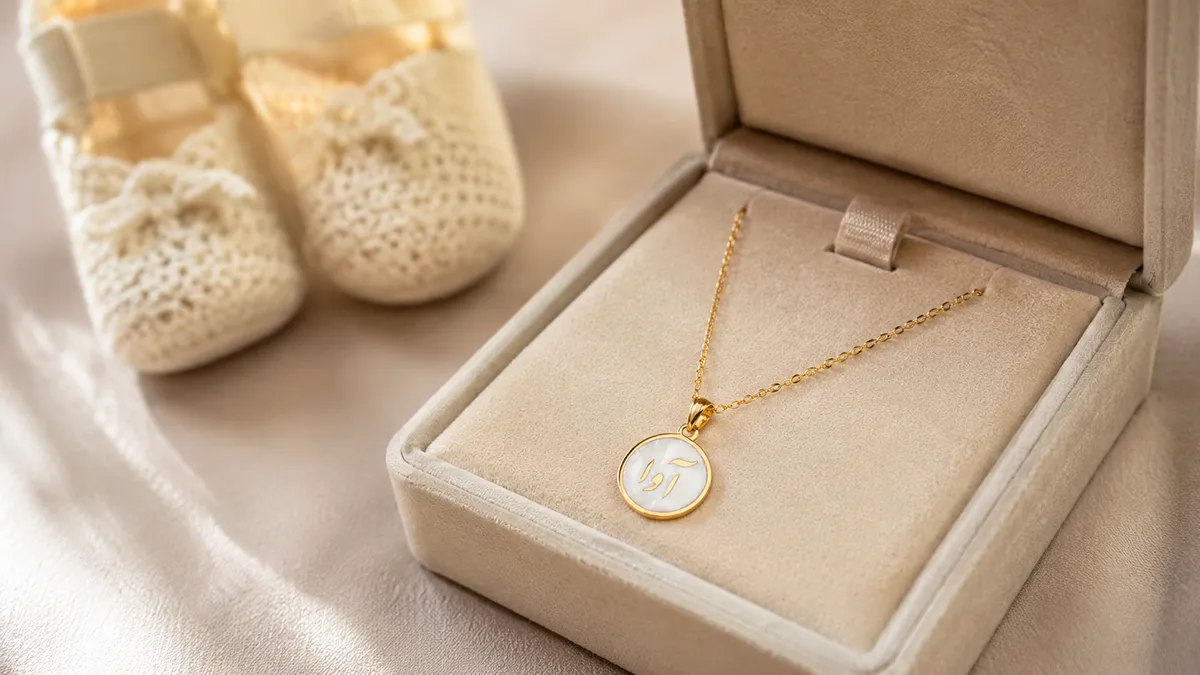
A Persian name necklace is one of the most personal gifts you can choose for a new baby, spelling out the child’s name in Farsi script on a fine chain sized for a tiny wrist or, more often, kept safe until the child is older. For new parents wanting to mark their baby’s arrival with something that carries real cultural weight rather than a generic charm, this kind of jewellery has become a genuine tradition of its own among Persian families both in Persian and abroad. This guide covers how Persian baby name jewellery is made, how to get the name and sizing right, and when it’s typically given.
What exactly is Persian baby name jewellery?
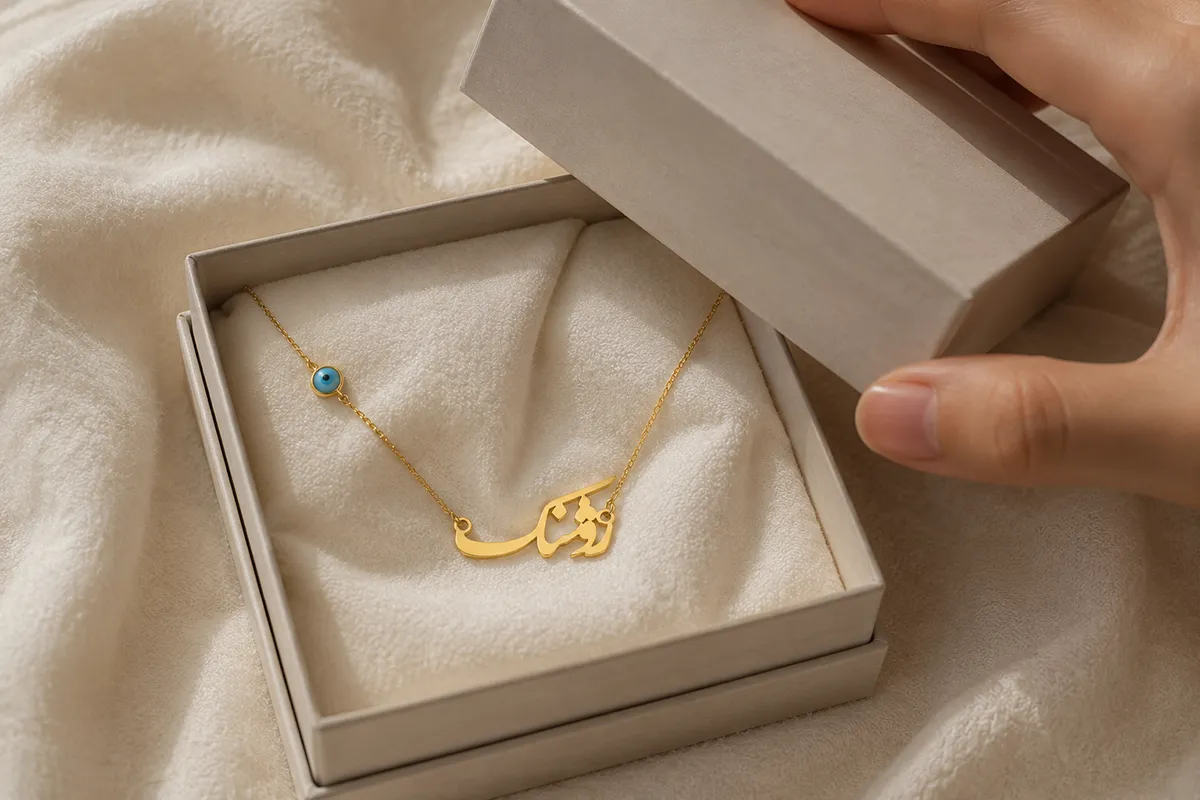
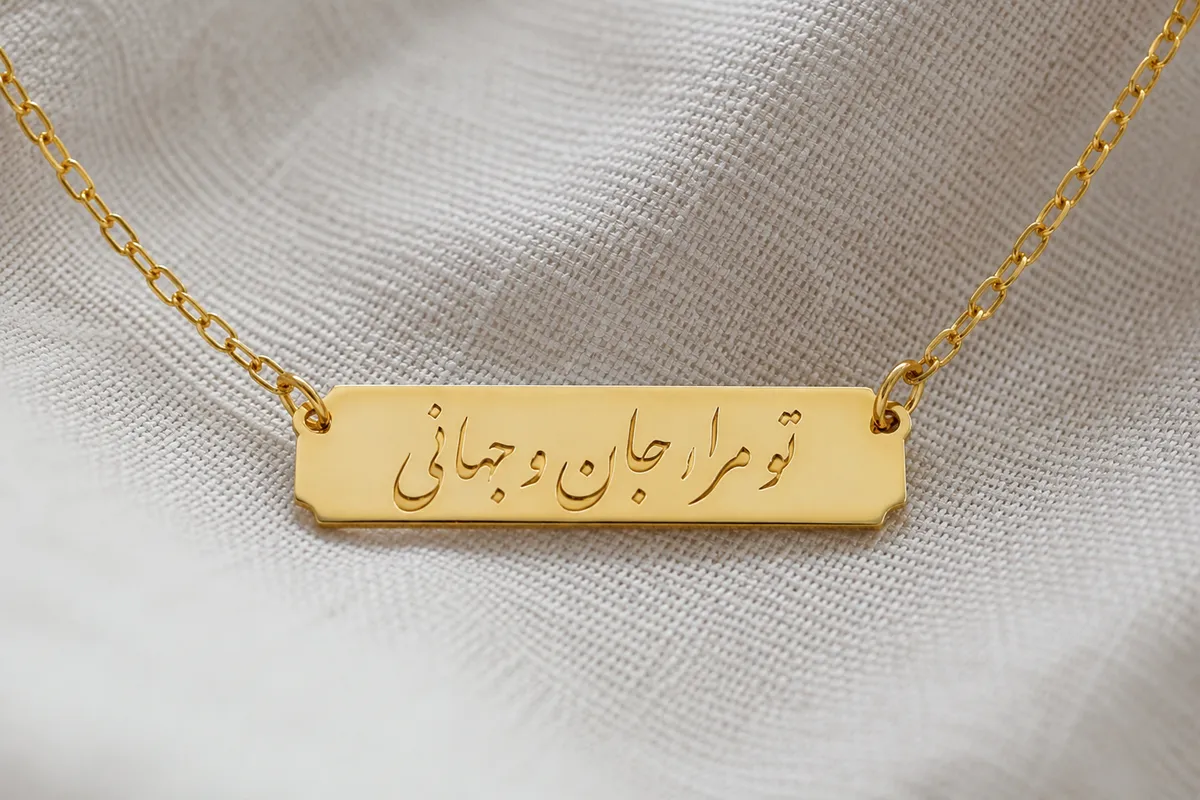
Persian baby name jewellery is a piece, usually a necklace, bracelet or small pendant, with the baby’s name handwritten or engraved in Farsi calligraphy, often in the flowing nastaliq script traditionally used for names and poetry. Unlike a plain engraved nameplate, the better pieces are drawn by a calligrapher first so the letters connect and flow the way Farsi script is meant to, then reproduced in metal by a jeweller, which is why the same name can look noticeably different depending on which calligraphy style a seller uses. Most pieces are made in sterling silver or gold, with gold-plated silver as a lower-cost option that still holds up well for an item that may not be worn daily until the child is older. The same hand craftsmanship that goes into adult Persian pieces, explained in our guide to Persian gold jewellery history and craftsmanship, applies just as much to a small pendant as it does to a full necklace.
Should you buy a necklace, bracelet or pendant for a newborn?
For a genuine newborn, a pendant or necklace kept as a keepsake rather than worn immediately is usually the more practical choice, since babies and very young toddlers shouldn’t wear necklaces unsupervised because of the strangulation and choking risk. Many families buy the piece at birth and store it safely, bringing it out for the child to wear from around age five or six once supervision is less of a constant concern, or gift it to be worn on special occasions like a naming ceremony or first Nowruz. A small charm bracelet with the name engraved on a flat tag is a slightly more practical option for early wear, provided it fits securely and doesn’t have small detachable parts.
How do you make sure the Farsi spelling of the name is correct?
Getting the Farsi transliteration right matters more than almost anything else when buying a Persian name necklace, since a name can be written more than one correct way in Farsi script depending on regional spelling conventions and personal family preference. The safest approach is to write out the name phonetically for the seller and ask them to confirm the Farsi spelling back to you before production begins, rather than relying on an automated transliteration tool, which can produce a technically readable but slightly unnatural result. If the baby has a Western name rather than a traditional Persian one, a good jeweller will still be able to render it in Farsi script, though it’s worth asking to see a proof of the calligraphy first.
What materials are safest and most durable for a piece a child may eventually wear?
Sterling silver and 18K gold are the two most common choices, both of which are hypoallergenic enough for most children once they’re old enough to wear jewellery, though nickel-free settings are worth confirming specifically if the child has sensitive skin. Gold-plated silver is a reasonable middle option for parents who want the look of gold without the cost of solid gold, though the plating will eventually wear thinner with regular use and may need re-plating after several years. For a piece meant to last from infancy through childhood, a slightly adjustable or extendable chain is worth asking about, since a fixed-length chain bought for a newborn won’t fit a seven year old. If you’re undecided between the two metals, our guide to choosing between gold and silver Persian jewellery covers how each wears over time and which tends to suit different skin tones.
When do Persian families typically give this kind of jewellery?
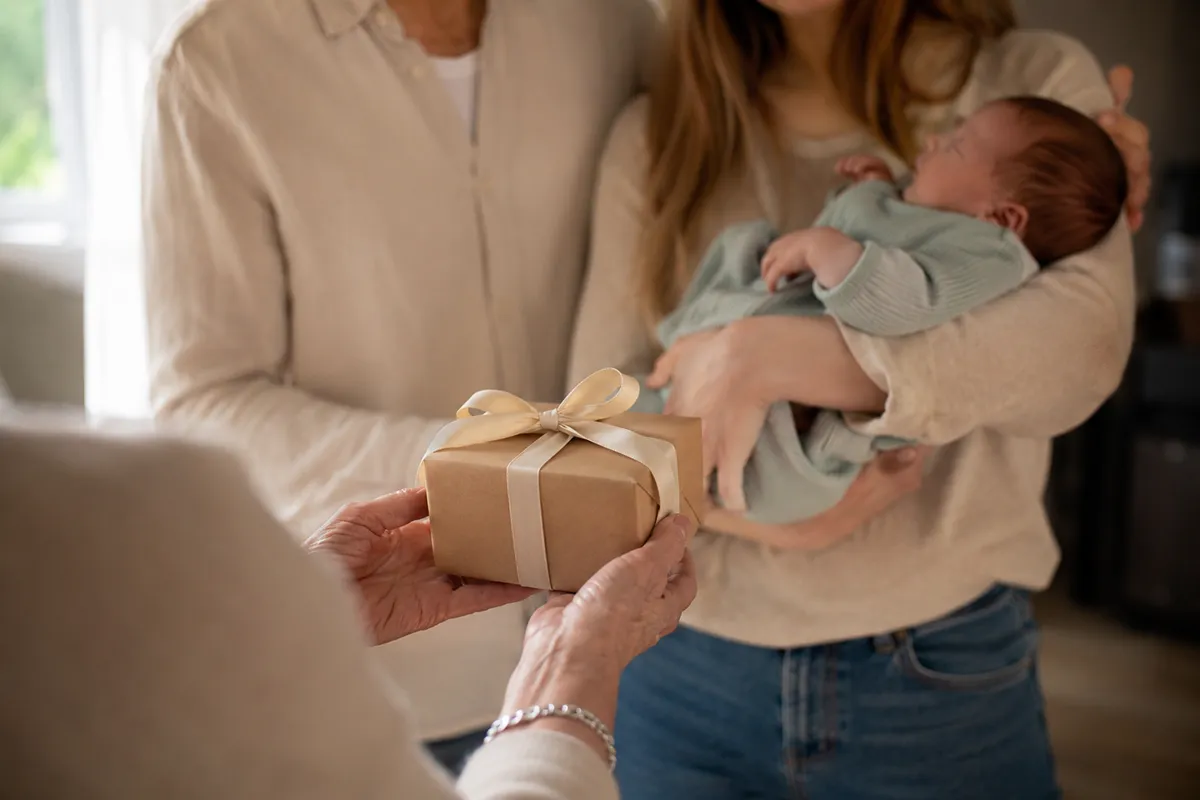
Birth is the most common occasion, often given by grandparents or godparents as one of the first gifts a baby receives, sometimes alongside a small gold coin in the same tradition as other Persian milestone gifts. A naming ceremony or the baby’s first Nowruz are the next most common moments, particularly for families who want to mark the occasion with something the child will keep rather than something purely decorative for the day. Some families wait until a specific birthday, often the child’s first or third, treating the necklace as a gift the child will actually understand and appreciate receiving rather than one chosen entirely by the parents.
What should you look for when buying a Persian name necklace for sale online?
When comparing a Persian name necklace for sale from different sellers, check whether the price includes a calligraphy proof before production, since this step is what prevents spelling mistakes reaching the final piece. Look closely at photographs of previous work rather than just a generic product mockup, since the quality of the actual hand-drawn script varies significantly between jewellers even at similar price points. Confirm the metal purity is stated clearly, whether that’s sterling silver marked 925 or gold marked with its karat, and check the seller offers a correction or remake if the engraved name doesn’t match what was confirmed.
Conclusion
A Persian name necklace gives new parents a way to mark their baby’s arrival with something rooted in real Persian craftsmanship rather than a generic keepsake, provided the Farsi spelling is confirmed carefully before the piece is made. Sterling silver and gold both work well, with an adjustable chain worth considering for a piece meant to last through childhood. Whether it’s worn from birth, kept for a naming ceremony, or given later once a child can safely wear it, a well-made Persian name necklace for sale from a seller who provides a calligraphy proof first is a gift that tends to be kept for decades.
Frequently Asked Questions
Is it safe for a newborn to wear a name necklace?
No, necklaces aren’t recommended for unsupervised wear by babies or very young toddlers because of the strangulation risk. Most families keep the piece as a keepsake until the child is old enough, typically around five or six, for it to be worn safely.
Can a Western name be written in Farsi script?
Yes. A skilled calligrapher can render most names phonetically in Farsi script, including names with no direct Persian equivalent. It’s worth asking to see a proof of how the name will look before production begins.
What’s the difference between sterling silver and gold-plated silver for this kind of jewellery?
Sterling silver keeps its finish with proper care and doesn’t wear thin over time, while gold-plated silver looks like solid gold initially but the plating gradually wears with regular use and may eventually need re-plating.
How long does it take to have a Persian name necklace made?
This varies by seller, but handmade pieces with a custom calligraphy proof typically take longer than stock jewellery, so it’s worth ordering with enough lead time before a birth date, naming ceremony or Nowruz if the gift needs to arrive by a specific occasion.
Can I buy matching pieces for siblings?
Yes, many sellers can produce matching or coordinated pieces for siblings using the same calligraphy style, which is a popular choice for families wanting each child to have their own named piece from our Persian jewellery collection.


Comments