


Traditional Persian Clothing for Children: A Buying Guide
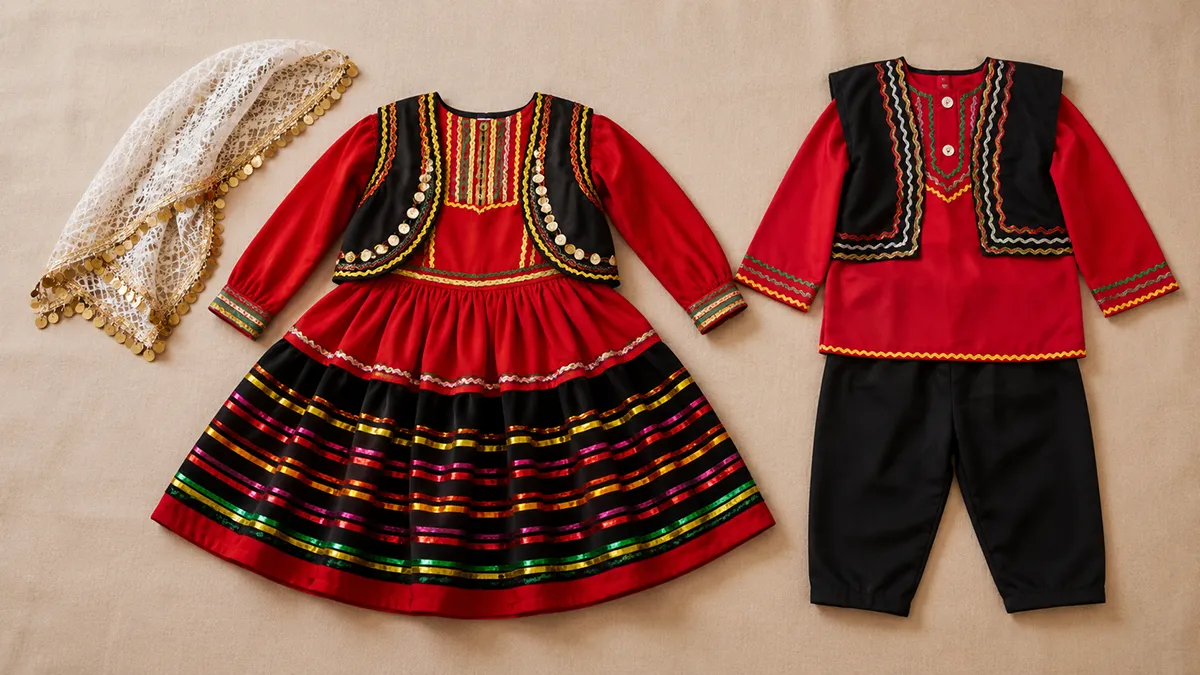
Buying kids traditional clothing for a Persian occasion, whether it’s Nowruz, a family wedding or a cultural event, involves a few more considerations than an everyday outfit: sizing conventions that differ from high street brands, embroidery that needs proper care, and knowing which pieces suit which occasion. This guide walks through what to look for when choosing traditional Persian clothing for children, how to get sizing right when buying online, and how to care for embroidered or delicately finished pieces so they last beyond a single wear.
What counts as traditional Persian clothing for children?
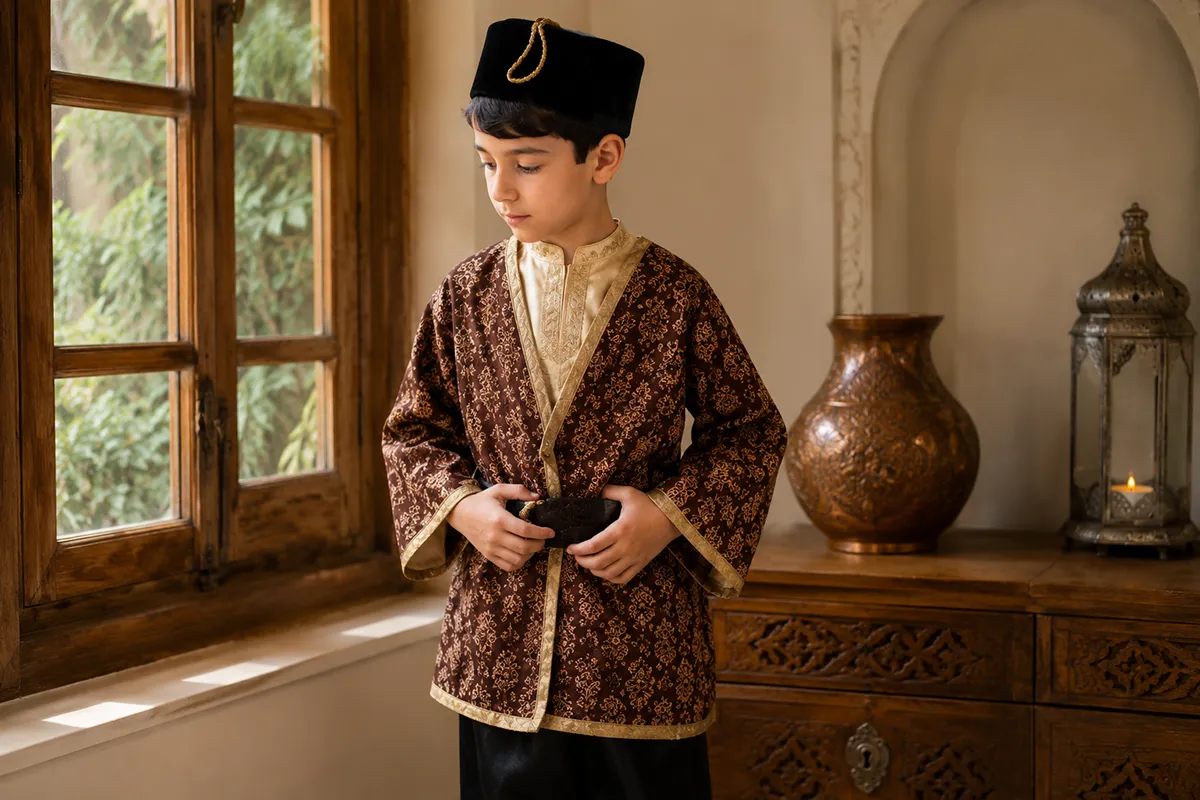
Traditional Persian children’s clothing typically includes embroidered tunics and dresses inspired by regional Persian styles, alongside smaller accessory pieces like decorative vests, headscarves for girls, and occasionally miniature versions of formal Persian menswear for boys. Many pieces draw on specific regional traditions, such as Qashqai or Kurdish-inspired embroidery patterns, rather than a single generic “Persian” style, so it’s worth knowing roughly which regional influence a piece reflects if that matters to your family. For most families outside Persian, the clothing is worn for specific occasions rather than daily wear, which affects how much you should prioritise durability versus finer, more delicate detailing.
How do you get sizing right when buying kids traditional clothing online?
Traditional Persian children’s clothing is often sized differently from high street Western brands, running slightly smaller or cut for a different body shape, so it’s worth checking the seller’s specific size chart in centimetres rather than assuming a UK or US age-based size will match exactly. Measure your child’s chest, height and waist before ordering, and compare directly against the listed measurements rather than the age label on the product, since a “4-5 years” label can vary noticeably between sellers. If you’re buying for a specific date, such as Nowruz or a wedding, order with enough lead time to exchange for a different size if needed, particularly when importing from overseas.
Where can families find kids traditional clothing in London and other major cities?
Families searching for kids traditional clothing in London have more options than most cities outside Persian, thanks to established Persian communities around areas like Kensington and Olympia, though stock varies significantly by season and is often strongest just before Nowruz in March. Specialist online sellers based in the UK, including our own collection, tend to offer more consistent year-round stock and faster delivery than importing directly from Persian, which can involve longer shipping times and customs considerations. Outside London, families in the US, Canada and Europe generally rely on online sellers almost entirely, since dedicated Persian children’s clothing shops are rare even in cities with large Persian populations.
How should you care for embroidered or delicately finished children’s clothing?
Hand embroidery and delicate trims generally shouldn’t go through a standard washing machine cycle, since agitation loosens stitching over time even on well-made pieces. Hand washing in cool water, or a gentle machine cycle inside a protective mesh bag if hand washing isn’t practical, extends the life of embroidered pieces considerably. Store finished garments folded rather than hung where possible, since hanging can stretch embroidered panels and delicate fabric over time, and keep pieces out of direct sunlight, which fades bright traditional colours and metallic thread faster than most parents expect.
Which occasions call for traditional Persian children’s clothing?
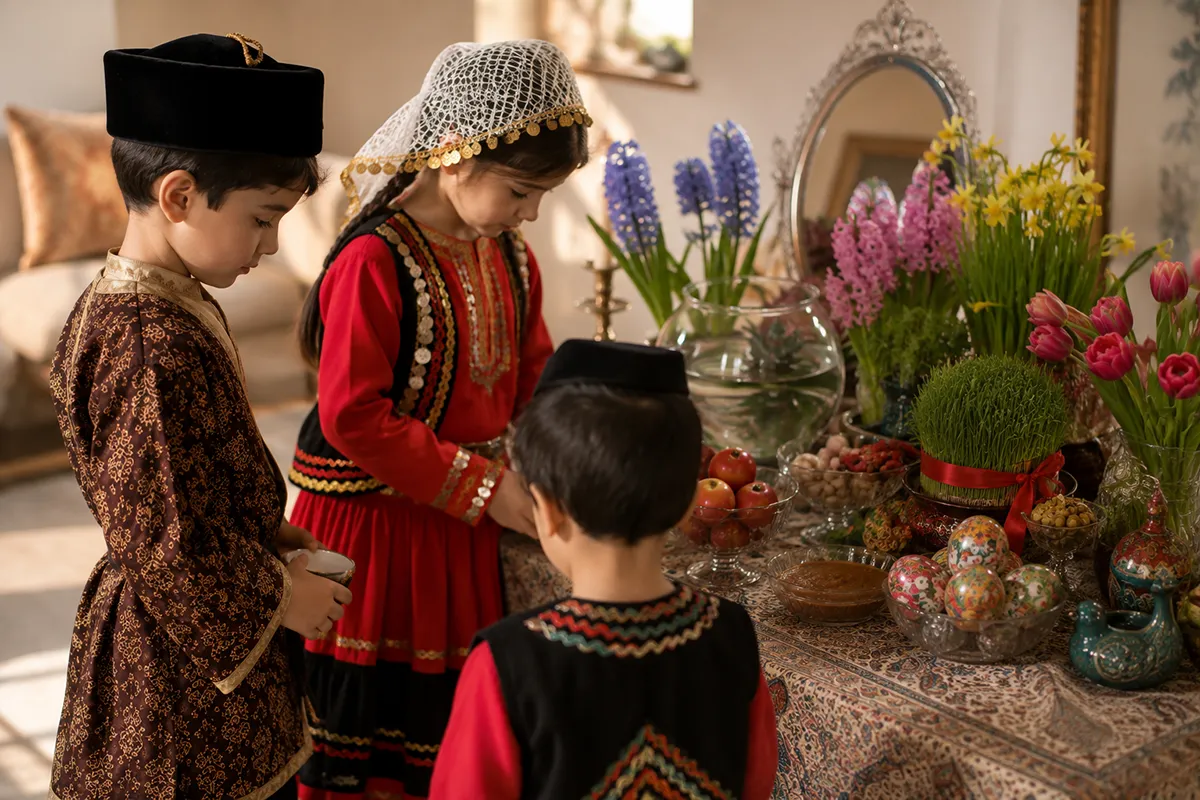
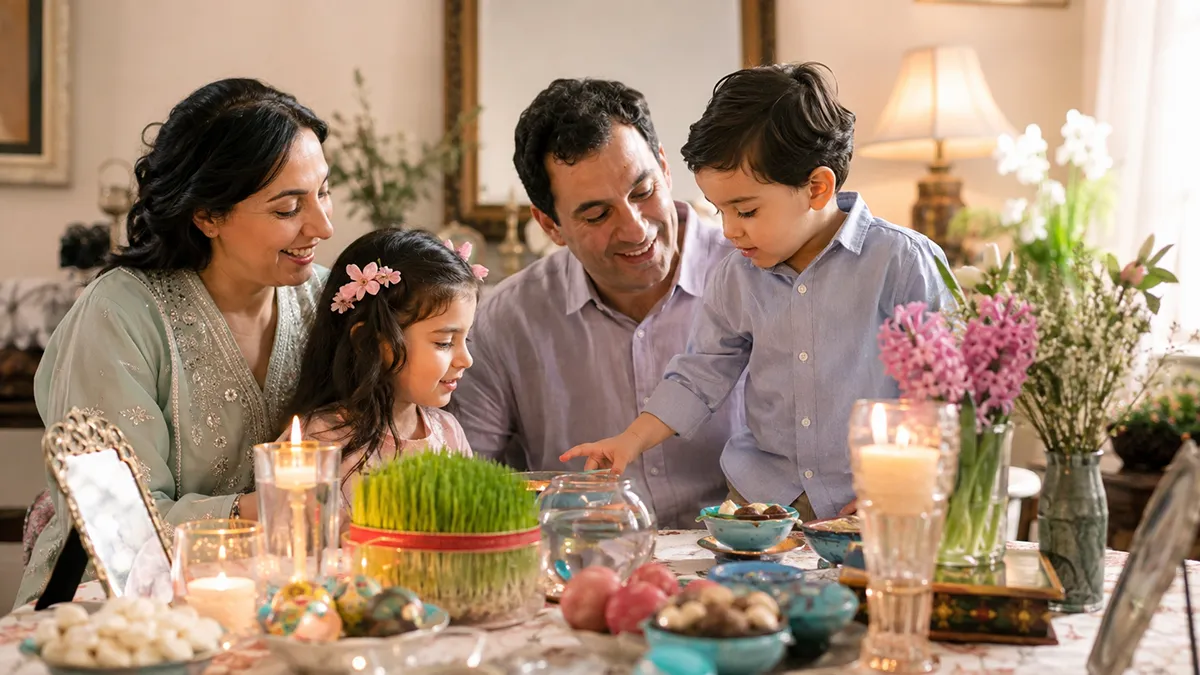
Nowruz is the most common occasion for diaspora families, with many parents dressing children in traditional pieces for family gatherings, community celebrations, or the haftsin table photographs that mark the day. Weddings and engagement parties are another common occasion, particularly when close family are involved, where a child in traditional dress is often a meaningful gesture toward the family’s heritage rather than simply decorative. Some families also choose traditional Persian clothing for cultural events at school, giving a child the chance to represent their heritage in a setting where classmates may otherwise have little exposure to Persian culture.
Should you buy a full traditional outfit or start with a single accent piece?
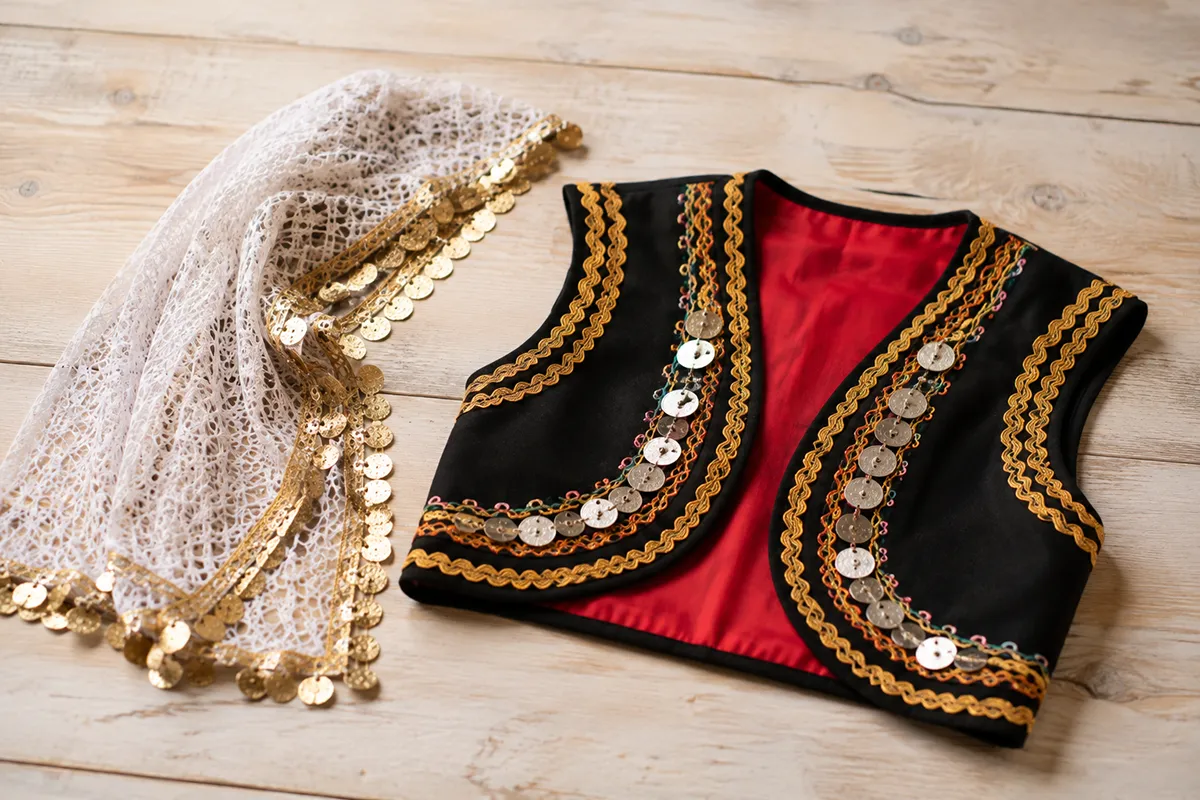
For families new to buying traditional Persian clothing, a single accent piece, an embroidered vest, a decorative headscarf, or a simple tunic worn over everyday trousers, is often a more practical starting point than a full formal outfit, both in cost and in how naturally a child wears it. A full outfit suits occasions like Nowruz or a wedding where the whole look matters, while a single piece works well for cultural events or family photos where you want a clear nod to heritage without a head-to-toe costume. Our Kids’ Collection guide covers how clothing fits alongside toys, storybooks and jewellery if you’re building a broader set of Persian heritage pieces for a child.
Conclusion
Buying kids traditional clothing well comes down to getting sizing right by measuring rather than guessing, caring properly for embroidered and delicate pieces, and matching the outfit to the occasion, whether that’s a full look for Nowruz or a single accent piece for everyday cultural connection. Families searching for kids traditional clothing in London have more local options than most cities, though a reliable online seller with a clear size chart and UK-based stock is usually the more consistent route. Whichever piece you choose, proper care will keep it looking good for more than a single wear, which matters for garments often kept as keepsakes.
Frequently Asked Questions
What size should I order for traditional Persian children’s clothing?
Measure your child’s chest, height and waist in centimetres and compare against the seller’s specific size chart rather than relying on the age label, since sizing conventions vary between sellers and often run differently to UK or US high street sizing.
Is traditional Persian clothing for children only worn at Nowruz?
No. While Nowruz is the most common occasion, traditional Persian clothing is also worn for weddings, engagement parties, cultural school events, and family celebrations throughout the year.
Can embroidered children’s clothing go in the washing machine?
It’s best avoided where possible. Hand washing in cool water protects embroidery and delicate trims far better than machine washing, which can loosen stitching over repeated cycles even on well-made garments.
Where can I find kids traditional clothing in London specifically?
Areas with established Persian communities, such as around Kensington, sometimes carry seasonal stock, particularly ahead of Nowruz, but UK-based online sellers generally offer more consistent year-round availability and faster delivery than relying on in-person shops alone.
What should I buy if I don’t want a full traditional outfit?
A single accent piece, such as an embroidered vest or decorative headscarf, is a practical starting point and works well for cultural events or family photos without committing to a full formal look. Browse our kids’ collection for individual pieces alongside full outfits.
Comments